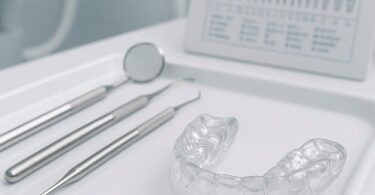
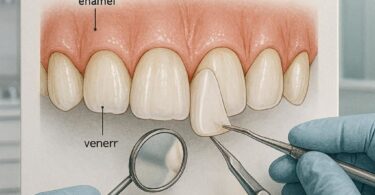
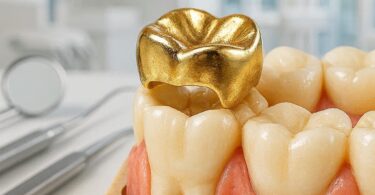
If you have ever sat in the treatment planning chair, or been the one in the operator’s chair, you know that dental implants represent a significant investment. Today, precision is everything. We have moved far beyond the days of “eye-balling” an implant placement. Now, we rely on advanced technology like 3D imaging and surgical guides to ensure that every implant goes exactly where it is supposed to go.
But here is where things get tricky for dental practices and patients alike: billing.
You have the technology. You have the skill. But when you sit down to submit a claim to insurance, you might find yourself staring at the CDT code list wondering, “What exactly is the dental code for an implant surgical guide?”
It is a question that causes confusion, claim denials, and lost revenue. The good news is that it doesn’t have to be complicated. In this guide, we are going to walk through everything you need to know about coding for surgical guides. We will look at the specific codes, the difference between a surgical guide and a diagnostic stent, how to bill them, and how to navigate the frustrating world of insurance reimbursement.
Whether you are a dentist, a dental biller, a practice manager, or a patient trying to understand your treatment plan, this article is for you. Let us clear up the confusion once and for all.
Dental Code for Implant Surgical Guide
What Exactly is an Implant Surgical Guide?
Before we jump into the codes, we need to understand the product. An implant surgical guide is a precision tool. It is typically a 3D-printed appliance that fits over a patient’s existing teeth or gums.
Think of it like a GPS for your dentist. When a surgeon places a dental implant, they need to drill a hole into the jawbone. If that hole is off by even a millimeter, it could damage a nerve, perforate a sinus, or ruin the esthetic outcome of the final crown.
The surgical guide ensures that the drill enters the bone at the exact angle, depth, and position that was planned using specialized software.
Types of Surgical Guides
Not all guides are created equal. The way you code for a guide often depends on the complexity and the method of production.
-
Tooth-Supported Guides: These sit on top of the patient’s natural teeth. They are highly stable because they lock onto the tooth structure. They are often used for single or multiple implants where adjacent teeth exist.
-
Mucosa-Supported Guides: These sit directly on the gums (soft tissue). They are used when a patient is missing all their teeth (edentulous). These can be less stable than tooth-supported guides unless they are anchored with fixation pins.
-
Bone-Supported Guides: These are used during flap surgery. They sit directly on the exposed bone. This is less common now with the rise of flapless surgery, but still used in complex cases.
-
Stackable Guides: These are advanced guides used in full-arch restorations (like All-on-4). They allow the surgeon to drill, place implants, and then attach a temporary prosthesis all in one visit using different layers of the same guide.
The Core Codes: D6190 and D5982
When we look at the Current Dental Terminology (CDT) code set, maintained by the American Dental Association (ADA), there is a lot of debate about which code is the right one.
Strictly speaking, there is no single code labeled “Implant Surgical Guide.” Instead, we use codes that describe the service of fabricating a device that aids in implant placement.
The two primary contenders are D6190 and D5982.
D6190: Radiographic/Surgical Implant Index
This is often considered the “modern” code for a surgical guide, especially when it involves cone beam computed tomography (CBCT) data.
According to the CDT manual, D6190 describes a “radiographic/surgical implant index.” This code covers the laboratory fabrication of a surgical guide that is used to transfer the implant position from the diagnostic wax-up or treatment plan to the surgical site.
If you are using a CBCT scan to plan the implant in 3D software, and then printing a guide based on that data, D6190 is typically the most accurate code.
D5982: Surgical Stent
This is an older code, but it is still widely used. D5982 is defined as a “surgical stent.” Historically, this referred to a simpler acrylic guide made on a stone model.
The distinction used to be based on complexity. A “stent” (D5982) was often considered a diagnostic or positioning guide, while an “index” (D6190) was considered a surgical guide used with radiographic markers.
However, in modern practice, the lines have blurred. Many payers still prefer D6190 because it is categorized under “Implant Services” (the D6100 series) rather than “Prosthodontics, Removable” (the D5900 series), making it more logically tied to the surgical procedure.
Comparative Table: D6190 vs. D5982
To help you decide which code to use, here is a breakdown of how these two codes compare in a typical dental practice setting.
| Feature | D6190 (Radiographic/Surgical Implant Index) | D5982 (Surgical Stent) |
|---|---|---|
| Category | Implant Services | Prosthodontics, Removable |
| Typical Use | CBCT-guided surgery; 3D printed guides; “flapless” surgery | Simple acrylic guides; tooth-supported positioning guides; flap surgery |
| Technology | High-tech (Digital impressions, CBCT integration, 3D printing) | Analog (Stone models, acrylic, vacuum form) |
| Insurance | Often covered under medical plans for surgical precision | Often denied as “laboratory” or “diagnostic” |
| Fee Structure | Typically higher due to software and printing costs | Typically lower due to materials and lab time |
| Notes | Requires radiographic markers (usually in the software) | Often billed per arch |
When to Use Which Code
A common rule of thumb in the dental billing community is to ask yourself: Is the guide used to interpret a radiograph?
If the guide was used during the CBCT scan to visualize the future tooth position (using gutta-percha or metal markers), it is definitively a D6190.
If the guide is made after the scan, solely to direct the drill physically, it could be either, but D6190 remains the industry standard for surgical guides.
The Nuances of Billing D6190
Using D6190 is not as simple as just punching in the code. To ensure that your claim is processed fairly, you need to understand the components of this code.
D6190 is considered a “laboratory” procedure. In the CDT manual, it is listed as “in conjunction with implant placement.” This is a critical distinction. It means that this code is rarely paid out as a standalone benefit on a standard dental PPO plan unless it is tied to the implant surgery (D6010) or the abutment placement.
The “Seat” Date
Unlike a filling or a crown, a surgical guide often involves multiple appointments. You have the scan appointment, the design appointment, and the surgery day.
When you bill D6190, you should use the date that the guide was delivered to the patient or used in the mouth. Usually, this is the date of the implant surgery. Billing too early (e.g., at the scan appointment) often results in a denial for “invalid date of service.”
Laboratory Costs
If you are outsourcing the printing of your surgical guides to a lab, you have a direct cost. When you bill D6190, you are billing for the service of fabricating the guide. You should enter the laboratory charge on the claim form so that the insurance company understands the overhead associated with the procedure.
If the lab fee is not listed, the payer may reduce the allowed amount assuming there was no outside cost involved.
Medical Billing: The Hidden Opportunity
Here is a secret that many general dentists overlook: Implant surgical guides are often a medical necessity.
If a patient is missing teeth due to trauma, congenital disease, or pathology (like cancer), the dental implant—and the guide used to place it—may be covered by the patient’s medical insurance, not their dental insurance.
Why Medical Coverage Matters
Dental insurance plans typically have low annual maximums ($1,000 to $2,000). A surgical guide can cost anywhere from $300 to $1,500 to fabricate. If you bill a dental plan, that guide might eat up a significant portion of the patient’s annual maximum, leaving less for the crown or other work.
Medical plans, however, often have higher limits and may cover surgical guides under codes like:
-
CPT 21076: Impression and custom preparation; surgical obturator prosthesis.
-
CPT 21085: Impression and custom preparation; oral surgical stent.
While these are medical (CPT) codes, they are often payable for the fabrication of the guide when the underlying surgery (the implant) is medically necessary.
When to Consider Medical Billing
You should consider medical billing for the surgical guide (D6190) in the following scenarios:
-
Trauma: The patient lost teeth in a car accident or fall.
-
Pathology: The patient had a tumor or cyst removed, requiring reconstruction.
-
Congenital Defects: Conditions like cleft palate or ectodermal dysplasia.
-
Post-Ablation: After jaw surgery or radiation therapy.
In these cases, the surgical guide is not just a “convenience” for the dentist; it is a critical component of the reconstruction process to avoid vital anatomical structures (nerves, sinuses) that are already compromised by the medical condition.
Insurance Reimbursement Realities
Let’s be honest. If you are a dentist or a biller, you know that just because a code exists, it does not mean the insurance company will pay for it.
Common Denial Codes
When you submit D6190, you might see these denial reasons:
-
“This procedure is not a covered benefit.” This is the most common. Many PPO plans explicitly exclude “implant services” or “laboratory procedures” associated with implants.
-
“Procedure is separate from the primary procedure.” The payer might argue that the implant placement (D6010) includes the surgical guide. This is usually incorrect. Unless the practice has a specific contract stating that D6010 is “all-inclusive,” the guide is separate.
-
“Missing documentation.” If you do not send a narrative or a copy of the radiograph showing the necessity of the guide, they will deny it.
How to Fight Denials
To get paid for D6190, documentation is your best friend.
You must include a narrative with your claim. A simple “implant guide” on the claim line will almost always get denied.
A strong narrative should include:
-
Medical Necessity: “Patient requires 3D guided surgery to avoid the inferior alveolar nerve due to limited bone height.”
-
Type of Guide: “Custom CAD/CAM surgical guide fabricated from CBCT data.”
-
Purpose: “To ensure precise implant placement for restoration of tooth #19.”
If the insurance company denies it as “not covered,” check the patient’s benefits booklet. If they cover implants (D6010), they are often supposed to cover the necessary ancillary services (like the guide). You can appeal citing the “necessary component” clause.
The Patient’s Perspective: Out-of-Pocket Costs
If you are a patient reading this, you might be wondering, “Why am I being charged for a plastic guide? Isn’t that part of the surgery?”
It is a fair question.
Think of it like building a custom home. The architect draws up the blueprints (the treatment plan). But to pour the foundation correctly, the construction crew uses laser levels and precise markers. The surgical guide is that laser level.
Why It Is a Separate Fee
-
Materials: 3D printing resins and the printing machines are expensive.
-
Software: The software used to merge the CBCT scan with the intraoral scan (digital impression) costs thousands of dollars per year in licensing fees.
-
Time: A skilled clinician or lab technician spends 20 to 60 minutes planning the virtual implant placement.
-
Risk Reduction: The guide minimizes the risk of nerve damage, which could lead to permanent numbness. That safety net has a cost.
Patients should look at their treatment plan. If you see a separate line item for D6190 or “Surgical Guide,” it is not a double charge. It is a separate service that adds a massive amount of safety and predictability to the procedure.
Best Practices for Dental Practices
To streamline your workflow and ensure you are capturing the revenue you deserve for surgical guides, implement these best practices.
1. Verify Benefits Before Surgery
Before you even take the CBCT scan, verify if the patient’s plan covers D6190. If they have a “Class II” or “Major” category, ask specifically: “Is the surgical guide included in the implant placement benefit, or is it a separate allowance?”
If the insurance rep says “It is not covered,” ask if a “surgical stent” (D5982) is covered. Sometimes, you can get coverage for the “stent” even if the “implant index” is denied.
2. Use a Separate Lab Slip
Always create a separate laboratory prescription for the surgical guide. This creates a paper trail. When you submit the claim, attach the lab invoice showing the date and the cost. This often triggers the insurance to pay the benefit because they see the incurred expense.
3. Charting Consistency
Your clinical notes must match your billing. If you bill D6190, your chart notes must mention:
-
The use of CBCT.
-
The virtual planning software.
-
The delivery of the guide.
-
The verification of fit prior to osteotomy.
4. Timing of Payment
Do not deliver the surgical guide until you have collected the patient portion, or you have a clear estimate of insurance payment. Because many plans deny D6190 initially, collecting a down payment for the guide (similar to a crown) is standard practice.
Frequently Asked Questions (FAQ)
Q1: Can I bill D6190 and D5982 on the same case?
Generally, no. These codes describe the fabrication of an appliance. You would only fabricate one guide per arch (or per surgery). Billing both for the same surgical site is considered duplicate billing and will result in an audit.
Q2: Does the implant surgical guide code (D6190) include the cost of the CBCT scan?
No. The CBCT scan is billed separately under D0367 (Cone beam CT capture and interpretation). D6190 only covers the fabrication of the guide from the data.
Q3: What if I make the guide in-house with a 3D printer?
You can still bill D6190. The code does not require that the guide be made by an external laboratory. However, you will not have a lab fee to attach to the claim. In this case, your narrative should state “In-house CAD/CAM fabrication.”
Q4: My insurance paid for D6010 (implant) but denied D6190. Is that correct?
It depends on the contract. Many PPO plans have a clause that they will only pay for the “implant body” (the screw) and not for “ancillary services” like guides, healing abutments, or impressions. You should review the specific plan document. If it does not exclude them, you can appeal.
Q5: Is there a specific code for the fixation pins used to hold the guide?
No. The pins or anchor screws used to stabilize a mucosa-supported surgical guide are considered part of the surgical guide procedure (D6190). The cost of the pins is typically included in the overall fee for the guide.
Conclusion
Navigating the dental code for an implant surgical guide requires a blend of clinical knowledge and administrative strategy. While D6190 stands as the most appropriate code for modern, CBCT-guided precision surgery, and D5982 remains a viable option for simpler cases, success ultimately depends on accurate documentation and clear communication with both the insurance carrier and the patient. By understanding the nuances of these codes and the potential for medical billing, practices can protect their revenue and patients can appreciate the true value of safety and precision in implant dentistry.
Additional Resource
For further reading on CDT coding standards and official definitions, we highly recommend visiting the American Dental Association (ADA) Coding and Reimbursement Committee page. You can also refer to the current CDT: Current Dental Terminology manual, which is updated annually and serves as the definitive source for all dental procedure codes.
Link to the ADA’s Coding Resources
Final Checklist for Your Next Implant Case
-
Diagnosis: CBCT taken (D0367).
-
Planning: Virtual implant planning completed.
-
Fabrication: Surgical guide designed and fabricated (D6190).
-
Verification: Verify medical necessity for potential medical billing.
-
Insurance: Submit narrative and lab slip with claim.
-
Patient: Discuss separate fee for guide prior to surgery.
Note to Readers
Dental coding is dynamic. Codes change, and payer policies shift. The information provided here is based on the standards in place as of March 2026. Always verify coverage with the specific insurance plan before rendering services. If you have a complex case involving full-arch rehabilitation or significant medical history, consulting with a specialized dental billing advocate can save your practice thousands of dollars in denied claims.
Disclaimer: This article is intended for informational and educational purposes only. Dental coding, insurance policies, and payer regulations vary by region and plan. This information does not constitute legal or billing advice. Always consult with your specific payer or a certified dental coding specialist to verify coverage and billing requirements.