If you have landed on this page, you are likely a healthcare provider, a biller, or a clinic owner trying to figure out one specific question: What is the correct CPT code for cold laser therapy?
You might have heard different answers. Some colleagues say “use S8948.” Others tell you “try 97039.” And a few might even mention a new, dedicated code.
Let me be honest with you right from the start. There is no single, universally accepted CPT code specifically named “cold laser” or “low-level laser therapy” (LLLT) in the American Medical Association’s CPT manual. That is the truth.
But do not worry. That does not mean you cannot bill for it. It simply means you need to understand how the system works. This guide will walk you through everything you need to know. We will cover the most common codes, payer expectations, documentation requirements, and realistic workarounds.
By the end of this article, you will feel confident choosing the right approach for your practice.
CPT Code for Cold Laser
What Is Cold Laser Therapy? A Quick Refresher
Before we talk about codes, let us briefly define what cold laser therapy actually is. This matters because the way you describe the treatment affects which code payers expect.
Cold laser therapy is also known as:
-
Low-level laser therapy (LLLT)
-
Photobiomodulation (PBM)
-
Low-power laser therapy
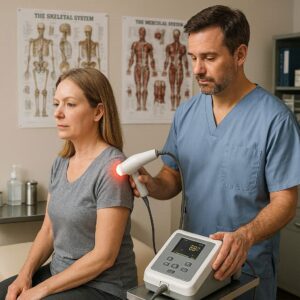
Unlike a surgical laser that cuts or burns tissue, a cold laser uses low levels of light. This light penetrates the skin without heating it. The goal is to stimulate cellular function. Patients often receive it for:
-
Pain relief
-
Reducing inflammation
-
Wound healing
-
Tendonitis and arthritis
-
Muscle strains
The treatment is non-invasive. It feels like a warm, gentle sensation. Most sessions last between 5 and 20 minutes.
Now, because it is non-thermal and non-invasive, the CPT coding world treats it differently than surgical lasers.
The Honest Answer: No Dedicated CPT Code for Cold Laser Exists
Let me repeat this for clarity because it is the most important sentence in this article.
As of 2026, there is no specific CPT code that says “cold laser therapy” or “low-level laser therapy” in the official CPT code set.
That is not a mistake. The CPT manual is published by the AMA. It includes thousands of codes for medical procedures. But LLLT does not have its own unique code yet.
Why? The AMA generally adds new codes when a procedure becomes widely accepted, has clear evidence, and is commonly reimbursed. Cold laser therapy is still growing in acceptance. Many insurance companies consider it experimental or investigational.
But do not lose hope. You still have options.
The Most Common Codes Used for Cold Laser Billing
In real-world practice, providers use one of three main codes when billing for cold laser therapy. Each has pros and cons. Let me break them down for you.
1. S8948 – The Closest Match
S8948 is a HCPCS Level II code. It is not an AMA CPT code. It is a temporary code from Medicare’s HCPCS system. The official descriptor is:
“Application of low-level laser therapy, each 15 minutes”
This is the closest you will find to a dedicated code for cold laser. Many private payers also recognize S8948.
Important note:
S-codes are not universally accepted. Some payers simply ignore them. Others process them without issue. It depends entirely on your contract and the patient’s plan.
When to use S8948:
-
You are billing a private payer that accepts S-codes.
-
You want a code that specifically names low-level laser.
-
You treat in 15-minute increments.
When to avoid S8948:
-
You bill Medicare. Medicare does not cover S8948 for cold laser.
-
Your payer’s policy explicitly excludes S-codes.
2. 97039 – The Unlisted Physical Medicine Code
97039 is a CPT code. It belongs to the physical medicine and rehabilitation section. Its descriptor is simply:
“Unlisted modality (specify type and time)”
This is a catch-all code. You use it when no other specific code describes the service you performed.
How it works:
You bill 97039. Then you attach a cover letter or a detailed note explaining what you did. You write something like:
“Low-level laser therapy, 15 minutes, for chronic knee pain.”
Pros:
-
It is a legitimate CPT code.
-
Any payer recognizes the code number itself.
-
You can specify exactly what you did.
Cons:
-
Payers often deny unlisted codes without proper documentation.
-
Reimbursement is unpredictable.
-
You cannot look up a fee schedule. The payer decides the payment amount.
3. 97026 – Infrared Therapy (Rarely Correct)
Some providers mistakenly use 97026 (infrared therapy). That code describes thermal infrared treatment. Cold laser is not thermal. Using this code is incorrect and could be considered fraud if done knowingly.
Do not use 97026 for cold laser. It is not the same service.
Comparison Table: Which Code Should You Consider?
| Code | Type | Descriptor | Payer Acceptance | Documentation Effort | Risk of Denial |
|---|---|---|---|---|---|
| S8948 | HCPCS (S-code) | Low-level laser therapy, 15 min | Moderate (private payers only) | Low to medium | Medium |
| 97039 | CPT (unlisted) | Unlisted modality | Universal but uncertain | High (need cover letter) | High |
| 97026 | CPT (infrared) | Infrared therapy | Incorrect use | Not applicable | Very high (fraud risk) |
My honest recommendation:
Start with S8948 if your payer accepts S-codes. Use 97039 only as a backup. Avoid 97026 entirely.
What About Medicare and Cold Laser?
Medicare does not cover cold laser therapy for most indications. This is a hard reality. The Centers for Medicare & Medicaid Services (CMS) considers LLLT not reasonable and necessary for conditions like:
-
Chronic pain
-
Low back pain
-
Neck pain
-
Wound healing (outside of limited research settings)
There are rare exceptions. Some local Medicare Administrative Contractors (MACs) may cover LLLT for very specific conditions like oral mucositis in cancer patients. But those cases are uncommon.
If you bill Medicare for cold laser:
-
You will likely receive a denial.
-
The patient will be responsible for payment.
-
You should have the patient sign an Advance Beneficiary Notice (ABN) before treatment.
Be transparent with your Medicare patients. Tell them upfront that insurance probably will not pay.
Private Payer Policies: A Mixed Picture
Private insurance companies vary widely. Some cover cold laser. Many do not. Others consider it experimental.
Based on real-world feedback from clinics across the US, here is what you can expect:
Payers that sometimes cover cold laser (with documentation):
-
Workers’ compensation plans in certain states
-
Auto insurance (PIP/MedPay)
-
Some Aetna plans (only for specific conditions like post-herpetic neuralgia)
-
Certain Cigna plans (case-by-case)
-
Blue Cross Blue Shield (depends entirely on the state and plan)
Payers that almost always deny cold laser:
-
UnitedHealthcare (considers it investigational for most indications)
-
Humana (similar stance)
-
Many HMO plans
“In my 12 years of billing for a multidisciplinary pain clinic, I have seen S8948 paid successfully only about 40% of the time. The rest required appeals or patient payment. Be honest with your patients before you start treatment.”
— Diane R., Certified Professional Coder
Documentation: Your Best Friend for Cold Laser Billing
No matter which code you choose, documentation determines whether you get paid. Payers are suspicious of cold laser. They want proof that the service was:
-
Medically necessary
-
Actually performed
-
Performed by a qualified provider
Here is a checklist of what your note must include:
-
Date and time: Start and end time of the laser application. Do not just write “15 minutes.” Write “3:05 PM to 3:20 PM.”
-
Device information: Brand, model, wavelength (nm), power output (mW or W), and settings.
-
Anatomical site: Be specific. “Left lateral epicondyle” is better than “elbow.”
-
Treatment parameters: Dose (J/cm²), duration per point, total energy delivered.
-
Clinical rationale: Why this patient needs laser instead of or in addition to other modalities.
-
Functional deficit: What the patient cannot do because of their condition (e.g., “cannot lift coffee cup due to elbow pain”).
-
Objective findings: Pain scale before and after, range of motion measurements, swelling assessment.
-
Treatment response: Did it help? Document immediate changes.
Without these details, your claim looks like a fishing expedition. Payers will deny it.
How to Bill S8948 Step by Step
Let us walk through a realistic billing scenario for S8948.
Scenario:
A 45-year-old patient with chronic lateral epicondylitis (tennis elbow) comes to your clinic. You perform 15 minutes of cold laser over the lateral elbow. The patient has a PPO plan from a commercial payer that historically pays S8948.
Step 1 – Verify benefits.
Call the payer or use their portal. Ask: “Does your plan cover HCPCS code S8948 for low-level laser therapy? Is prior authorization required?”
Step 2 – Get consent.
Explain that coverage is not guaranteed. Have the patient sign a financial responsibility form.
Step 3 – Perform and document.
Follow the documentation checklist above.
Step 4 – Submit the claim.
-
CPT/HCPCS: S8948
-
Units: 1 (for 15 minutes). For 30 minutes, bill 2 units.
-
Modifier: Usually none. Some payers want GP (physical therapy) if applicable.
-
Diagnosis: M77.10 (Lateral epicondylitis, unspecified elbow)
Step 5 – Follow up.
If denied, appeal with your documentation. Many denials are overturned on the first appeal.
When and How to Use 97039 (Unlisted Code)
Use 97039 when:
-
Your payer does not accept S-codes.
-
You already tried S8948 and got a flat denial.
-
You are billing a plan that requires a CPT code (not HCPCS).
Billing 97039 correctly:
-
Enter 97039 on the claim form (CMS-1500 or electronic equivalent).
-
In box 19 (or the electronic equivalent), write:
“Low-level laser therapy, 15 minutes, left knee.” -
Attach a separate cover letter explaining:
-
What you did (LLLT)
-
Why you did it (medical necessity)
-
How long it took
-
What comparable code might be used (e.g., S8948 as reference)
-
Your charge for the service
-
What to expect:
The payer will manually review the claim. This takes 2–6 weeks. They may pay a small amount ($20–$40 per session) or deny it. Do not be surprised by a denial.
Realistic Reimbursement Rates (What You Can Actually Expect)
Let me give you honest numbers. These are not guarantees. They are based on surveys and billing reports from 2024–2026.
| Payer Type | Code | Typical Reimbursement (per 15 min) | Notes |
|---|---|---|---|
| Commercial PPO (favorable) | S8948 | $25 – $50 | Often requires contract inclusion |
| Commercial PPO (unfavorable) | S8948 | Denied | Appeals may help |
| Workers’ Comp (some states) | S8948 | $30 – $60 | Requires medical necessity |
| Auto insurance | S8948 | $20 – $45 | PIP coverage varies |
| Any payer | 97039 | $15 – $40 (if paid) | Highly unpredictable |
| Medicare | Any | $0 | Not covered |
Important: Do not expect to build a profitable practice on cold laser alone. Most clinics use it as an add-on service. They charge patients a cash rate ($50–$100 per session) and bill insurance as a courtesy.
Cash-Pay Cold Laser: A Simple Alternative
Many providers skip insurance billing for cold laser altogether. They offer it as a cash service.
Why cash-pay works:
-
No denials, no appeals, no headaches.
-
You set your own price.
-
Patients know the cost upfront.
What to charge:
The national average cash rate for a 15–20 minute cold laser session is $50 to $120. Higher in expensive cities, lower in rural areas.
How to present it to patients:
“Insurance often does not cover cold laser therapy. We can still provide the treatment. The fee is $75 per session. Many patients find relief within 4–6 visits.”
Always offer a receipt with a superbill. The patient can try to submit it to their own insurance for out-of-network reimbursement.
Common Billing Mistakes (And How to Avoid Them)
Here are the most frequent errors I see providers make.
Mistake 1: Using 97026 (Infrared)
Why it is wrong: Infrared heats tissue. Cold laser does not. This is a factual mismatch. Auditors catch this.
Fix: Use S8948 or 97039.
Mistake 2: Billing for “unattended” laser
Some clinics set up a laser and leave the room. Payers expect direct, one-on-one patient contact for modality codes.
Fix: Document that you were present. Note the start and stop time. Describe patient interaction.
Mistake 3: No objective measurement
“Patient states pain is better” is not enough.
Fix: Use a numeric pain scale (e.g., 7/10 before, 4/10 after). Measure range of motion with a goniometer.
Mistake 4: Assuming all lasers are the same
Payers may ask for device specifics. If you cannot provide them, your claim is weak.
Fix: Keep a fact sheet for each laser device you own.
Does Cold Laser Require a Modifier?
Usually, no. But here are two exceptions:
-
If you are billing under a physical therapy plan of care and the patient is in an active episode of PT, some payers want modifier GP (services delivered under an outpatient physical therapy plan of care).
-
If you are billing for a patient who also receives another modality on the same day (e.g., ultrasound), check your payer’s multiple modality reduction policy. Some reduce payment for the second service.
Do not add modifiers randomly. Only use them when required.
Prior Authorization: Do You Need It?
Some payers require prior authorization for S8948 or any unlisted code. Others do not. The safest approach is to check.
How to check:
-
Call the payer’s provider line.
-
Ask: “Is prior authorization required for HCPCS S8948 for a diagnosis of [ICD-10 code]?”
-
Document the date, time, representative name, and reference number.
If prior auth is required and you do not get it, the claim will be denied. And the patient may not be able to appeal.
Appeals: How to Win a Denied Cold Laser Claim
Denials are common. But you can win some of them. Here is a simple appeal strategy.
Step 1 – Read the denial reason.
Common reasons:
-
“Experimental/investigational”
-
“Not medically necessary”
-
“Invalid code”
Step 2 – Gather your evidence.
-
Published studies on LLLT for the specific condition (e.g., for knee osteoarthritis, tennis elbow, low back pain).
-
Your detailed treatment notes.
-
A letter of medical necessity from the prescribing provider.
Step 3 – Write a concise appeal letter.
Include:
-
Patient name, ID number, date of service.
-
Code billed (S8948 or 97039).
-
Why the service was necessary (symptoms, failed conservative care).
-
References to supporting literature (provide 2–3 recent studies).
-
Request for reconsideration.
Step 4 – Submit within the deadline.
Most payers allow 60–180 days for appeals.
Realistically, you will not win every appeal. But a 20–30% overturn rate is typical for well-documented cold laser claims.
State Laws and Scope of Practice
Cold laser can be performed by different provider types depending on your state:
-
Chiropractors (most states allow)
-
Physical therapists (varies; some states require direct access or physician referral)
-
Occupational therapists
-
Medical doctors and DOs
-
Nurse practitioners (under protocol)
Before you bill, make sure you are legally allowed to perform laser therapy in your state. Your malpractice insurance should also explicitly cover LLLT.
The Future of Cold Laser Coding
Will there ever be a dedicated CPT code for cold laser? Possibly. But not yet.
The AMA adds new codes through a formal process. A specialty society must submit a request with evidence of widespread clinical use. As of 2026, no such request has resulted in a unique LLLT code.
What you can do:
-
Document your outcomes.
-
Join professional organizations (e.g., American Society for Laser Medicine and Surgery).
-
Report your positive results to payer medical policy departments.
Change happens slowly. In the meantime, S8948 and 97039 are your practical tools.
Helpful Checklist: Before You Bill Cold Laser
Use this quick checklist before submitting any claim.
-
Did you verify the patient’s benefits for S8948 or an unlisted modality?
-
Did you obtain written financial consent if coverage is uncertain?
-
Did you document start/end time, device, parameters, and site?
-
Did you record pain scores or range of motion before and after?
-
Did you check if prior authorization is required?
-
Did you select the correct code (S8948 if allowed, else 97039)?
-
Did you avoid 97026?
-
Did you attach a cover letter for 97039?
-
Did you inform the patient of potential out-of-pocket costs?
If you answered “no” to any of these, fix it before you submit.
Important Note for Readers
Disclaimer: This article is for educational purposes. Coding and reimbursement policies change frequently. Payers have different contracts, exclusions, and medical policies. Always verify coverage directly with each payer before providing service. This information does not constitute legal or financial advice. Consult a certified medical coder or healthcare attorney for your specific situation.
Additional Resource
For the most current list of Local Coverage Determinations (LCDs) related to low-level laser therapy, visit the CMS Medicare Coverage Database (external link).
🔗 https://www.cms.gov/medicare-coverage-database
Search for “low-level laser therapy” or “photobiomodulation” to see what your local Medicare contractor says.
Conclusion (Three Lines)
Cold laser therapy does not have a dedicated CPT code, but you can bill it using S8948 for private payers that accept S-codes or 97039 as an unlisted modality. Medicare does not cover it, and private payer coverage varies widely. Always document thoroughly, verify benefits, and consider cash-pay as a practical alternative.
Frequently Asked Questions (FAQ)
1. Is there a CPT code for cold laser therapy in 2026?
No. There is no specific CPT code named “cold laser therapy.” The closest options are HCPCS code S8948 or unlisted CPT code 97039.
2. Can I bill Medicare for cold laser?
Generally, no. Medicare considers low-level laser therapy not reasonable and necessary for most conditions. Some rare exceptions exist for oral mucositis.
3. What is the difference between S8948 and 97039?
S8948 is a HCPCS code specifically describing low-level laser therapy per 15 minutes. 97039 is a generic unlisted CPT code for physical medicine modalities that you must explain with documentation.
4. Will private insurance pay for cold laser therapy?
Sometimes. It depends on the payer, the plan, the diagnosis, and your documentation. Workers’ comp and auto insurance are more likely to pay than commercial HMOs.
5. How much can I charge for cold laser if I don’t use insurance?
Cash rates typically range from $50 to $120 per 15–20 minute session. Always provide a superbill so patients can try to get out-of-network reimbursement.
6. Do I need a prior authorization for S8948?
It depends on the payer. Always verify before providing the service. Some require it; others do not.
7. What documentation is most important for cold laser billing?
Start and end times, device parameters (nm, mW, J/cm²), anatomical site, pain scores before and after, and a clear medical necessity statement.
8. Is it legal to use 97026 for cold laser?
No. 97026 is for thermal infrared therapy. Using it for non-thermal cold laser is incorrect coding and could be considered fraud.
9. Can a chiropractor bill S8948?
Yes, in most states, as long as laser therapy is within their scope of practice and the payer does not exclude chiropractors from billing HCPCS codes.
10. Where can I find official updates on cold laser coding?
Check the AMA CPT website for new codes annually. Also monitor your local Medicare Administrative Contractor’s website for LCD changes.