If you have ever experienced jaw pain, clicking sounds when you eat, or chronic headaches, you have probably come across the term TMJ. And if you have tried to figure out how your dental insurance works for this condition, you have almost certainly asked yourself: What exactly is the dental code for TMJ?
The short answer is that there is no single code. Instead, there is a family of codes.
Treating jaw joint problems (what dentists call TMD or temporomandibular disorder) involves different procedures. Each procedure has its own unique code. Knowing these codes can save you money, reduce confusion with your insurance company, and help you get the care you need without unnecessary delays.
This guide walks you through every relevant dental code for TMJ in simple, clear English. You will learn what each code means, how much procedures typically cost, what insurance usually covers, and how to avoid common billing mistakes.
Let us start with the basics.

Understanding TMJ and TMD: A Quick Primer
Before we talk about codes and billing, it helps to understand what TMJ actually means.
TMJ stands for temporomandibular joint. That is the hinge connecting your jaw to your skull, right in front of each ear. You have two of them, and they work together every time you talk, chew, swallow, or yawn.
When something goes wrong with these joints or the muscles around them, dentists call it TMD (temporomandibular disorder). Common symptoms include:
- Jaw pain or tenderness
- Clicking, popping, or grating sounds when you open your mouth
- Difficulty chewing or a “stuck” feeling
- Aching pain around your ear
- Facial fatigue or headaches
- Locking of the jaw joint
TMD can be caused by teeth grinding (bruxism), arthritis, jaw injury, or even stress that makes you clench your jaw.
Now, here is where dental codes come in.
Why Dental Codes Matter for TMJ Treatment
Dental codes (called CDT codes, or Current Dental Terminology) are how your dentist communicates with your insurance company. Every procedure gets a five-character alphanumeric code. When your dentist submits a claim, the insurance company looks at those codes to decide:
- Is this treatment covered?
- How much will they pay?
- How much will you owe?
Without the correct code, your claim may be denied, delayed, or underpaid. With the correct code, you have a much better chance of getting the benefits you are entitled to.
This is especially important for TMJ treatment because many insurance plans have specific limits, exclusions, or separate annual maximums for TMD services. Some medical insurance plans also cover TMJ treatment, which adds another layer of complexity.
Let us look at the specific codes you need to know.
The Main Dental Codes for TMJ (Complete List)
Below is a complete, accurate table of the primary dental codes used for TMJ diagnosis and treatment. These codes come from the official CDT manual published by the American Dental Association (ADA). They are current as of 2026.
| CDT Code | Procedure Description | Typical Use in TMJ Treatment |
|---|---|---|
| D7880 | Occlusal orthotic device, including delivery | A custom-made mouthguard or splint to reduce jaw clenching and muscle tension |
| D7881 | Occlusal orthotic device adjustment | Follow-up visits to adjust the same device |
| D7899 | Unspecified TMD procedure, by report | A catch-all code for treatments without a specific code (requires written explanation) |
| D7995 | Synthetic graft – mandible or facial bones | Bone grafting for jaw surgery cases |
| D9920 | Behavior management (for TMD-related habits) | Teaching patients to stop clenching or teeth grinding |
| D0470 | Diagnostic casts | Creating plaster models of your teeth to study your bite |
| D0330 | Panoramic radiographic image | A single X-ray showing all teeth and both jaw joints |
| D0320 | Temporomandibular joint arthrogram, including injection | Special X-ray with contrast dye to see joint soft tissues |
| D0321 | Temporomandibular joint magnetic resonance (MRI) | Detailed imaging of the jaw joint and surrounding muscles |
| D0322 | Computed tomography (CT) of the temporomandibular joint | 3D imaging for complex joint problems or surgical planning |
Important note for readers: Codes D0320, D0321, and D0322 are often billed to medical insurance rather than dental insurance. We will explain why later in this article.
Deep Dive: The Most Common TMJ Dental Codes
Not all codes on that list are used every day. In reality, most TMJ treatment involves just a handful of codes. Let us break down the ones you will most likely see on your dental bill.
D7880 – The Occlusal Orthotic Device (The TMJ Mouthguard)
This is the code you will see most often.
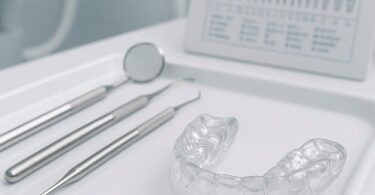
D7880 covers a custom-made, hard or soft acrylic appliance that fits over your upper or lower teeth. People call it a nightguard, a bite splint, or a TMJ orthotic. It works by:
- Preventing your teeth from grinding against each other
- Relaxing your jaw muscles
- Positioning your jaw in a more neutral, less painful alignment
What the procedure includes: Impressions of your teeth, laboratory fabrication of the device, and the first delivery appointment where your dentist checks the fit.
What it does NOT include: Future adjustments (those are billed under D7881).
Typical cost range: $500 to $1,200 without insurance.
D7881 – Adjusting Your TMJ Orthotic
Your new mouthguard will almost certainly need fine-tuning. Your bite changes slightly over time, or the device might feel too tight or too loose. That is where D7881 comes in.
This code covers each adjustment visit. Some dentists include two or three adjustments in the original D7880 fee. Others bill separately. Always ask before you agree to treatment.
Typical cost range: $75 to $200 per adjustment.
D7899 – Unspecified TMD Procedure (Use with Caution)
D7899 is a “by report” code. That means your dentist cannot just submit the code alone. They must attach a written description of exactly what they did and why.
This code is used for treatments that do not have their own specific CDT code. Examples include:
- Trigger point injections into jaw muscles
- Ultrasound therapy for muscle pain
- Patient education for habit reversal
However, many insurance companies deny D7899 automatically because it is vague. Some dentists avoid it for that reason. If you see this code on your bill, ask your dentist to explain exactly what procedure it represents and whether a more specific code exists.
D0320, D0321, D0322 – Imaging Your Jaw Joint
These codes cover advanced imaging. Most TMJ cases do not require them. But if your symptoms are severe, long-lasting, or not responding to basic treatment, your dentist may order one of these tests.
- D0320 (Arthrogram): An injection of dye into the joint followed by X-rays. It helps see displaced discs or tears in the ligaments.
- D0321 (MRI): The best test for seeing soft tissues like the disc that cushions your jaw joint.
- D0322 (CT scan): Used when your dentist suspects bone problems, arthritis, or needs a 3D view for surgical planning.
A critical point: many dental insurance plans do not cover these imaging codes. However, your medical insurance often will, especially if your primary care doctor or a specialist orders the test. We will discuss this more in the insurance section below.
How Much Does TMJ Treatment Really Cost? (With and Without Codes)
Understanding codes is one thing. Understanding what you will actually pay is another. Below is a realistic cost breakdown for common TMJ treatments using the codes we have discussed.
| Procedure | CDT Code | Average Fee Without Insurance | Average Fee With Dental Insurance (Patient Portion) |
|---|---|---|---|
| Initial exam and TMD evaluation | D0150 or D0140 | $100 – $250 | $20 – $60 (after deductible) |
| Panoramic X-ray | D0330 | $100 – $150 | $10 – $40 |
| Diagnostic teeth models | D0470 | $150 – $300 | $30 – $100 |
| Nightguard / orthotic | D7880 | $500 – $1,200 | $200 – $600 |
| Orthotic adjustment (per visit) | D7881 | $75 – $200 | $15 – $60 |
| MRI of jaw joint | D0321 | $800 – $2,500 | Often billed to medical insurance |
| CT scan of jaw joint | D0322 | $500 – $1,500 | Often billed to medical insurance |
| Arthrogram | D0320 | $400 – $1,000 | Often billed to medical insurance |
Note: These are national averages in the United States. Actual costs vary by geographic location, dentist experience, and laboratory fees.
Insurance Coverage for TMJ Dental Codes: What You Need to Know
Here is where things get complicated. Many patients assume that because TMJ affects their teeth and jaw, dental insurance will cover everything. That is not always true.
Dental Insurance and TMJ
Most standard dental PPO plans include limited coverage for TMD. Typical limitations include:
- A separate, lower annual maximum for TMD services (often $500 to $1,500, compared to $1,500 to $2,500 for general dental care)
- A requirement for pre-authorization before D7880 (nightguard)
- Exclusions for certain procedures like D0321 (MRI) or D0322 (CT)
- Coverage only for “medically necessary” treatment, not for “habitual” clenching or grinding
Some dental HMO or discount plans exclude TMD entirely. Always read your plan documents or call your insurance company before starting expensive treatment.
Medical Insurance and TMJ
Here is a little-known fact that can save you hundreds or thousands of dollars: many medical insurance plans cover TMJ treatment when it is clearly linked to a medical diagnosis.
Medical insurance is more likely to cover:
- MRI and CT scans (D0321, D0322)
- Arthrograms (D0320)
- Surgical procedures for the jaw joint
- Physical therapy for jaw muscles
- Prescription medications for pain or muscle relaxation
However, medical insurance rarely covers dental appliances like D7880 (nightguards). They consider those “dental” even if they help a medical condition.
A practical tip: Ask your dentist to write a letter of medical necessity. This document explains why your TMJ treatment is not just about your teeth but about a genuine medical problem affecting your ability to eat, speak, or live without pain. Many insurance companies approve coverage after receiving such a letter.
Dual Billing Strategy
Some savvy patients and dentists use a dual billing strategy:
- Bill dental insurance for D7880 (nightguard) and D7881 (adjustments)
- Bill medical insurance for D0321 (MRI) and specialist consultations
You can do this legally because different insurance contracts cover different services. Just be honest with both insurers about what other coverage you have.
What Your Dental Bill Should Look Like (With Real Examples)
Let us look at two realistic patient scenarios. These examples show exactly which codes you would see and what you might pay.
Example 1: Mild to Moderate TMJ (No Imaging Needed)
Patient: Sarah, 34, complains of jaw soreness in the morning and headaches. Her dentist diagnoses bruxism (teeth grinding).
| Service | Code | Billed Amount | Insurance Paid | Patient Owes |
|---|---|---|---|---|
| Limited exam (TMD focused) | D0140 | $120 | $80 | $40 |
| Panoramic X-ray | D0330 | $130 | $90 | $40 |
| Nightguard fabrication and delivery | D7880 | $800 | $400 | $400 |
| First adjustment (included) | D7881 | $0 | $0 | $0 |
| Second adjustment (3 months later) | D7881 | $100 | $60 | $40 |
| Total | $1,150 | $630 | $520 |
Example 2: Complex TMJ with MRI and Specialist Referral
Patient: Michael, 52, has jaw locking, pain when chewing, and a history of arthritis.
| Service | Code | Billed To | Billed Amount | Insurance Paid | Patient Owes |
|---|---|---|---|---|---|
| Comprehensive exam and TMD evaluation | D0150 | Dental | $180 | $120 | $60 |
| MRI of jaw joint | D0321 | Medical | $1,800 | $1,440 | $360 |
| Nightguard (orthotic) | D7880 | Dental | $950 | $450 | $500 |
| Three adjustments over 6 months | D7881 (x3) | Dental | $300 | $180 | $120 |
| Oral surgery consult | N/A (medical code) | Medical | $250 | $200 | $50 |
| Total | $3,480 | $2,390 | $1,090 |
Red Flags and Common Billing Mistakes to Avoid
Not every dentist bills TMJ treatment correctly. Here are warning signs that something may be wrong with your dental claim.
Unbundling Codes Unnecessarily
Some dentists bill separately for procedures that should be included. For example, taking impressions for your nightguard should be part of D7880. If you see a separate code like D9920 (impressions) on the same day as D7880, ask why.
Using D7899 When a Specific Code Exists
As mentioned earlier, D7899 is for unspecified procedures. If your dentist uses this code for a routine nightguard adjustment when D7881 exists, your insurance may deny the claim. Always ask for the most specific code available.
Billing You Before Insurance Processes the Claim
Legitimate dentists will submit your claim to insurance first. If a dentist asks you to pay the full D7880 fee upfront and then says “you can file for reimbursement yourself,” be cautious. That shifts the risk entirely onto you.
No Pre-Authorization for Expensive Procedures
For any TMJ treatment costing over $500 (like D7880 or imaging codes), ask your dentist to submit a pre-authorization (sometimes called a predetermination) to your insurance company. This is not a guarantee of payment, but it gives you a written estimate of what they will cover. If the pre-authorization says they will pay $400 for D7880, you can plan accordingly.
Step-by-Step Guide to Getting TMJ Treatment Without Billing Surprises
Follow this roadmap to reduce stress and unexpected costs.
Step 1: Verify your coverage before your appointment.
Call your dental insurance company. Ask two specific questions: “Does my plan cover CDT code D7880 for a TMJ orthotic?” and “Is there a separate annual maximum for TMD treatment?”
Step 2: Also call your medical insurance.
Ask: “Does my plan cover TMJ disorders? Does it cover jaw joint MRI (D0321) or CT (D0322) if ordered by a dentist or doctor?”
Step 3: Ask your dentist for a written treatment plan with codes.
Before any procedure, request a document that lists each CDT code, the fee for each, and an estimate of what insurance will pay.
Step 4: Request a pre-authorization for D7880 and any imaging.
Wait for the insurance company’s written response before scheduling expensive procedures.
Step 5: Keep your own records.
Save every explanation of benefits (EOB) from your insurance company. Compare them to the bills you receive from your dentist.
Step 6: Ask about payment plans.
If your out-of-pocket cost for D7880 is high, many dental offices offer in-house financing or third-party options like CareCredit.
Frequently Asked Questions (FAQ)
1. Is there a single dental code for TMJ diagnosis?
No. Diagnosis is not billed with a CDT code. Diagnosis is recorded using a diagnostic code (ICD-10). The most common ICD-10 codes for TMJ problems are M26.60 (temporomandibular joint disorder, unspecified) and M26.62 (arthralgia of the temporomandibular joint).
2. Will my dental insurance pay for D7880 (nightguard) 100%?
Rarely. Most plans cover 50% to 80% after you meet your deductible. Some cover nothing at all for TMD. Check your plan’s “TMD exclusion” clause.
3. Can I buy an over-the-counter nightguard instead of paying for D7880?
You can, but it is not the same. Over-the-counter guards are not custom-fitted. They can actually make TMJ worse by shifting your bite into an unnatural position. D7880 covers a device made from precise impressions of your teeth.
4. What if my dentist uses a code I do not recognize?
Ask politely but directly: “Can you explain what procedure CDT code [insert code] represents and why it is necessary for my TMJ treatment?” A good dentist will be happy to explain.
5. How often can D7881 (adjustment) be billed?
As often as medically necessary. However, most insurance plans limit adjustments to once every three to six months unless the dentist documents a change in your condition.
6. Does Medicare cover any TMJ dental codes?
Original Medicare (Part A and B) generally does not cover dental procedures, including D7880. However, Medicare Part B may cover medically necessary imaging (D0321, D0322) or surgery for TMJ if performed in a hospital setting. Medicare Advantage plans vary widely.
7. What should I do if my claim is denied?
First, request a written explanation from your insurance company. Then ask your dentist to help you file an appeal. Many denials are overturned on appeal, especially if your dentist submits a letter of medical necessity.
Additional Resources
For further reliable information on TMJ disorders and insurance billing, visit the American Dental Association’s patient page on TMD:
https://www.ada.org/en/resources/research/science-and-research-institute/oral-health-topics/temporomandibular-disorders-tmd
This resource provides dentist-reviewed explanations of TMD causes, symptoms, and treatment options.
Conclusion
There is no single dental code for TMJ. Instead, treatment involves a set of codes, with D7880 (nightguard) and D7881 (adjustments) being the most common. Understanding these codes helps you verify insurance coverage, avoid billing mistakes, and potentially save hundreds of dollars by knowing when to bill medical insurance for imaging like MRIs. Always request a written treatment plan with codes before starting care, and do not hesitate to ask your dentist or insurance company for clarification.
Disclaimer: This article is for informational purposes only and does not constitute medical, dental, or insurance advice. CDT codes and insurance policies change over time. Always consult with your licensed dentist and insurance provider before making treatment or payment decisions. The author and publisher are not responsible for any adverse outcomes resulting from the use of this information.