If you have ever been told you need a vestibuloplasty, your first question might have been, “What is that?” Your second question is likely, “What is the dental code for vestibuloplasty, and will my insurance help?”
You are not alone. This procedure sounds complex, but it is actually a very common surgical step for people who wear dentures or need implants.
In simple terms, a vestibuloplasty is a procedure to deepen the space (the vestibule) between your gums, cheeks, or lips. This creates more room for stable dentures or dental implants.
But let us focus on the practical side. You need to understand the billing codes. You want to know what you will pay. You need to know if your dental plan covers it.
This guide walks you through everything. We will keep the language simple, the advice honest, and the information realistic.
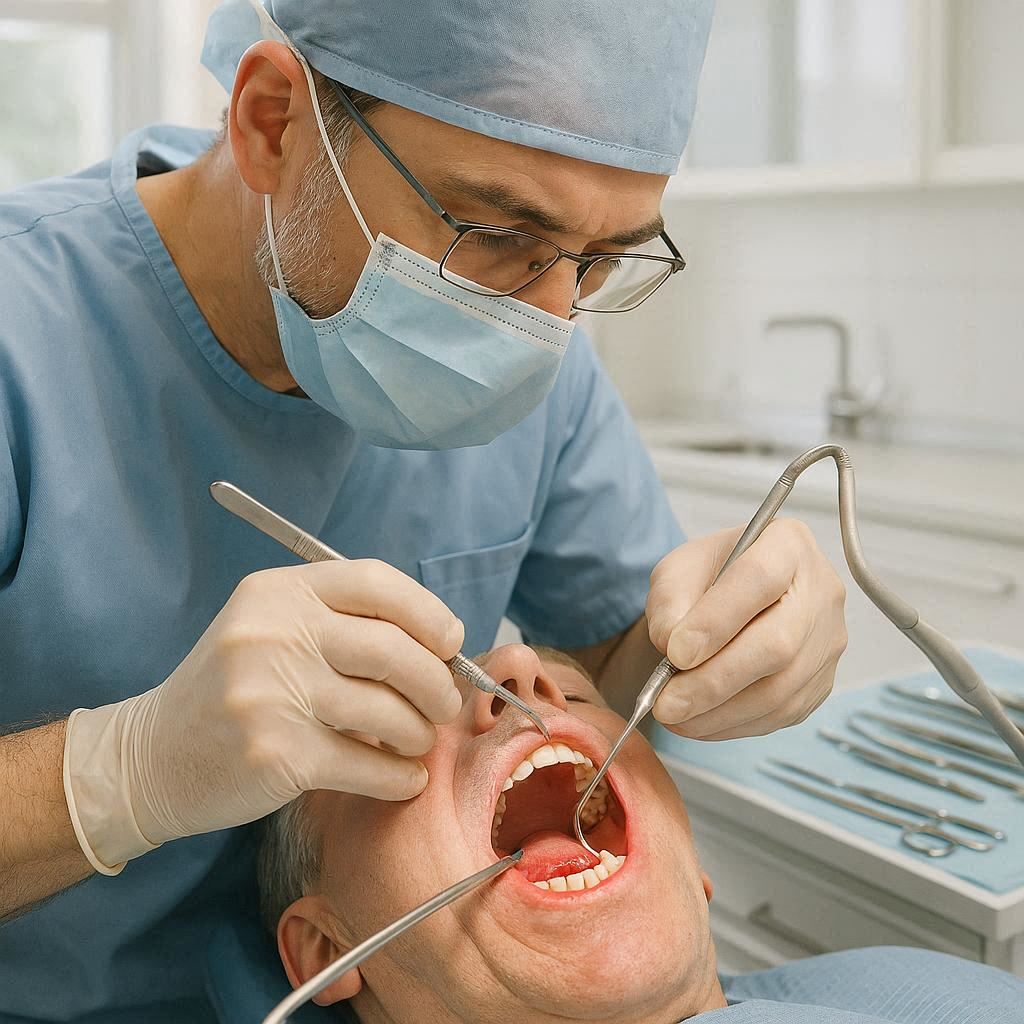
What Exactly Is a Vestibuloplasty? (A Plain English Explanation)
Before we talk about numbers and codes, let us understand the “what” and “why.”
Imagine your jawbone is a bathtub. Your gums and soft tissue are the water. Over time, when you lose teeth, that bathtub becomes shallow. The bone shrinks. The tissue shrinks. Now, when you try to put a denture in that bathtub, it slides out. It does not stay put.
A vestibuloplasty is like deepening the bathtub. The surgeon moves muscle attachments and soft tissue to create a deeper, wider space. This allows a denture or implant to sit securely.
Who needs this procedure?
- Denture wearers whose dentures constantly slip or rock.
- Patients preparing for implants who do not have enough soft tissue depth.
- People with muscle attachments that are too high (this pulls on the gums when you move your mouth).
It is not a cosmetic surgery. It is a functional one. It makes eating, speaking, and smiling easier.
The Two Main Dental Codes for Vestibuloplasty (D7340 and D7350)
Now we arrive at the heart of the article. The American Dental Association (ADA) publishes the Current Dental Terminology (CDT) codes. These are the standard codes used across North America.
There is not just one code. There are two primary codes for vestibuloplasty. The difference depends on how many areas of your mouth are involved.
Let us break them down side by side.
Comparative Table: D7340 vs. D7350
| Feature | D7340 | D7350 |
|---|---|---|
| Full Name | Vestibuloplasty – ridge extension (second stage) – mandibular | Vestibuloplasty – ridge extension (second stage) – maxillary |
| Location | Lower jaw (mandible) | Upper jaw (maxilla) |
| Scope | Usually one arch (one jaw) | Usually one arch (one jaw) |
| Complexity | Moderate | Moderate to High |
| Typical Setting | Oral surgeon or periodontist office | Oral surgeon or periodontist office |
| Common Pairing | D7340 (lower) | D7350 (upper) |
Important Note for Readers: Some dental offices incorrectly use these codes for the first stage of the procedure. The code descriptor says “second stage.” However, in real-world practice, many offices bill D7340 or D7350 for the entire vestibuloplasty. Always ask your provider exactly what they will bill.
What Does D7340 Cover? (Lower Jaw Vestibuloplasty)
Code D7340 is specifically for the lower jaw. Think of your bottom teeth area. The surgeon works on the lingual side (tongue side) or the buccal side (cheek side) of the lower ridge.
What the surgeon does:
- Makes an incision along the gum ridge.
- Moves muscle attachments (like the ones that move your tongue or lower lip) lower down.
- Sometimes uses a skin graft or tissue graft to cover the new area.
- Places a surgical stent (a special denture or splint) to hold everything in place.
When is this used?
You will see D734o most often in patients with a “shallow floor of the mouth.” If your tongue muscles pull up too high, your lower denture has no chance. D7340 fixes that.
What Does D7350 Cover? (Upper Jaw Vestibuloplasty)
Code D7350 is for the upper jaw. This is more common than lower jaw surgery because the upper jaw has more muscle attachments from the lip and cheek.
What the surgeon does:
- Detaches the lip muscles and cheek muscles from the bone.
- Deepens the upper vestibule (the space between your upper lip and gum ridge).
- Places a surgical stent or packing material.
- Allows the tissue to heal in a lower position.
When is this used?
Patients with a “shallow upper sulcus.” If you smile and your upper denture falls down, you likely need a D7350 procedure.
Other Related Codes You Might See on Your Bill
Here is an honest truth. You will almost never see only D7340 or D7350 on a bill. Vestibuloplasty is rarely a stand-alone procedure. It is often part of a larger treatment plan.
Be prepared to see these additional codes:
D7310 and D7320 (Alveoloplasty)
- D7310: Alveoloplasty (smoothing the bone) in conjunction with extractions – per quadrant.
- D7320: Alveoloplasty not in conjunction with extractions – per quadrant.
Most vestibuloplasty procedures also require bone smoothing. The surgeon cannot deepen the tissue if the bone underneath is sharp or uneven.
D4266 and D4267 (Guided Tissue Regeneration)
- D4266: Guided tissue regeneration – resorbable barrier – per site.
- D4267: Guided tissue regeneration – non-resorbable barrier – per site.
If the surgeon uses a membrane to protect a graft, you will see these codes.
D7951 and D7953 (Grafts)
- D7951: Sinus augmentation via lateral approach.
- D7953: Bone graft to the maxillary tuberosity.
If your vestibuloplasty requires a bone graft to build up the ridge first, these codes appear.
D7922 (Harvest of Graft)
If the surgeon takes tissue from your palate (roof of your mouth) to use as a graft for the vestibuloplasty, they may bill D7922 (Harvest of soft tissue graft).
Honest Reality Check: A full vestibuloplasty with grafting and alveoloplasty can involve 3 to 5 different dental codes on one claim form. Do not panic when you see a list. That is normal.
Does Insurance Cover the Dental Code for Vestibuloplasty?
This is the million-dollar question. The answer is frustrating: It depends.
Vestibuloplasty sits in a gray area between medically necessary and elective.
When Insurance Says “Yes” (Medical or Dental Coverage)
- You cannot wear dentures. If your dentures are physically impossible to wear because of muscle attachments, most dental PPO plans cover D7340 or D7350 (after a waiting period).
- You need implants. If a surgeon certifies that you cannot get implants without the vestibuloplasty, many plans cover it.
- You have a congenital defect. Cleft palate patients or those with genetic conditions affecting the vestibule often get full coverage.
- Medical insurance (not dental) may cover it. If the condition causes pain, ulcerations, or inability to eat, your medical plan might pay. This is rare, but it happens.
When Insurance Says “No” (Denial Reasons)
- It is considered “experimental” for your case. Some older plans still label vestibuloplasty as not standard.
- You have a basic HMO dental plan. These plans cover cleanings and fillings. They rarely cover surgical soft tissue procedures.
- Missing teeth not replaced. Some plans argue that if you are not getting new dentures or implants, the surgery is not necessary.
- Missing pre-authorization. Never do this surgery without a pre-authorization letter from your insurance company.
Average Out-of-Pocket Costs (No Insurance)
Let us be realistic. If you pay cash, here is what you expect in the United States (2026 estimates):
| Procedure | Without Insurance (Average) |
|---|---|
| D7340 (Lower jaw only) | $1,200 – $2,500 |
| D7350 (Upper jaw only) | $1,500 – $3,000 |
| D7340 + D7350 (Both jaws) | $2,500 – $5,000 |
| Plus bone graft (D7953) | + $600 – $1,200 |
| Plus tissue graft (D7922) | + $400 – $800 |
These prices are for the surgery alone. They do not include new dentures, implants, or anesthesia.
The Step-by-Step Procedure (What Your Dentist Does)
Understanding the steps helps you understand the codes. Here is a realistic walkthrough.
Step 1: Evaluation and Pre-Authorization
Your dentist examines your vestibule depth. They take X-rays or a CBCT scan. Then, they submit D7340 or D7350 to your insurance for pre-approval. Never skip this step.
Step 2: Anesthesia
Most vestibuloplasty is done under local anesthesia (numbing shots) with oral sedation. Some cases require IV sedation or general anesthesia. Anesthesia is billed separately (D9230, D9241, etc.).
Step 3: The Incision
The surgeon makes a horizontal cut along the ridge of your jaw. They create a “flap” of gum tissue.
Step 4: Muscle Repositioning
This is the key part. The surgeon uses a periosteal elevator to push the muscle attachments down. They move the muscle from the top of the ridge to the bottom.
Step 5: Grafting (If Needed)
If the area is large, the surgeon places a graft. This could be:
- Autograft: From your own palate.
- Allograft: Donated human tissue.
- Xenograft: Animal tissue (usually pig or cow).
Step 6: Stent Placement
The surgeon places a surgical stent. This is a clear plastic splint that holds the tissue in its new, deeper position. You wear this stent for 7 to 14 days.
Step 7: Sutures
The surgeon closes the incisions with dissolvable or non-dissolvable stitches.
What to Expect After Surgery (Recovery Guide)
The code on the paper matters, but your recovery matters more. Here is an honest timeline.
Days 1 to 3 (The Hard Part)
- Swelling: Expect moderate to significant swelling of the lip or cheek.
- Pain: Manageable with prescription pain medication or high-dose ibuprofen.
- Diet: Liquids only. Think smoothies, broth, protein shakes. No straws (you risk dislodging the graft).
- Stent: You wear it 24/7 except for cleaning.
Days 4 to 7 (Getting Better)
- Swelling: Peaks around day 3, then slowly goes down.
- Diet: Soft foods. Mashed potatoes, yogurt, scrambled eggs, pudding.
- Oral hygiene: Rinse gently with salt water or prescribed chlorhexidine. Do not brush the surgical site.
- Stent: You still wear it most of the time.
Days 7 to 14 (Stent Removal)
- Your surgeon removes the stent.
- They check the depth of the new vestibule.
- You switch to a soft denture or temporary appliance.
- Most people return to work or normal activities by day 10.
Days 14 to 30 (Healing Continues)
- The tissue looks pink and healthy.
- You can eat most normal foods, but avoid crunchy things like chips or nuts.
- You start gentle brushing of the area.
Months 1 to 6 (Final Result)
- The vestibule depth settles. You lose about 10-20% of the initial depth (this is normal).
- You get your final denture or implants placed.
Critical Note: If you smoke, your healing time doubles. Smoking drastically increases the chance of graft failure. Surgeons often refuse to perform D7340 or D7350 on active smokers. Be honest with your doctor.
Risks and Complications (Honest Discussion)
No surgery is without risk. A good dentist will tell you these things.
Common (But Manageable)
- Bleeding: Minor oozing for 24 hours is normal.
- Infection: Occurs in less than 5% of cases. Antibiotics fix it.
- Painful scar tissue: Rare, but possible.
Less Common (But Serious)
- Nerve damage: The lower jaw has the inferior alveolar nerve. Damage causes numbness of the lower lip. This is rare for vestibuloplasty but possible.
- Graft failure: The grafted tissue dies. This happens in about 5-10% of cases, especially in smokers or diabetics.
- Relapse: The muscle attachments slowly creep back up. You lose the depth you gained. This is the most frustrating complication.
How to Prevent Relapse
- Wear your stent as instructed. Do not cheat.
- Do stretching exercises your surgeon teaches you.
- Get your final denture or implants quickly. The longer you wait, the more relapse happens.
How to Talk to Your Dentist About Coding
Many patients feel shy asking about codes. Do not be. You are the customer.
Here is a script you can use:
“Doctor, I see you are recommending a vestibuloplasty. Can you tell me which dental code you plan to use – D7340 for the lower jaw or D7350 for the upper jaw? Also, could you give me a written treatment plan with all the codes before I schedule the surgery?”
A honest dentist will respect this question. A dishonest one will get defensive. That is a red flag.
Questions to Ask Before You Agree to Surgery
- “Is this one arch or two?” (Determines if you need one or two codes).
- “Will you use a graft?” (If yes, ask for code D7922 or D7953).
- “Does this price include the surgical stent?” (Sometimes the stent is billed separately under D5990).
- “What is your success rate with this specific code?” (A fair question about experience).
- “If the graft fails, do you charge again?” (Some surgeons offer a free revision within 90 days. Ask).
Alternatives to Vestibuloplasty (Before You Commit)
Surgery is not your only option. Depending on your case, you might choose a different path.
Alternative 1: New Dentures Only
Sometimes a skilled prosthodontist can redesign your denture flanges to work with a shallow vestibule. This costs less ($500 – $1,500) but does not fix the root problem.
Alternative 2: Implant-Supported Dentures
Instead of deepening the vestibule, you place 2 to 4 implants. The denture snaps onto the implants. This bypasses the need for vestibuloplasty entirely. Cost is higher ($5,000 – $15,000) but the success rate is excellent.
Alternative 3: Do Nothing
If you can eat and speak adequately, you do not need surgery. Many people live with shallow vestibules. They just use denture adhesive. That is a valid choice.
Comparison Table: Surgery vs. Alternatives
| Option | Average Cost | Recovery Time | Success Rate |
|---|---|---|---|
| Vestibuloplasty (D7340/D7350) | $1,500 – $3,000 | 2 – 4 weeks | 70% – 85% |
| New dentures only | $500 – $1,500 | None | 40% – 60% |
| Implant-supported dentures | $5,000 – $15,000 | 4 – 6 months | 95%+ |
| Do nothing (adhesives) | $50 – $200/year | None | N/A |
Common Billing Errors to Watch For
Even good offices make mistakes. Here are the most common errors with dental codes for vestibuloplasty.
Error 1: Using D7340 for the Upper Jaw
Some billers get confused. D7340 is only for the lower jaw. If you had upper jaw surgery and see D7340, ask for a correction.
Error 2: Bundling Graft Costs into the Main Code
D7340 and D7350 do not include the cost of a graft. If your surgeon uses a graft, they must bill it separately. If they do not, they are losing money (unlikely) or they did not use a graft (more likely). Clarify this.
Error 3: Billing Before the Surgery Date
Insurance fraud alert. Some offices pre-bill. The date of service on the claim must be the actual surgery date. If you see a future date, call the office.
Error 4: No X-ray Attached
Insurance companies often deny D7340 and D7350 if there is no radiograph (X-ray) showing the shallow vestibule. Ask your dentist to attach a panoramic X-ray or CBCT to the claim.
Real Patient Scenarios (Case Studies)
Let us look at three real examples. Names are changed, but the situations are real.
Case 1: Linda, 68 Years Old, Lower Denture Problems
Problem: Linda’s lower denture flew out when she opened her mouth to yawn. Her tongue muscles attached at the very top of her ridge.
Procedure: Surgeon performed D7340 (lower jaw vestibuloplasty) with a palatal graft.
Codes billed: D7340 + D7922 (graft harvest) + D5990 (surgical stent).
Insurance outcome: Dental PPO covered 60% after a $500 deductible. Linda paid $1,200 out of pocket.
Result: Success. Linda wears her lower denture without adhesive.
Case 2: James, 52 Years Old, Preparing for Implants
Problem: James lost his upper teeth 10 years ago. His upper lip muscles pulled his denture down when he smiled.
Procedure: Surgeon performed D7350 (upper vestibuloplasty) with no graft. Just muscle repositioning.
Codes billed: D7350 + D7310 (alveoloplasty).
Insurance outcome: Medical insurance denied it. Dental insurance denied it as “not medically necessary” because James did not have a current denture. He paid $2,800 cash.
Result: Successful. He now has four upper implants.
Case 3: Maria, 45 Years Old, Failed Graft
Problem: Maria smoked half a pack per day. She lied to her surgeon about smoking.
Procedure: D7350 with allograft.
Codes billed: D7350 + D7953.
Insurance outcome: Denied because she did not get pre-authorization. She paid $3,500 cash.
Result: The graft failed at day 10. The tissue turned black. Maria needed a second surgery (another $3,500). She quit smoking after that.
Lesson: Honesty saves money.
Tips for Saving Money on Your Vestibuloplasty
Surgery is expensive. Here are realistic ways to lower your bill.
1. Ask for a Cash Discount
Most oral surgeons offer 5% to 15% off if you pay in cash or check. Credit cards cost them fees. Cash saves them money. Ask: “What is your cash price for D7340?”
2. Use a Dental School
Dental schools need patients for teaching. A vestibuloplasty at a university clinic costs 40% to 60% less. The surgery takes longer (students work slowly), but the supervision is excellent.
3. Split the Surgery
If you need both upper and lower jaws, ask to do one arch at a time. You pay two deductibles, but you also spread the cost over two years. This helps with FSA or HSA accounts.
4. Check Your Medical Plan
Rare, but possible. If you have ulcerations or chronic pain from the shallow vestibule, your medical plan might cover D7340 or D7350 under a “medically necessary oral surgery” clause. Call your medical insurance and ask for a “predetermination.”
The Future of Vestibuloplasty Coding (2026 and Beyond)
The CDT codes update every year. As of April 2026, D7340 and D7350 remain active and unchanged. However, there is discussion among the ADA Coding Committee about creating a single code for “soft tissue ridge extension” that includes both jaws. Nothing has been approved yet.
What this means for you: Do not wait for new codes. The current codes work fine. If the codes change in 2027 or 2028, your dentist will update their billing system automatically.
Frequently Asked Questions (FAQ)
Q1: Is vestibuloplasty painful?
A: The surgery itself is not painful because of local anesthesia. The first 3 days after surgery are moderately painful. Most patients rate the pain 4 to 6 out of 10. Prescription pain medication controls it well.
Q2: How long does a vestibuloplasty last?
A: The results last many years. However, you lose about 10-20% of the depth within the first year due to natural relapse. After that, the depth is stable. Some patients need a touch-up surgery after 5 to 10 years.
Q3: Can I get D7340 and D7350 on the same day?
A: Yes. Many surgeons do both jaws in one surgery. You would see both codes on the same claim form. Expect a longer surgery (2 to 3 hours) and a harder recovery.
Q4: Does Medicare cover vestibuloplasty?
A: Almost never. Medicare Part A and B do not cover routine dental surgery. Medicare Advantage plans (Part C) sometimes have dental riders that cover D7340 or D7350, but only if you need it for a denture. Call your specific plan.
Q5: What is the difference between a vestibuloplasty and a frenectomy?
A: A frenectomy (code D7960) removes one small muscle band (frenum). A vestibuloplasty moves multiple muscles across a larger area. Think of a frenectomy as trimming a single thread. A vestibuloplasty is re-upholstering the entire couch.
Q6: Can a general dentist perform D7340?
A: Legally, yes. Realistically, most general dentists refer to oral surgeons or periodontists. Vestibuloplasty requires surgical training. Do not let a general dentist without surgical experience perform this.
Q7: How do I find a surgeon who knows the correct codes?
A: Call your local dental society or ask for an “oral surgeon who accepts your insurance.” Then, during the consult, ask: “How many D7340 procedures did you do last year?” A good answer is 10 or more.
Q8: What happens if my insurance denies the code?
A: You have three options: (1) Appeal the denial with a letter from your dentist. (2) Pay cash. (3) Do not do the surgery. Most patients choose option 1 first, then option 2 if the appeal fails.
Additional Resource
For the official list of current CDT codes, including annual updates and coding guidelines, visit the American Dental Association (ADA) CDT Code website:
👉 https://www.ada.org/en/publications/cdt (Note: This is the authoritative source for dental coding in the United States.)
You can also find patient-friendly explanations of oral surgery codes at the American Association of Oral and Maxillofacial Surgeons (AAOMS) website.
Final Checklist Before Your Vestibuloplasty
Print this checklist. Bring it to your consultation.
- Did the surgeon confirm whether you need D7340 (lower) or D7350 (upper)?
- Did you receive a written treatment plan with all codes listed?
- Did the office submit a pre-authorization to your dental insurance?
- Did you ask about the cost of the surgical stent (D5990)?
- Did you ask about graft costs (D7922, D7953)?
- Did you confirm the anesthesia code and cost?
- Did you ask about the surgeon’s success rate?
- Did you discuss what happens if the graft fails?
- Did you schedule a follow-up appointment for stent removal?
- Did you buy soft foods and protein shakes for recovery?
Conclusion (Three Lines)
The dental codes for vestibuloplasty are D7340 (lower jaw) and D7350 (upper jaw), each representing a surgical deepening of the gum space for better denture or implant stability. Insurance coverage varies widely, but pre-authorization and proper documentation improve your chances significantly. Always get a written treatment plan, ask about graft costs upfront, and follow all recovery instructions to prevent relapse.
Author: Dental Billing Team
Date: APRIL 15, 2026
Disclaimer: This content is for educational purposes only and does not replace professional dental or legal advice. Dental codes and insurance policies change frequently. Verify all information with your provider and insurance carrier before proceeding with any treatment.