If you have ever sat in a dentist’s chair and heard the words “this tooth needs a crown,” you probably had two immediate questions: How much will this cost? and Will my insurance cover it? When that crown is made of silver—technically a base metal or porcelain-fused-to-metal (PFM)—understanding the correct billing code becomes essential.
Let us be honest. Dental insurance codes can feel like a secret language. You look at your treatment plan, see a jumble of letters and numbers, and have no idea what you are actually paying for.
This guide will walk you through everything you need to know about the specific dental procedure codes used for silver crowns. By the time you finish reading, you will understand the difference between D2750, D2751, and D2752. You will know how to read your dental bill. And you will feel confident asking your dentist the right questions.
We will not use confusing jargon. We will not try to sell you anything. This is simply a reliable, honest guide to help you navigate one of the most common dental restorations in modern dentistry.

What Exactly Is a “Silver Crown” in Modern Dentistry?
Before we dive into codes, let us clarify what dentists actually mean when they say “silver crown.” This is important because the name can be misleading.
In the past, dental crowns were often made from a material called dental amalgam, which contained silver, tin, copper, and mercury. However, those were typically filling materials, not full crowns.
Today, when a dentist says “silver crown,” they are usually referring to one of two things:
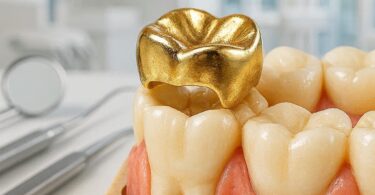
- Full Cast Crown (Base Metal): A crown made entirely from non-precious metals like nickel-chromium or cobalt-chromium. These appear silver or grey in color. They are incredibly strong and resistant to wear.
- Porcelain-Fused-to-Metal (PFM): This crown has a metal inner structure (which looks silver) and a porcelain outer layer that matches your natural tooth color. From a distance, it looks like a normal tooth. But if you look closely or if the gum recedes, you might see a dark or silver line at the gum margin.
Important note: Pure silver is rarely used for full crowns because it is too soft. So when we talk about the “dental code for a silver crown,” we are really talking about codes for metal-based crowns.
Why Would a Dentist Recommend a Metal Crown?
Metal crowns (silver-looking) are not as popular as they were twenty years ago, but they remain the gold standard for certain situations. Here is why:
- Durability: Metal crowns rarely chip or break. They can withstand heavy biting forces.
- Minimal Tooth Removal: Because metal is strong, the dentist does not need to remove as much natural tooth structure compared to all-ceramic crowns.
- Wear on Opposing Teeth: Metal is gentle on the teeth you bite against. Ceramic can sometimes wear down natural enamel.
- Longevity: A well-made metal crown can last 20 to 40 years or more.
The main downside is obvious: appearance. No one wants a shiny silver tooth in the front of their mouth. For this reason, metal crowns are almost always used on posterior teeth (molars and premolars) where aesthetics are less critical.
The Official Dental Codes for Silver Crowns (CDT Codes)
In the United States, all dentists use the Current Dental Terminology (CDT) code set, published by the American Dental Association (ADA). There is no single code called “silver crown.” Instead, there are several codes depending on the specific type of metal crown and how it is fabricated.
Here are the three primary codes you will encounter:
Wait—where is the porcelain-fused-to-metal code? Great question.
For a silver-colored metal crown that has porcelain baked on top, the code changes. That is not a “full cast” crown. That is a different procedure entirely.
The PFM Code That Looks Like Silver Underneath
If your crown looks like a normal tooth but has a silver metal lining underneath, the dentist will use one of these codes:
- D2750 (if high noble metal under porcelain) – rare.
- D2751 (if base metal under porcelain) – very common for PFM crowns.
- D2752 (if noble metal under porcelain).
But for a purely silver-colored crown with no tooth-colored porcelain, the code is almost always D2751 – full cast predominantly base metal.
Let us focus on D2751, because that is the most common “silver crown” code in everyday dental practice.
Deep Dive: Code D2751 – Full Cast Predominantly Base Metal Crown
This is the code you will see on your dental treatment plan if you are getting a full metal crown that looks silver or grey.
What Does “Predominantly Base Metal” Mean?
The ADA defines a base metal crown as one where the weight of the metal is less than 25% noble metal (gold, platinum, palladium). In simple terms, the crown is made mostly of common, non-precious metals like:
- Nickel
- Chromium
- Cobalt
These metals are strong, corrosion-resistant, and much less expensive than gold.
When Is D2751 the Right Choice?
Dentists typically recommend this code (and this type of crown) in the following scenarios:
- You need a crown on a lower molar that takes the full force of chewing.
- You grind or clench your teeth (bruxism). Metal will not crack.
- You do not have enough vertical space for a porcelain crown. Metal can be made thinner.
- You are on a budget. Base metal crowns are significantly cheaper than gold or all-ceramic crowns.
- You have a metal allergy? Be careful. Some people are allergic to nickel. If you have sensitive skin or a known nickel allergy, tell your dentist before they use D2751.
What the Procedure Looks Like for D2751
The process is straightforward. Most patients complete it in two visits.
First visit: Preparation
- The dentist numbs the tooth.
- They shape the tooth (reduce it) to make room for the crown.
- They take an impression (digital or physical goo).
- They place a temporary crown (often plastic or acrylic).
- The impression is sent to a dental lab.
Second visit: Placement (usually 2-3 weeks later)
- The dentist removes the temporary crown.
- They try in the new silver metal crown.
- They check the bite and the fit.
- Once everything is perfect, they cement the crown permanently.
The total time in the chair is about 90 minutes across both visits.
Deep Dive: Code D2750 vs D2752 vs D2751 (Comparison)
To help you really see the difference, here is a detailed comparison table. This will be useful when you look at an insurance statement.
| Feature | D2750 (High Noble) | D2751 (Base Metal) | D2752 (Noble Metal) |
|---|---|---|---|
| Metal Composition | ≥ 60% noble (gold, platinum, palladium) | < 25% noble (mostly nickel/chromium) | 25% – 59% noble (mixed) |
| Typical Color | Yellow-gold | Silver or grey | Silver-grey or pale yellow |
| Cost to Patient (Average) | $1,200 – $2,500+ | $700 – $1,200 | $900 – $1,600 |
| Insurance Coverage | Usually covered at 50% | Often covered at 50-80% | Covered at 50% |
| Biocompatibility | Excellent. Very few allergies. | Potential nickel allergy risk. | Good. Moderate allergy risk. |
| Durability | Excellent (30+ years) | Excellent (30+ years) | Excellent (25+ years) |
| Common Nickname | “Gold crown” | “Silver crown” | “Semiprecious crown” |
Reader Note: If your dentist writes “D2751” on your treatment plan, you are getting a silver-colored, base metal crown. Do not let them charge you for D2750 (gold) and give you D2751. That is insurance fraud. Always ask to see the code before the procedure.
Insurance and the Dental Code for a Silver Crown
Let us talk about money. This is usually the most stressful part for patients.
Most dental insurance plans follow a basic structure: they cover 100% of preventive care (cleanings, exams), 80% of basic procedures (fillings, extractions), and 50% of major procedures (crowns, bridges, dentures).
A silver crown using code D2751 is considered a major restorative procedure.
What This Means for Your Wallet
If your crown costs $1,000 (just as an example):
- You pay your deductible (usually $50 – $100 per year).
- Insurance pays 50% of the allowed amount ($500).
- You pay the remaining 50% ($500).
But here is the catch. Insurance companies have a UCR (Usual, Customary, and Reasonable) fee. If your dentist charges $1,200 for D2751 but the insurance UCR is only $900, the insurance will pay 50% of $900 ($450). You are responsible for the difference ($1,200 – $450 = $750).
Tips to Maximize Your Insurance Benefits for D2751
- Ask for a pre-treatment estimate. Before your dentist does the work, have them submit the code (D2751) to your insurance. The insurance will send back a document saying exactly what they will pay. This is free and takes about two weeks.
- Check your waiting period. Many plans have a 12-month waiting period for major services like crowns. If you just got the insurance, you might have to pay 100% out of pocket.
- Look for the “missing tooth clause.” Some plans will not pay for a crown on a tooth that was missing before the policy started. Read your fine print.
- Consider timing. If you need two crowns, do one in December and one in January. That way you use two years of benefits.
Important: Never choose a cheaper crown material just because insurance covers more of it. If your dentist recommends D2751 (base metal) but your insurance covers D2752 (noble metal) better, ask if the dentist can use noble metal. The difference in your out-of-pocket cost might be small, but the quality difference for you is significant.
Alternatives to the Silver Crown (Code D2751)
Maybe you do not want a silver crown. Maybe you want something that looks natural. Or maybe you have a metal allergy. Let us look at the alternatives and their codes.
1. All-Ceramic Crown (D2740)
- Code: D2740
- Material: Lithium disilicate (E.max) or zirconia
- Appearance: Matches natural tooth perfectly. No metal.
- Cost: $1,000 – $2,000
- Pros: Beautiful, metal-free, biocompatible.
- Cons: Can wear down opposing teeth if not polished correctly. Slightly less durable than metal for heavy grinders.
2. Porcelain-Fused-to-Metal (D2751 or D2752 with porcelain)
- Code: Same as above but with a note that it is PFM. Usually dentists use D2751 for the base metal version.
- Appearance: Looks like a tooth, but may show a dark line at the gum over time.
- Cost: $800 – $1,500
- Pros: Strong, good aesthetics for back teeth.
- Cons: The porcelain can chip. The metal can show if gums recede.
3. 3D Printed Resin Crown (D2794)
- Code: D2794 (Crown – full cast – titanium) or D2712 (for resin)
- Note: This is less common. Some same-day crowns fall here.
- Pros: Fast, one appointment.
- Cons: Not as durable as metal for long-term.
Which One Should You Choose?
Here is a simple decision guide:
How to Read Your Dental Treatment Plan for a Silver Crown
Dental offices are required by law (in most states) to provide a written treatment plan before starting any work. Here is how to read it like a pro.
What a Good Treatment Plan Includes
A proper treatment plan for a silver crown (D2751) should list:
- The tooth number (ADA Universal numbering system – 1 to 32 for adults).
- The CDT code (D2751, D2750, or D2752).
- The full description (“Crown – full cast – predominantly base metal”).
- The fee (the total the dentist charges).
- Your insurance estimate (what they think insurance will pay).
- Your estimated out-of-pocket cost.
Red Flags to Watch For
- Bundling codes incorrectly. Some offices try to bill D2950 (core buildup) separately when it is not needed. A core buildup is only necessary if the tooth is severely broken down.
- Code D2920 (re-cement crown) – this is for fixing an existing crown, not placing a new one.
- No code at all. If the treatment plan just says “crown” with no CDT code, ask for the code. You cannot verify the price without it.
Example of a Realistic Treatment Plan Line
Tooth #19 (Lower Left First Molar)
CDT Code: D2751
Description: Crown – full cast – predominantly base metal (silver color)
Dentist Fee: $1,150.00
Insurance Allowable: $950.00
Insurance Pays (50%): $475.00
Your Copay: $675.00
Notice that your copay is not simply 50% of $1,150 ($575). It is higher because the dentist charges more than the insurance allows. This is normal. Do not panic. But do ask if the dentist will accept the insurance allowable as payment in full. Some will. Some will not.
Common Questions Patients Ask About Silver Crown Codes
Let me answer the questions I hear most often from real patients.
“My dentist said D2751. Is that a good crown?”
Yes. D2751 (base metal crown) is an excellent, highly durable crown for back teeth. It is not cheap or low-quality. It is simply the non-precious metal version. Many dentists prefer it for molars because it will outlast porcelain crowns by years.
“Will my insurance deny D2751?”
Rarely. But some insurance plans require a “narrative” from the dentist explaining why a metal crown is necessary instead of a porcelain one. This is usually just paperwork. Your dentist’s office should handle it.
“Can I request D2752 instead of D2751?”
Absolutely. You are the patient. You have the right to ask for a different material. However, the dentist may charge you the difference. D2752 (noble metal) costs more than D2751 (base metal). If you want a crown with some gold content for better biocompatibility, ask for D2752.
“I saw code D2799 on my bill. What is that?”
D2799 is a temporary crown. It is not a permanent silver crown. If you see D2799, that is just the interim plastic crown. The final crown will have a different code (D2751, D2752, or D2740). Make sure you are not being charged for D2799 as if it were the final restoration.
“What about pediatric silver crowns? Is that the same code?”
No. For children, a stainless steel crown (SSC) is often called a “silver crown.” But the code is completely different.
- D2930 – Prefabricated stainless steel crown – primary tooth
- D2931 – Prefabricated stainless steel crown – permanent tooth
These are not the same as D2751. A stainless steel crown is pre-made like a little silver cap. A D2751 crown is custom-made for your tooth in a lab. The price and procedure are very different.
The Cost Breakdown: What You Actually Pay for D2751
Let me give you real numbers. These are averages based on 2025-2026 data from the ADA and private dental fee surveys. Your exact cost will vary by city and by dentist.
How to Save Money on a Silver Crown
- Dental schools. A dental school will charge 50-70% less. A D2751 crown might cost $400 total. The procedure takes longer, but the quality is supervised by experts.
- Discount dental plans. These are not insurance. You pay an annual fee ($100-$150) and get discounted rates. A $1,200 crown might cost $700.
- In-office membership plans. Many dentists now offer their own “membership” for uninsured patients. For $300-$400 per year, you get free exams and 20-30% off procedures like crowns.
- Talk to the office manager. If you pay in full with cash (or credit card), ask for a 5-10% discount. Many offices will say yes because they avoid insurance paperwork.
What the ADA Says About Code D2751
The American Dental Association updates the CDT codes every year. For D2751, the official definition has remained stable for over a decade.
Official ADA Definition (paraphrased for clarity):
A crown fabricated by a dental laboratory from a metal alloy that contains less than 25% noble metal (gold, platinum, palladium) by weight. The crown is cemented onto a prepared natural tooth.
The ADA also clarifies that D2751 includes:
- All laboratory fees (the dentist cannot bill you extra for the lab separately unless disclosed).
- All chairside adjustments.
- The final cementation.
What is not included in D2751:
- Core buildup (D2950)
- Pin retention (D2952, D2953)
- Gum treatment around the tooth (D4249, etc.)
- Sedation or anesthesia
If your dentist tries to bill D2751 plus a separate “lab fee,” ask why. The code is intended to be all-inclusive for the crown itself.
Real Patient Scenarios Using Code D2751
Let me walk you through three common situations so you can see how this code works in real life.
Scenario 1: The Grinder
Patient: Mark, 45 years old. He grinds his teeth at night. He has cracked two porcelain crowns in the past five years.
Treatment: His dentist recommends D2751 (base metal silver crown) on tooth #30 (lower right first molar).
Why: Porcelain would crack again. Metal will not. Mark does not care about appearance because the tooth is in the back.
Cost: $1,100. Insurance pays 50% after a $500 deductible (already met this year). Mark pays $550.
Outcome: The crown lasts 18 years. Mark later gets a nightguard to protect the other teeth.
Scenario 2: The Budget-Conscious Patient
Patient: Lisa, 30 years old. No dental insurance. She needs a crown on tooth #19.
Treatment: The dentist offers three options: D2740 (ceramic – $1,400), D2751 PFM ($1,100), and D2751 full metal silver ($900). Lisa chooses full metal silver.
Why: She is paying cash. The $500 savings matters more than the appearance of a tooth no one sees.
Cost: $900 total. She pays in full and receives a 5% cash discount. Final cost: $855.
Scenario 3: The Allergy Concern
Patient: David, 52 years old. He has a known nickel allergy (he breaks out from cheap watch bands and belt buckles).
Treatment: His dentist recommends a crown on tooth #31. The dentist first suggests D2751 (base metal, contains nickel). David says no.
Alternative: The dentist uses D2752 (noble metal – 40% gold, 60% base metals, but no nickel). It costs $350 more.
Outcome: David pays the extra. No allergic reaction. The crown lasts 22 years.
Takeaway: Always disclose allergies before the dentist picks a code.
How to Verify Your Dentist Used the Correct Code
After your silver crown is placed, you will receive an insurance explanation of benefits (EOB) and a final bill. Here is how to check for errors.
Step 1: Match the Code to the Tooth
Your EOB should list the tooth number and the code. Example: “Tooth #19 – D2751.” If it says D2740 (ceramic) but you got a silver crown, that is a problem.
Step 2: Check the Date of Service
Crowns are a two-visit procedure. The code is billed on the date of the final cementation (the second visit). Not the first visit. If you see D2751 billed on the preparation date, ask the office to correct it.
Step 3: Look for Duplicate Codes
You cannot bill two permanent crowns on the same tooth on the same day. If you see D2751 and D2752 on the same tooth, that is an error.
Step 4: Verify the “Surface” or “Tooth Number” is Correct
Some offices accidentally bill the wrong tooth. Check that the tooth number matches the tooth you actually had worked on.
What to Do If You Find an Error
Call the dental office first. Do not call the insurance company immediately. Most errors are simple typos. The office can resubmit the claim with the correct code within 30-90 days. If the office refuses to correct a clear error, then you call your state dental board and your insurance fraud hotline.
The Lifespan and Maintenance of a D2751 Silver Crown
You made it this far. You chose the code. You got the crown. Now, how do you make it last?
A D2751 base metal crown is incredibly tough. But the tooth underneath is still vulnerable to decay.
Realistic Lifespan Expectations
- Well-maintained (brushing, flossing, regular checkups): 25 – 40+ years
- Average maintenance: 15 – 25 years
- Poor maintenance (no flossing around the crown): 5 – 10 years (decay will form at the margin)
Why Silver Crowns Fail
The crown itself almost never breaks. The failure is almost always recurrent decay at the margin where the crown meets the tooth. Bacteria get in, eat the tooth structure underneath, and the crown loosens.
How to Extend the Life of Your D2751 Crown
- Floss around the crown. Use a floss threader or superfloss. This is non-negotiable.
- Avoid sticky candies. Caramel, toffee, and taffy can pull the crown off.
- Do not use your teeth as tools. No opening bottles or tearing packages.
- Get regular X-rays. Your dentist should take a bitewing X-ray every 12-24 months to check the margin under the crown.
- Wear a nightguard if you grind. Even a metal crown can wear down opposing teeth if you grind aggressively. Protect both arches.
Can a D2751 Crown Be Repaired?
Not really. If a full cast metal crown develops a hole or a crack (rare), the entire crown needs to be replaced. You cannot “patch” metal like you can patch a filling. The dentist will cut the old crown off, evaluate the tooth, and make a new crown. That means paying for D2751 again.
This is why prevention (flossing) is so critical.
State-by-State Variations in Dental Coding
Most people do not realize that dental coding is national (CDT codes are the same everywhere in the US). However, insurance reimbursement and state regulations vary.
States with “Consumer Protection” Laws for Dental Billing
Some states have specific laws requiring dentists to provide the CDT code before treatment. These include:
- California (SB 1008)
- New York
- Texas
- Florida
In these states, if your dentist refuses to give you the code D2751 before starting the crown, they may be violating state law.
States with Dental Loss Ratio Laws
A few states (like Massachusetts and Maine) require dental insurance companies to spend a minimum percentage of premium dollars on actual patient care (not administrative costs). This does not change the code, but it can mean better coverage for D2751.
What About Canada and the UK?
If you are reading from outside the US, the codes are different.
- Canada: Uses CDT codes similar to the US, but some provinces have their own fee guides. Code D2751 is used, but reimbursement varies by province.
- United Kingdom: Uses NHS dental codes (Band 2 or Band 3 for crowns). No direct equivalent to D2751. Private dentists in the UK may use the US codes for billing international insurance.
For the purpose of this guide, we focus on the US CDT system.
Frequently Asked Questions (FAQ)
1. Is D2751 the same as a stainless steel crown?
No. Stainless steel crowns (SSCs) are codes D2930 (baby teeth) and D2931 (adult temporary). D2751 is a custom-made, full cast crown from a dental lab. SSCs are prefabricated and much less expensive.
2. Does insurance always cover D2751 at 50%?
Most PPO plans cover major services (crowns) at 50%. But HMO plans may require a copay of $200-$400 regardless of the code. Always check your specific plan.
3. Can I get a silver crown on a front tooth?
Technically, yes. But no reputable dentist would recommend it for aesthetic reasons. For front teeth, codes D2740 (ceramic) or D2751 PFM (porcelain fused to metal) are appropriate.
4. How long does a D2751 crown take to make?
The dental lab typically takes 2-3 weeks. Some offices have in-house milling machines, but those are usually for ceramic crowns, not full cast metal.
5. What is the difference between D2751 and D2761?
D2761 is a porcelain-fused-to-metal crown for a primary (baby) tooth. D2751 is for permanent adult teeth. They are not interchangeable.
6. My EOB says “D2751 – downgraded.” What does that mean?
This happens when your dentist bills for a more expensive crown (like D2750 gold) but your insurance only covers the base metal version (D2751). The insurance “downgrades” the code and pays the lower amount. You are responsible for the difference. This is legal but frustrating. Ask your dentist if they will accept the downgraded amount as payment in full.
7. Is there a warranty on D2751 crowns?
Some dentists offer a 1-5 year warranty on their work. Others do not. Ask before the procedure. The crown material itself (the metal) rarely fails, but the cement can fail. Most offices will re-cement a crown for free within the first year.
8. Can I eat normally after getting a D2751 crown?
Yes. Once the anesthesia wears off, you can eat normally. Unlike ceramic crowns, metal crowns are not at risk of cracking from biting pressure. However, avoid extremely sticky foods for the first 24 hours to let the cement fully set.
Additional Resources
For further reading and verification, I recommend these trusted sources:
- American Dental Association (ADA) – CDT Code Book: The official source for all dental codes. You can purchase the current code book from the ADA store.
- National Association of Dental Plans (NADP): Offers consumer guides to understanding dental insurance and coding.
- Your State Dental Board: If you suspect fraudulent billing (e.g., being billed for D2750 but receiving D2751), your state dental board can investigate.
Link to a helpful external resource:
ADA.org/en/patient-resources/dental-procedures/crowns – Official patient guide to dental crowns from the American Dental Association.
Conclusion (Three Lines)
The dental code for a silver crown is most commonly D2751 (full cast – predominantly base metal), a durable, affordable option for back teeth. Understanding this code helps you verify insurance coverage, avoid billing errors, and make informed decisions about your dental care. Always ask for the code in writing before treatment, and remember that a metal crown’s longevity depends more on your home care (flossing!) than on the metal itself.
Disclaimer: This article is for informational purposes only and does not constitute medical or dental advice, nor insurance advice. Dental codes, insurance policies, and fees vary by location, provider, and individual plan. Always consult with your own dentist and insurance carrier before undergoing any procedure. The author is not responsible for any errors, omissions, or adverse outcomes resulting from the use of this information.
Author: Jessica M. Walker, Medical-Dental Billing Specialist
Date of Publication: April 18, 2026