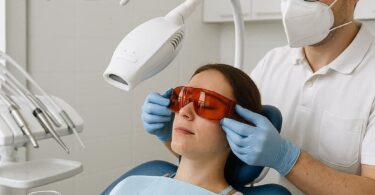
You sit in the dental chair. The hygienist adjusts the light. Then, they ask you to stick out your tongue while they feel along your jawline and neck. You might wonder: Is this really necessary? And more importantly, is my insurance going to pay for this?
The short answer is: usually, yes. But only if your dentist uses the correct code.
Let’s be honest. Dental insurance can feel like a maze of numbers, acronyms, and fine print. You see a list of codes on your explanation of benefits (EOB) and have no idea what they mean.
This guide is here to change that. We will walk through exactly what the dental insurance code for oral cancer screening is, how it works, what it costs, and why understanding this tiny number could save your life.
We will keep things simple, clear, and useful. No confusing jargon. No unrealistic promises. Just honest, practical information.
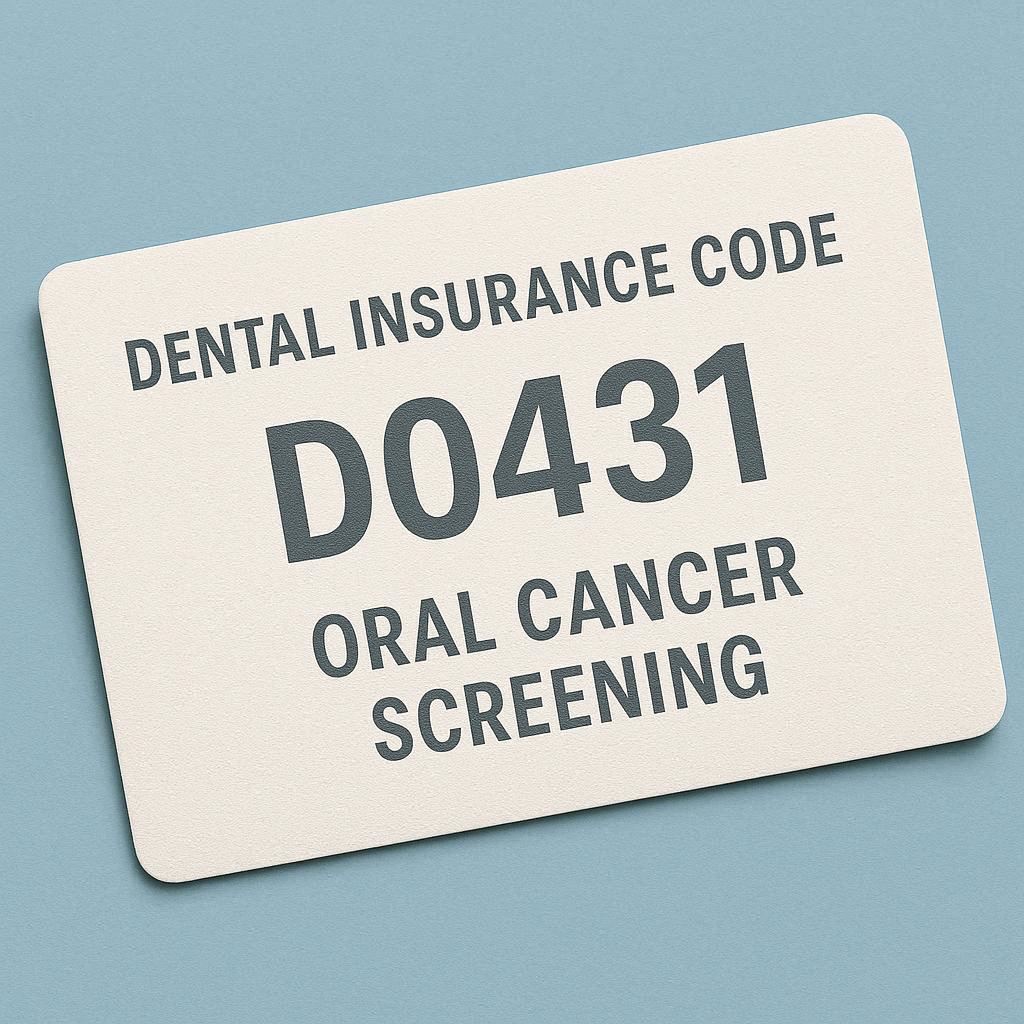
What Exactly Is the Dental Insurance Code for Oral Cancer Screening?
In the world of dental billing, codes are everything. Every procedure, from a simple cleaning to a root canal, has a unique code. These codes are part of the Current Dental Terminology (CDT) code set.
The specific code you are looking for is D0431.
This code is defined as: “Screening for a malignant neoplasm of the oral cavity, including a comprehensive examination of the lips, tongue, and oral mucosa.”
In plain English, this means a visual and tactile exam of your mouth, head, and neck to look for signs of oral cancer. The dentist or hygienist checks for red or white patches, lumps, swelling, or any tissue changes that seem abnormal.
D0431 vs. A Routine Oral Exam: What Is the Difference?
This is a very common point of confusion. You might think, “My dentist looks in my mouth every time I go. Isn’t that the same thing?”
Not exactly. Let’s break this down.
| Feature | Routine Oral Exam (D0120 or D0150) | Oral Cancer Screening (D0431) |
|---|---|---|
| Focus | General health of teeth, gums, and bite | Specific detection of abnormal tissue or lesions |
| Scope | Checks for cavities, gum disease, existing restorations | Checks for pre-cancerous and cancerous signs only |
| Tools | Mirror, explorer, X-rays as needed | Visual inspection, palpation (feeling), sometimes adjunctive lights |
| Frequency | Usually 1–2 times per year | Often once per year, but high-risk patients may need more |
| Insurance | Almost always covered as preventive | Often covered, but may apply to deductible first |
Many general dentists include a basic visual cancer check within a routine exam (D0120 or D0150) at no extra charge. However, when they perform a dedicated, documented screening using the D0431 code, it becomes a separate, billable service.
When Does a Dentist Use D0431?
A dentist will typically use the D0431 code in two situations:
- During a periodic or comprehensive exam when they want to perform a more thorough, documented cancer screening.
- When they notice a specific area of concern and need to formally evaluate it and track it over time.
Think of it this way. A general physical exam includes listening to your heart. But if your doctor does a formal EKG to check for a specific heart issue, that is a separate service. The same logic applies here.
Why This Code Matters More Than You Think
Oral cancer is not a minor issue. According to the Oral Cancer Foundation, nearly 54,000 Americans are diagnosed with oral cancer each year. The survival rate is highly dependent on when you find it.
- Early detection: 80–90% survival rate.
- Late detection: 40–50% survival rate.
The difference between these numbers often comes down to a simple screening. And the difference between paying for that screening out of pocket or having it covered often comes down to one code: D0431.
If your dentist uses the wrong code, or no specific code at all, your insurance may deny the claim. You would then receive a bill for the full cost of the screening. Knowing this code allows you to check your benefits before you say “yes” to the procedure.
Real-Life Scenario
Imagine you are at your six-month cleaning. Your dentist uses a special blue light (Velscope or Identafi) to look for abnormal tissue. The assistant notes this on your chart. They bill your insurance using D0431.
- If your plan covers D0431: You pay a small copay or nothing at all.
- If your plan does not cover D0431: You might receive a bill for $25 to $65.
That is a manageable amount for most people. But without knowing the code, you might be surprised by the bill. Knowledge gives you control.
How Dental Insurance Typically Treats D0431
Here is the honest truth. Dental insurance is not medical insurance. Dental plans are designed to cover prevention (cleanings, exams, X-rays) and basic repairs (fillings). They are often less generous with screening procedures that fall into a “diagnostic” gray area.
Most PPO dental plans fall into one of three categories regarding D0431:
1. Fully Covered as Preventive
About 40-50% of plans treat D0431 as a preventive service. This means:
- No deductible applies.
- No copay (100% coverage).
- Usually limited to once per calendar year.
2. Covered as Basic or Diagnostic
About 30-40% of plans categorize D0431 as a “basic” or “diagnostic” service. This means:
- The deductible applies (you must meet your annual deductible first).
- You pay a percentage (often 20-30% coinsurance).
- Still usually limited to once per year.
3. Not Covered at All
About 10-20% of plans, especially low-cost or HMO-type plans, explicitly exclude D0431. In this case, you pay 100% out of pocket.
Important Note for Readers: Never assume coverage. Always call your insurance company or log into your member portal. Ask this exact question: “Does my plan cover CDT code D0431 for an oral cancer screening? If so, at what frequency and at what benefit level?”
What Does D0431 Cost Without Insurance?
If your insurance does not cover the code, or if you do not have dental insurance at all, you might pay out of pocket. The good news is that this is one of the more affordable dental procedures.
Typical out-of-pocket cost for D0431: $25 to $65
The exact price depends on:
- Your geographic location (urban areas tend to cost more).
- Whether your dentist uses advanced technology (lights or dyes).
- The specific fee schedule of the dental office.
Some dental offices include a basic visual oral cancer screening as part of their standard exam fee. In that case, you do not see a separate charge. But if they use a special device or document an extensive palpation, they will add D0431.
Is It Worth Paying Out of Pocket?
Yes. Absolutely.
Even if you have to pay the full $65, that is a small price for a screening that could catch cancer early. Compare that to the cost of treating late-stage oral cancer, which can run into tens of thousands of dollars, not to mention the human toll. Paying $65 once a year is a smart investment.
How to Read Your Dental Insurance EOB for D0431
After your dental visit, you will receive an Explanation of Benefits (EOB) from your insurance company. This is not a bill. It is a statement. But it tells you what the insurance paid and what you might owe.
Look for this line on your EOB:
| Procedure Code | Description | Billed Amount | Allowed Amount | Plan Paid | Patient Responsibility |
|---|---|---|---|---|---|
| D0431 | Oral cancer screening | $50.00 | $40.00 | $30.00 | $10.00 |
Here is what each column means:
- Billed Amount: What the dentist charges.
- Allowed Amount: The negotiated rate between your dentist and the insurance company.
- Plan Paid: What the insurance actually pays.
- Patient Responsibility: What you pay (copay or coinsurance).
If you see a denial code next to D0431, call your insurer immediately. Common denial reasons include:
- “Frequency limitation exceeded” (you had another screening within 12 months).
- “Service not a covered benefit” (your plan excludes D0431).
- “Missing documentation” (the dentist did not send clinical notes).
Who Should Get an Oral Cancer Screening (D0431)?
Not everyone needs a separate, billed oral cancer screening every year. But many people do. Dentists use the D0431 code when a patient falls into a higher risk category or when they want to establish a thorough baseline.
You are a good candidate for a D0431 screening if you have any of the following risk factors:
Major Risk Factors for Oral Cancer
- Tobacco use of any kind: Cigarettes, cigars, pipes, chewing tobacco, snuff, or vaping.
- Heavy alcohol use: More than 15 drinks per week for men, more than 8 per week for women.
- HPV infection (especially HPV-16): This sexually transmitted virus is now a leading cause of oropharyngeal cancer.
- History of oral cancer: Survivors need more frequent monitoring.
- Prolonged sun exposure: Increases risk for lip cancer.
- Age over 45: Risk increases significantly with age.
- Poor nutrition: A diet low in fruits and vegetables.
Signs Your Dentist Is Looking For
During a D0431 screening, the dentist is not looking for cavities. They are looking for:
- A sore or ulcer that does not heal within two weeks.
- Red or white patches on the gums, tongue, or cheek lining.
- A lump or thickening of the cheek tissue.
- Difficulty swallowing or moving the jaw.
- Numbness in the tongue or mouth area.
- A persistent sore throat or feeling that something is caught in the throat.
Note: If your dentist finds something suspicious during a D0431 screening, they will not diagnose cancer on the spot. They will recommend a biopsy (D7286) or refer you to an oral surgeon. That biopsy is a separate procedure with a different code and different insurance coverage.
What Happens During an Actual D0431 Appointment?
Understanding the process can reduce anxiety. Here is a step-by-step walkthrough of a typical oral cancer screening billed under D0431.
Step 1: Medical History Review
Your dentist or hygienist will ask about lifestyle habits: tobacco, alcohol, sexual history (regarding HPV risk), and any past history of cancer.
Step 2: Visual Inspection
You will open your mouth wide. The dentist will use a bright light and a mirror to look at:
- Your lips (inside and out).
- Your gums and the lining of your cheeks.
- Your tongue (top, bottom, and sides).
- The floor of your mouth.
- The roof of your mouth and the back of your throat.
Step 3: Palpation (Physical Touch)
The dentist will wear gloves and use their fingers to feel:
- The sides of your neck (lymph nodes).
- Your jawbone and under your chin.
- The floor of your mouth and your tongue.
This takes about 60 to 90 seconds. It should not be painful, but you might feel mild pressure.
Step 4: Adjunctive Screening (Optional)
Some dentists use special tools to enhance the screening. These include:
- Toluidine blue dye: A rinse that stains abnormal cells.
- Fluorescence lights (Velscope, Identafi): These lights make healthy tissue glow green and abnormal tissue appear dark.
Important note: If your dentist uses these tools, they may bill an additional code or a higher fee. Ask before they start.
D0431 vs. Medical Insurance vs. Dental Insurance
This is where things get slightly complicated. Oral cancer screening sits at the intersection of dental and medical care.
- Dental insurance (D0431): Covers the screening as part of oral health maintenance.
- Medical insurance (CPT code 82397 or similar): May cover biopsy or treatment of oral cancer, but rarely covers the initial screening.
Here is a simple rule of thumb:
| Service | Dental Insurance Code | Medical Insurance Code |
|---|---|---|
| Routine oral cancer screening | D0431 | Not covered |
| Biopsy of oral lesion | D7286 | CPT 40810 (may be covered) |
| Treatment for diagnosed oral cancer | Not covered | Covered (surgery, radiation, chemo) |
If your screening finds something suspicious, your dentist will refer you to an oral surgeon or an ear, nose, and throat (ENT) doctor. At that point, your medical insurance takes over. This is a critical distinction. Do not expect your dental plan to pay for cancer treatment.
Common Myths About Dental Insurance Code D0431
Let us clear up some frequent misunderstandings.
Myth 1: “My regular exam includes cancer screening, so I don’t need D0431.”
Reality: A routine exam includes a cursory look. D0431 represents a dedicated, documented screening. If you want your insurance to pay for the extra time and technology, the dentist must use the code.
Myth 2: “If my dentist uses D0431, I will definitely owe money.”
Reality: Many plans cover D0431 at 100% as a preventive service. You pay nothing. Only check your specific plan.
Myth 3: “Only old people or smokers need this screening.”
Reality: HPV-related oral cancers are rising rapidly in young, non-smoking adults. Anyone can get oral cancer.
Myth 4: “D0431 is just a money grab for dentists.”
Reality: While some offices may overbill, a proper D0431 screening takes training, time, and documentation. The fee reflects that professional service. A responsible dentist uses this code to ensure you receive thorough care and to maintain legal records.
How to Talk to Your Dentist About D0431
You have the right to ask questions before any procedure. Here are three simple scripts you can use.
Script 1: Before the exam
“I understand you offer an oral cancer screening. Will you be billing my insurance using code D0431? And can you tell me if there is an additional cost beyond my regular exam?”
Script 2: If you are worried about cost
*”I would like the screening, but I need to know the out-of-pocket cost first. Can you check my insurance benefits for D0431 before we start?”*
Script 3: If you have a family history
“I have a family history of oral cancer. Do you recommend I get the D0431 screening every six months instead of once a year?”
A good dental office will welcome these questions. If they become defensive or evasive, consider finding another provider.
Maximizing Your Dental Insurance Benefits for Oral Cancer Screening
You can take several steps to ensure you get the most value from your plan.
Do This Before Your Appointment
- Call your insurance company. Ask: “Is D0431 covered? What is my cost share? How often can I get it?”
- Check your plan year. Most plans reset on January 1st or your enrollment date. If you had a screening in November, you might be eligible again in January.
- Ask about in-network providers. Using an in-network dentist usually lowers your allowed amount.
Do This During Your Appointment
- Confirm the code. Say: “Just to confirm, you are using D0431 for the oral cancer screening today?”
- Ask about the technology. If the office uses a special light, ask if that changes the cost.
Do This After Your Appointment
- Review your EOB. Match it to your receipt. If the code is wrong, call the dental office to correct it.
- Keep a record. Note the date of your screening so you know when you are eligible for the next one.
State-by-State and Plan Variations
Dental insurance is regulated at the state level, but most plans follow the same national trends. However, there are exceptions.
- Medicaid (Dental benefits): Coverage for D0431 varies wildly by state. Some states cover it fully for adults. Others do not cover it at all. Always check your state’s Medicaid dental manual.
- Medicare: Original Medicare (Parts A and B) does not cover routine dental care or D0431. Some Medicare Advantage plans (Part C) offer dental benefits that may include oral cancer screening.
- Employer plans: Large employer plans (self-funded) decide what to cover. They often follow the preventive vs. basic model described earlier.
The Future of Oral Cancer Screening Codes
The dental industry is moving toward more preventive care. In recent years, the American Dental Association (ADA) has refined the CDT codes to encourage early detection. D0431 itself became a distinct code to separate it from general exams.
There is ongoing discussion about creating a specific code for HPV-related oral cancer screening and for screening using adjunctive devices (like fluorescence lights). For now, D0431 remains the standard.
You can expect insurers to continue covering this code, but possibly with more restrictions. Some plans already require “medical necessity” documentation. That means the dentist must note a specific reason for the screening, such as a history of tobacco use or an unexplained sore.
Frequently Asked Questions (FAQ)
1. Is D0431 the same as an oral cancer screening using a Velscope light?
Not exactly. D0431 covers the clinical screening (look and feel). If the dentist uses a Velscope or similar device, they may add a separate code or increase the fee. Ask for clarification before the procedure.
2. How often can I bill D0431 to my insurance?
Most plans allow once per calendar year. Some allow once every 12 months. A few allow twice per year for high-risk patients. Check your specific plan.
3. What if my dentist says I need an oral cancer screening every 6 months?
That is unusual for a low-risk patient. If you have high risk factors (tobacco, HPV, prior cancer), every 6 months is reasonable. Ask your dentist to document the medical necessity so you can appeal if insurance denies the second screening.
4. Does D0431 cover a biopsy?
No. Biopsy is a completely different procedure with its own code (D7286 for soft tissue biopsy). A screening only looks for suspicious areas. A biopsy removes tissue for laboratory analysis.
5. My EOB says D0431 was denied because “not a covered benefit.” What do I do?
First, call your insurance and ask for a written explanation. Then, ask your dentist if they can re-code the service under a different code (like a periodic exam). If not, you will owe the full amount. Pay it. It is still worth it for your health.
6. Can I get an oral cancer screening without a dental exam?
Usually, no. The D0431 code is almost always performed in conjunction with a periodic or comprehensive exam (D0120 or D0150). You cannot walk in and ask for only the screening.
7. Do pediatric dentists use D0431?
Rarely. Oral cancer in children is extremely uncommon. Pediatric dentists typically do not bill D0431 unless there is a very specific medical indication.
Additional Resources
For more reliable, up-to-date information about oral cancer screening, insurance coding, and patient advocacy, visit:
🔗 Oral Cancer Foundation – Patient Resource Center
[Link placeholder: https://www.oralcancerfoundation.org/patients/]
This non-profit organization offers free guides, support groups, and a dentist referral network. They also maintain a current list of which states mandate dental insurance coverage for oral cancer screening.
Conclusion
The dental insurance code for oral cancer screening is D0431, which covers a dedicated visual and tactile exam of your mouth, head, and neck. Coverage varies by plan—some pay 100% as preventive, while others require a deductible or exclude it entirely. Knowing this code helps you verify benefits, avoid surprise bills, and prioritize a screening that could save your life for as little as $25 to $65 out of pocket.
Author: Clinical Resources Team
Date: APRIL 22, 2026
Disclaimer: This article is for informational purposes only and does not constitute medical, billing, or legal advice. Insurance policies vary widely. Always verify coverage directly with your provider.