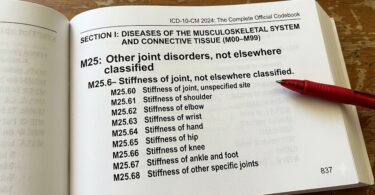
If you have ever looked up “dry eye” in a coding manual, you know things can get confusing quickly. Xerophthalmia is not your everyday dry eye. This is a more serious condition linked to vitamin A deficiency. Getting the right ICD 10 code for xerophthalmia matters for reimbursement, patient records, and treatment plans.
In this guide, we will walk through everything you need to know. You will learn the specific codes, when to use them, and how to avoid common mistakes. Let us make this simple and practical.
What Is Xerophthalmia? A Quick Clinical Overview
Before we jump into codes, let us understand the condition itself. Xerophthalmia refers to a progressive eye disease caused by vitamin A deficiency. The word comes from Greek: “xeros” (dry) and “ophthalmia” (eye). But it is more than just dryness.
This condition starts with night blindness. Then it progresses to dryness of the conjunctiva and cornea. In severe cases, it can lead to corneal ulcers and even blindness. You will find xerophthalmia more common in developing countries, but it can appear anywhere with severe malnutrition or absorption disorders.
Key clinical features include:
- Night blindness (nyctalopia)
- Conjunctival xerosis (dryness)
- Bitot’s spots (foamy white patches on the conjunctiva)
- Corneal xerosis
- Corneal ulcers or keratomalacia
Clinicians need to document the stage of xerophthalmia. Why? Because the ICD 10 code changes based on how advanced the disease is.
The Main ICD 10 Code for Xerophthalmia: E50.7
The most direct answer to your search is E50.7. This code stands for “Xerophthalmia, unspecified.” You use it when the documentation confirms xerophthalmia but does not specify a particular stage or manifestation.
But here is the catch. E50.7 is a “catch-all” code. Most coding experts recommend using a more specific code whenever possible. Let me show you why.
Understanding the E50 Category: Vitamin A Deficiency
The ICD 10 system groups all vitamin A deficiency codes under E50. Each subcode describes a different manifestation. Take a look at this table.
| ICD 10 Code | Description | When to Use |
|---|---|---|
| E50.0 | Vitamin A deficiency with conjunctival xerosis | Early dryness without spots |
| E50.1 | Vitamin A deficiency with Bitot’s spot | White foamy patches on conjunctiva |
| E50.2 | Vitamin A deficiency with corneal xerosis | Dry cornea, no ulcers yet |
| E50.3 | Vitamin A deficiency with corneal ulceration | Open sores on cornea |
| E50.4 | Vitamin A deficiency with keratomalacia | Corneal softening, advanced stage |
| E50.5 | Vitamin A deficiency with night blindness | Only night vision affected |
| E50.6 | Vitamin A deficiency with xerophthalmic scars | Past damage, now scarring |
| E50.7 | Vitamin A deficiency with xerophthalmia, unspecified | No specific stage documented |
| E50.8 | Vitamin A deficiency with other manifestations | Rare or mixed symptoms |
| E50.9 | Vitamin A deficiency, unspecified | No eye symptoms mentioned |
So yes, the direct answer for “icd 10 code xerophthalmia” is E50.7. But you will often find yourself using E50.0 through E50.6 instead. These codes paint a clearer picture of the patient’s condition.
Breaking Down the Specific Codes for Xerophthalmia
Let us go deeper into each relevant code. This section will help you match clinical notes to the correct code every time.
E50.0: Vitamin A Deficiency with Conjunctival Xerosis
Conjunctival xerosis is the earliest sign of vitamin A deficiency affecting the eyes. The conjunctiva loses its normal moisture and shine. It looks dry and rough instead of smooth and wet.
Documentation tips for E50.0:
- The note should say “conjunctival xerosis” or “dry conjunctiva due to vitamin A deficiency”
- This stage has no Bitot’s spots yet
- Patient may or may not have night blindness
E50.1: Vitamin A Deficiency with Bitot’s Spot
Bitot’s spots are very specific. They look like foamy, silver-gray, or white triangular patches on the conjunctiva. You usually find them on the side of the eye (temporal side).
These spots are pathognomonic for vitamin A deficiency. That means when you see them, you know the cause. So this code is highly specific.
Important note: If the patient has both Bitot’s spots and night blindness, you still use only E50.1. The spot code takes priority.
E50.2: Vitamin A Deficiency with Corneal Xerosis
Now the cornea itself becomes dry. The cornea is the clear front part of the eye. When it dries out, it loses its transparency. It may look dull or hazy.
This is a warning sign. Corneal xerosis can progress quickly to ulcers. So prompt coding helps prompt treatment.
E50.3: Vitamin A Deficiency with Corneal Ulceration
This is an emergency. The cornea develops open sores. These ulcers can become infected. They cause pain, tearing, and sensitivity to light.
Coding tip: Do not assume an ulcer is from vitamin A deficiency. The documentation must clearly link the ulcer to vitamin A deficiency or xerophthalmia. Otherwise, you may need to code the ulcer separately with a different code from the eye chapter (H16.-).
E50.4: Vitamin A Deficiency with Keratomalacia
Keratomalacia is the most severe form. The cornea softens and can actually melt or perforate. This leads to permanent blindness. It is most common in young children with severe malnutrition.
When you see “keratomalacia” in a chart, E50.4 is your code. Do not use E50.7 or any other code.
E50.5: Vitamin A Deficiency with Night Blindness
Some patients only report trouble seeing in dim light. They may not have any visible eye changes yet. Night blindness alone gets code E50.5.
But remember, night blindness has many causes. Retinitis pigmentosa, cataracts, and other conditions can cause it too. So the physician must document that vitamin A deficiency is the cause.
E50.6: Vitamin A Deficiency with Xerophthalmic Scars
What happens after xerophthalmia heals? Scarring. The cornea may have scars from previous ulcers or keratomalacia. These scars can affect vision permanently.
You use E50.6 when the patient has a history of vitamin A deficiency and now shows eye scars. The active deficiency may have resolved, but the scars remain.
E50.7: Xerophthalmia, Unspecified – When Is It Okay?
Sometimes the documentation simply says “xerophthalmia.” Nothing more. No stage. No specific manifestation. In these cases, E50.7 is correct.
But I recommend a two-step approach:
- Code E50.7 based on what you have.
- Query the provider for more specifics.
Better documentation leads to better codes. Better codes lead to better data and reimbursement.
How to Choose the Right ICD 10 Code for Xerophthalmia: A Decision Flow
Let me simplify the decision process. Follow these questions in order.
Question 1: Does the note mention vitamin A deficiency?
- Yes → Continue to question 2.
- No → Check if the note mentions “xerophthalmia” alone. If yes, use E50.7. If no, consider other dry eye codes (H04.12 or H16.-).
Question 2: What is the main eye finding?
- Night blindness only → E50.5
- Conjunctival dryness without spots → E50.0
- Bitot’s spots (with or without night blindness) → E50.1
- Corneal dryness (no ulcers) → E50.2
- Corneal ulcer → E50.3
- Corneal softening (keratomalacia) → E50.4
- Corneal scars (old, healed) → E50.6
- None of the above, just “xerophthalmia” → E50.7
This flow works for most clinical scenarios.
Common Mistakes Coders Make with Xerophthalmia Codes
Even experienced coders slip up sometimes. Here are the most frequent errors I see.
Mistake 1: Confusing Xerophthalmia with Common Dry Eye
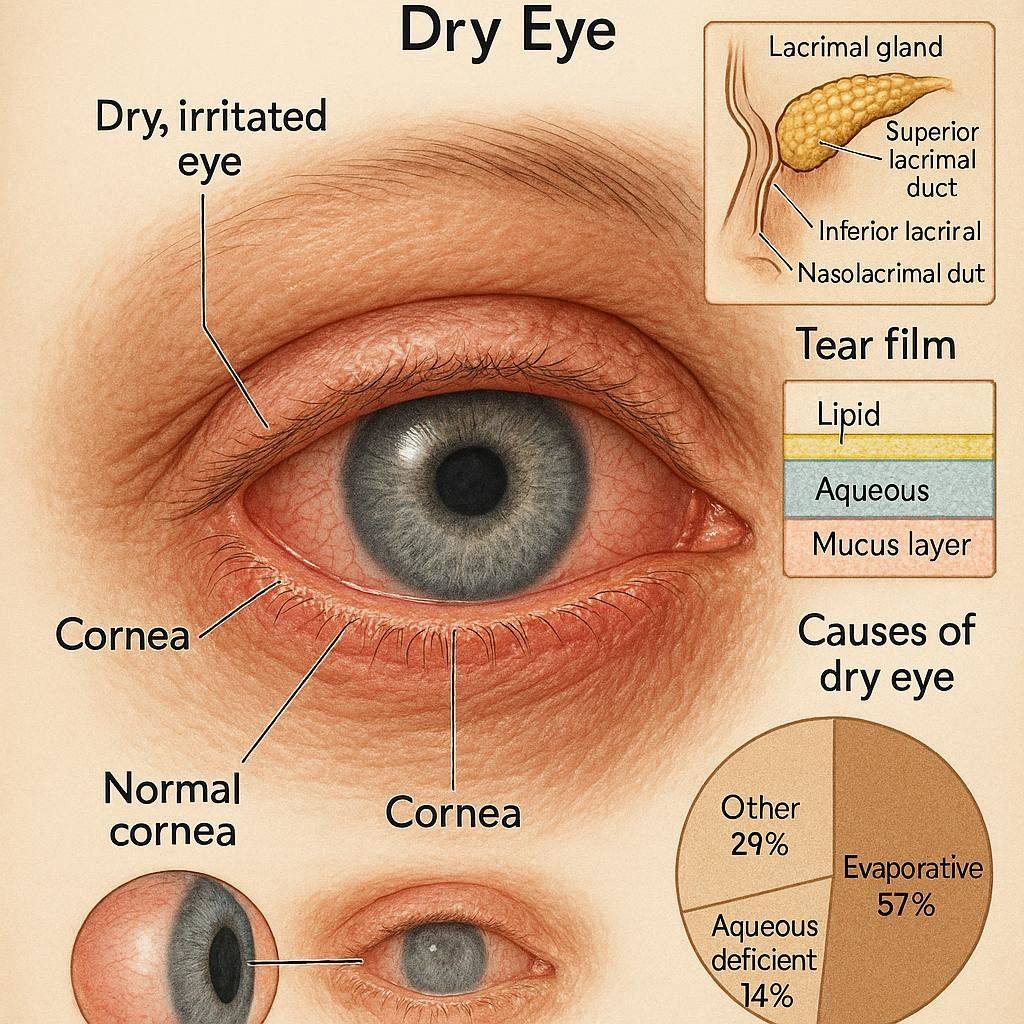
Dry eye syndrome (also called keratoconjunctivitis sicca) has codes in the H04.12 series. For example, H04.121 is dry eye syndrome of right lacrimal gland. These are completely different from xerophthalmia codes.
How to tell them apart:
- Xerophthalmia = caused by vitamin A deficiency
- Common dry eye = caused by Meibomian gland dysfunction, aging, medications, autoimmune disease, etc.
If the cause is not vitamin A deficiency, do not use E50 codes.
Mistake 2: Using E50.7 for Everything
E50.7 is tempting. It is easy. But specificity matters. If the doctor documents “Bitot’s spots due to vitamin A deficiency,” E50.1 is the correct code. Using E50.7 in this case loses important clinical information.
Mistake 3: Missing the Link to Vitamin A Deficiency
You will sometimes see a note that says “corneal ulcer” in a malnourished child. The doctor does not explicitly say “due to vitamin A deficiency.” What do you do?
Do not assume. You cannot link the ulcer to vitamin A deficiency unless the provider states that link. Query the provider. This protects you and the patient.
Mistake 4: Coding Both E50.5 and E50.1 for the Same Encounter
Remember the rule. Bitot’s spots (E50.1) include any night blindness the patient has. Do not add E50.5 separately. The same goes for other combinations. Use only the code that describes the most severe manifestation present.
Documentation Tips for Providers (and What Coders Should Look For)
Good documentation makes good coding possible. If you are a coder, you can educate your providers on what you need. If you are a provider, these tips will help your coding team.
What to document for accurate xerophthalmia coding:
- Confirm the diagnosis of vitamin A deficiency (lab values or clinical signs)
- Describe the eye findings in detail: “Bitot’s spots present bilaterally”
- Note the stage: “Corneal xerosis without ulceration”
- Mention any treatments given (vitamin A supplementation)
- For follow-up visits, note if the condition is improving or worsening
Example of good documentation:
“The patient is a 4-year-old male with severe malnutrition. Eye exam reveals foamy white patches on the temporal conjunctiva of both eyes consistent with Bitot’s spots. There is no corneal involvement. Night blindness is present but secondary to the Bitot’s spots. Diagnosis: Vitamin A deficiency with Bitot’s spots.”
This note clearly supports E50.1.
Sequencing and Additional Codes
Sometimes xerophthalmia is not the primary reason for the visit. How do you sequence codes then?
When Xerophthalmia Is the Main Reason
If the patient comes specifically for eye problems related to vitamin A deficiency, the E50 code goes first.
Example: A child presents with night blindness and Bitot’s spots. The pediatrician diagnoses vitamin A deficiency. You code E50.1 first.
When Vitamin A Deficiency Is the Main Reason
If the patient has other signs of vitamin A deficiency (skin changes, immune problems) and the eye findings are just one part, you might list the underlying deficiency first. But the coding guidelines say to use the manifestation code as the principal diagnosis if the eye problem is the reason for the encounter.
Confused? Let me clarify with a table.
| Reason for Encounter | Principal Diagnosis | Additional Diagnosis |
|---|---|---|
| Patient complains of night blindness and dry eyes. Exam shows Bitot’s spots. | E50.1 (Vitamin A deficiency with Bitot’s spot) | None needed |
| Patient has known malnutrition. Routine exam finds mild conjunctival xerosis. | E50.0 (Vitamin A deficiency with conjunctival xerosis) | May add E50.0 alone. The deficiency is implied. |
| Patient has vitamin A deficiency (diagnosed) and comes for diarrhea due to the deficiency. | E50.8 (Vitamin A deficiency with other manifestations) + A09 (diarrhea) | Follow sequencing guidelines for symptoms |
Linking Codes with the “Due To” Relationship
When you have a clear cause-and-effect, use the correct linkage. In ICD 10, you do not need a separate “due to” code. The E50 category already implies that the eye condition is due to vitamin A deficiency.
So do not add an extra code for vitamin A deficiency alone (E50.9) alongside E50.1. That would be redundant.
Xerophthalmia ICD 10 Code List for Quick Reference
Here is a clean, printable list for your desk.
E50.0 – Vitamin A deficiency with conjunctival xerosis
E50.1 – Vitamin A deficiency with Bitot’s spot
E50.2 – Vitamin A deficiency with corneal xerosis
E50.3 – Vitamin A deficiency with corneal ulceration
E50.4 – Vitamin A deficiency with keratomalacia
E50.5 – Vitamin A deficiency with night blindness
E50.6 – Vitamin A deficiency with xerophthalmic scars
E50.7 – Vitamin A deficiency with xerophthalmia, unspecified
E50.8 – Vitamin A deficiency with other manifestations
E50.9 – Vitamin A deficiency, unspecified
Keep this list handy. It will save you time.
Real-World Coding Scenarios for Xerophthalmia
Let us practice with realistic patient cases.
Scenario 1: The Child with Night Blindness
A 3-year-old boy from a low-income region presents because his mother noticed he bumps into furniture at night. His general health is poor. Eye exam shows normal conjunctiva and corneas. No Bitot’s spots. The pediatrician writes: “Night blindness likely due to vitamin A deficiency. Will start supplementation.”
Your code: E50.5 (Vitamin A deficiency with night blindness)
Why not E50.7? Because the note specifies night blindness.
Scenario 2: The Adult with Malabsorption
A 55-year-old woman with Crohn’s disease has chronic diarrhea. She complains of dry, gritty eyes. Exam reveals dry conjunctiva and Bitot’s spots on both eyes. The gastroenterologist documents: “Xerophthalmia secondary to vitamin A deficiency from malabsorption.”
Your code: E50.1 (Vitamin A deficiency with Bitot’s spot)
Additional code: K50.9 (Crohn’s disease, unspecified) as a secondary code to explain the malabsorption.
Scenario 3: The Unclear Emergency Note
A patient arrives at the ER with eye pain and redness. The ER physician writes: “Corneal ulcer, possible xerophthalmia. Patient appears malnourished. Consult ophthalmology.” The ophthalmologist later writes: “Corneal ulcer, etiology unclear. Vitamin A deficiency suspected but not confirmed.”
Your code until confirmed: H16.0 (Corneal ulcer, unspecified) + E50.9? No. Do not add E50.9 unless confirmed. Code only what is documented. This is a case for querying the provider.
Scenario 4: The Follow-Up Visit for Healing Xerophthalmia
A child treated for keratomalacia three months ago returns. The corneas have healed but with dense scars. Vision is poor. The ophthalmologist writes: “Xerophthalmic scars, resolved keratomalacia.”
Your code: E50.6 (Vitamin A deficiency with xerophthalmic scars)
Billing and Reimbursement Considerations
ICD 10 codes directly affect payment. For xerophthalmia codes, keep these points in mind.
Medical Necessity
Payers want to see that the diagnosis justifies the treatment. Vitamin A supplementation is cheap and safe. But if a patient receives expensive eye procedures, the diagnosis must support them.
For example, a corneal transplant for keratomalacia (E50.4) makes sense. The same surgery for conjunctival xerosis (E50.0) would raise questions.
Payer-Specific Guidelines
Medicare and most commercial payers follow the same ICD 10 guidelines. But some Medicaid plans have local coverage determinations (LCDs) for nutritional deficiencies. Always check your local rules.
Documentation for Audits
Xerophthalmia codes may trigger audits because vitamin A deficiency is rare in developed countries. Have your documentation ready. The medical record should show:
- Objective eye exam findings
- Lab values if available (serum retinol <0.70 µmol/L suggests deficiency)
- Nutritional assessment
- Treatment plan
Related Codes You Might Need
Xerophthalmia does not exist in a vacuum. Here are other codes that often appear alongside E50 codes.
Vitamin A Deficiency Without Eye Findings
If the patient has low vitamin A levels but no eye symptoms, use E50.9 (Vitamin A deficiency, unspecified).
Other Nutritional Eye Conditions
| Condition | ICD 10 Code | Notes |
|---|---|---|
| Vitamin B2 deficiency with eye findings | E53.0 | Can cause corneal vascularization |
| Bitot’s spot without vitamin A deficiency | H11.14 | Very rare; use only if deficiency ruled out |
| Night blindness, unspecified | H53.6 | Use when cause unknown |
| Dry eye syndrome | H04.12- | Use sixth digit for laterality |
Malnutrition Codes
Many xerophthalmia patients have general malnutrition. Consider adding:
- E40 – Kwashiorkor
- E41 – Marasmus
- E43 – Unspecified severe protein-calorie malnutrition
- E46 – Unspecified protein-calorie malnutrition
Sequence these based on the reason for encounter.
The Importance of Laterality in Xerophthalmia Codes
Notice something about the E50 codes? They do not have laterality. Unlike many eye codes (H04.121 for right dry eye, H04.122 for left), the E50 category does not distinguish between right and left eyes.
Why? Because xerophthalmia from vitamin A deficiency is almost always bilateral. Both eyes are affected, even if not equally. So you do not need to specify right or left.
If the provider documents unilateral findings, ask yourself: Is this truly xerophthalmia? Or something else?
ICD 11 Comparison (For Future Reference)
ICD 11 launched in 2022, though most countries still use ICD 10. For your future planning, here is how xerophthalmia appears in ICD 11.
The code is 5B5Y (Vitamin A deficiency) with specific extensions for eye manifestations. The structure is different. But for now, stick with ICD 10. This guide covers current real-world practice.
Frequently Asked Questions (FAQ)
1. What is the exact ICD 10 code for xerophthalmia?
The exact code is E50.7 when the stage is not specified. But more specific codes (E50.0 to E50.6) are preferred when the documentation allows.
2. Is xerophthalmia the same as dry eye syndrome?
No. Xerophthalmia specifically refers to eye changes from vitamin A deficiency. Dry eye syndrome (H04.12) has many other causes and a different code.
3. Can I use E50.7 for Bitot’s spots?
No. Bitot’s spots have their own code: E50.1. Using E50.7 for documented Bitot’s spots would be incorrect.
4. What code do I use for night blindness from vitamin A deficiency?
Use E50.5 (Vitamin A deficiency with night blindness). Do not use H53.6 (night blindness, unspecified) because that would ignore the known cause.
5. Do I need to add a separate code for vitamin A deficiency?
No. The E50 codes already include the deficiency. For example, E50.1 means “vitamin A deficiency with Bitot’s spot.” You do not add E50.9 on top of it.
6. How do I code xerophthalmia in a patient with known malnutrition?
Code the xerophthalmia first if it is the reason for the visit. Then add the malnutrition code as secondary. For example: E50.4 (keratomalacia) + E41 (marasmus).
7. Is E50.7 billable?
Yes, E50.7 is a valid, billable ICD 10 code. However, some payers may request more specificity. Use it when the documentation does not provide a specific stage.
8. Can xerophthalmia be coded as a chronic condition?
Yes. Xerophthalmia can be acute (new deficiency) or chronic (recurrent or long-standing). The ICD 10 codes do not differentiate. The documentation should describe the timeline.
9. What is the difference between E50.7 and H04.12?
E50.7 is xerophthalmia from vitamin A deficiency. H04.12 is dry eye syndrome from other causes. They are not interchangeable.
10. How do I code a history of xerophthalmia with no current signs?
If the patient has scars from past xerophthalmia, use E50.6 (xerophthalmic scars). If the patient was treated and has no remaining signs, you may code Z87.19 (Personal history of other nutritional deficiencies) plus Z90.01 (Acquired absence of eye, unspecified) only if the eye was removed. For most healed cases without scars, a history code is sufficient.
Important Notes for Readers
Note 1: Always code from the medical record. Do not assume a diagnosis. If the documentation is unclear, send a query to the provider.
Note 2: The codes in this guide are accurate as of the latest ICD 10 CM update. Always check for annual changes. Official coding guidelines take precedence over any article.
Note 3: Xerophthalmia is a reportable condition in some public health systems because it indicates widespread vitamin A deficiency. Check your local reporting requirements.
Note 4: When in doubt between two codes, choose the code that best matches the documentation. Do not upcode (choose a more severe code than documented) or downcode (choose a less specific code when a specific one is supported).
Additional Resources
For more information on ICD 10 coding for nutritional eye diseases, visit the American Academy of Ophthalmology (AAO) coding website:
https://www.aao.org/practice-management/coding
This resource provides regular updates on coding changes, webinars, and practice management tools. It is free for AAO members and available at a low cost for non-members.
You can also consult the CDC’s official ICD 10 website for annual code updates:
https://www.cdc.gov/nchs/icd/icd10cm.htm
Final Thoughts on ICD 10 Code Xerophthalmia
We covered a lot of ground. You now know that the primary code is E50.7, but more specific codes exist for each stage of the disease. You understand the difference between xerophthalmia and common dry eye. You can handle real-world scenarios and avoid frequent mistakes.
Remember this simple rule: Match the code to the documentation. If the note says “Bitot’s spots,” use E50.1. If it says “corneal xerosis,” use E50.2. If it only says “xerophthalmia,” use E50.7. Then consider asking for more details.
Accurate coding helps patients receive proper treatment and helps researchers track vitamin A deficiency worldwide. Your careful work makes a difference.
Conclusion
Xerophthalmia due to vitamin A deficiency uses ICD 10 codes from the E50 category. The unspecified code E50.7 applies when no stage is documented, but specific codes E50.0 through E50.6 offer greater accuracy. Proper documentation of eye findings is essential for correct coding and optimal patient care.
Disclaimer: This article is for educational purposes only. It does not constitute medical advice or official coding guidance. Always refer to the current ICD 10 CM official guidelines for coding and reporting. Consult with a certified medical coder or your organization’s compliance department for specific coding decisions.