If you have ever looked at a medical bill or a referral form from your doctor, you have probably seen a strange combination of letters and numbers next to a diagnosis. That is an ICD-10 code. It might look confusing at first. But understanding the basics of these codes, especially for something common like an X-ray of the thoracic spine, can save you time, stress, and even money.
You might be asking yourself: Why does my doctor need a specific code for my back X-ray? Or perhaps you are a medical coder, a biller, or a student trying to get the details right. You are in the right place.
This guide is about the ICD 10 code for x-ray of thoracic spine. We will walk through everything. What the code means. When to use it. What not to use. And how to make sure the process is smooth for everyone involved.
Let us start with the most important part: the actual code.
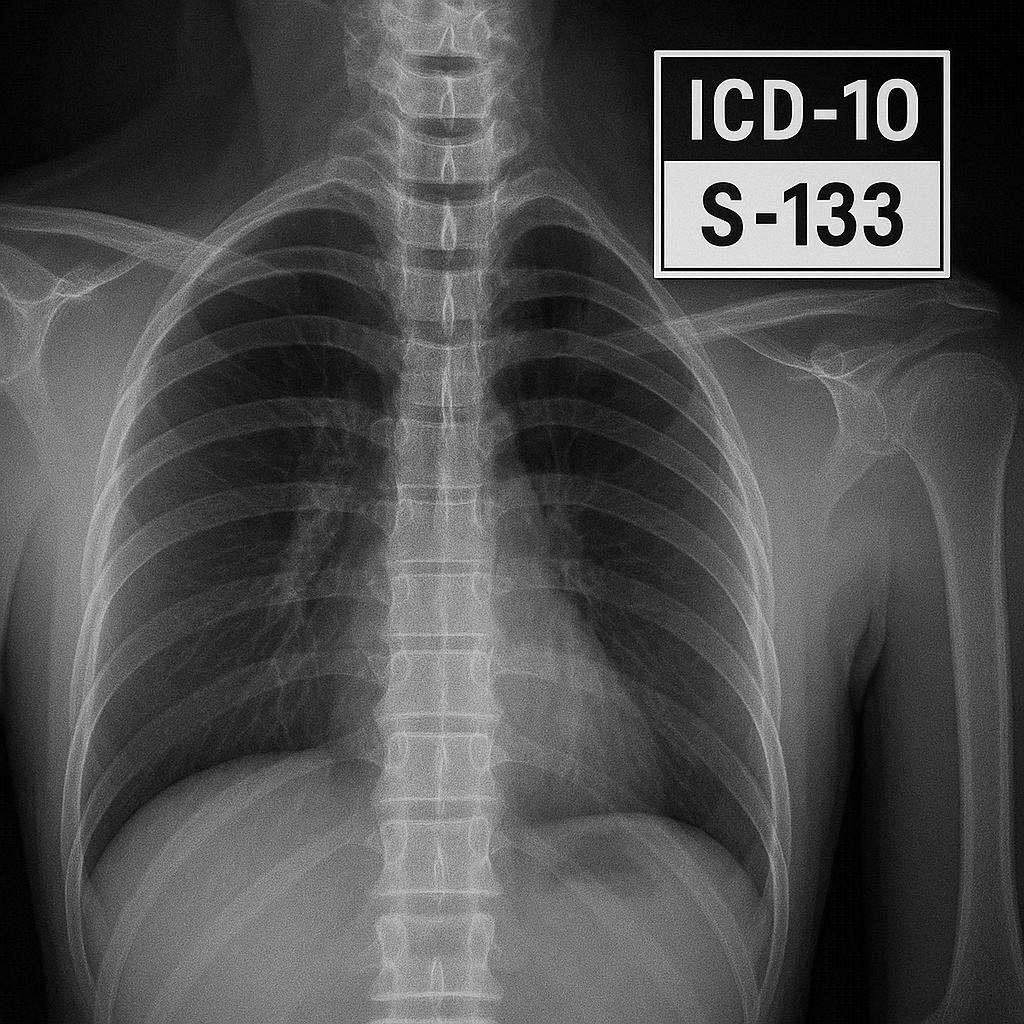
What Is the Correct ICD 10 Code for a Thoracic Spine X-Ray?
There is a common misunderstanding. Many people think there is a single, universal code for an X-ray of the thoracic spine. That is not how the ICD-10 system works.
The ICD-10 system does not code for the procedure itself (the X-ray). Instead, it codes for the reason the X-ray is being done. The X-ray is the tool. The code describes the symptom, the injury, or the condition that makes the X-ray necessary.
So, if a doctor orders an X-ray of your mid-back (the thoracic spine), they must provide a code that explains why. Is it because you fell? Do you have unexplained back pain? Are you following up on a known case of osteoporosis?
The most frequently used code for a thoracic spine X-ray, when the reason is back pain without a more specific diagnosis, is:
M54.6 – Pain in thoracic spine
But wait. That is not the only possibility. In fact, using M54.6 too often or in the wrong context can lead to denied claims. Let us break down the most common scenarios.
When the Reason Is Back Pain (The Most Common Scenario)
For a patient with mid-back pain that is not clearly linked to an injury or a specific disease, the code is:
- M54.6 – Dorsalgia (pain in the thoracic spine)
Doctors use this as a starting point. It tells the insurance company: My patient has pain here, and I need an image to find out why.
Note for readers: M54.6 is a symptom code. It is perfectly acceptable for initial imaging. However, if the X-ray reveals something specific, like a fracture or arthritis, the doctor should update the code for follow-up visits.
When the Reason Is a Recent Injury or Trauma
If you were in a car accident, fell off a ladder, or took a hard hit while playing sports, the code changes. Trauma is a different story.
- S22.0XXA – Fracture of thoracic vertebra, initial encounter for closed fracture
- S29.0XXA – Injury of muscle and tendon of thorax, initial encounter
But here is the key. Before the X-ray, the doctor does not know if there is a fracture. So they often use a code for the suspected condition or the mechanism of injury.
For example:
- S29.8XXA – Other specified injuries of thorax, initial encounter
In practice, many emergency departments use codes under the S20–S29 range (Injuries to the thorax) to justify a thoracic spine X-ray after trauma.
When the Reason Is a Known Chronic Condition
Some patients already have a diagnosis. They need periodic X-rays to monitor the condition.
Common examples:
- M47.812 – Spondylosis without myelopathy or radiculopathy, thoracic region
- M40.204 – Kyphosis, unspecified, thoracic region
- M80.08G – Age-related osteoporosis with current pathological fracture, vertebra(e), subsequent encounter for fracture with delayed healing
In these cases, the X-ray is not looking for a mystery. It is tracking a known problem. The ICD-10 code here is very specific.
The Complete List of Relevant Codes for Thoracic Spine X-Ray
To make this easier, here is a comparison table. It shows the most common ICD-10 codes used to justify an X-ray of the thoracic spine.
| ICD-10 Code | Condition or Reason | When to Use It |
|---|---|---|
| M54.6 | Pain in thoracic spine | New patient with mid-back pain, no trauma history |
| S29.8XXA | Other specified injury of thorax | After a fall or accident, before fracture is confirmed |
| S22.0XXA | Thoracic vertebral fracture (initial) | After X-ray confirms a fracture, or high suspicion |
| M47.812 | Thoracic spondylosis | Known wear-and-tear arthritis of mid-back |
| M40.204 | Kyphosis, thoracic region | Monitoring curve progression or postural changes |
| M80.08G | Osteoporosis with pathological fracture | Elderly patient, known bone loss, new collapse |
| R29.6 | Repeated falls | Patient has history of falling; X-ray rules out new fracture |
| Z09 | Follow-up exam after treatment | After surgery or casting for a known thoracic injury |
Notice how the code tells a story. It is not just X-ray. It is X-ray because of this specific human problem.
Why the Correct ICD 10 Code Matters for Your Thoracic Spine X-Ray
You might think this is just paperwork. It is not. The code directly affects three important things.
1. Insurance Approval and Payment
Insurance companies are strict. If the code does not match the X-ray, they can deny the claim. For example, using a general code like M54.9 (Back pain, unspecified) for a thoracic X-ray might get rejected. The insurer will ask: Why the mid-back specifically? They want the region specified. That is why M54.6 is better.
2. Medical Necessity
Medicare and private insurers use guidelines called Local Coverage Determinations (LCDs). These rules say: For a thoracic spine X-ray to be paid, the patient must have at least one of these symptoms or conditions. The ICD-10 code proves that medical necessity exists.
Without the right code, you might receive a bill for the full cost of the X-ray. That can be hundreds of dollars.
3. Your Medical Record Accuracy
Codes follow you. If a coder uses the wrong code today, that incorrect diagnosis can stay in your electronic health record for years. It can affect future treatments, insurance applications, and even disability evaluations.
A real-world example: A patient gets a thoracic X-ray for mild muscle strain. A coder accidentally uses a fracture code. Two years later, the patient applies for life insurance. The company sees fracture in the record and raises the premium. The error was never caught. This happens more often than you think.
So, getting the code right is not just bureaucracy. It is patient safety.
How Doctors Decide Which ICD 10 Code to Use for a Thoracic X-Ray
Let us step inside the doctor’s office for a moment. You are sitting on the exam table. You say: Doctor, my upper back hurts when I twist.
The doctor asks specific questions. They are not just being polite. They are gathering the information needed to choose the correct ICD-10 code.
The Decision Tree for Thoracic Spine X-Ray Codes
Here is a simplified version of how a medical professional thinks through the coding process.
- Step 1: Is there a known injury?
- Yes → Look at codes S20–S29 (Injuries to thorax)
- No → Go to step 2
- Step 2: Is the pain the main reason?
- Yes → M54.6 (Pain in thoracic spine)
- No → Go to step 3
- Step 3: Is there a known chronic disease?
- Yes → Use specific disease code (e.g., M47.812 for spondylosis)
- No → Go to step 4
- Step 4: Is this a follow-up?
- Yes → Z09 (Follow-up exam after treatment)
- No → R10.9 (Unspecified abdominal pain – but wait, that is wrong for back. So never use that. This is why training matters.)
What the Doctor Documents Matters Most
Here is a truth that surprises many patients. The doctor does not need to write the code perfectly. They need to write a clear, detailed note. Then a professional coder (or a smart software system) translates that note into the correct ICD-10 code.
For a thoracic spine X-ray, the doctor’s note should include:
- Location: “Mid-back” or “thoracic spine” (not just “back”)
- Duration: “Pain for 3 weeks” or “sudden onset yesterday”
- Mechanism: “Lifting a box” or “no injury recalled”
- Associated symptoms: “Pain with deep breath” or “no numbness in legs”
When these details are present, the correct code is obvious.
Common Mistakes with ICD 10 Coding for Thoracic Spine X-Rays
Even experienced coders make errors. Here are the most frequent mistakes. Avoid them, and you will save yourself and your practice a lot of headaches.
Mistake #1: Using a Cervical or Lumbar Code for the Thoracic Spine
The spine has three main sections:
- Cervical (neck)
- Thoracic (mid-back, attached to ribs)
- Lumbar (lower back)
Using M54.2 (Cervicalgia) for a thoracic X-ray is a direct path to a denial. Always check the region.
Mistake #2: Coding Only the Pain When a Specific Diagnosis Exists
If the X-ray shows a compression fracture, do not keep using M54.6. Update the code to S22.0XXA or M80.08G (for osteoporotic fracture). Insurance companies expect the most specific code available.
Mistake #3: Forgetting the Laterality and Encounter Type
Some thoracic spine codes require extra characters. For fractures, the 7th character is critical:
- A = initial encounter (active treatment)
- D = subsequent encounter (healing, routine)
- S = sequela (long-term effect)
Using the wrong character can be seen as fraud. Yes, it is that serious.
Mistake #4: Adding Unnecessary Codes
More codes are not better. For a simple thoracic X-ray for pain, you usually need only one ICD-10 code. Adding R10.9 (Abdominal pain) or R51 (Headache) just confuses the payer.
Mistake #5: Ignoring the “Medical Necessity” Rules in Your Area
Different Medicare regions have different rules. Some require that a patient has tried and failed physical therapy before an X-ray is approved for non-traumatic pain. Others allow an X-ray at the first visit. Check your local LCDs.
The Complete Process: From Doctor’s Order to X-Ray Result
Let us follow a real patient named Carla. She is 58 years old. She has mid-back pain that started after she spent a weekend gardening. Her doctor orders a thoracic spine X-ray.
Here is what happens behind the scenes, with the ICD-10 code at the center.
Step 1 – The Office Visit
Doctor asks Carla: “Where exactly does it hurt?”
Carla points to the middle of her back, between her shoulder blades.
Doctor writes in the note: “Patient presents with localized pain in the thoracic spine region. Onset 2 days ago. Associated with twisting and lifting. No numbness, no weakness. No recent trauma.”
Step 2 – The Order and the Code
The doctor’s staff looks at the note. They assign:
ICD-10 code: M54.6 (Pain in thoracic spine)
They send an electronic order to the radiology department. The order includes:
- Procedure: X-ray thoracic spine (CPT code 72070)
- Diagnosis: M54.6
Step 3 – Insurance Pre-Authorization (If Required)
Some insurance plans require a pre-authorization for X-rays. The billing team submits the code pair (M54.6 + 72070) to the insurer.
The insurer checks their medical policy. Their system says: *M54.6 is acceptable for a thoracic X-ray if no red flags are present.* Approval is given within hours.
Step 4 – The X-Ray is Performed
Carla goes to the imaging center. The technologist confirms her name, birth date, and the reason for the exam. They check the order. The code is still M54.6.
Step 5 – The Radiologist Report
A radiologist reads the X-ray. In Carla’s case, the images show mild degenerative changes but no fracture. The report says: “Mild thoracic spondylosis. No acute findings.”
Step 6 – Final Coding and Billing
A medical coder now has two pieces of information:
- The original reason for the X-ray (M54.6)
- The X-ray finding (Mild spondylosis – code M47.812)
For the X-ray claim, the coder still uses the original code that justified the test. The fact that the result showed spondylosis does not change the code for that visit. However, for future visits, the doctor will use M47.812 instead of M54.6.
Carla’s insurance is billed. The claim is paid. Carla pays her small copay. Everything works.
X-Ray of Thoracic Spine: What the Procedure Actually Looks Like
You now know the codes. But what about the X-ray itself? Understanding the procedure helps you see why the coding matters clinically.
A thoracic spine X-ray is a quick, painless test. It uses a small amount of radiation to create images of the 12 vertebrae in your mid-back. These bones are attached to your ribs, which makes the thoracic spine very stable but also harder to image than the neck or lower back.
Standard Views for a Thoracic Spine X-Ray
Most X-rays include two or three different angles. The most common are:
| View Name | What It Shows | Why It Helps |
|---|---|---|
| AP (Anteroposterior) | Front-to-back view of the spine | Shows alignment, scoliosis, and vertebral body shapes |
| Lateral | Side view | Shows kyphosis (curvature), compression fractures, and disc spaces |
| Oblique (less common) | Angled view | Used to see the facet joints (common in trauma or arthritis) |
The entire process takes about 10 to 15 minutes. You will stand or lie down. The technologist will ask you to hold very still and sometimes hold your breath.
What a Thoracic X-Ray Can (and Cannot) See
This is important for setting realistic expectations.
A thoracic X-ray is good for:
- Bone fractures (including small compression fractures)
- Arthritis in the spinal joints
- Loss of bone density (though a DEXA scan is better)
- Spinal curvature problems (kyphosis or scoliosis)
- Alignment issues after trauma
- Checking the position of surgical hardware
A thoracic X-ray is NOT good for:
- Herniated discs (you need an MRI for that)
- Nerve compression (again, MRI or CT)
- Infections inside the spinal canal
- Tumors in the soft tissue around the spine
- Muscle or ligament tears
Doctors order X-rays first because they are fast, cheap, and good at ruling out fractures. If the X-ray is normal but your symptoms are severe, the next step is often an MRI.
Important Note for Patients: How to Prepare for Your Thoracic Spine X-Ray
You have the order. You have the code (even if you did not know it). Now you need to show up for the test. Here is what you should know.
Before the X-Ray
- You do not need to fast. You can eat and drink normally.
- Wear loose, comfortable clothing without metal. No zippers, buttons, or underwire bras. A t-shirt and sweatpants are perfect.
- Remove all jewelry from your neck and chest. Necklaces, large earrings, and even some glasses can show up on the X-ray.
- If you are pregnant or might be pregnant, tell the technologist immediately. X-rays are generally avoided during pregnancy unless absolutely necessary.
- Bring your photo ID and insurance card. The staff will confirm your information and the ICD-10 code on the order.
During the X-Ray
- You will be asked to stand against a flat surface or lie on a table.
- The technologist will position you carefully. They may use sandbags or foam blocks to help you hold the position.
- You will hear a quiet beep or buzz when the image is taken. That is normal.
- You will be asked to hold your breath for a few seconds. This stops your chest from moving and blurring the image.
After the X-Ray
- No recovery time is needed. You can drive yourself home.
- A radiologist will review your images. They will send a report to your doctor within 24 to 48 hours.
- Your doctor will call you or schedule a follow-up visit to discuss the results and any next steps.
A friendly reminder: The X-ray technologist cannot give you results. They are trained to take the images, not to interpret them. Please do not ask, “Does it look okay?” They are not allowed to answer. Wait for your doctor.
How to Read Your Radiology Report (And Find the ICD-10 Code)
You receive a copy of your thoracic spine X-ray report. It contains medical terms. Do not panic. Here is a simple guide to understanding the most common phrases.
Common Findings and Their Corresponding ICD-10 Codes
| Phrase in the Report | What It Means | Probable ICD-10 Code |
|---|---|---|
| “No acute fracture or dislocation” | Normal result for trauma | Code the original reason (e.g., M54.6) |
| “Mild degenerative changes of the thoracic spine” | Normal wear and tear for age | M47.812 |
| “Anterior wedging of T7” | A small compression fracture | S22.0XXA or M80.08G |
| “Increased thoracic kyphosis” | Excessive rounding of the mid-back | M40.204 |
| “Scoliosis of the thoracic spine” | Sideways curve of the spine | M41.20 (if unspecified) |
| “Vertebral body height loss” | Possible osteoporosis-related collapse | M80.08G |
| “Schmorl’s nodes” | Disc material pushes into the vertebra | M51.84 (if painful) |
Look at the Impression section of the report. That is the summary. It usually contains the diagnosis that will become the primary ICD-10 code for that visit.
Frequently Asked Questions (FAQ) About ICD 10 Code for X-Ray of Thoracic Spine
Here are real questions that patients and coders ask.
Q1: Can I use M54.6 for both thoracic and lumbar X-rays on the same day?
Yes, but with caution. If a patient has pain in both the mid-back and lower back, you can use M54.6 for the thoracic order and M54.5 (Low back pain) for the lumbar order. However, some insurers require a separate medical reason for each region. Document both pain locations clearly in the doctor’s note.
Q2: What code should I use for a routine screening X-ray of the thoracic spine?
Routine screening X-rays of the thoracic spine are very rare. Insurance almost never covers them without a specific symptom. If a patient insists on a “just to check” X-ray, they will likely pay out of pocket. In that case, you might use Z01.89 (Encounter for other specified special examinations), but be prepared for a denial.
Q3: My X-ray was ordered for thoracic pain, but the radiologist found a lung nodule. Do I change the code?
No. The code for the X-ray itself stays as the original reason (M54.6). The lung nodule is an incidental finding. Your doctor will address that separately, likely with a different test (like a chest CT). Do not add a lung code to the spine X-ray claim. That would be incorrect.
Q4: How long is an ICD-10 code valid for a thoracic X-ray order?
An order for a thoracic spine X-ray with a specific code is generally valid for 30 to 90 days, depending on your insurance. If you wait longer than that, the doctor may need to re-enter the order with a new note and the same or updated code.
Q5: Can a chiropractor order a thoracic spine X-ray and use the same ICD-10 codes?
Yes. Chiropractors in most states can order X-rays. They use the same ICD-10 codes as medical doctors. M54.6 is very common in chiropractic offices for thoracic spine imaging.
Q6: What is the CPT code for a thoracic spine X-ray? Is it the same as the ICD-10 code?
No. They are completely different.
- CPT code = the procedure (X-ray). For thoracic spine, the CPT code is usually 72070 (Radiologic examination, spine, thoracolumbar, 2 views) or 72072 (3 views).
- ICD-10 code = the reason (e.g., M54.6).
You need both on a claim. The CPT code says what you did. The ICD-10 code says why you did it.
Q7: My doctor wrote “thoracolumbar spine.” What code do I use?
When the order says “thoracolumbar,” that means both the thoracic and the lumbar spine. You have two options:
- If the pain is clearly in both areas, you can use M54.6 (thoracic) and M54.5 (lumbar) on the same claim.
- If the pain is in the middle but radiates down, M54.8 (Other dorsalgia) might be appropriate. But check your local guidelines. Most coders prefer two distinct codes when the order explicitly covers two regions.
Additional Resources for Correct ICD-10 Coding of Thoracic X-Rays
You do not have to memorize all these codes. Use trusted resources.
Recommended Link (Internal Resource):/radiology-coding-guide/thoracic-spine-xray-cpt-icd
External Reliable Resources:
- CMS ICD-10 Lookup Tool – Official government tool. Free and updated quarterly.
- American College of Radiology (ACR) Appropriateness Criteria – Shows when a thoracic X-ray is the right test. Very helpful for medical necessity arguments.
- The ICD-10-CM Official Guidelines for Coding and Reporting – The full rulebook. Dense but definitive.
Final Checklist Before Submitting a Claim for Thoracic Spine X-Ray
Use this checklist to avoid denials.
- Did the doctor document the pain or symptom location as thoracic or mid-back?
- Did you select a code from the correct chapter? (M00–M99 for musculoskeletal, S00–T88 for trauma, or Z00–Z99 for follow-up)
- Is the code specific to the thoracic region? (Avoid M54.5 for lumbar or M54.2 for cervical)
- For trauma, did you use the correct 7th character (A, D, or S)?
- Did you match the CPT code (72070 or 72072) with the correct number of views?
- Did you check your local Medicare LCD for any additional coverage requirements?
- Is the patient’s insurance still active? (Surprisingly common error)
A Note on AI and Automated Coding
Some healthcare systems now use artificial intelligence to suggest ICD-10 codes based on the doctor’s notes. These tools are helpful but not perfect. They often struggle with the thoracic spine because it is less common than the lumbar spine.
If you are using an AI coding assistant, always double-check the region (thoracic vs. lumbar). AI sometimes defaults to lumbar codes because they are more frequent in the training data. Human review is essential.
Conclusion: Three Key Takeaways
The ICD 10 code for an x-ray of the thoracic spine depends entirely on the reason for the exam, with M54.6 (thoracic spine pain) being the most common starting point. Using the correct region-specific code prevents claim denials and protects the patient’s medical record accuracy. Always document the clinical reason clearly, update the code when a specific diagnosis is confirmed, and check local coverage rules before submitting the claim.
*Disclaimer: This article is for informational and educational purposes only. It does not constitute medical advice, legal advice, or billing advice. ICD-10 codes and coverage policies change frequently. Always consult with a certified medical coder, a physician, or your local Medicare Administrative Contractor (MAC) for the most current information applicable to your specific situation.*