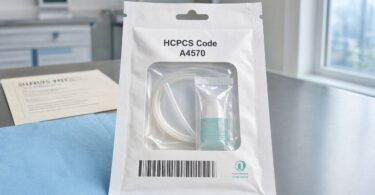
Medical billing for advanced biologic treatments can feel like navigating an intricate maze. For healthcare providers, medical coders, and patients alike, securing coverage for specialized cardiovascular and lipid-lowering therapies requires absolute procedural accuracy. When documentation misses a single digit or utilizes an outdated placeholder, insurance claims face rapid denials or lengthy verification delays.
Among these advanced therapies, Repatha (evolocumab) stands out as a highly effective, frequently prescribed medication. It is a proprotein convertase subtilisin kexin type 9 (PCSK9) inhibitor designed to drastically lower low-density lipoprotein cholesterol (LDL-C), commonly known as “bad” cholesterol. Because Repatha is a high-cost biologic agent administered via subcutaneous injection, health insurance payers require highly specific coding data before they approve reimbursement. Understanding the exact hcpcs code for repatha is the absolute baseline requirement for building a clean, error-free medical claim.
This guide provides an exhaustive breakdown of the medical coding infrastructure surrounding Repatha. We will explore the primary Healthcare Common Procedure Coding System (HCPCS) codes, National Drug Codes (NDCs), Current Procedural Terminology (CPT) administration codes, and corresponding International Classification of Diseases (ICD-10) diagnosis codes. By establishing a clear, scannable reference framework, healthcare practices can streamline their administrative workflows, optimize prior authorization pathways, and ultimately protect their patients from unexpected out-of-pocket expenses.

The Primary HCPCS Codes for Repatha
Unlike some older, long-established injectable medications that possess dedicated, product-specific HCPCS Level II “J-codes” (such as a specific code that names the drug and its exact dosage unit directly), Repatha is currently billed using unclassified or unassigned therapeutic biological injection codes.
When submitting a medical claim for Repatha under a patient’s medical insurance benefit rather than their pharmacy benefit, medical billers must rely on unclassified codes. The specific code selected depends entirely on the setting of care and the explicit requirements of the healthcare payer.
Code J3590: Unclassified Biologics
The most frequently utilized hcpcs code for repatha in outpatient clinics, private physician practices, and home health settings is J3590.
- Descriptor: Unclassified biologics.
- Application: This is the standard, default code for non-chemotherapeutic biological products that have not been assigned a specific, dedicated permanent HCPCS code. When using J3590, the medical claim must be accompanied by detailed administrative attachments, including the drug’s brand name (Repatha), generic name (evolocumab), administered dosage, and the specific National Drug Code (NDC) number.
Code J3490: Unclassified Drugs
In some specific institutional billing scenarios or under distinct regional commercial payer policies, J3490 is required instead of J3590.
- Descriptor: Unclassified drugs.
- Application: While J3590 is technically more precise because Repatha is a monoclonal antibody (a biologic), certain legacy billing systems or medical policies mandate J3490 for any injected medication lacking a unique, product-specific J-code.
Code C9399: Unclassified Drugs or Biologicals (Hospital Outpatient)
For services rendered within a hospital outpatient department (HOPD) that operates under the Medicare Outpatient Prospective Payment System (OPPS), coders must frequently turn to C9399.
- Descriptor: Unclassified drugs or biologicals.
- Application: This code is designed strictly for hospital outpatient settings to ensure proper tracking and temporary transitional payment allocation before a permanent, specific code is universally established.
Essential National Drug Code (NDC) Mappings
Because the primary hcpcs code for repatha relies on unclassified code formulations (such as J3590 or J3490), health insurance clearinghouses and claims adjusters cannot determine what drug was actually administered based on the HCPCS code alone. To bridge this information gap, payers strictly mandate the inclusion of the 11-digit National Drug Code (NDC).
The NDC acts as a universal product identifier, specifying the manufacturer, the exact chemical strength, and the physical packaging configuration. Amgen Inc., the manufacturer of Repatha, provides the drug in three distinct delivery formats. Billers must accurately convert the commercial 10-digit NDC found on the product packaging into the standard 11-digit medical billing format by adding a leading zero where appropriate.
The table below outlines the active packaging options and their exact billing conversions:
| Delivery System & Product Strength | 10-Digit Package NDC | 11-Digit Billing NDC (Format: 5-4-2) |
| SureClick® Autoinjector (140 mg/mL) | 72511-393-02 | 72511-0393-02 |
| Prefilled Syringe (140 mg/mL) | 72511-501-01 | 72511-0501-01 |
| Pushtronex® System (On-Body Infusor, 420 mg/3.5 mL) | 72511-770-01 | 72511-0770-01 |
Important Note for Billers: In recent production cycles, older product NDCs (such as the legacy 72511-0760-02 autoinjector series) have been systematically phased out and replaced by updated configurations (such as the 72511-0393-02 latex-free variant). Always check the physical box administered to the patient to ensure the exact NDC matches the claim text perfectly. A mismatch between the written NDC and the physical stock records will result in an immediate administrative denial.
Cross-Referencing CPT Administration Codes
Identifying the correct hcpcs code for repatha fulfills only half of the billing equation. A complete medical claim must also account for the professional work, clinical space, and specialized equipment required to administer the injection within a healthcare facility.
If a clinical staff member or physician performs the injection within the office, one of the following Current Procedural Terminology (CPT) codes must be appended to the claim alongside the drug code:
- CPT 96372 (Therapeutic, Prophylactic, or Diagnostic Injection; Subcutaneous or Intramuscular): This is the standard procedure code applied when a nurse or medical assistant administers a standard 140 mg Repatha dose via a prefilled syringe or the SureClick autoinjector.
- CPT 96377 (Application of On-Body Injector for Timed Subcutaneous Delivery): This highly specialized code is strictly reserved for the Repatha Pushtronex system. Because the Pushtronex system is an on-body infusor that adheres to the patient’s skin and delivers a 420 mg dose slowly over a 5-minute window, CPT 96377 correctly captures the additional clinical time required to prepare, apply, and monitor the automated device.
Clinical Indications and Corresponding ICD-10 Codes
Health insurance companies will not pay for Repatha unless the documentation proves “medical necessity.” This means the patient’s medical records must feature an approved International Classification of Diseases, Tenth Revision (ICD-10) diagnosis code that perfectly matches the clinical indications authorized by the Food and Drug Administration (FDA).
Repatha is primarily indicated as an adjunct to diet and maximally tolerated statin therapies for very specific cardiovascular and genetic lipid disorders. The most common diagnostic pairings include:
1. Atherosclerotic Cardiovascular Disease (ASCVD)
For patients with a documented history of major adverse cardiovascular events—such as myocardial infarction (heart attack), stroke, acute coronary syndromes, or peripheral arterial disease—Repatha is prescribed to lower the risk of future cardiovascular complications.
- Primary ICD-10 Codes: I25.10 (Atherosclerotic heart disease of native coronary artery without angina pectoris), I25.2 (Old myocardial infarction), I63.9 (Cerebral infarction, unspecified), and I73.9 (Peripheral vascular disease, unspecified).
2. Primary Hyperlipidemia & Heterozygous Familial Hypercholesterolemia (HeFH)
HeFH is an inherited genetic condition characterized by dangerously high levels of LDL cholesterol from birth.
- Primary ICD-10 Codes: E78.01 (Familial hypercholesterolemia) or E78.00 (Pure hypercholesterolemia, unspecified).
3. Homozygous Familial Hypercholesterolemia (HoFH)
HoFH is a rare, severe genetic variation where a patient inherits altered lipid-processing genes from both parents, resulting in extreme circulating cholesterol levels that require aggressive intervention.
- Primary ICD-10 Code: E78.01 (Familial hypercholesterolemia).
The Prior Authorization Workflow: Minimizing Claim Denials
Securing approval for Repatha requires passing strict clinical gatekeeping. Because it is a premium biologic therapy, nearly every major insurance provider mandates a comprehensive Prior Authorization (PA) process before agreeing to cover the unclassified hcpcs code for repatha.
To build an unassailable prior authorization request, clinical teams should follow a highly structured documentation process:
[Verify Diagnosis via ICD-10]
       │
       ▼
[Document Statin Maximization (8+ Weeks)]
       │
       ▼
[Prove Statin Intolerance (If Applicable)]
       │
       ▼
[Establish Baseline & Current LDL-C Levels]
       │
       ▼
[Submit PA Form with Full Clinical Chart Notes]
Critical Prior Authorization Criteria Checklist
- Statin Maximization Trial: Insurance companies generally require explicit written proof that the patient has tried at least a 12-week trial of a high-intensity statin regimen (such as Atorvastatin 40–80 mg daily or Rosuvastatin 20–40 mg daily) combined with ezetimibe (Zetia), and that their LDL-C remains stubbornly above 70 mg/dL (or above 100 mg/dL for HeFH pediatric cases).
- Documented Statin Intolerance: If the patient cannot take statins due to severe side effects, the provider must detail the specific physiological reactions. Documentation must explicitly confirm that the patient experienced severe, reversible skeletal-related muscle symptoms (such as statin-induced myopathy or rhabdomyolysis) across at least two distinct attempted statin varieties.
- Specialist Attestation: Many commercial policies favor or outright require that the medication be explicitly prescribed by, or in direct formal consultation with, a board-certified cardiologist, endocrinologist, or lipidologist.
Conclusion
Securing medical reimbursement for evolocumab hinges on utilizing the correct unclassified hcpcs code for repatha (primarily J3590 or C9399) alongside an exact, 11-digit converted National Drug Code matching the specific delivery device. Providers must meticulously cross-reference precise CPT administration codes (96372 or 96377) and specific genetic or cardiovascular ICD-10 diagnosis codes while submitting robust prior authorization details. Following this rigorous coding framework ensures smooth administrative processing, prevents costly claim denials, and guarantees that vulnerable patients receive their life-saving lipid-lowering therapies without unnecessary delay.
Frequently Asked Questions (FAQ)
What is the specific HCPCS code for a 140 mg dose of Repatha?
Repatha does not currently have a dedicated, single-product HCPCS J-code. For a standard 140 mg dose delivered via a prefilled syringe or a SureClick autoinjector, medical billers must use the unclassified biologics code J3590. Some institutional commercial policies may request the general unclassified drug code J3490.
Which billing code should be used for the Repatha Pushtronex system?
When billing for the 420 mg Pushtronex on-body infusor system, use the unclassified HCPCS code J3590 (or C9399 if administered within a hospital outpatient department). To capture the specialized administration procedure of applying this automated device, you must couple the drug code with the administration code CPT 96377.
Why was my Repatha medical insurance claim denied as unlisted or invalid?
The most common cause of an unclassified HCPCS denial is the omission or improper formatting of the mandatory narrative attachments. Because J3590 is a generic placeholder, the claim must explicitly list the drug name, the exact dosage administered, and the converted 11-digit National Drug Code (NDC) in the electronic loop 2410 or Box 24 of the paper CMS-1500 form.
How do I convert Repatha NDCs from the 10-digit box format to the 11-digit billing format?
To satisfy strict HIPAA transactional standards, you must expand the manufacturer’s 10-digit code into a 5-4-2 digit distribution structure. This is accomplished by adding a leading zero to the middle segment of the code. For instance, the popular latex-free SureClick autoinjector kit with a 10-digit layout of 72511-393-02 converts cleanly to 72511-0393-02 for billing purposes.
Does Medicare cover Repatha under Part B or Part D?
Repatha is most frequently covered under Medicare Part D (the prescription drug benefit) when self-administered by the patient at home. However, if the patient receives their injections directly within a physician’s office or an outpatient clinic due to a documented clinical need for medical supervision, it can be billed under Medicare Part B using the unclassified code J3590.
Additional Resources
For further official verification, interactive coding crosswalks, and real-time policy modifications regarding unclassified biological billing protocols, please consult the formal resources hosted by the Centers for Medicare & Medicaid Services (CMS).