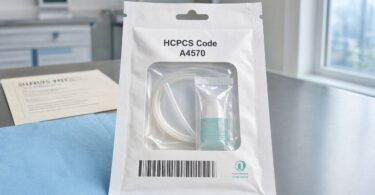
Navigating the world of Healthcare Common Procedure Coding System (HCPCS) codes can feel like trying to solve a puzzle while blindfolded. When it comes to something as seemingly simple as oral acetaminophen, the coding landscape gets surprisingly complex. Many billers and coders scratch their heads daily, wondering why a drug as common as Tylenol doesn’t have a straightforward billing pathway.
This guide cuts through the noise. We will walk you through exactly what you need to know about coding oral acetaminophen, from the specific HCPCS codes you might encounter to the critical distinction between physician-administered and take-home oral drugs. You will learn to avoid denials, understand Medicare’s specific rules, and code with confidence.
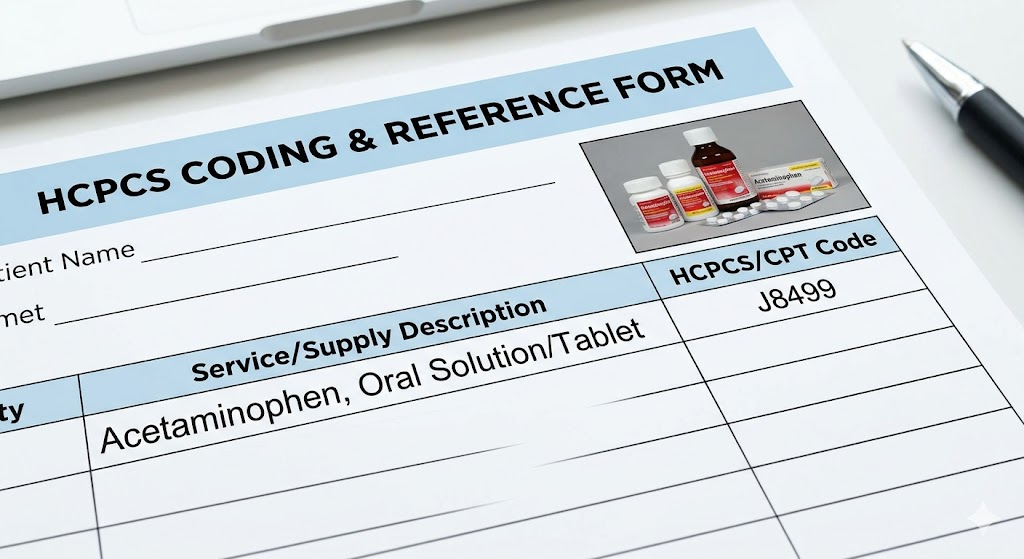
Understanding the HCPCS Coding System
Before we pinpoint the exact code for oral acetaminophen, you need a solid grasp of the system itself. HCPCS is not just one list; it is a multi-layered coding structure designed to standardize healthcare claims across the United States.
What is HCPCS?
HCPCS stands for Healthcare Common Procedure Coding System. The Centers for Medicare & Medicaid Services (CMS) created this system to ensure that healthcare providers, suppliers, and insurers all speak the same language when submitting claims for services, equipment, and medications.
The system splits into two primary levels.
Level I is simply the American Medical Association’s Current Procedural Terminology (CPT) codes. These codes cover medical procedures and services performed by physicians and other healthcare professionals. You will not find drugs here.
Level II is where we find the codes for products, supplies, and services not included in CPT. This level houses the codes for durable medical equipment, ambulance services, and, crucially for our discussion, drugs administered in the outpatient setting.
Level II codes are alphanumeric. They always start with a single letter followed by four numbers. The letter tells you the category. For drugs, the most important letter is “J.”
J-Codes: The Backbone of Drug Billing
J-codes are the workhorses of outpatient drug reimbursement. Physicians, hospital outpatient departments, and ambulatory surgical centers use these codes to bill for injectable and infusible drugs. Sometimes, they also cover oral drugs, but only under very specific circumstances.
Here is a critical point that trips up many new coders: Not every oral drug has a J-code. The HCPCS system primarily assigns J-codes to drugs that a healthcare professional administers directly to a patient in a clinical setting. The code covers the cost of the drug itself, and often the administration is billed separately using a CPT code.
Common examples of J-codes include J0885 for epoetin alfa and J9260 for methotrexate injection. But what about a pill a patient swallows while sitting in the emergency room? That is where our search for the acetaminophen oral code begins.
The Direct Answer: HCPCS Code for Acetaminophen Oral
Let’s address the question head-on. If you are looking in the HCPCS Level II manual for a dedicated, standalone code that represents “acetaminophen oral tablet supplied in a physician’s office,” you will not find one. There is no specific, unique HCPCS code created exclusively for oral acetaminophen tablets like there is for injectable forms.
However, this does not mean you cannot bill for it. The correct coding pathway depends on the context, the payer, and how the patient receives the medication.
The Myth of a Single “Oral Acetaminophen” J-Code
Many online forums and outdated reference guides might lead you to believe a specific J-code exists for oral acetaminophen. They might cite retired codes or confuse the oral form with the intravenous preparation. Let’s be clear: CMS does not maintain a dedicated J-code for a standard oral acetaminophen tablet given to a patient in a physician’s office.
The reason is primarily financial. CMS evaluates whether the cost of a drug is high enough to justify separate packaging and payment outside of the practice expense. Since oral acetaminophen is incredibly inexpensive and widely available over the counter, Medicare bundles its cost into the payment for the visit or service.
The Valid Code: A9150
If the clinical scenario justifies billing the oral acetaminophen separately from the visit—and your payer requires a HCPCS code—you will typically use A9150.
A9150 is the HCPCS code for “Non-prescription drug, oral, per dose.” This code is a miscellaneous, catch-all code. It covers any non-prescription medication given by mouth. Acetaminophen fits perfectly into this category.
Here is the breakdown of when you would use A9150:
- The patient receives an over-the-counter strength acetaminophen tablet.
- The provider dispenses a single dose or a limited supply from the office stock.
- The payer explicitly allows separate reimbursement for non-prescription oral drugs, which is rare.
Important Note: Medicare almost never pays for A9150 separately. Medicare Administrative Contractors (MACs) consider the cost of over-the-counter oral medications as part of the overhead of running a practice. Submitting this code to Medicare often results in an automatic denial or a zero-payment explanation of benefits.
Other Potential Codes (NOC and Unlisted)
Beyond A9150, some coders might look toward Not Otherwise Classified (NOC) codes.
J8999 is the HCPCS code for “Prescription drug, oral, not otherwise classified.” You should not use this code for acetaminophen because standard acetaminophen is not a prescription drug. Using J8999 incorrectly signals to the payer that you gave a costly, branded prescription item, which is inaccurate.
J3490 is the code for “Unclassified drugs.” While technically possible, this code usually requires manual review, extensive documentation, and a detailed invoice. Submitting this for a few pennies’ worth of Tylenol would clog the system and likely irritate the payer.
The most honest and accurate path, when a code is mandated, remains A9150. But the deeper truth is that most of the time, you should not bill a HCPCS code for oral acetaminophen at all. Let’s explore why.
When Oral Drugs Get a HCPCS Code: The Crucial Context
You might be thinking, “Wait, I see J-codes for oral drugs all the time. Why is acetaminophen different?” The distinction lies in how CMS and commercial payers classify the drug’s purpose and cost.
Physician-Administered vs. Self-Administered
The golden rule of HCPCS drug coding is this: The system primarily covers drugs “incident to” a physician’s service that cannot reasonably be self-administered.
Injectable chemotherapy, intravenous antibiotics, and intra-articular steroid injections all fall into this bucket. The patient needs a skilled professional to deliver the drug. Oral drugs generally do not fit this mold because a patient can simply swallow a pill on their own.
CMS publishes explicit guidance in the Medicare Benefit Policy Manual. It states that drugs usually self-administered by the patient are not covered as a separately payable service under Part B. Since oral acetaminophen is a classic example of a self-administered drug, Medicare logically excludes it from separate J-code payment.
The Oral Anti-Emetic Exception
There are exceptions to this rule that prove the point. CMS has created specific J-codes for certain expensive, prescription oral anti-emetic drugs used alongside chemotherapy.
For instance, J8501 covers oral aprepitant, and J8650 covers oral nabilone. These drugs are oral, but they are:
- Available by prescription only.
- Extremely costly compared to OTC alternatives.
- Essential to the efficacy of a separately covered infusion service (chemotherapy).
This exception highlights why acetaminophen doesn’t get its own code. It fails all three tests. It is available over the counter, it is inexpensive, and its use is typically symptomatic rather than integral to a complex, separately billable procedure.
Billing Acetaminophen Oral in Different Settings
The physical location where you give the pill dramatically changes the billing rules. Let’s break down the scenarios from the emergency room to the private practice.
In the Physician’s Office
Imagine a patient comes in with a tension headache after a minor office procedure. The physician orders one 325mg acetaminophen tablet from the office stock.
Standard Rule: You absorb the cost into the office visit. You bill an Evaluation and Management (E/M) code based on the visit’s complexity. The cost of that single acetaminophen tablet factors into the practice’s overall overhead, which theoretically influences the Relative Value Unit (RVU) calculations for the E/M service.
Coding Action: Do not add a HCPCS code. Do not pass the cost to the patient as a separate line item on a CMS-1500 form. Doing so violates payer contracts and invites a swift denial.
In the Hospital Outpatient Department
Now picture a patient in the emergency department. The patient has a fever of 101°F. The triage nurse provides a dose of acetaminophen orally while the patient waits for the physician.
Standard Rule: This cost packages into the facility’s payment. Medicare uses the Outpatient Prospective Payment System (OPPS). Under OPPS, hospitals receive a single bundled payment (Ambulatory Payment Classification, or APC) for the entire visit. Cheap oral drugs like acetaminophen do not trigger a separate APC payment.
Coding Action: The hospital does not generate a separate line item for the acetaminophen on the UB-04 claim form. The drug cost becomes part of the statistical tracking of hospital supplies, but it does not hit the patient’s bill as a separate charge.
In the Ambulatory Surgical Center (ASC)
An ASC patient wakes up from anesthesia with mild pain. The recovery room nurse provides an oral dose of acetaminophen.
Standard Rule: Just like the hospital outpatient setting, the ASC payment is a bundled, prospectively determined rate. The facility’s fee covers routine medications, including oral analgesics, provided during the recovery period.
Coding Action: No separate HCPCS code is billed. The ASC simply provides the medication as part of the global perioperative care.
The NDC Connection: Identifying the Right Product
While you don’t bill a J-code for oral acetaminophen, understanding the National Drug Code (NDC) system is still vital for inventory management, electronic health records, and the rare case where a payer might request it.
What is an NDC Number?
The FDA assigns NDC numbers to every marketed drug product. The NDC is a 10-digit or 11-digit number that appears on the drug’s packaging. It serves as a universal product identifier.
The number breaks into three segments:
- The Labeler Code: Identifies the manufacturer or distributor.
- The Product Code: Identifies the specific strength, dosage form, and formulation.
- The Package Code: Identifies the package size and type.
For acetaminophen oral tablets, thousands of NDCs exist. Johnson & Johnson’s Tylenol Regular Strength has different NDCs than a generic hospital supplier like Major Pharmaceuticals.
NDC vs. HCPCS
A common source of confusion is the relationship between NDC and HCPCS. NDC identifies the product precisely. HCPCS identifies the category for billing. Payers like Medicaid and some commercial plans are increasingly asking providers to submit NDC numbers alongside HCPCS codes on claims to enable precise rebate calculations.
In fact, some state Medicaid agencies require an NDC on every physician-administered drug claim. If you gave an oral acetaminophen dose in such a state and needed to report it, you would list the A9150 code and then provide the NDC from the bottle you used. This allows the state to invoice the manufacturer for a rebate.
Comparative Table: HCPCS vs. NDC
| Feature | HCPCS (A9150 example) | NDC (Acetaminophen example) |
|---|---|---|
| Purpose | Billing a category of items | Identifying a unique product |
| Issued By | CMS | FDA |
| Format | 1 Letter + 4 Numbers | 10 or 11 digits (Labeler-Product-Package) |
| Granularity | “Non-Rx, oral, per dose” | “Tylenol 325mg tablet, bottle of 100” |
| Payer Use | Claim reimbursement | Drug rebates, inventory, product tracking |
The A9150 Deep Dive: Purpose and Limitations
Let’s look more closely at A9150, as it is the code that most directly answers the query for an oral acetaminophen HCPCS code, even if it is a problematic answer for reimbursement.
Purpose of A9150
The official description reads: “Non-prescription drug, oral, per dose.” CMS created this code to provide a generic bucket for any OTC oral medication that a provider might need to account for. This code is a supply code, not a therapeutic drug code like the J-codes.
Its purpose is typically informational or for tracking in specific capitated or grant-funded environments. For example, a Federally Qualified Health Center (FQHC) might use A9150 internally to track the cost of OTC samples dispensed under a specific program, even if they don’t expect payment from a third-party insurer.
Limitations of A9150
The limitations of A9150 are severe and cannot be overstated.
- No Reimbursement from Medicare: As noted, MACs universally reject this code for separate payment. The cost is considered part of the MPPR (Multiple Procedure Payment Reduction) logic or the E/M service’s practice expense RVU.
- Denials from Commercial Payers: Most commercial insurers follow Medicare’s lead. They bundle payment for incident-to supplies. Submitting A9150 often generates an explanation of benefits stating the service is “bundled” or “inclusive.”
- No Specified Dosage: Unlike J-codes with precise dosage descriptors (e.g., “per 10 mg”), A9150 is “per dose.” This provides no information about the strength given. It treats a 81mg aspirin exactly the same as a 500mg extra-strength acetaminophen.
- Contractual Risk: Some provider contracts explicitly prohibit balance billing the patient for services bundled into the primary procedure code. Trying to bill A9150 to a patient as a separate cash item could trigger an audit or a breach-of-contract claim.
Medicare’s Stance on Self-Administered Drugs
To truly master this topic, you must internalize Medicare’s philosophy on self-administered drugs. This policy forms the unbreachable wall against separate payment for oral acetaminophen.
The Medicare Benefit Policy Manual
Chapter 15, Section 50 of the Medicare Benefit Policy Manual lays out the rule for drugs and biologicals. It states that Medicare Part B covers drugs that are “not usually self-administered.” The patient must not be able to competently and safely take the medication without the direct supervision of a medical professional.
CMS provides a non-exhaustive list of drugs considered usually self-administered. Unsurprisingly, oral analgesics like acetaminophen, ibuprofen, and aspirin headline this list. The manual explicitly instructs contractors to exclude these from coverage.
The “Incident To” Requirement
For a drug to be covered “incident to” a physician’s service, it must represent a cost to the practice that is beyond the routine overhead. A physician ordering restocking of an emergency crash cart drug like IV epinephrine incurs a significant cost. Ordering a 500-count bottle of generic acetaminophen for $5.00 does not reach this threshold.
Medicare’s logic is straightforward: the service of providing the pill is integral to the visit, but the drug cost itself is trivial and bundled into the clinical labor portion of the E/M payment.
Commercial Payer Guidelines: A Cautious Approach
Commercial payers like UnitedHealthcare, Aetna, and Blue Cross Blue Shield plans often have their own, more opaque rules. However, a consistent principle applies: do not bill for cheap OTC supplies.
Most commercial provider manuals include a clause covering “supplies and materials.” A typical statement reads:
“Routine supplies, including bandages, gowns, gloves, and non-prescription oral medications, are considered part of our allowance for the primary service and are not separately reimbursable.”
Coding an A9150 for an OTC pill with a commercial payer risks labeling your practice as an outlier. Electronic claim editing software, like the ClaimCheck or code-auditing tools used by insurers, automatically flags these submissions. Repeated flagging can trigger a post-payment audit review.
The One Possible Exception: Worker’s Compensation
Worker’s compensation fee schedules are a different animal altogether. Some state-mandated fee schedules require providers to itemize every single supply, down to the gauze pad and the Tylenol tablet.
If you operate in a state like California or New York under worker’s comp, you might legitimately bill A9150 with an NDC for oral acetaminophen. Always check the specific state’s Official Medical Fee Schedule (OMFS) pharmaceutical section. Even here, some states use NDC-based pricing software that sets the reimbursement to a few pennies, making the administrative cost of billing it almost not worth the effort.
Step-by-Step: How to Bill When a Code is Required
Despite all the logic against it, there are times when a billing system or a specific protocol forces your hand. If you must enter a line item for oral acetaminophen, follow this conservative, defensible process.
Step 1: Verify the Payer’s Policy
Before submitting the claim, check the payer’s medical policy. Search their online portal for “A9150 coverage” or “self-administered drug billing policy.” If the policy explicitly states A9150 is non-covered, submitting it is an exercise in futility that can trigger an unnecessary denial.
Step 2: Document Medical Necessity
This step is non-negotiable. The provider’s note must clearly justify why the medication was necessary during the visit and why the patient could not wait to take their own supply at home.
Insufficient Documentation: “Pt c/o headache. Provided Tylenol.”
Sufficient Documentation: “Patient presented with acute post-lumbar puncture headache, 7/10 severity. Oral acetaminophen 500mg administered from office supply to manage pain rapidly so patient could safely discharge home. Patient instructed not to take additional acetaminophen at home for 4 hours.”
Step 3: Select the Correct Code and Modifier
Choose A9150. Do not use a prescription oral drug J-code. If the payer requires it, add the appropriate HCPCS modifier.
- Modifier -GY: Use this if an Advance Beneficiary Notice (ABN) is on file and you expect Medicare to deny the item as not medically necessary. This modifier statutorily excludes the item from coverage, ensuring the patient knows they will be responsible.
- Modifier -KX: Use this cautiously and only if specific medical policy criteria are met and documented. This modifier certifies that you have met the requirements outlined in the policy.
Step 4: Include the NDC on the Claim
In field 24D of the CMS-1500 form, enter the 11-digit NDC from the actual product dispensed, preceded by “N4.” In the shaded area above, enter the quantity (e.g., “2” for two tablets) and the unit of measurement (e.g., “UN” for units).
This step converts a questionable claim into a granularly documented one. It shows the payer exactly what the patient received.
Step 5: Submit and Track
Submit the claim and track it meticulously. If the payer denies the code, appeal if you have a strong, unique case. Otherwise, write off the minimal cost and adjust your billing office’s standard operating procedure to avoid repeating the denial.
The Critical Role of Documentation and Medical Necessity
We touched on documentation, but its centrality demands its own section. In the world of healthcare reimbursement, if you didn’t document it, it didn’t happen.
The SOAP Note Standard
Providers should integrate medication administration into the standard SOAP (Subjective, Objective, Assessment, Plan) note.
In the “Objective” section, document the vital signs before and after the dose. “Temp 100.2°F. Patient given acetaminophen 650mg PO. Repeat temp at 15 min: 99.1°F.”
In the “Plan” section, tie the administration to the overall medical decision-making. “Administered oral acetaminophen for rapid antipyresis to facilitate timely discharge and avoid sepsis workup.”
Linking to Procedures
If a patient gets the pill because of a specific procedure, link the two. “During 30-minute observation period post-laceration repair, patient c/o pain at suture site. Provided acetaminophen 500mg PO. Patient tolerated well.”
This narrative creates a clear, logical flow that a claims reviewer can easily follow. It transforms the acetaminophen from an incidental, forgotten supply to an integral component of a complete medical service.
Common Claim Submission Errors to Avoid
Coding errors waste time and money. Here are the most frequent mistakes billers make when dealing with oral acetaminophen and similar supplies.
Error 1: Billing A9150 to Medicare Without a Modifier.
This is the classic mistake. The claim processes automatically and returns with a denial code CO-97: The benefit for this service is included in the payment/allowance for another service. You’ve now created a denial that your billing staff must work, costing more in labor than the drug itself.
Error 2: Using J3490 as a Workaround.
A creative but misguided coder might think, “I’ll just use the unclassified drug code J3490 and put the NDC.” Medicare and commercial auditors view this as an attempt to circumvent the bundled payment system. It will trigger a manual review and a request for records. For a bottle of Tylenol, this is a high-risk, zero-reward strategy.
Error 3: Confusing Oral with IV Coding.
This is surprisingly common. IV acetaminophen (brand name Ofirmev) has a dedicated, billable J-code: J0135 (Injection, acetaminophen, 10 mg). A coder rushing through a chart might see “acetaminophen” and reflexively code J0135. This is a massive error. J0135 is an expensive, separately reimbursable code for an FDA-approved injectable product. Using it for a pill is fraudulent.
Error 4: Balance Billing the Patient.
A provider decides that since insurance won’t pay, the patient should pay the $0.25 retail cost. The provider adds a line item of A9150 charging the patient $5.00 directly. If the provider has a contract with the payer that precludes balance billing for bundled services, this action can violate the provider agreement and open the practice to a lawsuit or contract termination.
Comparative Analysis: Oral vs. IV Acetaminophen Coding
The difference between coding oral and IV acetaminophen is the most instructive contrast in this entire guide. It reveals precisely what CMS values and why.
Table: Oral vs. IV Acetaminophen Billing
| Feature | Oral Acetaminophen | IV Acetaminophen (Ofirmev) |
|---|---|---|
| HCPCS Code | A9150 (Not payable by Medicare) | J0135 (Payable by Medicare) |
| Code Type | Supply/Miscellaneous | Therapeutic Drug |
| FDA Status | Over-the-Counter (OTC) | Prescription Only (Rx) |
| Cost | Less than $0.10 per dose | $30-$50+ per dose |
| Administration | Self-administered (swallowed) | Physician-administered (IV infusion) |
| Medicare Coverage | Bundled into visit payment | Paid separately under Part B |
| NDC Example | 50580-449-10 (Tylenol 500mg) | 43825-0004-10 (Ofirmev 1000mg) |
This table makes the logic crystal clear. The HCPCS system and CMS reimbursement policy pivot entirely on the route of administration and the drug’s acquisition cost. The expensive, professionally administered IV drug gets a dedicated J-code and separate payment. The cheap, self-administered pill gets absorbed into the practice’s overhead.
Navigating Specific Payer Scenarios
Every payer is a little different. While the principles are universal, the execution details vary.
Scenario 1: Traditional Medicare Part B
Action: Do not bill a separate HCPCS code. Document the dose in the medical record. The cost is bundled.
Why: Medicare MACs strictly enforce the self-administered drug policy. Their software automatically bundles all A-code supply submissions.
Scenario 2: Medicare Advantage (Part C)
Action: Check the plan’s specific “Medical Necessity and Coverage” guide. Most mirror traditional Medicare. A few progressive plans may allow a token payment for tracking purposes. Do not bill without calling provider relations to confirm.
Why: Medicare Advantage plans have the flexibility to cover extra benefits, but they rarely choose to unbundle OTC drugs.
Scenario 3: State Medicaid
Action: Bill A9150 with the NDC in the claim detail segment. Expect a reimbursement of $0.01 to $0.05.
Why: Many state Medicaid agencies want the NDC for the Federal Drug Rebate Program, even if the payment is negligible. The claim submission triggers a rebate from the manufacturer, so the state mandates the billing.
Scenario 4: TRICARE
Action: Do not bill separately for OTC drugs.
Why: TRICARE policy explicitly states that “over-the-counter (OTC) medications are not covered except for certain insulin products, OTC continuous glucose monitors, and prescription-strength OTC medication that requires a prescription to be dispensed.”
FAQs: HCPCS Codes and Oral Acetaminophen
Q1: Is there a specific J-code for oral acetaminophen?
No. There is no dedicated J-code in the HCPCS Level II manual for oral acetaminophen tablets. The only acetaminophen-specific J-code is J0135, which is for the intravenous (IV) formulation.
Q2: Can I use J0135 for an oral dose if I adjust the units?
Absolutely not. This is considered fraudulent coding. J0135 describes an injectable drug product (10mg per unit). The oral and IV forms have completely different NDCs, FDA approvals, and costs. Using an IV code for an oral drug will result in a claim denial or, worse, an audit.
Q3: What code do I use for acetaminophen with codeine (Tylenol #3)?
This is a prescription drug, so the rules change. There is no single specific J-code for acetaminophen-codeine. You would typically use a Not Otherwise Classified (NOC) code like J8999 (Prescription drug, oral, not otherwise classified). You must submit the claim with the correct NDC and a clear description in Box 19 of the CMS-1500 form.
Q4: Can I bill a patient cash for an OTC medication dispensed in the office?
You can, but you must be extremely careful. If you are a participating provider with the patient’s insurance plan, your contract likely prohibits billing the patient for items already bundled into the covered service. You could bill a patient who is uninsured (cash pay) or one for whom you have a signed ABN stating the service is not covered and the patient accepts financial responsibility.
Q5: Does the HCPCS code for oral acetaminophen exist under the ASP (Average Sales Price) drug pricing files?
No. A9150 is a supply code, not a drug code. It does not appear on the CMS ASP Drug Pricing files, which are exclusively for Part B covered drugs. J0135, the IV formulation, does appear on this file with a payment limit based on ASP+6%.
Expert Tips for Flawless Ambulatory Drug Coding
Beyond the specific code, these best practices will protect your practice’s revenue and keep your claims clean.
Tip 1: Master the “Bundle vs. Bill” Flowchart.
Create a simple flowchart for your staff. Does the patient receive a prescription drug via a route other than oral? BILL IT (J-code). Is the drug an OTC oral pill? BUNDLE IT (No separate line item). This simple heuristic resolves 95% of cases.
Tip 2: Use Revenue Codes Wisely.
For hospital billing (UB-04), even if you don’t expect payment, you may need to report the drug for cost-reporting purposes. Use revenue code 0250 (General Pharmacy) or a more specific code like 0258 (Non-prescription Drugs) with a zero or nominal charge. Always follow your facility’s chargemaster coordinator’s instructions.
Tip 3: Keep a Payer Policy Cheat Sheet.
Don’t rely on memory. Create a digital or physical folder with the medical policy documents from your top 10 payers. Highlight the section on self-administered drugs. When a question arises, your answer is just a search away.
Tip 4: Train Providers on Documentation.
Coders cannot code from nothing. A 15-minute in-service training with your physicians on documenting “in-office medication administration” can save hours of coding queries. Show them examples of a good note versus a bad note. They only need to add one or two sentences to make the clinical story complete.
Tip 5: Never Code for Reimbursement First.
The mantra of a good coder is “code for accuracy, not for payment.” The desire to capture every penny of cost is understandable. But forcing a code like A9150 or J3490 onto a claim for a product you know is bundled introduces compliance risk. The cost of an audit far outweighs the lost $0.10 for a pill.
The Future of HCPCS and OTC Drug Coding
The landscape of healthcare coding is not static. Trends suggest where the coding of simple OTC medications might be heading.
Currently, the system operates on a medicalized, procedure-centric model. An OTC pill in a clinic is invisible to the billing system, while the same pill prescribed and picked up at a pharmacy creates a discrete claim under Medicare Part D or a pharmacy benefit manager.
However, as value-based care and global budgeting models grow, the need to track every resource consumed during an episode of care increases. Accountable Care Organizations (ACOs) want granular data on everything, including OTC analgesics, to understand total cost of care.
We may see future coding systems like ICD-11 or updates to HCPCS that require better reporting of OTC dispensing, not for separate fee-for-service payment, but for population health data collection. For now, the coder’s job remains to fit the clinical reality into the current, somewhat rigid framework accurately and ethically.
Conclusion
The specific HCPCS code for oral acetaminophen is A9150, a supply code representing a non-prescription oral drug per dose. However, this code is almost never separately payable by Medicare or commercial insurers, as OTC oral medications are bundled into the primary service payment. The key takeaway for billers is to distinguish between an injectable drug like J0135, which merits separate billing, and an inexpensive oral supply like acetaminophen, which should be documented but absorbed into the practice’s overhead without a separate line item.
Additional Resources
For the most current and authoritative information, consult these official resources:
- CMS HCPCS Quarterly Updates: https://www.cms.gov/medicare/coding-billing/healthcare-common-procedure-system/quarterly-update
- FDA National Drug Code Directory: https://www.accessdata.fda.gov/scripts/cder/ndc/index.cfm
Disclaimer: This article provides general information on medical coding and billing. It is not legal advice, nor does it guarantee reimbursement from any specific payer. Coding rules change frequently and vary by payer, jurisdiction, and individual patient circumstances. Always verify coding with the official payer guidelines and a certified professional coder before submitting claims.