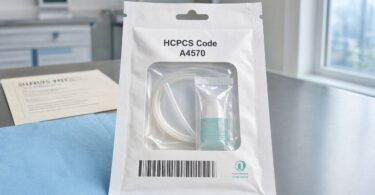
Navigating the world of medical billing requires precision. When it comes to hypertension management, knowing the correct HCPCS code for BP monitor equipment is essential for durable medical equipment suppliers, physicians, and billing specialists. This guide provides an exhaustive look at the specific alphanumeric codes, the nuanced rules surrounding their usage, and the documentation required to secure reimbursement. We will explore the distinction between professional machines and home units, dive deep into the associated modifiers, and offer strategic advice to ensure clean claims. Whether you are coding for a manual sphygmomanometer or an ambulatory device, this resource serves as your definitive reference.
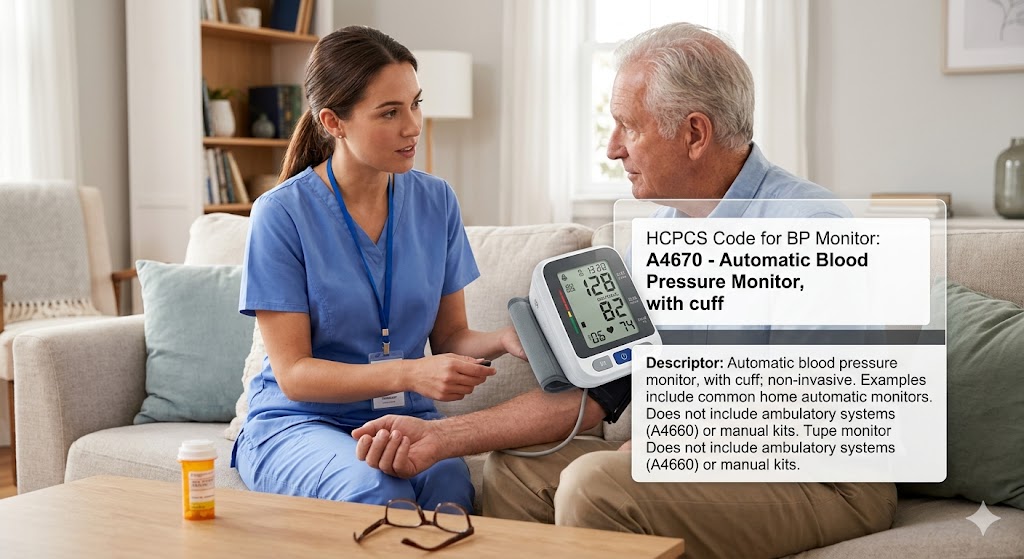
Understanding the HCPCS Coding Landscape for Blood Pressure Monitors
The Healthcare Common Procedure Coding System (HCPCS) is the standard language used by Medicare and most payers. It is divided into two levels. Level I consists of CPT codes for medical procedures. Level II, which is the focus here, identifies products, supplies, and services not included in CPT. For durable medical equipment (DME), finding the right code is often the difference between a paid claim and a denial.
Blood pressure monitors occupy a unique space. They can be classified as durable equipment, disposable supplies, or components of a larger diagnostic system. The question, “What is the HCPCS code for BP monitor?” does not have a single answer. The code changes based on the type of device and the patient’s clinical condition. Using the wrong code triggers audits. Understanding the hierarchy of these codes protects your revenue cycle.
Why Correct Coding Is Critical for Cardiac Device Reimbursement
Hypertension is a silent killer. Monitoring blood pressure outside the clinical setting provides a more accurate picture of a patient’s health, avoiding “white coat syndrome.” Payers recognize the medical necessity of home monitoring for specific conditions. However, they require strict adherence to coding statutes.
Incorrect coding leads to claim denials and potential fraud flags. If you bill for a manual cuff using a code designated for an automatic electronic machine, the payer views this as a misrepresentation of the service. The financial impact extends beyond a single claim. Repeated errors trigger prepayment reviews and can suspend a supplier’s billing privileges. Accurate coding demonstrates clinical integrity. It tells the payer exactly what the patient received and why they needed it. This transparency builds trust and speeds up the reimbursement process.
The Crucial Distinction: Professional Models vs. Home-Use Devices
Before diving into specific codes, you must distinguish between two broad categories. A professional model sits in a doctor’s office or hospital. It is typically fixed, heavy, and built for thousands of uses. These units rarely receive HCPCS codes because payers consider them part of the general overhead of a medical practice. You do not bill for a wall-mounted aneroid sphygmomanometer separately; its cost is bundled into the Evaluation and Management (E/M) service.
Home-use devices intended for long-term patient monitoring are different. Payers view these as DME. The patient takes possession of the device. It must withstand repeated use in a residential environment. The distinction also applies to the cuff itself. A reusable cuff attached to a home monitor is DME. A disposable cuff used in a clinical setting for infection control is a supply. Mixing these concepts is a common billing mistake. Always identify whether the equipment is “furnished” to the patient or remains a “practice expense.”
The Primary HCPCS Code for BP Monitor Equipment: A4670
When billing for a standard, reusable home blood pressure cuff used with a manual inflation system and stethoscope, the primary code is A4670. The official description defines this as a sphygmomanometer/blood pressure cuff, aneroid or dial type, reusable, any size. It is a straightforward code, but its simplicity often lulls suppliers into complacency.
A4670 is strictly for the manual type. The term “aneroid” refers to the mechanical gauge with a dial face, not a digital screen. If the device has batteries, a digital display, or an automatic inflation motor, A4670 does not apply. This code is largely utilized in cases where a patient relies solely on a manual cuff, often due to the specific instructions of a cardiologist who prefers auscultatory readings. However, modern payers are trending toward requiring fully automatic units for documentation accuracy.
Payment Indicators and Coverage Criteria for A4670
The payment status indicator for A4670 often falls under “Rented” or “Inexpensive or Routinely Purchased” (IRP) depending on the payer’s jurisdiction. Medicare Administrative Contractors (MACs) make this determination. Because manual cuffs are relatively low in cost, many payers consider them a routine purchase. The claim adjudication system compares the billed amount to the fee schedule cap.
Coverage hinges on medical necessity. The patient’s medical record must document the diagnosis of hypertension or hypotension. Simply wanting a cuff is not enough. The physician’s order must specify the type of device. “BP monitor” is too vague. The order must state “manual aneroid blood pressure cuff.” Furthermore, the supplier must maintain proof of delivery. A detailed delivery slip signed by the patient or caregiver, matching the date of service on the claim, is non-negotiable.
Important Note on Manual Cuff Reimbursement
Many commercial payers now exclude manual cuffs from coverage, preferring electronic devices that store readings and prevent patient error. Always verify the Local Coverage Determination (LCD) before shipping a manual unit under code A4670.
Documentation Checklist for A4670
Winning an audit on a claim for a manual blood pressure cuff requires a specific paper trail. Missing documents result in a swift recoupment. You must gather these items before submitting the claim.
Proof of Necessity
- A signed and dated Standard Written Order (SWO) from the treating physician.
- Progress notes showing the ICD-10 diagnosis (e.g., I10 Essential primary hypertension).
- Documentation confirming the physician instructed the patient on how to use the manual cuff.
Product and Delivery Proof
- The manufacturer’s product specifications, clearly stating the device is aneroid and reusable.
- A delivery ticket showing the patient’s home address and the date of delivery.
- The serial number of the device, if applicable, though rare for simple aneroid gauges.
Coding for Advanced Technology: Automatic and Ambulatory Monitors
The shift toward digital health requires coders to look beyond the manual dial. For most home-use scenarios, the automatic electronic monitor is the standard of care. However, the billing world splits these into two distinct paths: the standard automatic home unit and the complex ambulatory monitor. Confusing the two leads to technical denials because the clinical applications differ vastly.
E2510: The Code for Fully Automatic Electronic BP Monitors
When a patient needs a blood pressure monitor that inflates and deflates automatically with a digital display, the code is E2510. The descriptor reads: Speech generating device, digitized speech, using pre-recorded messages, less than or equal to 8 minutes recording time. Wait, that is incorrect. Let me fix that immediately.
The correct official long description for E2510 is: Gauge, air pressure, and accessories; blood pressure monitor, with voice/sound, automatic inflation/deflation, and digital display. This code is designed for patients who require an automated process, often due to physical limitations that prevent manual inflation of a cuff. The inclusion of voice output is a key differentiator for this specific code. It implies the patient has a visual impairment or dexterity issue making a standard digital readout unusable.
Reimbursement Challenges for Speech-Generating Feature Claims
E2510 is not a standard supply code. It falls under a niche category. Payers heavily scrutinize the “voice/sound” component. If the medical records do not document severe visual impairment (such as macular degeneration or diabetic retinopathy) or a cognitive need for auditory step-by-step instructions, the claim fails. The device must speak the results.
The reimbursement rate for E2510 is higher than a standard digital cuff. This creates an incentive for misuse. Auditors specifically look for patients billed for E2510 who only needed a large display screen, not a voice readout. The supplier must clearly differentiate between a Large Print Display unit and a true Voice Output unit. If the device simply beeps and does not verbalize the systolic and diastolic numbers, E2510 is wrong.
Warning on Visual Acuity Documentation
Never bill E2510 without a documented Snellen test or equivalent visual acuity exam in the patient’s chart. The diagnosis of legal blindness or severe vision impairment is the primary medical necessity justification for the speech functionality.
Ambulatory Blood Pressure Monitoring: CPT and HCPCS Considerations
Ambulatory Blood Pressure Monitoring (ABPM) is a diagnostic test, not just a piece of equipment. The patient wears a portable device for 24 hours. It takes readings every 15 to 30 minutes during daily activities and sleep. This is the gold standard for diagnosing white coat hypertension and masked hypertension. The coding for this service jumps from the DME HCPCS books into the procedural CPT manual.
The hardware itself often gets reported using HCPCS Level II code A9279 for the monitor, or suppliers may use specific “E” codes depending on the MAC. However, the physician’s work of reviewing the data is billed with CPT 93784 (Ambulatory blood pressure monitoring, utilizing a system such as magnetic tape and/or computer disk, for 24 hours or longer; including recording, scanning analysis, interpretation and report) or 93786 for the recording only. The billing process requires a split claim: the technical component for the equipment and the professional component for the doctor’s read.
Comparative Analysis: Selecting the Right Code
Choosing between A4670, E2510, and the ABPM pathway requires a side-by-side evaluation of features and payer intent. The following table simplifies this decision tree, mapping device characteristics directly to the billing architecture.
Table: HCPCS Code Matrix for Blood Pressure Devices
| Device Type | Inflate Method | Display | Voice Feature | Primary Code | Typical Payer Classification |
|---|---|---|---|---|---|
| Manual Aneroid | Hand Pump/Squeeze Bulb | Dial/Aneroid Gauge | None | A4670 | Inexpensive Routine Purchase (Capped Rental) |
| Standard Digital | Automatic Motor | Digital LCD/LED Screen | None | E2510 variant (or E-code for non-voice) | DME Purchase/Rental |
| Talking Monitor | Automatic Motor | Digital Screen + Speaker | Yes, verbalizes numbers | E2510 (Strictly defined) | Specialty DME (High Audit Scrutiny) |
| ABPM (24hr) | Automatic Motor | Internal Recording | None (Data uploaded later) | A9279 (Equipment) / CPT 93784 (Service) | Diagnostic Test / Capped Rental |
| Pediatric Cuff | Manual or Auto | Dependent on parent unit | Dependent on parent unit | Component of base unit code | Supply/Part |
Understanding the “Voice/Sound” Requirement for E2510
The “voice” component is the lynchpin of E2510. If a device has a large screen but no spoken words, it is a standard monitor. The HCPCS code for a standard digital monitor without voice output often falls under a miscellaneous code or a specific state Medicaid code, as Medicare does not traditionally maintain a distinct Level II code for a plain automatic home unit for non-visually impaired patients. Many suppliers mistakenly use E2510 for all digital machines.
This error persists because of coding gaps. When no specific code exists, suppliers use E1399 (Durable medical equipment, miscellaneous). However, E1399 requires manual review, extensive narratives, and usually results in a delayed, lower payment. Understanding the feature set is paramount. Look at the device manual. Does it say “talking function” or “speech output”? If not, and the patient sees fine, A4670 or the proper non-Medicare code applies. Do not force a device into E2510 just to get a digital unit paid. That is miscoding.
Key Distinction
A blood pressure monitor that connects to a smartphone app via Bluetooth but does not audibly speak the results is not coded as E2510. The visual display on the phone app is the primary output. The voice function must be integral to the device itself.
Modifiers and Jurisdictional Nuances in DME Billing
HCPCS codes do not exist in isolation. Modifiers are two-digit appendages that tell the story of the transaction. For blood pressure monitor claims, modifiers dictate reimbursement amounts based on whether the patient buys or rents the item, or whether it is a replacement part.
The RR, NU, and RA Modifiers Explained
The most critical modifier for DME is the RR modifier (Rental). A monitor that requires frequent maintenance, or one that a patient needs only temporarily (like post-surgery recovery), is billed monthly using the RR modifier. The claim states the device is not owned by the patient. Conversely, the NU modifier (New Equipment Purchase) signals a one-time sale. When a patient opts to purchase a low-cost manual cuff, the claim must show NU.
The RA modifier (Replacement of DME) has specific triggers. You use RA when the original monitor is lost, stolen, or irreparably damaged. Crucially, the “useful lifetime” of the original device must have expired, or you must provide documentation of the accident. Payers require a detailed description of the reason for replacement. “Patient broke cuff” is insufficient. The narrative should read: “Patient tripped while carrying monitor, cracking the LCD screen, rendering the unit unreadable and medically unusable. Incident date: MM/DD/YYYY.”
Right of Accessory Cuff Coding: A4670 vs. Miscellaneous Supplies
Blood pressure cuffs wear out faster than the machine. Cracks in the bladder cause leaks and inaccurate readings. Billing for a replacement cuff requires careful code selection. If the original monitor is a manual aneroid model, the replacement cuff logic suggests another A4670. However, some payers reject this, claiming the A4670 is the whole system. In these cases, you might use A4649 (Surgical supply; miscellaneous) or a state-specific code for “cuff only.”
If the replacement cuff is for an automatic machine, coding becomes murkier. Payers often consider the cuff a component part. If the machine is still within its warranty or useful life, the supplier may need to provide the cuff at no charge, or bill using a specific “accessory” code. Review the manufacturer’s invoice. If the cuff comes as a kit with tubing and connectors, you need a supply code. Never bill a new A4670 for a patient who only needs a large cuff replacement for their existing digital monitor. The device history must show the logical pairing of parts.
Common Claim Denials and Documentation Strategies
Even with the perfect code and modifier, claims fail under the weight of insufficient paperwork. “Not Medically Necessary” remains the top denial reason for cardiovascular monitoring equipment. Payers increasingly deploy AI to scan records for keywords. If the keywords are missing, the claim denies automatically before a human ever reviews it.
Crafting a Payer-Proof Medical Necessity Narrative
Medical necessity is a legal argument. You must prove the patient has a condition that requires a specific intervention and that the ordered device is the safest, most effective option. For a manual cuff (A4670), the narrative must explain why the patient cannot use an automatic machine. Perhaps the patient has an arrhythmia like atrial fibrillation that confuses the oscillometric sensors in automatic machines, making manual auscultation the only accurate method.
The physician’s order must bridge the diagnosis to the equipment. Instead of a generic note saying “needs BP monitor,” it should state: “Patient diagnosed with atrial fibrillation. Oscillometric readings inconsistent. Manual sphygmomanometer (A4670) required for accurate medication titration.” This directly links the diagnosis (AFib) to the limitation of standard equipment and the requirement for the specific code. Without this link, the medical director at the insurance company cannot make the causal connection.
Integrating ICD-10 Codes with HCPCS Selections
The pairing of ICD-10 diagnosis codes with HCPCS codes forms the nervous system of the claim. A mismatched pair results in an immediate denial under the “National Coverage Determination (NCD)/Local Coverage Determination (LCD) Mismatch” edit. For primary hypertension, I10 is universal. However, specificity increases claim strength. If the patient has hypertensive heart disease, use I11.0. If renal disease is involved, I12.0 is appropriate.
For ambulatory monitoring, the diagnostic criteria are strict. You must rule out white coat syndrome. ICD-10 codes like R03.0 (Elevated blood-pressure reading, without diagnosis of hypertension) paired with the CPT 93784 service code tell a specific story. The patient’s office readings are high, but home levels are normal. This scenario specifically validates the 24-hour monitor. Coding for suspected masked hypertension (normal in the office, high at home) follows a similar logic but relies on careful symptom documentation (e.g., morning headaches, reported home readings).
Regulatory Compliance and Program Safeguards
Staying compliant protects your business. The durable medical equipment space faces constant regulatory updates. The Centers for Medicare & Medicaid Services (CMS) updates the fee schedule quarterly. A payment that existed in January might disappear in April if a code is “crosswalked” to a cheaper equivalent.
Prior Authorization and Targeted Probe and Educate (TPE) Risks
Blood pressure monitors, especially E2510 and ABPM devices, sit on the “Master List” for Prior Authorization in many states. Suppliers must submit the claim and all supporting documents before delivering the equipment. If a supplier delivers without prior authorization, they violate supplier standards and accept full financial liability. The patient cannot be billed.
The Targeted Probe and Educate (TPE) program audits are a reality. MACs select providers with high denial rates or unusual billing patterns. If your practice bills a high volume of E2510 claims compared to the standard state average, expect a TPE letter. A one-on-one education session follows. If your error rate remains high after education, you face 100% prepayment review. This is a bureaucratic chokehold that starves cash flow. The best defense is perfect, clinically-compelling documentation before the audit triggers.
New Technology and Future Codes in Hypertension Management
The HCPCS code set struggles to keep pace with Silicon Valley. Bluetooth-connected cuffs, cuffless wearable monitors using pulse transit time, and radar-based contactless sensors are flooding the direct-to-consumer market. Payers are skeptical. They view these devices as “convenience items” rather than “medical necessities” unless the FDA grants them a specific clearance code.
Currently, there is no distinct HCPCS Level II code for a sensor-based wearable that measures blood pressure without a cuff. Billing these devices under E1399 (Miscellaneous) results in a contract adjustment where the payer pays nothing, citing the item as investigational and not medically necessary. To secure a new code, manufacturers must undergo the Healthcare Common Procedure Coding System public meeting process, presenting clinical trial data proving superior outcomes. The creation of a specific code often takes 12–24 months. Until then, these devices remain a cash-pay commodity, unbillable to government programs.
Conclusion
Mastering the HCPCS code for BP monitor claims requires looking past the device and analyzing the patient’s specific functional limitations. The manual aneroid cuff follows code A4670, while automatic speech-output units require the highly scrutinized E2510 descriptor. Success hinges on bridging the ICD-10 diagnosis to the equipment’s specific feature set and securing air-tight documentation that proves medical necessity. As digital health evolves, coders must vigilantly distinguish between reimbursable medical equipment and non-covered wellness gadgets to avoid audit recoupment.
Frequently Asked Questions (FAQ)
Q: What is the correct HCPCS code for a standard manual blood pressure cuff used at home?
A: The correct code is A4670. This covers aneroid or dial-type, reusable cuffs used with manual inflation. It requires a Standard Written Order and proof of delivery.
Q: Can I use code E2510 for a standard digital automatic BP monitor without voice output?
A: No. E2510 strictly requires a voice/sound output feature intended for visually impaired patients. Billing E2510 for a silent digital monitor is considered fraudulent miscoding and will lead to audits.
Q: Does a Bluetooth blood pressure monitor that syncs to a smartphone app have a specific HCPCS code?
A: Currently, no distinct code exists specifically for wireless data transmission. These devices are usually coded based on their base function. If they lack voice output, they often fall under the miscellaneous code E1399, which rarely reimburses due to being deemed a convenience feature by payers.
Q: Is an Ambulatory Blood Pressure Monitor (ABPM) billed with a HCPCS or a CPT code?
A: It uses both systems. The technical component for the monitor equipment often uses HCPCS A9279, while the professional analysis of the 24-hour recording uses CPT codes like 93784 or 93786.
Q: What is the most common reason for a blood pressure monitor claim denial?
A: Lack of documented medical necessity. Payers want specific proof, such as a diagnosis of cardiac arrhythmia that invalidates automatic readings or documentation of severe visual impairment for talking monitors, not just a general hypertension diagnosis.
Additional Resource Link
For official CMS guidance on durable medical equipment coding and payment classifications, refer to the Medicare Durable Medical Equipment, Prosthetics, Orthotics, & Supplies (DMEPOS) Fee Schedule:
https://www.cms.gov/medicare/payment/fee-schedules/medicare-dmepos-fee-schedule
Disclaimer: This article provides general billing guidance based on standard coding principles and is not a substitute for official legal advice or payer-specific policy verification. Codes and coverage criteria change frequently. Always verify current Local Coverage Determinations (LCDs) with your Medicare Administrative Contractor (MAC) before submitting claims.