
Canadians often pride themselves on a healthcare system that covers doctor visits and hospital stays without direct bills. Yet, a visit to the dentist can provoke a very different reaction—stunned silence at the reception desk when the treatment plan is presented. A single root canal and crown can easily exceed $2,000. A full set of dental implants might rival the price of a modest new car. Why does this happen in a country known for universal healthcare? The answer is not simple. It involves a complex web of historical policy decisions, professional standards, business realities, and geography. This guide explores every angle of this question with honesty and depth.
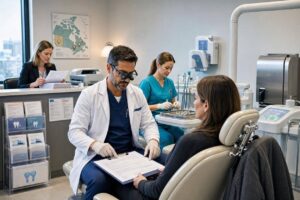
Why Is Dental Treatment In Canada So Costly?
The Great Divide: Medicine vs. Dentistry
Most Canadians do not realize that the roots of expensive dental care stretch back to the 1960s. When Medicare was born, it focused on hospitals and physicians. Dental care was left out. This was not an oversight. At the time, dental disease was viewed as a mechanical problem, not a medical one. Teeth were seen as something to drill and fill, separate from the rest of the body.
Today, we know oral health connects directly to heart disease, diabetes, and overall wellness. But the policy framework has not caught up. This historical separation created an entirely different economic model for dentistry. Without public bargaining power, dental fees grew with market forces, not government budgets.
Important Note: The Canada Health Act defines medically necessary services covered by public insurance. Dental services, with rare exceptions like certain jaw surgeries performed in hospitals, are explicitly excluded.
The True Cost Breakdown: Where Your Money Goes
Patients see a lump sum on a treatment estimate. That number is not an arbitrary invention. It represents a meticulous accumulation of visible and invisible costs. Understanding this breakdown can transform confusion into clarity, even if it does not lower the bill.
Clinical Operating Expenses
A dental office is not just a chair and a drill. It is a miniature hospital with stringent requirements. The overhead costs are staggering and relentless.
Rent and Location
Most dental clinics occupy professional buildings or retail spaces in high-traffic areas. A 1,500-square-foot clinic in Toronto or Vancouver might carry a monthly lease of $8,000 to $15,000. Rural clinics pay less, but they also see fewer patients. The lease cost for every square foot must be covered by treatment fees.
Infection Control and Sterilization
This is a massive, non-negotiable expense. Dental offices follow Infection Prevention and Control (IPAC) standards set by provincial regulatory bodies. Every instrument that touches a patient must be heat-sterilized in an autoclave. These machines cost thousands of dollars to purchase and hundreds monthly to maintain and test.
Biological indicators, chemical indicators, and spore testing happen regularly. Disposable items—gloves, masks, suction tips, syringe needles, bibs, barriers for surfaces—are used once and discarded. A single treatment room can generate several pounds of biomedical waste per day. Disposal of this waste requires a specialized, licensed service that charges by weight. These costs are continuous and have increased significantly in recent years.
Utilities and Technology
A dental clinic uses enormous amounts of electricity. Compressors, suction motors, digital imaging sensors, computers, servers, sterilization equipment, and bright operating lights run all day. High-speed handpieces require compressed air at precise pressures. Digital panoramic and 3D cone beam computed tomography (CBCT) machines are now standard for implants and complex procedures. A CBCT machine can cost $80,000 to $150,000 to purchase, plus annual software licensing and maintenance fees.
Laboratory and Materials: The Artisan Component
Many patients assume the dentist creates crowns, bridges, and dentures in a back room. In nearly all cases, a separate dental laboratory does this work. These labs represent a hidden workforce of highly skilled technicians.
The Laboratory Fee
When a dentist charges $1,500 for a crown, a significant portion—often $300 to $500—goes directly to the laboratory. The lab technician pours models, sculpts wax, invests the pattern, casts metal, layers porcelain, and stains the final restoration to match natural teeth. This is not factory work. It is custom artistry for a single human being.
Canadian labs pay their technicians professional wages, operate in commercial spaces, and purchase precious metals and advanced ceramics. A full arch of custom implant abutments and crowns from a top Canadian lab can cost the dentist over $5,000 before any markup.
A Comparative Look at Lab Involvement
| Restoration Type | Lab Fabrication Steps | Typical Lab Cost to Dentist | Why It Matters |
|---|---|---|---|
| Single Porcelain Crown | Model pour, die trimming, wax-up, investing, casting or milling, porcelain layering, glazing | $250 – $450 | Multiple furnace cycles and hand artistry |
| Custom Abutment for Implant | CAD design, precision milling from titanium or zirconia, finishing | $300 – $500 | Requires exact fit to implant interface |
| Full Denture | Impressions, custom trays, wax rims, tooth setup, processing, finishing | $600 – $1,200 per arch | Multiple patient appointments involved |
| All-on-4 Hybrid Prosthesis | Complex framework design, verification jig, multiple try-ins, final acrylic or porcelain processing | $3,000 – $6,000 | Weeks of lab work, high material cost |
Human Resources: The Team Behind the Chair
Labor is typically the single largest expense for a dental practice, often consuming 25% to 30% of gross revenue. The team extends far beyond the dentist.
Dental Assistants
Assistants are regulated in most provinces. They hold certification and maintain continuing education. They do not simply hand instruments. They manage infection control, take radiographs, perform coronal polishing, and often handle treatment coordination. A certified dental assistant (CDA) in a major city expects $28 to $38 per hour, plus benefits, paid vacation, and statutory holidays.
Dental Hygienists
Hygienists are primary care providers in their own right. They hold diplomas or bachelor’s degrees and are regulated by their own colleges. They assess periodontal health, perform scaling and root planing, administer local anesthesia, and educate patients. An independent dental hygienist can establish their own practice. In a dental office, an experienced hygienist earns $45 to $60 per hour. If a practice employs two hygienists, annual labor costs for hygiene alone can approach $200,000.
Administrative Staff
The front desk team is the practice nerve center. They answer calls, schedule complex appointments, submit insurance predeterminations, manage accounts receivable, order supplies, and soothe anxious patients. Skilled treatment coordinators understand the language of dentistry and can discuss finances clearly. They expect competitive wages, often $22 to $30 per hour.
Regulatory and Insurance Burdens
Every dentist in Canada must hold a license from a provincial regulatory body. These bodies set standards, investigate complaints, and mandate continuing education.
Annual Licensing and College Fees
Dentists pay substantial annual fees to their provincial College of Dental Surgeons. These fees fund the regulatory apparatus—inspections, complaint committees, and quality assurance programs. Dentists also pay fees to their professional association, liability insurance premiums, and often commercial dental corporation fees. Total annual professional expenses for a general dentist can exceed $10,000 before they see a single patient.
Professional Liability Insurance
The Canadian Dental Protective Association (CDPA) or commercial equivalents provide malpractice protection. Premiums vary by procedure mix and claims history. A dentist performing surgical extractions, implants, and sedation will pay significantly more than one focusing on basic restorative care. Annual premiums of $5,000 to $15,000 are common.
Regulatory Compliance Costs
Infection control standards, privacy legislation compliance, employment standards, workplace safety (WHMIS, occupational health and safety), and accessibility requirements all generate administrative and physical costs. A privacy breach protocol, mandatory staff training on accessibility, regular radiology equipment inspections—each item adds to the overhead base that treatment fees must cover.
The Insurance Factor: A Cost Spiral
The relationship between dental insurance and fees is complex and, some argue, circular. Dental offices do not set prices based on what insurance pays. They set fees based on operational realities. But insurance presence indirectly inflates costs across the system.
How Dental Insurance Works in Canada
Most Canadians with dental coverage have it through employer-sponsored plans. Insurers contract with plan sponsors (employers) to administer benefits. They do not set fees. They establish fee guides and reimbursement levels. A typical plan covers 80% of preventive and basic care, 50% of major procedures like crowns, up to an annual maximum, often $1,500 to $2,500. This maximum has barely budged in decades, while costs have multiplied.
The Assignment of Benefits Problem
When a patient assigns benefits to the dental office, the office submits the claim electronically and receives payment directly. This streamlines the process but creates a triangle of expectation. The patient often only focuses on their copayment, not the total fee. This reduced price sensitivity means there is less downward pressure on fees from consumer behavior.
Predeterminations and Administrative Load
For major treatment plans, offices submit predeterminations—detailed clinical narratives and cost estimates—to insurers. This process consumes substantial staff time. Some complex plans require hours of phone time. This administrative burden is built into overhead costs and, by extension, fees.
The Fee Guide Phenomenon
Each provincial dental association publishes a suggested fee guide. These guides are not mandatory. Dentists can charge above or below. However, insurers use these guides as a benchmark to determine reimbursement. Over time, fee guides have increased annually, often outpacing general inflation. Critics argue the guides function as a price floor. Supporters counter that they reflect the genuine cost of providing care.
Urban Geography and Practice Density
Walk through downtown Toronto, Vancouver, or Montreal, and count the dental offices. In some neighborhoods, you will find a clinic every block. This density appears to offer choice and competition, which should theoretically lower prices. Reality is more nuanced.
Saturation and Marketing Costs
High density forces practices to differentiate. This differentiation requires investment in technology, interior design, and marketing. A practice opening in a competitive urban market might spend $50,000 on a website, search engine optimization, and social media presence before opening. These costs amortize into treatment fees.
Demographic Targeting
Practices in affluent urban areas may invest heavily in amenities—noise-cancelling headphones, virtual reality headsets, aromatherapy, massage chairs. While these enhance patient experience, they elevate the operational cost structure. Fees reflect this positioning.
Rural and Northern Realities
The cost of care in rural and northern communities presents a different picture. Operating costs are sometimes lower for rent, but they spike dramatically for supplies. Shipping impressions, sending lab work, and receiving materials incurs surcharges. Staff recruitment is extremely difficult. Locum dentists flown into remote communities command premiums. Patients in these regions may face both high fees and limited provider choice.
The Cost of Education: The Dentist’s Personal Overhead
A dental student in Canada graduates with staggering debt. This financial burden influences career decisions and, eventually, the fee structure of the profession.
The Price of Becoming a Dentist
Canadian dental schools charge domestic students between $25,000 and $60,000 per year in tuition alone. A four-year program can generate $200,000 or more in tuition debt. Add living expenses in expensive cities, equipment purchases, and examination fees, and total debt can approach $300,000. International dental graduates completing qualifying programs face even higher costs.
Debt Service and Practice Investment
Upon graduation, the new dentist faces immediate debt repayment. Monthly loan payments may be $2,000 to $3,000. Simultaneously, they may seek to purchase a practice or buy into a partnership. Practice purchase prices in urban markets range from $500,000 to over $1 million. Commercial loan payments add another $5,000 to $10,000 monthly. A young dentist may carry combined personal and practice debt service of $10,000 monthly before earning a personal income. This reality inevitably shapes the perception of what constitutes a necessary fee.
Specialization and Advanced Technology
General dentists increasingly offer advanced services previously reserved for specialists. This improves access but requires capital investment that flows into fees.
Cone Beam CT and Digital Workflows
Implant placement now routinely involves 3D imaging. A CBCT scan allows visualization of bone volume, nerve pathways, and sinus positions. The machine, the lead-lined room, the annual physics inspections, and the interpretive software all cost money. Practices that invest in intraoral scanners for digital impressions can reduce lab shipping costs and patient discomfort, but the scanner itself costs $25,000 to $45,000.
Implant Components and Inventory
Dental implants are not a single product. They are a system. The practice must maintain an inventory of implants of varying diameters and lengths, healing abutments, impression copings, and surgical drills. A single implant driver can cost $150. These precision medical devices are manufactured to micron-level tolerances and carry associated research and development costs from their manufacturers. The cost of a single implant fixture and the necessary components to the dental office can be $400 to $600 before the dentist performs any work.
Continuing Education and Specialization
Specialists—oral surgeons, periodontists, endodontists, prosthodontists—complete several additional years of training, often accumulating more debt and forgoing income during residency. Their fees reflect this advanced expertise. A prosthodontist managing a full-mouth rehabilitation brings a depth of knowledge about occlusion and long-term stability that commands appropriate compensation.
Public Coverage: A Fragmented Safety Net
The Canadian mosaic of dental coverage for specific populations is complex and varies provincially. Understanding what exists can help families access what they qualify for, while understanding the gaps explains why so many face high personal costs.
Federal Programs
Non-Insured Health Benefits (NIHB)
This program serves registered First Nations and recognized Inuit. Coverage includes diagnostic, preventive, restorative, endodontic, periodontal, oral surgery, and prosthodontic services. There are pre-authorization requirements for major procedures and frequency limitations. The program uses a fee schedule that some providers find adequate and others do not, leading to access challenges in certain communities.
Interim Federal Health Program (IFHP)
Resettled refugees and protected persons receive basic and emergency dental coverage through this program. Coverage levels have changed over time and currently offer a reasonable range of services, though major restorative work often requires pre-approval.
Canadian Armed Forces and Veterans
Active military personnel receive dental care through military clinics. Veterans with service-related conditions may qualify for treatment benefits through Veterans Affairs Canada. Eligibility criteria are specific and not all veterans qualify.
Provincial and Territorial Programs
Each province and territory administers its own targeted programs. This patchwork creates significant variation in access.
| Jurisdiction | Key Program | Population Covered | Scope |
|---|---|---|---|
| Ontario | Healthy Smiles Ontario | Children 17 and under from low-income households | Comprehensive basic and preventive |
| Ontario | Ontario Seniors Dental Care Program | Low-income seniors 65+ | Basic preventive and restorative, some denture services |
| British Columbia | BC Dental Program | Children from low-income families | Basic care, limited frequency |
| Alberta | Alberta Dental Assistance for Seniors | Low-income seniors | Basic services, scaled fees |
| Quebec | Régie de l’assurance maladie du Québec (RAMQ) | Children under 10, social assistance recipients | Basic services, limited to specific providers |
| Nova Scotia | Children’s Oral Health Program | Children 14 and under | Preventive, basic restorative |
| Newfoundland & Labrador | Children’s Dental Health Program | Children 12 and under | Preventive, basic restorative |
Important Note: Even for covered populations, benefits are often capped annually or procedurally. A senior needing a root canal and crown might find the root canal covered but the crown excluded, or covered only with a significant patient copayment. The illusion of full coverage often shatters when complex treatment is required.
Hospital Dental Care and Surgical Coverage
Some dental procedures performed in a hospital setting receive coverage under provincial health plans. This typically applies to:
-
Complex extractions requiring general anesthesia for patients with severe medical comorbidities or developmental disabilities
-
Treatment of traumatic facial injuries and fractures
-
Biopsies and removal of oral pathology
-
Orthognathic surgery to correct significant jaw discrepancies when deemed medically necessary
The facility and anesthesia fees in these cases may be publicly funded. However, the dental or surgical professional fees for the dental aspect of treatment may still be billed to the patient or their private insurance. This complexity catches many patients off guard.
The Dental Materials Continuum
A significant portion of any restoration’s cost lies in the materials selected. The range of options is vast, and the choices have real clinical and financial implications.
Direct Restorative Materials
Dental Amalgam
Silver amalgam has been used for over 150 years. It is durable, technique-insensitive, and inexpensive. A two-surface amalgam might cost $180 to $300. It remains a viable option for posterior teeth, particularly where moisture control is challenging. However, patient preference for tooth-colored materials has reduced its use.
Composite Resin
Tooth-colored fillings require meticulous isolation, incremental placement, and light curing. The material cost is higher, and the procedure time is longer. A two-surface posterior composite might cost $250 to $450. Recent advances in bulk-fill composites and universal bonding agents have improved efficiency but material costs remain elevated.
Glass Ionomer and Resin-Modified Glass Ionomer
These materials release fluoride and bond chemically to tooth structure. They are used for root surface restorations, pediatric dentistry, and as liners. They are less costly than composite but also less durable under heavy chewing forces.
Indirect Restorative Materials
Full Cast Gold
Gold alloys remain the gold standard for longevity. A well-crafted gold crown can last several decades. However, the metal cost fluctuates with commodity markets. A high-noble alloy with significant gold content adds $150 to $300 in metal cost alone to a crown fee.
Porcelain-Fused-to-Metal (PFM)
This has been the workhorse of fixed prosthodontics for decades. A metal substructure provides strength, while layered porcelain provides aesthetics. PFM crowns require significant lab time and skill. They remain slightly less expensive than all-ceramic alternatives in most practices.
Lithium Disilicate and Zirconia
Pressed lithium disilicate (e.g., IPS e.max) offers excellent aesthetics and good strength. Monolithic zirconia provides extreme durability with acceptable aesthetics for posterior teeth. Layered zirconia maximizes both properties but carries a higher lab fee. These materials are milled in sophisticated CAD/CAM systems. A posterior monolithic zirconia crown might carry a lab fee of $250 to $400, while an aesthetic anterior zirconia crown with layering could exceed $500 in lab charges alone.
Implant Materials
Implant Fixtures
Most implants are commercially pure titanium or titanium alloy (Ti-6Al-4V). Some manufacturers offer zirconia implants for metal-free requests. The manufacturing precision and surface treatment technology drive the cost. Major brands invest heavily in research, documented long-term success rates, and warranty programs. This development cost is embedded in the component price.
Abutments and Prosthetic Components
Stock abutments are machined by the implant manufacturer to precise tolerances. Custom abutments are designed using CAD software and milled from titanium or zirconia. Custom solutions improve emergence profile and aesthetics but add $150 to $350 to the prosthetic cost. Screws, drivers, and laboratory analogs all add incremental expense.
Navigating the High-Cost Environment: Practical Strategies
While patients cannot restructure the dental economic system, they can employ strategies to manage costs without compromising care.
Timing and Sequencing
A comprehensive treatment plan can often be phased over months or years. The dentist diagnoses all existing conditions but the patient addresses them in order of urgency.
Priority One: Infection and Pain
Active decay causing pain, abscessed teeth requiring root canal treatment or extraction, and broken teeth with sharp edges. These conditions worsen without intervention and can lead to emergency room visits, which the health system covers but the dental aftermath does not.
Priority Two: Structural Breakdown
Large fillings with recurrent decay, cracked teeth at risk of fracture, and teeth with pulpal exposure from decay. Crowns in this category prevent tooth loss and more expensive future treatment.
Priority Three: Aesthetics and Function
Replacement of missing teeth with bridges or implants, whitening, and orthodontics. These enhance quality of life and function but can be planned when finances allow.
Phasing Example Table
| Phase | Treatment | Estimated Fee Range | Timeline | Rationale |
|---|---|---|---|---|
| 1 | Extraction of tooth #30, bone graft | $500 – $800 | Immediate | Active infection, non-restorable |
| 2 | Root canal #14, crown #14 | $2,500 – $3,200 | 2 months | Large decay, nerve involvement |
| 3 | Crowns #3, #4 | $3,000 – $3,800 | 6 months | Cracked alloy restorations |
| 4 | Implant #30, implant crown | $4,500 – $6,000 | 12 months | Final replacement after bone healing |
| 5 | Whitening, bonding #7, #10 | $1,200 – $2,000 | 18 months | Aesthetic concerns |
Dental Schools: A Viable Alternative
All ten Canadian dental schools offer treatment provided by students under direct faculty supervision. The process is slower, and appointments are longer. Fees, however, are substantially lower—often 30% to 50% of private practice rates.
What to Expect
Patients undergo a comprehensive screening. Those with complex needs suitable for teaching are accepted. Appointments are scheduled in three-hour blocks. A faculty dentist checks every step—anesthetic depth, preparation quality, impression accuracy, restoration fit. Quality control is rigorous. The trade-off is time. A crown that takes two appointments in private practice might require four or five in a school setting. For patients with limited finances and flexible schedules, this option can mean the difference between treatment and no treatment.
List of Canadian Dental Schools:
-
University of British Columbia
-
University of Alberta
-
University of Saskatchewan
-
University of Manitoba
-
University of Toronto
-
Western University
-
McGill University
-
Université de Montréal
-
Université Laval
-
Dalhousie University
Dental Tourism: A Calculated Risk
Some Canadians travel abroad for major dental work. Popular destinations include Mexico, Costa Rica, Hungary, and Turkey. Savings can be real—50% to 70% reductions on implant and crown fees are common. The calculus must include:
-
Round-trip airfare and accommodation
-
Lost income during travel
-
Inability to easily return for complications
-
Lack of regulatory recourse if standards fall short
-
Differences in material standards and infection control
-
The Canadian dentist who must manage complications may charge full fees
A patient who receives eight crowns in a single day abroad might save $10,000. If two of those crowns fail within three years due to open margins or poor occlusion, the savings may disappear in re-treatment costs—and the original provider is an ocean away.
Insurance Maximization and Timing
For those with dental benefits, strategic timing can improve utilization.
Calendar Year Maximums
Most plans reset January 1. Treatment started in November can continue in January, accessing two years of benefits for a single treatment plan. A crown preparation in December and insertion in January splits the fee across two benefit periods.
Coordination of Benefits
Spouses with dual coverage can coordinate benefits, often achieving 100% reimbursement for basic services and significantly reducing out-of-pocket costs for major care. Understanding the order of payment rules is essential.
Alternative Benefit Arrangements
Some employers offer Health Spending Accounts (HSAs) or flexible spending accounts. These allow pre-tax dollars to pay for dental expenses not covered by insurance. Maximizing these contributions effectively provides a discount equal to the marginal tax rate.
The Political and Future Landscape
The Canadian Dental Care Plan (CDCP) represents the most significant policy shift in a generation. Understanding its structure and limitations clarifies the current cost conversation.
The Canadian Dental Care Plan (CDCP)
Announced and beginning implementation, the CDCP aims to provide coverage for uninsured Canadians with household incomes below $90,000. The plan covers a defined list of services including preventive care, basic restorative treatment, removable prosthetics, and some surgical care. It does not extend universal coverage to all Canadians. It leaves significant copayments for those near the income threshold. The impact on overall fee structures remains to be seen.
Important Note: The CDCP uses a fee schedule that may differ from provincial association guides. Some providers may charge above the CDCP reimbursement rate, leaving patients responsible for the balance. This is a critical distinction from provincial medical plans where extra-billing is prohibited.
The Rise of Corporate Dentistry
Consolidation is reshaping the industry. Dental Service Organizations (DSOs) acquire practices, centralize administration, and negotiate supply contracts. This can improve efficiency and reduce some operational costs. Whether these savings reach patients in the form of lower fees is an open question. Some observers worry that corporate pressure for quarterly growth may lead to over-treatment. Others see potential for economies of scale benefiting consumers.
Technology as Cost Driver and Cost Saver
Intraoral scanners, 3D printers, and chairside milling units allow same-day crowns without laboratory involvement. A practice can produce a monolithic ceramic crown in 90 minutes. The capital cost is high, but the elimination of the lab fee for certain cases can lower the total fee or improve practice margins. As these technologies become more accessible and competition increases, some procedure costs may moderate.
The Emotional and Health Toll of Cost Barriers
Statistics show that one in five Canadians reports avoiding dental care due to cost. This is not just a financial metric. It is a human one. Avoided care means preventable decay progressing to abscesses. It means periodontal disease advancing silently, contributing to diabetic complications and cardiovascular inflammation. It means adults hiding their smiles, avoiding photographs, and limiting social and professional engagement.
Emergency rooms see dental-related visits daily. Patients present with severe pain, swelling, and infection. The ER can provide antibiotics and pain relief but cannot address the dental source. The patient is discharged, often with a prescription and a referral back to the system they could not afford in the first place. This cycle is costly to the health system and cruel to the patient.
A Note for Anxious Patients
Financial anxiety compounds clinical dental anxiety. Patients who fear the cost as much as the procedure delay care, which increases the complexity and cost when they finally present. Almost every dental office offers a conversation about finances before work begins. No one should feel ashamed to ask for a written treatment plan, to phase treatment, or to explore payment options. The nervous patient calling three clinics to compare fees is not a nuisance. They are an informed consumer making a rational decision in an expensive system.
Payment and Financing Options
Most dental offices recognize the burden fees impose and have developed mechanisms to help.
In-House Payment Plans
Some independent offices offer extended payment terms, especially for established patients. A $4,000 crown series might be paid over six months post-dated cheques or pre-authorized debits. Practices do not widely advertise this option, but a respectful conversation with the office manager often reveals flexibility.
Third-Party Healthcare Financing
Companies like Dentalcard, Medicard, and LendCare offer dedicated healthcare loans. These are personal loans, not revolving credit. Interest rates vary from competitive to high based on credit history. Patients should read terms carefully. A zero-percent promotional period that reverts to 29.9% if not fully repaid can be a trap.
Credit Cards with Introductory Offers
A patient with good credit might apply for a card offering 0% interest on purchases for 12 months. Charging treatment and repaying within the promotional period effectively finances the work at no cost. This requires discipline and secure employment.
Special Considerations for New Canadians
Immigrants and refugees face distinctive barriers. Language difficulties, unfamiliarity with the system, and cultural differences in healthcare expectations create confusion. A family from a country with socialized dental care may not understand why Canadian care costs so much. Settlement agencies can sometimes direct newcomers to low-cost clinics, dental school services, or community health centers with sliding fee scales.
The Interim Federal Health Program offers time-limited coverage for eligible newcomers. Transitioning from this coverage to private insurance or out-of-pocket payment creates a shocking financial cliff. Advance planning and early engagement with a dental office that understands newcomer challenges can smooth this transition.
Seniors and Fixed Incomes
Canada’s population is aging. Seniors are retaining more teeth than previous generations and living longer. This is a public health victory that creates a financial challenge. Crowns placed at age 50 now need replacement at age 75, 85, or beyond. A retiree on a fixed pension facing a $5,000 dental bill confronts impossible arithmetic.
Root Caries and Dry Mouth
Medications that cause xerostomia (dry mouth) are rampant among seniors. Saliva is the body’s natural cavity fighter. Without it, decay explodes, often at the gumline where it is difficult to restore. This creates a cycle of frequent, costly restorative care that many seniors cannot afford.
Dentures and Implant Retention
Traditional dentures become loose as bone resorbs over years. Implant-retained overdentures offer transformative stability but cost $8,000 to $15,000 per arch. Provincial senior dental programs rarely cover implants. The gap between what works and what is funded grows wider annually.
Comparing Canadian Dentistry Internationally
To fully appreciate the Canadian cost structure, a brief international comparison is useful. Canadian dental fees are not the world’s highest, but they are substantially higher than in many peer nations with similar living standards.
United States
U.S. fees are generally 10% to 30% higher than Canadian for comparable procedures in comparable urban markets. The U.S. system shares the private insurance, fee-for-service model but with even less public coverage for adults.
United Kingdom
National Health Service (NHS) dentistry sets fixed patient charges in three bands. A Band 3 course of treatment, which includes crowns, bridges, and dentures, costs £306.80 (approximately CAD $520) in England. Private dentistry in the UK is more expensive but still generally less than Canadian fees. The NHS model achieves these fees through cost-control measures, lower lab fees, and provider salaries that many Canadian dentists would find unviable.
Australia
Australia’s system more closely resembles Canada’s. High fees, private insurance, and a similar regulatory environment produce costs roughly comparable or slightly higher than Canada’s for major work.
Mexico
A crown that costs $1,500 in Canada can be done for $300 to $500 in Mexico. Lab costs, rent, and professional wages are orders of magnitude lower. This disparity drives the dental tourism industry. The debate about quality consistency is real, but the economic gradient is undeniable.
Why Not Here?
The absence of a single national fee schedule or universal public plan means Canadian fees are a product of input costs plus professional judgment. Those input costs—Canadian wages, Canadian commercial rents, Canadian regulatory compliance, Canadian lab fees—are near the top of the global scale.
The Honest Conversation with Your Dentist
The author has spoken with many Canadian dentists about fees. Most express genuine discomfort with the financial barrier their own bills represent. They did not enter the profession to turn people away. They also did not sign up for poverty after a decade of training and hundreds of thousands of dollars in debt. The tension is structural, not personal.
A productive conversation starts with transparency. A patient can say: “I understand this work needs to be done, and I value your expertise. My financial reality makes this full plan difficult right now. Can we discuss what must happen now, what can wait, and whether there are alternative materials or approaches that cost less?” This is not haggling. This is shared decision-making. Almost every dentist would prefer to treat a patient within their means than watch them leave untreated.
Questions Worth Asking
-
“What happens if I wait six months on this particular tooth?”
-
“Is there a different material that would be more affordable and still functional?”
-
“Do you offer any courtesy adjustment for full payment at the time of service?”
-
“Can we explore extraction versus root canal and crown for this tooth, with the pros and cons of each?”
-
“Would you be willing to submit a predetermination so I can see exactly what my insurance will pay before I commit?”
Red Flags to Watch
A patient should be cautious if a dentist pressures them into immediate, extensive treatment without written documentation. A rushed treatment plan with no alternatives presented, no phased options, and a demand for immediate full payment should trigger skepticism. Legitimate care can be urgent without being coercive. If the vibe feels like a timeshare presentation, seek a second opinion. That second opinion might cost $150 to $200 for an examination and radiographs but could save thousands if the treatment plan differs materially.
The Role of Preventative Care
The most effective cost-reduction strategy is prevention. This sounds simple, but its power is underappreciated. The patient who attends regular hygiene appointments, brushes effectively, flosses or uses interdental brushes, and addresses small lesions early will spend dramatically less over a lifetime than the patient who presents only in pain.
The Economics of Prevention
A hygiene appointment with periodic exam and bitewings costs $200 to $350. A small occlusal filling costs $200 to $300. Detected early, decay stays small. Left undetected, that same decay advances into dentin, approaches the pulp, and requires a root canal, build-up, and crown costing $3,000 to $4,000. The prevention pathway saves thousands. This is not blame; it is mathematics.
Periodontal Maintenance
Patients with periodontal disease who commit to three-month maintenance intervals keep their teeth. Those who lapse lose attachment, develop furcation involvement, and eventually face extractions and expensive replacement. A periodontal maintenance appointment is far less costly than an implant.
Conclusion
Dental treatment in Canada costs so much because every component in the system is expensive. The clinical space carries commercial rent. Instruments are precision medical devices. Materials come from sophisticated laboratories. Staff earn professional wages and deserve them. Regulations mandate rigorous safety standards. The dentist carries education debt and business risk. Insurance partially buffers the patient but also inflates the price environment. Public programs cover fragments of the population. The result is world-class care at world-class prices that exclude a significant portion of the population. Understanding this system does not make the bills smaller, but it replaces helpless confusion with grounded clarity.
Frequently Asked Questions
Why doesn’t Canadian Medicare cover dental care?
When Medicare was established in the 1960s, dental care was not considered a medically necessary service in the same way physician and hospital care was. The Canada Health Act focuses on medically necessary hospital and physician services. Efforts to expand coverage are ongoing but face substantial political and fiscal hurdles.
How can I find out what a dental procedure should cost in my province?
Each provincial dental association publishes a suggested fee guide. Many are available online or through public libraries. Some are behind member-only portals. You can call several offices in your area and request an estimate for a specific procedure code to understand the local range.
Are dental fees negotiable?
Direct fee haggling is uncommon and may be poorly received. Presenting your financial reality and asking about phasing, alternative materials, or courtesy discounts for upfront payment is a more productive approach.
What happens if I cannot afford a needed root canal?
Discuss extraction as an alternative with a full understanding of the consequences of tooth loss. Ask about payment plans, dental school clinics, or public health dental clinics in your region. Do not leave an infected tooth untreated; the infection can spread and require emergency hospitalization.
Do all Canadian dental offices charge the same fees?
No. Fees vary significantly by location, practice overhead, dentist experience, and market positioning. A rural general dentist may charge substantially less than a downtown specialist for the same procedure code.
Is dental work cheaper in Quebec compared to other provinces?
Historically, Quebec fees have been lower than some other provinces for certain procedures due to regulatory differences and the RAMQ fee structure for covered services. Private fees still vary.
Additional Resource:
Canadian Dental Association – Find a Dentist and Oral Health Information
https://www.cda-adc.ca


