
Dental care sits in an awkward space within the American healthcare system. Your mouth is part of your body, yet your health insurance often treats your teeth as if they belong to a separate entity altogether. This separation creates confusion when you face a significant dental procedure that blurs the line between medical necessity and routine oral care. You might wonder whether your health insurance will step in to cover what your dental plan refuses, or how to navigate the process of deducting dental costs when insurance falls short.
This guide walks you through every aspect of deducting dental costs, from understanding the bifurcated insurance system to claiming tax deductions on your federal return. We will explore the circumstances under which health insurance covers dental procedures, the documentation you need, the appeals process when coverage is denied, and the tax strategies that help you recoup some of what you spend. By the end, you will have a clear, actionable roadmap for minimizing your out-of-pocket dental burden through every available channel.
The process is not intuitive, and the rules change depending on whether you are dealing with an insurance claim, a tax deduction, or a flexible spending account reimbursement. We will address each pathway separately so you can pursue all of them simultaneously and maximize your recovery.
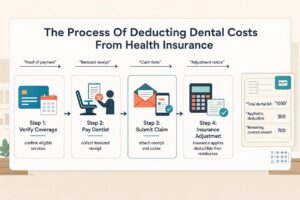
The Process Of Deducting Dental Costs From Health Insurance
Understanding the Dental-Medical Insurance Divide
Before you can deduct anything, you need to understand why dental and medical coverage operate as separate systems in the United States. This historical accident explains most of the friction you experience when seeking coverage for dental work.
How Dentistry Became Separated from Medicine
In the nineteenth century, medicine professionalized along a path that excluded dentistry. Physicians trained in universities and teaching hospitals, while dentists trained through apprenticeships and separate dental schools. The professions developed distinct licensing bodies, distinct journals, and distinct insurance structures.
When employer-sponsored health insurance emerged in the mid-twentieth century, dental care was not included. Dental insurance developed later as a separate product with different actuarial assumptions and benefit structures. This separation persists today, embedded in the infrastructure of insurance regulation, provider networks, and billing codes.
What Health Insurance Typically Covers for Dental
Health insurance plans generally exclude routine dental care. Cleanings, fillings, crowns, root canals, and orthodontics fall under the dental plan. However, health insurance does cover certain procedures that involve the mouth when they are deemed medical in nature.
Procedures that health insurance may cover include oral surgery to repair a fractured jaw, removal of impacted wisdom teeth when medically necessary, treatment of oral infections that threaten systemic health, biopsies of oral lesions, and dental procedures that are integral to covered medical treatments, such as jaw reconstruction following cancer surgery.
The key distinction is whether the procedure addresses a medical condition or a dental condition. A medical condition affects your overall health beyond your teeth and gums. An infection that could spread to your bloodstream is a medical issue. A cavity confined to a single tooth is a dental issue, even though both involve the same anatomical region.
The Role of Medical Billing Codes
Health insurers rely on Current Procedural Terminology codes and International Classification of Diseases codes to determine coverage. Dental procedures use a separate coding system called Current Dental Terminology codes. The mismatch between these coding systems creates administrative barriers.
For a health insurer to consider a dental-related claim, the provider must submit the claim using medical codes that describe a medical diagnosis and a medical procedure. Many dental offices are not equipped to bill medical insurance and lack familiarity with medical coding. Finding a provider who understands medical billing for dental procedures can be the difference between coverage and denial.
Identifying Dental Procedures That Health Insurance Might Cover
Not every dental procedure qualifies for health insurance consideration. The following categories represent the most common crossover procedures where medical coverage might apply.
Trauma-Related Dental Work
If you sustain injuries in an accident that damage your teeth, your health insurance often provides coverage. A car crash that knocks out teeth, a fall that fractures your jaw and damages teeth, or a sports injury requiring emergency dental reconstruction typically falls under medical coverage.
Health insurance treats these as accident-related injuries, not routine dental care. The medical necessity of restoring function and preventing infection drives the coverage decision. You will still need to meet your medical deductible and pay any applicable copays or coinsurance, but the procedure enters the medical claims stream rather than being rejected as a dental exclusion.
Medically Necessary Oral Surgery
Extraction of impacted wisdom teeth often crosses the medical-dental boundary. If the impaction causes infection, cyst formation, damage to adjacent teeth, or threatens the integrity of the jawbone, the extraction may qualify as a medical procedure. A simple extraction of an erupted wisdom tooth for convenience generally does not.
Other surgical procedures that may qualify include treatment of jaw cysts or tumors, corrective jaw surgery for skeletal deformities that impair function, and surgical treatment of temporomandibular joint disorders when conservative therapy has failed. Each requires documentation establishing that the condition is a medical problem, not simply a dental one.
Dental Work Integral to Covered Medical Treatment
When you need dental work as a prerequisite for a covered medical procedure, the line blurs. A classic example is a cardiac patient who needs dental clearance before valve replacement surgery. If the cardiac surgeon requires extraction of infected teeth to reduce endocarditis risk, the health insurer may cover those extractions as part of the cardiac surgical episode.
Similarly, head and neck radiation therapy often damages salivary glands and teeth. Dental restoration necessitated by radiation treatment may qualify for medical coverage as a complication management expense. Cancer patients in this situation should work with their oncologist and a hospital-based dentist who understands medical billing.
Sleep Apnea Oral Appliances
Obstructive sleep apnea is a medical condition diagnosed through sleep studies and treated by various modalities. When an oral appliance fabricated by a dentist serves as the treatment, the appliance and associated dental visits may be billable to health insurance.
The coverage determination usually requires that the patient has attempted and failed continuous positive airway pressure therapy or has a documented contraindication to CPAP. The dentist must work with the sleep physician to establish medical necessity and submit claims using appropriate medical codes.
The Step-by-Step Process of Filing a Dental Claim with Health Insurance
When you have identified a dental procedure that may qualify for health insurance coverage, follow this systematic process to maximize your chance of approval.
Step One: Obtain a Predetermination
Before scheduling the procedure, request that your provider submit a predetermination or prior authorization request to your health insurer. This request includes the proposed procedure codes, the diagnosis codes supporting medical necessity, and clinical documentation such as X-rays, photographs, and a narrative letter from the provider explaining why the procedure is medical rather than dental in nature.
A predetermination is not a guarantee of payment, but it provides a strong indication of whether the insurer will cover the procedure. If the predetermination comes back denied, you have an opportunity to address the issues before incurring the expense. You can also decide to proceed knowing you will bear the cost, rather than being surprised by a denial after the fact.
Step Two: Coordinate with Both Providers
When your treatment involves both a medical provider and a dental provider, coordination between them is essential. The medical provider, often a surgeon or physician, must document the medical necessity. The dental provider, who actually performs the procedure, must be willing to submit claims to health insurance using medical codes.
Find a dental provider who accepts medical insurance assignment. Hospital-based dental clinics and oral and maxillofacial surgeons routinely bill medical insurance and understand the coding requirements. A general dentist in private practice may not be set up to bill medical insurance at all.
Step Three: Submit the Claim with Complete Documentation
After the procedure, the provider submits the claim to your health insurer. The claim package should include the procedure codes with medical modifiers, the diagnosis codes linking the procedure to a medical condition, the provider’s notes describing clinical findings, relevant imaging, and any prior authorization or predetermination reference numbers.
If your provider will not submit to medical insurance, you may need to submit the claim yourself. Obtain a superbill from the provider with all relevant codes and a detailed receipt. Submit it to your insurer with a cover letter explaining the medical necessity of the procedure. Self-submission requires more effort from you but can succeed when the documentation is thorough.
Step Four: Track the Claim and Respond to Requests
Monitor the claim through your insurer’s online portal. Insurers frequently request additional information before making a coverage determination. Respond to these requests promptly, providing the documentation requested within the stated timeframe. A failure to respond in time results in an automatic denial that is harder to reverse than a pending claim.
Keep a log of every interaction with the insurer, including the date, the name of the representative, and a summary of what was discussed. This log becomes invaluable if you later need to appeal a denial.
Appealing a Denied Health Insurance Claim for Dental Work
Denials are common when dental procedures are submitted to health insurance. The initial denial is not the end of the process. Insurers count on a certain percentage of claimants giving up at the denial stage, which saves them money. Persistence pays.
Understanding the Reason for Denial
Read the Explanation of Benefits or denial letter carefully. It will cite a specific reason for the denial. Common reasons include the procedure being classified as dental rather than medical under the plan terms, lack of documented medical necessity, the provider being out of network, or the absence of prior authorization.
The denial reason determines your appeal strategy. If the insurer says the procedure is dental, you need to demonstrate that it is medical by providing additional clinical documentation and a stronger letter of medical necessity. If the denial is based on missing prior authorization, you may need to submit a retroactive authorization request with an explanation of why the procedure could not wait.
The Internal Appeal Process
Every health plan has an internal appeals process mandated by federal law for most plans. The denial letter will include instructions for filing an appeal and the deadline, usually 180 days from the date of the denial notice. Missing the appeal deadline waives your right to challenge the decision.
Your internal appeal should include a detailed letter rebutting each reason for denial point by point, additional clinical evidence supporting medical necessity, a letter from your treating physician explaining the medical basis for the procedure, peer-reviewed literature supporting the treatment when available, and any correspondence from the predetermination process.
Submit the appeal by certified mail with return receipt requested. This proves that the insurer received it and establishes the timeline for their required response, which is generally 30 days for a standard appeal.
The External Review Option
If the internal appeal is denied, you have the right to an external review by an independent third party. The denial of your internal appeal will include instructions for requesting external review. This review is binding on the insurer, meaning if the external reviewer decides in your favor, the insurer must pay.
External reviewers are often more receptive to medical necessity arguments than internal claims adjusters, who operate under pressure to contain costs. Presenting a well-organized, medically supported case to an independent reviewer gives you a meaningful chance of reversing even a strongly defended denial.
Using Flexible Spending Accounts and Health Savings Accounts for Dental Costs
Tax-advantaged accounts provide a mechanism for deducting dental costs from your taxable income. The process differs between account types, and understanding the rules helps you maximize the benefit.
FSA Reimbursement for Dental Expenses
A Flexible Spending Account allows you to set aside pre-tax dollars for medical and dental expenses. The annual contribution limit is set by the IRS and adjusted for inflation. FSA funds can be used for almost any dental expense, including cleanings, fillings, crowns, orthodontics, and oral surgery.
The reimbursement process typically requires you to submit a claim with documentation of the expense. Your FSA administrator provides a claim form and may offer a debit card linked to the account. If you use the debit card at a dental office, you must still retain the receipt and the Explanation of Benefits or itemized statement in case of an audit.
FSA funds are use-it-or-lose-it, meaning you forfeit any unspent balance at the end of the plan year unless your employer offers a grace period or a limited carryover. Plan your dental spending to align with your FSA election to avoid losing money.
HSA Reimbursement and the Long-Term Strategy
A Health Savings Account offers greater flexibility than an FSA. HSA funds roll over from year to year with no forfeiture. You can pay dental expenses out of pocket, save the receipts, and reimburse yourself from the HSA at any time in the future, even decades later. This allows your HSA funds to grow tax-free while you retain the right to reimbursement.
The key requirement is that the dental expense must have been incurred after the HSA was established. You must keep detailed records of each expense, including the date of service, the provider, the type of service, and the amount paid. In an audit, you need to produce these records along with proof that the expense was not reimbursed by insurance or claimed as a tax deduction.
Documentation Requirements for Account Reimbursement
The IRS requires that you substantiate each expense reimbursed from an FSA or HSA. An itemized receipt or statement from the dental provider must show the patient’s name, the date of service, the type of service provided, and the amount charged and paid. A canceled check or credit card statement alone is insufficient because it does not describe the service.
Many dental offices provide a summary statement at the end of treatment that serves as excellent documentation. Request this statement and file it with your tax records for the year in which you take the reimbursement.
Claiming Dental Expenses on Your Federal Tax Return
When your dental costs exceed what insurance and tax-advantaged accounts cover, you may claim the remaining expenses as an itemized deduction on Schedule A of your federal tax return.
The Itemized Deduction Threshold
Medical and dental expenses are deductible only to the extent that they exceed a specified percentage of your adjusted gross income. This threshold changes with tax legislation. For a taxpayer with an AGI of $80,000 and a threshold of 7.5 percent, you can only deduct medical and dental expenses that exceed $6,000. If your total qualifying expenses are $10,000, you deduct $4,000.
This limitation makes the medical expense deduction unavailable to many taxpayers whose expenses, while substantial, do not cross the AGI threshold. However, for a taxpayer with high dental costs and a moderate income, or for a retiree with significant medical spending, the deduction remains valuable.
Qualifying Dental Expenses for Tax Purposes
The IRS defines qualifying dental expenses broadly to include most procedures that prevent or alleviate dental disease. Covered expenses include diagnostic services like X-rays and examinations, preventive treatments like cleanings and sealants, restorative treatments like fillings, crowns, and bridges, endodontic care like root canals, periodontic treatments for gum disease, orthodontic treatment including braces and aligners, and oral surgery including extractions and implants.
Cosmetic procedures that do not treat or prevent disease are generally not deductible. Teeth whitening and purely cosmetic veneers are the most common non-qualifying expenses. However, veneers placed to restore damaged teeth may qualify if a dentist documents the medical necessity.
Documentation for Tax Deduction Claims
For each dental expense you plan to deduct, maintain an itemized statement showing the patient’s name, the provider’s name and address, the date of service, the type of procedure, and the amount paid. Also keep proof of payment, such as canceled checks, credit card statements, or receipts.
Track your insurance reimbursements carefully. You can only deduct the amount you paid out of pocket after insurance payments. If your dental insurer paid $800 toward a $1,200 crown, you can deduct the $400 you paid, not the full $1,200.
Coordinating FSA, HSA, and Tax Deductions
You cannot deduct an expense reimbursed through an FSA or HSA on your tax return. That would be double-dipping, claiming two tax benefits for the same expense. You also cannot deduct expenses paid with pre-tax dollars if your employer’s cafeteria plan allowed you to exclude those dollars from income.
If you have both an HSA and the ability to itemize, consider paying small expenses out of pocket without HSA reimbursement and saving the receipts. Take the tax deduction for expenses that exceed the AGI threshold in the current year, and use HSA funds for expenses below the threshold. This strategy maximizes the tax benefit across both mechanisms. Consult a tax professional for advice tailored to your situation.
Deducting Dental Costs in a Business Context
If you are self-employed, you may have additional opportunities to deduct health and dental insurance premiums and expenses.
Self-Employed Health Insurance Deduction
Self-employed individuals can deduct health and dental insurance premiums for themselves, their spouse, and their dependents as an above-the-line deduction on Form 1040. This deduction reduces adjusted gross income directly, which is more valuable than an itemized deduction.
The deduction is limited to the net profit of the business. You cannot deduct more in premiums than your business earned. The insurance plan must be established under the business, meaning the policy is in the name of the business or the self-employed individual.
Dental Expenses as Business Expenses
Dental procedures themselves are not deductible as business expenses simply because you are self-employed. They remain personal medical expenses subject to the itemized deduction rules. However, if a dental procedure is required for your trade or profession in a direct and specific way, a portion might be deductible. A television broadcaster who needs veneers for on-camera work might argue the expense is ordinary and necessary for the business, but this is an aggressive position that requires careful documentation and may attract scrutiny.
Navigating the Coordination of Benefits Between Dental and Medical Insurance
When both a dental plan and a medical plan could potentially cover a procedure, the coordination of benefits rules determine which plan pays first and how much you ultimately owe.
Determining the Primary Payer
For crossover procedures, the medical plan typically acts as the primary payer when the procedure addresses a medical condition. The dental plan becomes secondary, covering any remaining portion that falls within its benefit structure.
You must understand both plans’ coverage terms. The medical plan may pay a portion based on allowable charges, leaving patient responsibility for the deductible and coinsurance. The dental plan may then apply its own benefit schedule to the remaining amount, subject to its annual maximum and any missing tooth clauses or waiting periods.
Avoiding Duplicate Coverage Gaps
The worst outcome in coordination of benefits is when both plans deny coverage, each claiming the other is primary. Avoid this by securing predeterminations from both insurers before treatment. Present the medical insurer’s coverage decision to the dental insurer, and vice versa, so that all parties understand their respective obligations before you incur the expense.
If both plans deny coverage after the fact, you must appeal each denial separately, presenting evidence that the other plan has also denied. The administrative burden is high, but persistence often results in one plan accepting responsibility.
The Role of Dental Savings Plans and Discounts
Dental discount plans provide an alternative to insurance that changes the calculation of your net dental costs, though they do not provide a deduction in the traditional sense.
How Dental Discount Plans Work
You pay an annual membership fee and receive a card that entitles you to discounted rates from participating dentists. The discounts range from 10 to 60 percent depending on the procedure. There are no deductibles, no annual maximums, and no waiting periods. The discount is immediate at the time of service.
The membership fee and the discounted payments are personal expenses. They are not deductible as insurance premiums because the plan is not insurance. However, the net cost of dental care after discounts is substantially lower, which achieves the practical goal of reducing your financial burden even without a tax benefit.
Common Mistakes When Attempting to Deduct Dental Costs
Understanding what not to do protects you from audits, denied claims, and missed opportunities.
Failing to Distinguish Medical from Dental
The most common error is assuming that a procedure involving the mouth is automatically dental. When you fail to submit a medically necessary oral surgery to your health insurance because you assumed it would not be covered, you leave money on the table. Always inquire about medical coverage for any procedure that involves surgical extraction, trauma repair, or treatment of infection.
Inadequate Documentation
Insurance companies and the IRS both rely on documentation. A credit card receipt showing a payment to a dental office does not prove that the payment was for a qualifying medical expense. Always obtain and retain itemized statements. In the absence of proper documentation, your deduction or reimbursement request will be denied.
Double-Dipping on Tax Benefits
Claiming a tax deduction for an expense you already reimbursed through an FSA or HSA is a red flag for IRS auditors. The FSA administrator reports distributions to the IRS, and cross-referencing systems can identify the mismatch. Maintain separate records and ensure that no expense is counted twice.
Conclusion
Deducting dental costs from health insurance and taxes requires navigating a fragmented system with deliberate strategy and thorough documentation. Health insurance covers dental procedures when they address medical conditions like trauma, infection, or surgical correction of functional impairments, and success depends on proper coding, prior authorization, and persistent appeals of initial denials. Tax-advantaged accounts and itemized medical expense deductions on your federal return provide additional pathways to reduce your net dental spending, but careful coordination prevents double-dipping and preserves audit-proof records.
Frequently Asked Questions
Can I submit a dental cleaning to my health insurance?
No, routine dental cleanings and preventive care are excluded from virtually all health insurance plans. These are handled exclusively by dental insurance or paid out of pocket.
What if my dentist does not bill medical insurance?
You can request a superbill with medical codes and submit the claim yourself to your health insurer. Alternatively, seek a referral to an oral surgeon or hospital-based dental clinic that routinely bills medical insurance.
How long should I keep dental expense records for tax purposes?
The IRS generally has three years from the date you file your return to initiate an audit. Keep all dental expense documentation, including itemized statements and proof of payment, for at least three years after filing.
Can I deduct cosmetic dentistry on my taxes?
Pure cosmetic procedures like teeth whitening do not qualify. However, restorative procedures that also improve appearance, such as crowns or veneers placed to repair damaged teeth, may qualify if medically necessary.
Does Medicare cover dental procedures?
Original Medicare generally does not cover routine dental care. Some Medicare Advantage plans include dental benefits. Medically necessary oral surgery may be covered under Part B if it falls within a covered category of medical care.
Additional Resource:
For detailed guidance on medical and dental expense deductions, consult IRS Publication 502 at https://www.irs.gov/publications/p502.


