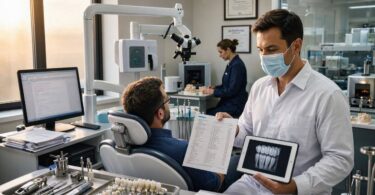
A crown on a front tooth is more than just a dental restoration; it is a work of art. It sits at the center of your smile, visible every time you talk or laugh. When a crown on a front tooth fails, breaks, or simply ages past its prime, replacing it becomes a top priority. You want it to look perfect, match your other teeth, and restore your confidence.
But this perfection comes at a price. Replacing a crown on a front tooth is a procedure that demands the highest level of aesthetic skill from both the dentist and the dental lab. This guide will explain the costs associated with replacing a front tooth crown, why it might be more expensive than a back tooth crown, and what your options are for managing the expense.

The Cost Of Replacing The Crown On A Front Tooth?
Why Front Tooth Crowns Are Different
The functional demands of a front tooth (incisor or canine) are very different from a molar in the back of your mouth. A molar is a workhorse. Its primary job is to grind food, so it must be incredibly strong. A front tooth’s job is to cut food, but more importantly, it is a major player in your appearance.
This difference changes the priorities when making a crown.
-
Aesthetics are Paramount: A crown on a molar is hidden in the back. It just needs to be functional and not look terrible. A crown on a front tooth must be a flawless match. It needs to have the same level of translucency, color, and surface texture as your natural teeth. It must catch the light in the same way.
-
Material Choice: Because of the high aesthetic demands, the materials used for front tooth crowns are often the most expensive available.
-
Artistry: The dental lab technician who fabricates a front tooth crown is a true artist. They spend hours layering porcelain to mimic the natural beauty of a real tooth. This skill commands a higher lab fee.
The Cost Breakdown for a Front Tooth Crown
The cost of replacing a crown is essentially the same as the cost of getting a new crown. You are paying for the fabrication of a new prosthetic. However, there may be additional costs if the old crown was removed because of decay underneath it.
Here is a breakdown of the average costs for a single front tooth crown without insurance.
| Component | Description | Average Cost |
|---|---|---|
| Examination and X-Ray | To assess the condition of the tooth and the old crown. | $50 – $150 |
| Removal of Old Crown | The dentist must carefully cut off the old crown. | $100 – $200 |
| Core Buildup (if needed) | If there is decay or damage under the old crown, the dentist must rebuild the tooth structure before taking a new impression. | $200 – $400 |
| New Crown (Material Dependent) | The cost of the new crown itself. See the material table below. | $800 – $2,500 |
| Temporary Crown | A temporary cover to protect the tooth while the permanent crown is being made. (Often included in the crown fee). | $100 – $300 |
| Cementation | The final appointment to place the new crown. (Usually included). | $0 |
| Total Estimated Cost | All components for a single front tooth. | $1,250 – $3,550 |
The Impact of Material Choice on Cost
For a front tooth, the choice of material is the single biggest factor that determines the price. You generally get what you pay for in terms of aesthetics.
| Material Type | Aesthetic Quality | Durability | Average Cost (per crown) |
|---|---|---|---|
| Porcelain-Fused-to-Metal (PFM) | Fair. Can look opaque and lifeless. A dark metal margin may become visible at the gum line over time. | Very High | $800 – $1,200 |
| Pressed Ceramic (E-max) | Excellent. Very good color matching and translucency. A popular choice for front teeth. | High | $1,000 – $1,600 |
| Zirconia (Layered) | Excellent. Very strong and aesthetic. Modern layered zirconia looks very natural. | Very High | $1,100 – $1,800 |
| All-Ceramic (Feldspathic/Porcelain) | Outstanding. The most beautiful and lifelike. Custom-stained by a lab artist. | Moderate | $1,200 – $2,500 |
Important Note: For front teeth, most dentists strongly recommend avoiding PFM. The aesthetic shortcomings are too visible. E-max or layered zirconia are the standard choices for a balance of beauty and strength. For the ultimate in aesthetics, a hand-layered feldspathic porcelain crown is the gold standard but is also the most expensive.
Why Replacing a Crown Can Cost More Than the Original
You might assume that replacing a crown is simpler than getting the first one. This is not always the case.
1. Removal is Tricky
Removing an old crown requires skill and patience. The dentist must cut through the ceramic and cement without damaging the natural tooth underneath. If the old crown is very well-made and securely cemented, this can take a significant amount of time.
2. The Underlying Tooth Has Changed
Crowns typically last 10-15 years. During that time, the natural tooth underneath may have developed new decay, or the gums may have receded. This means the dentist must do more work to prepare the tooth for a new crown. A “core buildup” to replace decayed tooth structure adds to the cost.
3. Aesthetic Challenges
If you are replacing a crown that you were unhappy with (e.g., the color was too dark or it looked fake), the dentist has a more challenging job. They must work to correct the mistakes of the previous restoration, which requires more time and skill from the lab.
The Cost of Delay: Why You Should Replace a Failing Crown
If your front tooth crown is cracked, loose, or has a visible dark line at the gum, it is tempting to put off the replacement. This is a risky decision.
1. Risk of Decay
A loose or cracked crown allows bacteria and food particles to seep underneath it. These bacteria will attack the vulnerable natural tooth underneath, causing a cavity that you cannot see or feel.
2. Risk of Root Canal
If the decay under the crown reaches the nerve of the tooth, you will need a root canal before a new crown can be placed. This adds $800 to $1,500 to the total cost of your treatment.
3. Risk of Tooth Fracture
The natural tooth under a crown has been shaved down and is fragile. If the crown is compromised, the tooth is at a higher risk of fracturing. A fractured tooth may be unrestorable, leading to extraction and the need for a much more expensive dental implant.
Replacing a failing crown today is almost always cheaper than waiting for it to cause a bigger problem.
Strategies to Manage the Cost
A $2,000 bill for a new front tooth crown is a big deal. Here is how to manage it.
1. Use Your Insurance Wisely
A crown replacement is considered a “Major” service by insurance. It is typically covered at 50%, subject to your annual maximum. If you have a $1,500 annual maximum and your crown costs $1,500, your insurance will pay $750, and you will pay $750.
2. Ask About a “Cash Pay” Discount
As always, ask the front desk if they offer a discount for paying in full with cash or a check. This is especially effective at private practice offices.
3. Inquire About the Lab Fee
Ask your dentist to break down the quote. Ask: “What is the lab fee for this crown?” The lab fee is the amount the dentist pays to the lab. For a high-end cosmetic crown, this could be $300 to $600. You can sometimes ask if there is a less expensive lab or material option that would still give you a good result.
4. Consider a Dental School
For a front tooth crown, a dental school is an excellent option. Dental schools often have specialized clinics for cosmetic dentistry (prosthodontics). The work is done by residents under the strict supervision of board-certified prosthodontists. The cost is often 40-50% less than private practice. The appointments take longer, but the aesthetic outcome is usually excellent because every step is meticulously checked.
Conclusion
Replacing a crown on a front tooth is an investment in your smile and your confidence. The cost, ranging from $1,200 to $3,500, is driven by the need for high-quality, aesthetically pleasing materials and skilled artistry. While the price can be high, delaying the procedure can lead to more extensive and expensive problems. By understanding the material options and managing your finances wisely, you can restore your smile without breaking the bank.
Frequently Asked Questions (FAQ)
Q: Why is a crown on a front tooth more expensive than a crown on a back tooth?
A: The aesthetic demands are much higher. A front tooth crown must perfectly match the color, shape, and translucency of your other teeth. This requires more expensive materials and more time and skill from the dental lab technician, which drives up the cost.
Q: Can a cracked front tooth crown be repaired, or does it need to be replaced?
A: In most cases, a cracked crown needs to be replaced. While there are some temporary patch kits available, a cracked crown is a structural failure. The crack will allow bacteria to leak in, leading to decay. A new crown is the only permanent solution.
Q: How long will my new front tooth crown last?
A: A well-made crown, placed on a healthy tooth, and cared for with good oral hygiene can last 10 to 15 years or even longer. Front teeth are subject to less chewing force than molars, which can work in your favor.
Q: Will my dental insurance cover a crown replacement?
A: Yes, most dental insurance plans cover crown replacement as a “Major” service. However, there is often a waiting period (e.g., 5 years) before they will pay to replace a crown on the same tooth. Check your policy details.
Q: Is it painful to have a crown replaced?
A: No. The procedure is performed under local anesthesia. You will be completely numb. You may experience some mild sensitivity or soreness in the gums after the anesthesia wears off, but this is temporary.
Additional Resource:
To learn more about the art and science of cosmetic dental crowns, you can visit the American Academy of Cosmetic Dentistry (AACD): https://aacd.com/