Navigating the world of dental procedure codes can feel like learning a new language. When you add a specific material like Valplast into the mix, things get even more interesting.
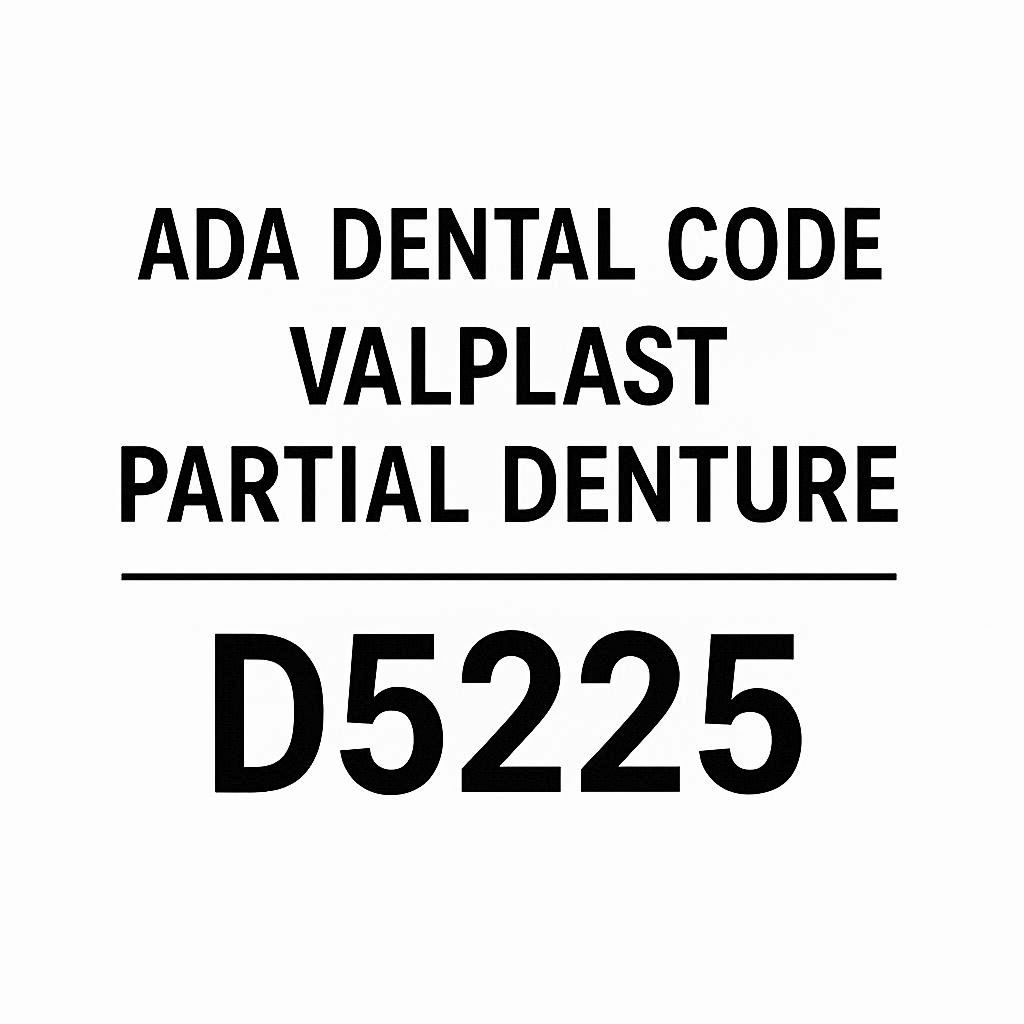
You are likely looking for a simple answer. But here is the honest truth: there is no single, unique ADA code exclusively for “Valplast partial denture.”
Valplast is a brand name for a flexible nylon thermoplastic material. The American Dental Association (ADA) codes describe the service performed, not the specific brand of plastic used.
So, how do you bill for a Valplast partial? You use the standard removable partial denture codes, but you must understand the nuances. This guide will walk you through exactly which codes apply, when to use them, and how to document your work to ensure proper reimbursement.
Let us break this down into simple, actionable steps.
What Exactly is a Valplast Partial Denture?
Before we open the code book, let us quickly define what makes Valplast special. This will help you understand why certain codes fit better than others.
A Valplast partial denture is a flexible, biocompatible nylon denture base. Unlike traditional acrylic or metal framework partials, Valplast is:
- Flexible: It bends to follow the natural movement of your mouth.
- Gum-colored: It blends seamlessly with oral tissue.
- Metal-free: There are no visible metal clasps.
- Lightweight: Patients often find it more comfortable.
From a billing perspective, the key feature is the absence of a metal framework. This single fact guides your code selection.
The Core ADA Codes for Valplast Partials
Since Valplast is a type of removable partial denture, you will use the standard codes from the Removable Prosthodontics section (D5000-D5899).
Here are the primary codes you will use, depending on the specific case.
D5211: Mandibular Partial Denture – Resin Base (Including Retainers, Clasps, and Teeth)
This is the most common code for a Valplast partial on the lower jaw.
- What it means: A partial denture with a base made of resin (plastic). Valplast is technically a high-performance thermoplastic resin.
- When to use it: For a partial denture that replaces teeth on a single arch (lower) without a cast metal framework. The retainers (clasps) are made of the same flexible resin material.
- Valplast connection: Perfect fit. Because Valplast uses flexible resin clasps (not wire or cast metal), D5211 is your go-to code.
D5212: Maxillary Partial Denture – Resin Base (Including Retainers, Clasps, and Teeth)
This is the exact same procedure as above, but for the upper jaw.
- What it means: Same as D5211, but for the maxilla.
- When to use it: For a Valplast partial replacing upper teeth.
- Valplast connection: Again, the absence of a metal framework makes this the correct code.
Important Note for Readers: Do not use codes D5213 or D5214. Those codes are for partial dentures with cast metal frameworks. Valplast has no metal, so those codes would be incorrect and likely lead to a denied claim.
Comparison Table: Resin Base vs. Cast Metal Framework
To avoid confusion, here is a simple visual guide.
| Feature | Code D5211/D5212 (Resin Base) | Code D5213/D5214 (Cast Metal) |
|---|---|---|
| Material Base | Acrylic or flexible resin (Valplast) | Chrome-cobalt metal alloy |
| Clasp Type | Flexible resin or wrought wire | Cast metal (rigid) |
| Valplast Suitable? | YES – Ideal for this code | NO – Incorrect usage |
| Typical Insurance Coverage | Often lower reimbursement | Often higher reimbursement |
| Durability | Good for light to moderate wear | Excellent for heavy wear |
When to Use Other ADA Codes with Valplast
A partial denture is rarely a standalone procedure. You will often need to add other codes to complete the treatment plan.
Code D5110: Complete Denture
Do not confuse this with a partial. A complete denture replaces a full arch of missing teeth. Valplast is rarely used for full dentures because its flexibility can make it unstable without teeth to clasp onto. Stick to acrylic for full dentures.
Codes for Adjustments and Repairs
Valplast is durable, but it is not indestructible.
- D5410: Adjust complete denture (maxillary).
- D5411: Adjust complete denture (mandibular).
- D5511: Repair broken complete denture base (mandibular).
Caution: Repairing Valplast is difficult. Standard acrylic repair materials do not bond well to nylon. If a Valplast partial breaks, the patient may need a full replacement (D5211 or D5212) rather than a simple repair.
Code D9920: Behavior Management
This is a unique one. Because Valplast partials require no metal and are often more comfortable, they are excellent for patients with metal allergies or dental anxiety. If you spend extra time managing a nervous patient, you may bill D9920 (though check your payer’s policy first).
Quotation: A Real-World Billing Example
“Dr. Lee, my patient needs a lower partial replacing teeth #22, #23, and #24. She has a severe nickel allergy. I am using a Valplast flexible partial with no metal. What code do I use?”
Answer: “You will use D5211 – Mandibular Partial Denture, Resin Base. On your claim form, add a narrative note: ‘Flexible nylon partial denture, metal-free due to patient allergy.’ This justifies the resin base code and explains why you did not use a cast metal framework.”
Documentation: The Secret to Getting Paid
Insurance companies are skeptical. If you bill D5211 (resin base), they might ask: “Why didn’t you do a cheaper, traditional acrylic partial?”
You must document the medical necessity.
What to Include in Your Patient’s Chart
- Material Justification: “Patient presents with allergy to acrylic monomers / metal / nickel. Valplast (nylon thermoplastic) is indicated.”
- Clinical Photos: Show the edentulous space and the opposing dentition.
- Study Models: Demonstrate that a metal framework would be too bulky or visually unappealing.
- Periodontal Status: Note that flexible clasps are less traumatic to weakened abutment teeth.
Sample Narrative for the Claim Form
“Procedure D5211: Mandibular partial denture fabricated using flexible nylon thermoplastic (Valplast) base with integral resin clasps. No metal framework used due to documented patient metal sensitivity and to minimize stress on compromised abutment teeth #21 and #28.”
This level of detail separates a paid claim from a denied one.
Important Notes for Readers (Please Read Carefully)
Before you submit your claim, keep these points in mind.
- Not All Payers Recognize D5211 for Valplast. Some old-school insurance plans expect a partial to have metal. They may downgrade D5211 to D5213 (cast metal) and pay less. Always verify benefits.
- Valplast is a “Premium” Material. Many insurance plans consider it an upgrade. They may pay the same as for a standard acrylic partial, leaving the patient responsible for the lab fee difference.
- Do Not Fabricate Codes. Never use an unlisted code like D5999 (unspecified prosthesis) unless absolutely necessary. Unlisted codes are almost always delayed or denied.
- Check for “Missing Tooth Clause.” Most partial denture benefits require that the missing teeth were extracted while the patient was covered under the plan. If the teeth were missing before the plan started, benefits may be $0.
Helpful List: Step-by-Step Workflow for Billing a Valplast Partial
Follow this checklist to keep your billing clean and efficient.
- Diagnose: Confirm the patient needs a partial denture.
- Select Code: Choose D5211 (lower) or D5212 (upper).
- Pre-Authorization (Highly Recommended): Send the code, X-rays, and a narrative to the insurance company. Ask: “Will you cover D5211 for a flexible resin partial?”
- Treatment Plan: Present the patient with their estimated out-of-pocket cost.
- Impressions & Bite Registration: Perform the clinical steps.
- Lab Prescription: Clearly write “Valplast flexible partial” on your lab slip.
- Insertion & Delivery: Deliver the prosthesis.
- Submit Claim: Attach your narrative and any pre-authorization approval number.
- Post-Operative Care: Schedule an adjustment appointment (bill D5410 or D5411 if needed after 6 months).
Common Billing Mistakes to Avoid
Even experienced front office teams make errors. Here is what to watch for.
- Using D5213/D5214: This is the #1 mistake. You are billing for a metal framework that does not exist. This is insurance fraud, even if unintentional.
- Forgetting the Narrative: Without a narrative explaining the “resin base,” the payer assumes you used cheap pink acrylic. Tell them you used Valplast.
- Bundling Services: Do not try to bill separately for clasps or teeth. D5211 and D5212 are complete codes. They include the base, retainers, clasps, and teeth.
- Ignoring Frequency Limitations: Most plans cover a new partial denture only once every 5 to 7 years per arch. Check the patient’s history.
How Much Does a Valplast Partial Cost? (For Patient Estimates)
While this is not a code, patients will ask. Being transparent builds trust.
| Procedure Code | Procedure Description | Typical Office Fee (USD) | Insurance Allowance (Estimate) |
|---|---|---|---|
| D5211 | Mandibular Resin Partial (Valplast) | $1,200 – $2,000 | $500 – $900 |
| D5212 | Maxillary Resin Partial (Valplast) | $1,200 – $2,000 | $500 – $900 |
| D5410/D5411 | Adjustment (per visit) | $50 – $150 | $0 – $50 |
Note: These are estimates. Fees vary dramatically by region and lab costs.
The Future of Flexible Denture Coding
Will the ADA ever create a specific code for “flexible thermoplastic partial”? It is possible. As materials like Valplast, Flexite, and Duraflex become mainstream, the ADA’s Code Maintenance Committee may introduce new codes.
For now, however, D5211 and D5212 remain the correct, honest, and professional choices.
Do not chase codes. Do not invent codes. Use the existing codes accurately and document thoroughly. That is how you run an ethical, profitable dental practice.
Conclusion (Summarized in Three Lines)
To bill a Valplast partial denture, use ADA codes D5211 (lower) or D5212 (upper) for a resin-base partial. Never use cast metal codes, as Valplast contains no metal framework. Always attach a narrative explaining the flexible nylon material to justify medical necessity and secure insurance reimbursement.
Frequently Asked Questions (FAQ)
Q1: Is there a specific ADA code just for Valplast?
No. Valplast is a brand of flexible resin. You use the standard resin partial codes: D5211 or D5212.
Q2: Can I use code D5213 for a Valplast partial?
No. D5213 is for a partial with a cast metal framework. Valplast has no metal. Using this code is incorrect.
Q3: Does insurance pay more for Valplast than for acrylic?
Usually not. Most plans pay the same allowance for any resin-base partial (D5211/D5212). The patient may pay a higher lab fee for Valplast.
Q4: What if my patient has a metal allergy?
Document the allergy clearly. Use D5211/D5212 and add a narrative: “Metal-free prosthesis required due to confirmed nickel/cobalt allergy.”
Q5: Can a Valplast partial be repaired under code D5511?
Technically yes, but it rarely works well. Most dental labs cannot repair Valplast reliably. You will often need to replace the entire denture under D5211/D5212.
Q6: Does Medicare cover Valplast partial dentures?
Original Medicare (Part A & B) does not cover routine dental services like dentures. Some Medicare Advantage (Part C) plans may offer limited coverage. Always verify.
Q7: How do I find the latest ADA codes?
Purchase the current Current Dental Terminology (CDT) code book from the American Dental Association’s official website.
Additional Resource
For the most up-to-date information on flexible partial denture materials and coding guidelines, visit the American Dental Association’s CDT Code Maintenance Committee page:
https://www.ada.org/en/publications/cdt
Disclaimer: This article is for informational purposes only and does not constitute legal or medical advice. ADA codes are subject to change. Always verify current codes with the American Dental Association and your specific insurance payer.
Author: Professional Dental Billing Specialist
Date: APRIL 15, 2026