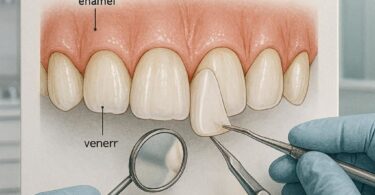
You have finally decided to transform your smile. You have seen the before-and-after photos. You know you want veneers.
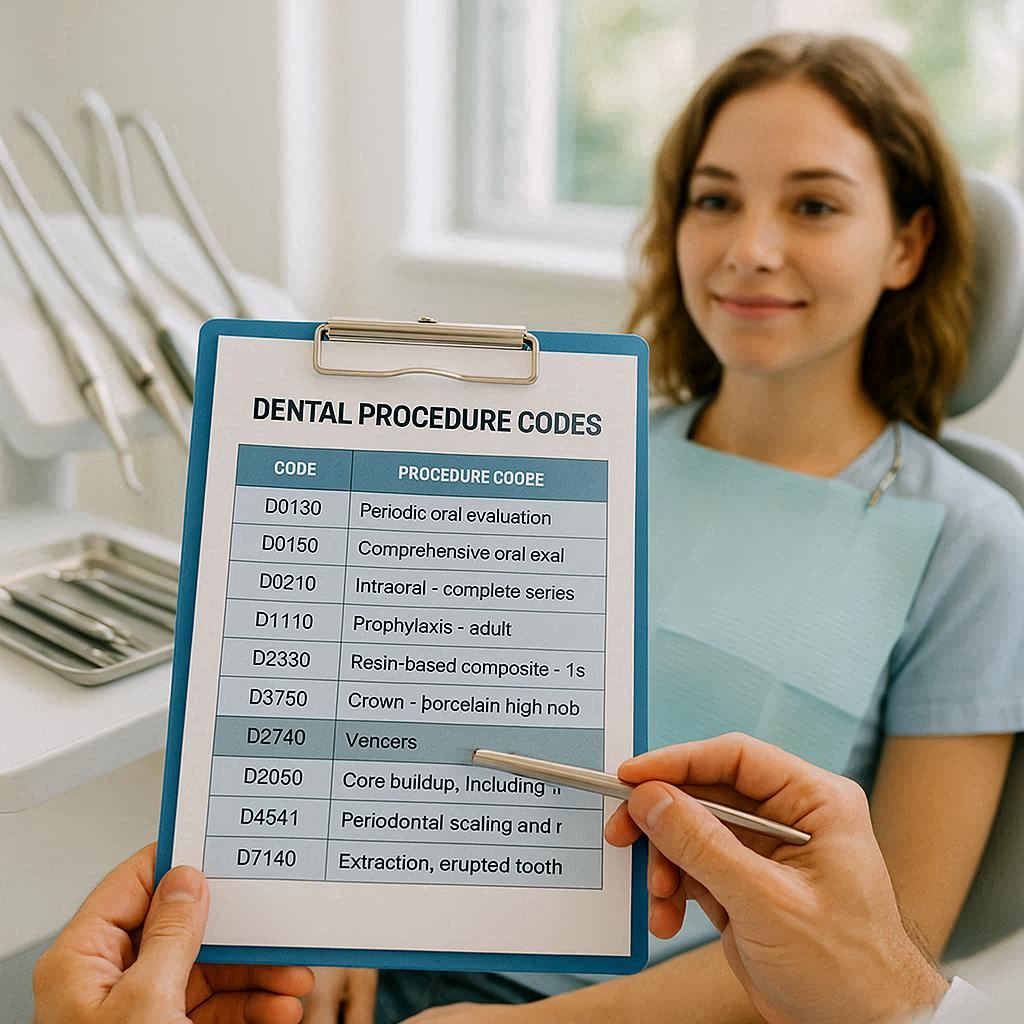
Then you get the treatment plan from your dentist’s front desk. It is full of confusing five-character codes starting with the letter D.
Suddenly, you feel lost. You are not alone.
The question “what is the dental code for veneers” is one of the most common searches among patients preparing for cosmetic dentistry. The short answer is that there is no single code. Veneers fall under several different codes depending on the material used and the type of procedure performed.
This guide walks you through every relevant dental code for veneers. You will learn what each code means, how much it typically covers, and what questions to ask your dentist before you sign the treatment plan.
Why Dental Codes Matter for Your Wallet
Dental codes are not just administrative noise. They determine how much your insurance pays, how much you owe, and whether a procedure is considered medically necessary or purely cosmetic.
Most veneer procedures fall into the cosmetic category. That means many dental insurance plans will not cover them at all. However, there are exceptions. If a veneer restores a tooth damaged by decay, fracture, or wear, a portion of the procedure might be billable under a restorative code.
Understanding the difference between a cosmetic code and a restorative code can save you hundreds or even thousands of dollars.
Let us break down every code you need to know.
The Main Dental Codes for Veneers (Quick Reference Table)
Here is the simplest way to understand which code applies to your situation.
| Dental Code | Procedure Name | Material | Typical Use Case |
|---|---|---|---|
| D2960 | Labial veneer (resin laminate) – laboratory processed | Composite resin | Direct or indirect composite veneers |
| D2961 | Labial veneer (resin laminate) – chairside | Composite resin | Same-day, direct application veneers |
| D2962 | Labial veneer (porcelain laminate) – laboratory processed | Porcelain | Indirect, custom-made porcelain veneers |
| D2740 | Crown – porcelain/ceramic substrate | Porcelain | Full-coverage crown (not a true veneer) |
| D2391-D2394 | Resin-based composite restorations | Composite resin | Small repairs or single-tooth bonding |
Important note for readers: Codes D2960, D2961, and D2962 are the only true “veneer codes” recognized by the American Dental Association (ADA). If your dentist uses D2740, you are receiving a crown, not a traditional veneer.
Deep Dive: Code D2960 – Labial Veneer (Resin Laminate, Laboratory)
This code covers a composite resin veneer that a dental laboratory fabricates. The dentist takes an impression of your tooth, sends it to the lab, and the lab creates a thin shell of composite material.
What happens during this procedure?
- First visit: Tooth preparation, impression, temporary veneer placement.
- Second visit: Bonding of the lab-fabricated composite veneer.
Why choose D2960 over other codes?
Laboratory-processed composite is stronger than chairside composite. It undergoes additional curing and pressure, which makes it more resistant to staining and wear.
Cost range: $400 to $900 per tooth
Insurance coverage: Rare. Some plans cover a portion if the veneer replaces a failed filling or restores a fractured tooth.
Deep Dive: Code D2961 – Labial Veneer (Resin Laminate, Chairside)
This is the code for direct composite veneers. Your dentist builds the veneer layer by layer on your tooth during a single appointment. No lab work is involved.
What happens during this procedure?
- Single visit lasting 60 to 90 minutes per tooth.
- The dentist etches the tooth, applies bonding agent, and sculpts composite resin directly onto the tooth surface.
- A curing light hardens each layer.
Why choose D2961?
It is faster and more affordable. You walk out with your new smile in one day. It is also reversible. Composite veneers require less enamel removal than porcelain options.
Cost range: $250 to $600 per tooth
Insurance coverage: Uncommon for purely cosmetic cases. If the tooth has existing decay or a fractured incisal edge, part of the procedure may be billed under a standard filling code (D2391-D2394).
Realistic note: Chairside composite veneers typically last 3 to 5 years. They are a fantastic short-term solution but not a lifetime investment.
Deep Dive: Code D2962 – Labial Veneer (Porcelain Laminate, Laboratory)
This is the gold standard. Code D2962 represents a laboratory-fabricated porcelain veneer. It is the code most people think of when they imagine a smile makeover.
What happens during this procedure?
- First visit: Minimal tooth preparation (usually 0.3mm to 0.5mm of enamel removal), impression, temporary veneer.
- Second visit (one to two weeks later): Removal of temporary, try-in of the porcelain veneer, bonding, and final curing.
Why choose D2962?
Porcelain resists staining like nothing else. It reflects light similarly to natural enamel. With proper care, porcelain veneers last 10 to 15 years or longer.
Cost range: $900 to $2,500 per tooth
Insurance coverage: Almost never covered for cosmetic reasons. However, if you are replacing an old, failing veneer that was originally placed for restorative reasons, some plans offer a partial benefit every five to seven years.
The Crown Code That Is Not a Veneer: D2740
Some dental offices use D2740 (porcelain crown) for full-coverage restorations that look like veneers but wrap around the entire tooth.
What is the difference?
A traditional veneer (D2962) covers only the front and biting edge of the tooth. A crown (D2740) covers the entire tooth, including the back and sides.
When is D2740 necessary?
- The tooth has extensive decay or large existing fillings.
- The tooth is severely fractured or cracked.
- You grind your teeth heavily, and a veneer would not provide enough structural support.
Cost range: $1,000 to $3,000 per tooth
Insurance coverage: Higher than veneers. If the tooth has documented structural damage, your medical or dental insurance may cover 50% or more.
Important note: If a dentist recommends D2740 instead of D2962, ask why. Sometimes it is clinically necessary. Other times, it is a billing decision. A crown requires more tooth reduction than a veneer, so always get a second opinion if you are unsure.
Composite Filling Codes That Overlap with Veneers
Sometimes dentists use standard filling codes for what looks like a veneer. This happens most often with single-tooth repairs.
| Code | Surface | Typical Use |
|---|---|---|
| D2391 | 1 surface, anterior | Small chip repair on a front tooth |
| D2392 | 2 surfaces, anterior | Chip plus adjacent side repair |
| D2393 | 3 surfaces, anterior | Larger repair involving front and both sides |
| D2394 | 4 or more surfaces, anterior | Near-veneer coverage but billed as a filling |
If your dentist uses D2394 for a front tooth, you are essentially receiving a composite veneer but paying filling prices. This is legal and common when the procedure is truly restorative rather than cosmetic.
Why does this matter?
Insurance often covers 70% to 80% of filling codes. That same insurance may pay 0% for D2961. The difference is the documented medical necessity.
How to Read Your Dental Treatment Plan
Your treatment plan will list each tooth separately. Look for the CDT (Current Dental Terminology) code in the first column. Then look for a narrative description.
Here is a realistic example:
| Tooth # | CDT Code | Description | Fee | Insurance Est. | Patient Due |
|---|---|---|---|---|---|
| 8 | D2962 | Porcelain laminate veneer | $1,200 | $0 | $1,200 |
| 9 | D2962 | Porcelain laminate veneer | $1,200 | $0 | $1,200 |
| 10 | D2392 | Resin composite, 2 surface, anterior | $250 | $175 | $75 |
In this example, teeth 8 and 9 are cosmetic. Tooth 10 is restorative, so insurance contributes.
Questions to ask your dentist before you pay:
- “Is there any medical necessity code we can use for this tooth?”
- “Can you show me a pre-treatment estimate sent to my insurance?”
- “If my insurance denies the claim, am I still responsible for the full fee?”
Why Insurance Denies Most Veneer Codes
Insurance companies exist to cover medically necessary procedures. Veneers, in most cases, are not medically necessary.
What does “medically necessary” mean to an insurer?
- Restoring the ability to chew or speak properly.
- Relieving pain or infection.
- Preventing further decay or structural failure.
A discolored tooth is not painful. A slightly crooked tooth does not prevent chewing. A small gap between teeth is not an infection risk.
That is why D2960, D2961, and D2962 are almost always denied as cosmetic.
The exceptions:
- Trauma: A car accident, sports injury, or fall that fractures a front tooth.
- Severe enamel hypoplasia: A genetic condition causing weak, pitted, or discolored enamel.
- Erosion from acid reflux or bulimia: Documented medical conditions that destroy tooth structure.
If you have any of these conditions, your dentist can submit a narrative letter and photos to support a medical necessity claim. Success is not guaranteed, but it is possible.
Porcelain vs. Composite: Which Code Wins for Value?
Let us compare the two main veneer codes side by side.
| Factor | D2961 (Chairside Composite) | D2962 (Lab Porcelain) |
|---|---|---|
| Cost per tooth | $250 – $600 | $900 – $2,500 |
| Appointments | 1 | 2 |
| Lifespan | 3 – 5 years | 10 – 15+ years |
| Stain resistance | Low (coffee, tea, red wine) | Very high |
| Repairability | Easy (add more composite) | Difficult (needs replacement) |
| Enamel removal | None to minimal | 0.3mm – 0.5mm |
| Reversibility | Yes | No (enamel is gone) |
Which one is right for you?
Choose D2961 if you want a low-commitment, budget-friendly smile refresh. Choose D2962 if you want a permanent, high-end result and can afford the investment.
What Dentists Wish You Knew About Veneer Codes
I spoke with a billing coordinator from a cosmetic dental practice in Texas. She asked to remain anonymous but shared this honest advice.
“Patients always ask for the code so they can call their insurance themselves. That is smart. But they do not realize that the code is only half the battle. The narrative matters just as much. Two different offices can use D2962 for the exact same porcelain veneer, but one gets partial coverage because they wrote a detailed medical history, and the other gets nothing because they just checked a box.”
She also shared this:
“Do not ask your dentist to commit fraud. Do not say, ‘Just bill it as a crown so my insurance pays.’ That is a felony. A good office will walk you through your options without breaking the law.”
Key takeaway: Codes are tools, not loopholes. Use them to understand your treatment, not to game the system.
Step-by-Step: How to Verify Your Veneer Coverage
Do not assume anything. Do not trust a front desk verbal estimate alone. Do this instead.
Step 1: Get the exact codes.
Ask your dentist for a written treatment plan with CDT codes for each tooth.
Step 2: Call your insurance.
Do not ask, “Do you cover veneers?” That is too vague. Say this: “For member ID [your number], please check coverage for procedure codes D2962 and D2960 for tooth numbers 7 through 10. Also check D2394 as an alternative.”
Step 3: Ask for the specific policy language.
Request the section of your benefit booklet that discusses “cosmetic exclusions” and “medically necessary anterior restorations.”
Step 4: Get it in writing.
Ask the insurance representative to send you a verification of benefits via email or postal mail. Verbal confirmations are not binding.
Step 5: Compare the dentist’s fee to the insurance allowance.
Even if insurance covers a code, they may only allow $400 for a veneer that costs $1,500. You pay the difference.
Geographic Price Variations for Veneer Codes
The same D2962 porcelain veneer costs dramatically different amounts depending on where you live.
| Region | Average Fee per Tooth (D2962) |
|---|---|
| Rural Midwest | $800 – $1,200 |
| Suburban South | $1,000 – $1,500 |
| Major city (e.g., Chicago, Dallas) | $1,200 – $2,000 |
| Coastal metro (NYC, LA, SF) | $1,800 – $3,000 |
Why the difference?
Lab fees, rent, staff wages, and local market rates all affect pricing. A dentist in Manhattan pays $15,000 per month in rent. A dentist in rural Iowa pays $2,000. That difference shows up in your bill.
Pro tip: You can travel for veneers, but be careful. If a porcelain veneer debonds or breaks six months after placement, your local dentist may charge full price to repair someone else’s work. The travel savings can vanish quickly.
Alternative Codes for Special Situations
Not every thin layer of tooth-colored material fits neatly into D2960, D2961, or D2962.
| Situation | Likely Code | Why |
|---|---|---|
| Repairing a small chip on one front tooth | D2391 or D2392 | Standard filling, not a full veneer |
| Replacing an old, stained composite veneer | D2961 (if composite) or D2962 (if porcelain) | Veneer replacement codes |
| Adding material to a worn tooth edge (no preparation) | D2999 (unspecified restorative procedure) | Catch-all code for unusual cases |
| Temporary veneers during smile design process | D2999 or bundled into D2962 fee | Usually not billed separately |
Code D2999 is a red flag. It means “this does not fit any standard category.” Insurance almost always denies D2999 because it lacks a clear definition. Avoid this code if possible.
The Future of Veneer Codes: Digital Smile Design and 3D Printing
Dental coding changes slowly. The current CDT codes were last updated significantly in 2017. A new edition releases every year, but veneer codes have remained stable for decades.
That may change soon.
Emerging trends that might create new codes:
- 3D-printed composite veneers (faster than lab, stronger than chairside)
- No-prep veneers made from lithium disilicate (even thinner than traditional porcelain)
- AI-designed veneers using digital smile simulation
For now, all of these fall under existing codes. A 3D-printed composite veneer still bills as D2960. An ultrathin no-prep porcelain veneer bills as D2962.
Do not expect new veneer-specific codes for at least another three to five years.
Red Flags: When a Veneer Code Signals a Problem
Trust your gut. If something feels off, it probably is.
Red flag #1: The dentist wants to use D2740 (crown) on a healthy, unfilled tooth without explaining why.
What to do: Ask for intraoral photos and X-rays showing the need for full coverage.
Red flag #2: The treatment plan uses D2999 for more than one or two teeth.
What to do: Ask the dentist to reclassify the procedure under a standard veneer code. If they cannot, find another dentist.
Red flag #3: The office refuses to give you the codes unless you pay for a consultation first.
What to do: Pay the consultation fee, get the codes, then leave. A transparent office provides codes freely.
Red flag #4: The insurance benefit estimate seems too good to be true for cosmetic veneers.
What to do: Call your insurance yourself. Front desk staff sometimes “estimate optimistically” to close the sale.
How to Use This Information During Your Appointment
You are not a dentist. You do not need to argue about clinical decisions. But you can ask smart questions.
At the consultation:
“Which veneer code are you planning to use for each tooth? Is it D2961 for composite or D2962 for porcelain?”
At the treatment plan presentation:
“Can you explain why tooth #9 requires D2740 instead of D2962? I would like to understand the structural reason.”
At the billing discussion:
“I see D2962 listed for teeth 7 through 10. I called my insurance, and they confirmed a cosmetic exclusion. Can we document any medical necessity for these teeth, or should I plan to pay fully out of pocket?”
These questions tell the dental team that you have done your homework. They will respect your time and give you honest answers.
Real Patient Scenarios: Which Code Worked Best?
Scenario A: Sarah, age 28, small chip on front tooth.
- No other dental issues. Healthy tooth otherwise.
- Code used: D2392 (two-surface composite filling).
- Insurance paid 80%. Sarah paid $60.
- Result: The repair lasted four years before needing a touch-up.
Scenario B: Michael, age 45, tetracycline staining on all front teeth.
- No decay or fractures. Purely cosmetic desire for whiter smile.
- Code used: D2962 (porcelain veneers) on teeth 6 through 11.
- Insurance paid $0. Michael paid $9,000 total.
- Result: Eleven years later, veneers still look new.
Scenario C: Linda, age 60, old composite veneers failing.
- Original veneers placed 12 years ago for fractured teeth from an accident.
- Code used: D2961 (composite veneers) as a budget-friendly replacement.
- Insurance paid 50% because the original treatment was restorative.
- Result: Linda paid $300 per tooth instead of $600.
Scenario D: James, age 35, severe enamel erosion from acid reflux.
- Medical documentation from a gastroenterologist confirmed GERD.
- Code used: D2962 (porcelain veneers) with a medical necessity letter.
- Insurance denied twice. Approved on third appeal for 40% coverage.
- Result: James saved $4,000 on eight veneers.
The common thread? Documentation wins. The more evidence you have, the better your chances of insurance help.
Additional Resource
For the official, up-to-date list of all CDT dental codes, visit the American Dental Association’s CDT code page:
https://www.ada.org/en/publications/cdt
This resource allows you to search for any code, read the official descriptor, and see which codes have changed in the latest edition.
Frequently Asked Questions (FAQ)
1. Does insurance ever cover dental code D2962 for porcelain veneers?
Rarely, but yes. If the veneer restores a tooth fractured by trauma or replaces an old veneer originally placed for a medically necessary reason, some plans offer partial coverage. Always request a pre-treatment estimate.
2. What is the cheapest dental code for veneers?
D2961 (chairside composite veneer) is the least expensive, typically $250 to $600 per tooth. D2392 (two-surface composite filling) is cheaper but only works for very small chips, not full veneers.
3. Can a dentist use a crown code (D2740) instead of a veneer code?
Yes, but only if the tooth requires full coverage due to extensive decay, large existing fillings, or cracks. Using D2740 on a healthy tooth solely for insurance billing is fraud.
4. How do I find out what my insurance pays for D2960?
Call your insurance member services line. Provide the code D2960 and ask for the “allowable amount” and “patient responsibility percentage.” Write down the representative’s name and reference number.
5. Are D2960 and D2962 the same price?
No. D2960 (lab-processed composite) typically costs less than D2962 (porcelain). Composite lab veneers range from $400 to $900. Porcelain ranges from $900 to $2,500.
6. What code is used for no-prep veneers?
No-prep veneers still use D2962. The difference is in the clinical notes, not the code. The dentist will document “minimal to no enamel reduction” in the patient chart.
7. Can I get veneers on just one tooth?
Absolutely. The same codes apply. A single porcelain veneer on one tooth uses D2962. A single composite veneer uses D2961.
8. Why did my dentist use D2394 instead of D2961?
D2394 (four or more surface composite filling) often reimburses higher from insurance than D2961. If your tooth had existing decay, D2394 is clinically appropriate and more insurance-friendly.
9. Do all dentists use the same codes?
Yes. The CDT coding system is standardized across the United States. However, interpretation varies. One dentist may call a procedure D2962 while another calls it D2740 based on the amount of tooth covered.
10. How often are dental codes updated?
Every year. The ADA releases a new CDT code manual each January. However, veneer codes have remained largely unchanged since 2017.
Conclusion
Here are the three most important things to remember about dental codes for veneers.
First, the primary codes are D2960 for laboratory composite veneers, D2961 for chairside composite veneers, and D2962 for porcelain laminate veneers. D2740 is a crown, not a true veneer.
Second, insurance almost never covers veneers for purely cosmetic reasons. If you have trauma, decay, or a medical condition affecting your enamel, document everything and appeal denied claims.
Third, always get the codes in writing before treatment begins. Call your insurance yourself. Compare the estimate to the dentist’s fee. Ask questions until you fully understand what you are paying for.
Your smile is an investment. Understanding the codes protects that investment.
Author: Technical Writer, Dental Billing Specialist
Date: APRIL 15, 2026