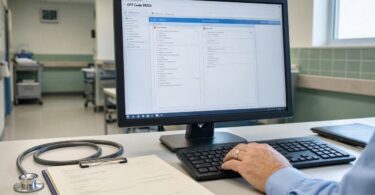
When you work in physical therapy, occupational therapy, or medical billing, you encounter a handful of procedure codes every single day. Among them, one code stands out for its clinical importance and its billing complexity. That code is CPT 97140. This manual therapy code represents a fundamental skill set that therapists use to restore function, reduce pain, and improve mobility. Yet it also triggers more audits and claim denials than almost any other code in the rehab world.
Understanding this code fully can transform your practice’s revenue cycle and protect you from compliance headaches. This guide will walk you through every aspect of the code—from its official definition to advanced billing scenarios. You will find practical advice, clear examples, and answers to questions you did not even know you had.
Grab a coffee and settle in. By the end of this article, you will hold a level of mastery that most clinicians and billers never achieve.
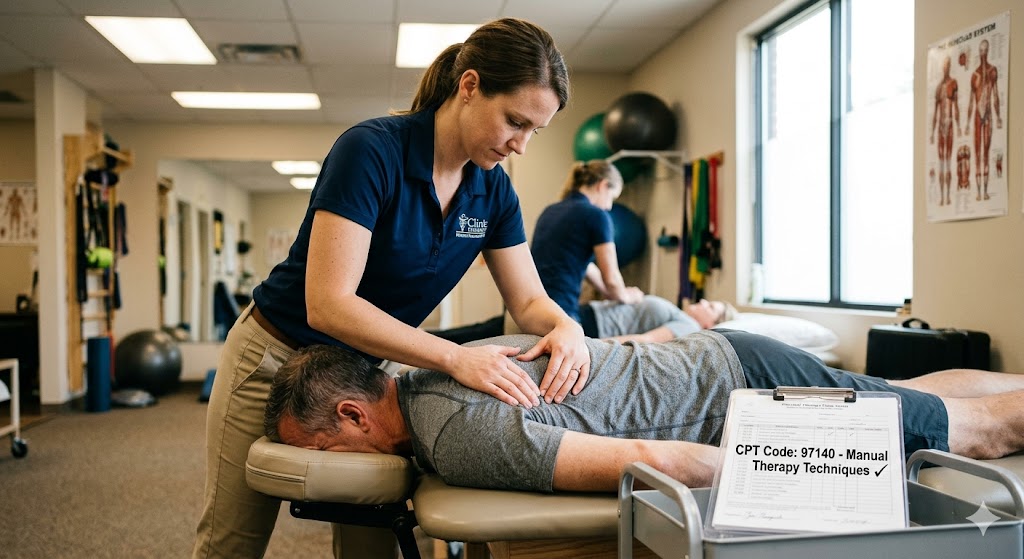
What Is CPT Code 97140?
Every medical procedure that exists in the United States healthcare system has a corresponding numeric identifier. These identifiers come from the Current Procedural Terminology (CPT) code set, which the American Medical Association (AMA) maintains. CPT 97140 falls within the Physical Medicine and Rehabilitation section. Specifically, it describes manual therapy techniques.
The official AMA descriptor for CPT 97140 reads: “Manual therapy techniques (e.g., mobilization/manipulation, manual lymphatic drainage, manual traction), one or more regions, each 15 minutes.”
Let’s break that descriptor down into plain English.
Understanding the Official Descriptor
The phrase “manual therapy techniques” covers a broad family of hands-on interventions. You are using your hands—not a machine, not a needle, not an electrode—to create a therapeutic change in the patient’s tissues. The parenthetical examples (mobilization/manipulation, manual lymphatic drainage, manual traction) provide guidance, but they do not limit the code. Other techniques like soft tissue mobilization, myofascial release, trigger point therapy, and passive range of motion performed for a therapeutic purpose can all fall under this code when performed correctly and documented appropriately.
The phrase “one or more regions” carries enormous significance. You could spend 15 minutes performing soft tissue work on the cervical spine, thoracic spine, and lumbar spine all in one session. You bill one unit of 97140, not three. This time-based code aggregates all manual therapy work across all body regions into a single unit count. We will explore this concept in great detail later, but for now, sear this into your memory: the number of body regions does not determine your unit count. Total time does.
Finally, the time component—”each 15 minutes”—defines the unit structure. Medicare and most commercial payers follow the 8-minute rule for time-based codes. A single unit of 97140 requires at least 8 minutes of direct, one-on-one manual therapy. Two units require at least 23 minutes. We will map out every time threshold in a dedicated section below.
The Clinical Heart of Manual Therapy
Manual therapy is not simply massage, nor is it random touching. It is a skilled intervention that requires postgraduate training, clinical reasoning, and precise execution. When you perform manual therapy under CPT 97140, you are applying specific forces to joints, muscles, and connective tissues to achieve a therapeutic goal. That goal might be increasing joint accessory motion, reducing soft tissue restrictions, promoting fluid movement in cases of lymphedema, or modulating pain through neurophysiological mechanisms.
The code demands clinical decision-making. You are not providing a relaxation massage. You assess tissue texture, temperature, and resistance. You continually re-evaluate the patient’s response. You modify your technique based on that feedback. This skilled nature separates 97140 from unskilled touch and from other codes like therapeutic massage (97124), which we will compare later.
Important Note: CPT 97140 requires direct, one-on-one patient contact. You cannot bill for time spent setting up equipment, documenting, or instructing the patient in self-management strategies. That time falls under other codes or represents non-billable clinical time.
Why CPT Code 97140 Matters So Much
This code matters for three distinct audiences: clinicians, billers, and patients. Each group has a different stake in the proper use of 97140.
For clinicians, this code validates the skilled nature of hands-on care. It allows therapists to get reimbursed for interventions that require advanced training and continuous clinical reasoning. When a physical therapist performs a grade IV mobilization on a stiff lumbar facet joint, or when an occupational therapist performs manual lymphatic drainage for a post-mastectomy patient, CPT 97140 captures that expertise. Without proper use of this code, the healthcare system effectively renders this skill set invisible.
For billers and practice owners, this code represents a significant revenue stream. Manual therapy typically commands a higher reimbursement rate than therapeutic exercise (97110) or neuromuscular re-education (97112). However, it also attracts significant payer scrutiny. The Office of Inspector General (OIG) and various Recovery Audit Contractors (RACs) have flagged 97140 as a high-risk code for improper payments. Mastering its billing rules protects your revenue and keeps your practice out of audit trouble.
For patients, the proper use of 97140 ensures they receive the right interventions for their conditions. Accurate coding supports the medical necessity of hands-on care, which helps justify continued treatment authorization to payers. When a therapist bills correctly, the patient’s record accurately reflects the skilled care delivered, which supports continuity of care across providers.
The Audit Spotlight
You should understand why this code lives under a microscope. The OIG has repeatedly identified manual therapy as a service prone to billing errors. Common problems include billing units of 97140 when the therapist merely provided supervision without direct contact, billing for non-skilled massage, and—most commonly—upcoding by billing 97140 instead of a less-reimbursed code like therapeutic exercise.
Medicare Administrative Contractors (MACs) actively review 97140 claims. They look for patterns. A practice where every patient receives exactly two units of manual therapy per visit, regardless of condition or functional status, will wave a red flag. A practice where manual therapy time exceeds total treatment time on the claim invites immediate denial.
Your defense against audit risk is knowledge. When you understand the rules cold, you bill appropriately, document defensibly, and sleep peacefully.
CPT 97140 vs. Other Common Rehab Codes
Confusion among similar codes drives most billing errors. Let’s draw clear boundaries around 97140 by comparing it to the codes it most commonly gets confused with. This section will save you from costly mistakes.
Comparison Table: 97140 vs. Common Alternatives
| Feature | 97140 Manual Therapy | 97124 Massage Therapy | 97110 Therapeutic Exercise | 97112 Neuromuscular Re-education | 97530 Therapeutic Activity |
|---|---|---|---|---|---|
| Primary Intent | Improve joint mobility, soft tissue extensibility, fluid dynamics | Improve circulation, relax muscles, reduce soft tissue tightness | Improve strength, endurance, ROM, flexibility | Improve movement patterns, balance, coordination, posture | Improve functional performance in dynamic activities |
| Skilled Level | High; requires clinical assessment and specific force application | Moderate; effleurage, petrissage, tapotement | Moderate; requires understanding of exercise physiology | High; requires movement analysis and specific cuing | High; requires functional task analysis |
| Patient Participation | Passive; therapist applies technique to patient | Passive; therapist applies technique to patient | Active or active-assisted; patient performs the movement | Active; patient performs specific movement patterns | Active; patient performs functional tasks |
| Time Unit | 15 minutes | 15 minutes | 15 minutes (Medicare defines as one unit regardless of time) | 15 minutes | 15 minutes |
| Common Examples | Joint mobilization, myofascial release, manual traction, MLD | Effleurage, petrissage, friction massage | Treadmill walking, theraband exercises, weight lifting | Proprioceptive training, Feldenkrais, balance board work | Car transfers, simulated grocery shopping, ladder climbing |
97140 vs. 97124: The Most Critical Distinction
I want to spend extra time on this comparison because payers audit this distinction aggressively. Both codes involve hands-on soft tissue work. Both are time-based. Both require direct contact. Yet they are not interchangeable.
Massage therapy (97124) aims to improve circulation, promote relaxation, and reduce non-specific muscle tightness. The techniques—effleurage (gliding strokes), petrissage (kneading), and tapotement (rhythmic tapping)—follow a protocol. The therapist does not need to continuously assess joint play, tissue barrier resistance, or the specific direction of fascial restriction. The treatment applies broadly to a region of discomfort.
Manual therapy (97140) requires a specific, identifiable clinical dysfunction that the therapist’s hands address directly. You do not simply rub the patient’s back because it feels tight. You palpate a specific restriction, select a technique (say, a myofascial release with a sustained hold in a specific direction), apply it, and then re-assess to determine whether the restriction released. This cycle of assessment, treatment, and re-assessment defines skilled manual therapy.
Quotable Wisdom: “I don’t bill 97140 because I touched the patient. I bill 97140 because I assessed the patient’s tissue quality, identified a specific restriction at a specific depth in a specific direction, applied a skilled technique to address that restriction, and then re-assessed to confirm a change. That’s the clinical narrative that separates manual therapy from massage.” — A seasoned outpatient orthopaedic therapist.
If your documentation reads “massage to bilateral paraspinals,” you have described 97124. If it reads “grade III unilateral posterior-anterior mobilizations at L4-L5 to improve accessory motion in the setting of documented segmental hypomobility, with patient reporting decreased stiffness post-intervention,” you have described 97140.
97140 vs. 97110: When Hands-On Doesn’t Mean Manual Therapy
Therapeutic exercise (97110) involves the patient actively performing movements to achieve a therapeutic goal. The therapist may use hands-on contact for cuing, facilitation, or resistance. That contact does not transform the exercise into manual therapy.
Consider this scenario: You place your hands on a patient’s scapula to guide proper movement during a wall push-up. Your hands provide tactile feedback, but the patient actively performs the exercise. This service qualifies as therapeutic exercise or neuromuscular re-education—not manual therapy. You did not apply skilled forces to mobilize joints or soft tissues. You used tactile cuing to improve motor performance.
Now consider a different scenario: The patient lies prone while you perform specific soft tissue mobilization to release adhesions between the infraspinatus and the posterior capsule. The patient remains passive. You apply skilled, directed force. This scenario represents manual therapy.
The distinction lies in who performs the movement and the intent of the contact.
The 8-Minute Rule and Time-Based Billing for 97140
Time-based billing causes more confusion than any other aspect of rehab coding. Let’s make this crystal clear. CPT 97140 carries a time descriptor of “each 15 minutes.” For Medicare and most commercial insurers, this means you must follow the 8-minute rule to determine how many units you can bill.
The 8-minute rule states that a therapist must provide at least 8 minutes of a time-based service to bill one unit. The rule comes from Medicare’s definition of “substantial portion of a time unit.” Since one unit equals 15 minutes, half of that is 7.5 minutes. Because you cannot bill for 7.5 minutes, Medicare rounds up: 8 minutes or more counts as one full unit.
But the math gets more complex when you combine multiple time-based services in one visit. That’s where the rule of eights table becomes essential.
The Complete 8-Minute Rule Table for Time-Based Codes
| Total Minutes of Time-Based Services | Number of Billable Units |
|---|---|
| Less than 8 minutes | 0 units (services not billable) |
| 8 – 22 minutes | 1 unit |
| 23 – 37 minutes | 2 units |
| 38 – 52 minutes | 3 units |
| 53 – 67 minutes | 4 units |
| 68 – 82 minutes | 5 units |
| 83 – 97 minutes | 6 units |
| 98 – 112 minutes | 7 units |
| 113 – 127 minutes | 8 units |
The pattern continues. Add 15 minutes for each additional unit beyond 8.
How to Calculate Units When Multiple Time-Based Services Are Involved
Let’s move beyond the simple “one code” scenarios. Most therapy visits involve multiple time-based codes. You might perform manual therapy, therapeutic exercise, and neuromuscular re-education all in one session. How do you allocate your total units?
The process follows these steps:
- Add up the total minutes of all time-based services provided during the visit.
- Use the 8-minute rule table to determine the total number of billable time-based units.
- Rank the services from greatest minutes to least minutes.
- Distribute units to codes based on that ranking.
This method prevents double-counting and ensures fair representation of your work.
Example 1: A Balanced Visit
- Manual therapy (97140): 18 minutes
- Therapeutic exercise (97110): 16 minutes
- Neuromuscular re-education (97112): 12 minutes
- Total time-based minutes: 46 minutes
According to the table, 46 minutes falls within the 38–52 minute range, which equals 3 billable units. Now rank the services: 97140 has the most minutes, so it gets the first unit. 97110 gets the second unit. We have one unit left. 97112 has 12 minutes, which exceeds 8 minutes, so it gets the third unit. The claim would bill one unit each of 97140, 97110, and 97112.
Example 2: Manual Therapy Dominates
- Manual therapy (97140): 25 minutes
- Therapeutic exercise (97110): 10 minutes
- Total time-based minutes: 35 minutes
The table says 35 minutes earns 2 units. 97140 gets the first unit. 97110 has 10 minutes, which meets the 8-minute threshold, so it gets the second unit. Bill one unit of each.
Example 3: Manual Therapy Doesn’t Meet the Threshold
- Manual therapy (97140): 7 minutes
- Therapeutic exercise (97110): 20 minutes
- Total time-based minutes: 27 minutes
The table awards 2 units. 97110 has the most minutes, so it gets the first unit. 97140 has only 7 minutes, which falls below the 8-minute threshold. It cannot receive a unit. 97110 still has remaining minutes (20 total, one unit uses 15, leaving 5), but that remainder does not meet the 8-minute threshold for a second 97110 unit. So you can only bill one unit of 97110. The manual therapy minutes were insufficient to bill. You provided the service, but you cannot bill for it separately. This scenario highlights why tracking time accurately matters.
Important 97140-Specific Time Rules
The “one or more regions” language in the 97140 descriptor means you combine all manual therapy time across all body regions into one time pool. If you spend 10 minutes on cervical mobilizations and 8 minutes on lumbar soft tissue work, your total 97140 time equals 18 minutes. You do not bill two separate units. The 18 minutes count toward the total time-based minutes for the visit, potentially earning multiple units if the total supports it, but the units all post under the single 97140 code.
Additionally, you cannot bill 97140 alongside certain other codes for the same time. For instance, you cannot bill 97140 and 97124 for the same clinical encounter when the manual work overlaps in time or intent. Payers consider this unbundling. You performed one service and tried to bill for two.
Documentation Requirements That Pass Audits
You have heard the phrase, “If it isn’t documented, it didn’t happen.” In the context of 97140, that phrase carries the weight of denied claims and demanded repayments. Payers do not accept “manual therapy” as a line item without supporting detail.
Required Elements for Defensible 97140 Documentation
Every manual therapy note should include these elements:
1. The specific technique performed. Do not write “manual therapy.” Write “myofascial release,” “grade IV unilateral posterior-anterior mobilization,” “manual lymphatic drainage,” or “soft tissue mobilization to the iliotibial band.” Specificity signals skill.
2. The body region(s) treated. Identify the exact anatomical location. “Cervical spine” works. “C5-C6 facet joint on the right” works even better. “Lumbar paraspinals” works. “Back” does not.
3. The clinical indication. Why did you choose manual therapy? Document the impairment you aimed to address. “Segmental hypomobility at L4-L5 noted during passive accessory motion testing” provides a clear rationale. “Muscle tightness” does not reach that level of specificity.
4. The patient’s response. How did the patient tolerate the intervention? Did they report a change in symptoms? Did you re-assess and find objective improvement? “Patient reported a 4/10 pain reduction following mobilization. Re-assessment revealed improved active cervical rotation from 45 to 60 degrees.” That sentence demonstrates medical necessity and treatment effectiveness.
5. The duration of treatment. Record the exact number of minutes you spent performing manual therapy. Minutes must be face-to-face and hands-on. Do not include setup time or documentation time.
A Sample Documentation Entry
Poor example:
“Manual therapy to shoulder, 15 min.”
Excellent example:
“Manual therapy: 15 minutes of soft tissue mobilization to the right upper trapezius, levator scapulae, and suboccipital muscles using sustained myofascial release techniques. Treatment directed at reducing palpable muscle spasm and tissue density identified during initial palpation assessment. Patient reported a decrease in cervical pain from 5/10 to 2/10 following intervention. Re-assessment demonstrated an increase in active cervical lateral flexion from 20 to 35 degrees. Patient tolerated treatment well.”
That second example tells the payer exactly what you did, why you did it, what changed, and how long it took. An auditor reading this note can visualize the session and confirm medical necessity.
Common Documentation Pitfalls
- Vague language: “Manual therapy performed.” This tells the auditor nothing and invites denial.
- Missing time: You must document minutes. A note without time documentation makes the service appear unbillable.
- Failure to demonstrate skill: If a non-skilled provider (like an aide) could have performed the same intervention, the service fails the skilled requirement.
- Cookie-cutter notes: Notes that read identically across visits and patients suggest templated documentation rather than genuine clinical care. Personalize each note.
Billing Scenarios and Real-World Examples
Theory matters, but application solidifies understanding. Let’s walk through a series of real-world clinical scenarios and determine the correct billing for each.
Scenario 1: The Straightforward Manual Therapy Visit
Clinical Picture: A patient presents with chronic cervical pain and limited rotation. The physical therapist evaluates, then performs 22 minutes of cervical and thoracic joint mobilizations, followed by 10 minutes of therapeutic exercise for deep neck flexor strengthening.
Total Time-Based Minutes: 22 (97140) + 10 (97110) = 32 minutes.
Billable Units: 32 minutes falls in the 23–37 range. The visit earns 2 time-based units.
Unit Distribution: 97140 has 22 minutes, which earns the first unit. 97110 has 10 minutes, meeting the 8-minute threshold, so it earns the second unit. Bill one unit of 97140 and one unit of 97110.
Scenario 2: Manual Therapy Doesn’t Make the Cut
Clinical Picture: An occupational therapist treats a patient with post-surgical hand stiffness. The therapist performs 7 minutes of gentle joint mobilization, 15 minutes of therapeutic activity involving fine motor tasks, and 10 minutes of neuromuscular re-education for sensory desensitization.
Total Time-Based Minutes: 7 (97140) + 15 (97530) + 10 (97112) = 32 minutes.
Billable Units: 32 minutes earns 2 units.
Unit Distribution: Rank the services. 97530 has 15 minutes, so it gets the first unit. 97112 has 10 minutes, so it gets the second unit. 97140 has only 7 minutes, which falls below the 8-minute threshold. Bill one unit of 97530 and one unit of 97112. The manual therapy minutes cannot be billed separately. However, you should still document the time in the event that your total time-based minutes came close to a higher threshold and the minutes could affect the unit count calculation (they don’t in this specific scenario, but documentation of all skilled time remains a best practice).
Scenario 3: Manual Therapy Across Multiple Regions
Clinical Picture: A patient has fibromyalgia with widespread pain. The physical therapist spends 12 minutes performing myofascial release to the thoracic and lumbar regions. Then the therapist spends 8 minutes on specific cervical mobilization for a documented C5-C6 restriction. The total hands-on manual therapy time equals 20 minutes. The therapist then provides 10 minutes of gentle therapeutic exercise.
Total Time-Based Minutes: 20 (all 97140) + 10 (97110) = 30 minutes.
Billable Units: 30 minutes earns 2 units.
Unit Distribution: 97140 has 20 minutes and gets the first unit. 97110 has 10 minutes and gets the second unit. Notice that even though the therapist addressed three different spinal regions, only one unit of 97140 gets billed because the code covers “one or more regions.” The remaining 5 minutes of 97140 time (20 minus 15 for the first unit) does not meet the 8-minute threshold for a second unit.
Scenario 4: High-Volume Manual Therapy
Clinical Picture: A patient recovering from a motor vehicle accident presents with widespread soft tissue restrictions and multiple areas of joint stiffness. The physical therapist provides 40 minutes of manual therapy, addressing the cervical, thoracic, lumbar, and bilateral shoulder regions. The visit concludes with 15 minutes of therapeutic exercise.
Total Time-Based Minutes: 40 (97140) + 15 (97110) = 55 minutes.
Billable Units: 55 minutes falls in the 53–67 range, earning 4 units.
Unit Distribution: 97140 has 40 minutes, which earns the first two units (first unit at 15 minutes, second unit at 30 minutes, with 10 minutes remaining). 97110 has 15 minutes, which earns one unit. The remaining 10 minutes from 97140 then meets the 8-minute threshold, earning a third unit of 97140. So the final distribution: three units of 97140 and one unit of 97110.
Always confirm payer-specific rules. Some commercial insurers cap manual therapy units per visit. Medicare generally does not impose a per-visit unit cap on 97140 when medical necessity supports the minutes, but individual contractor policies may apply.
Modifiers Relevant to CPT 97140
Modifiers provide additional information to payers about the circumstances of a service. For manual therapy, several modifiers commonly appear on claims.
Modifier 59: Distinct Procedural Service
This modifier tells the payer that two services, typically bundled together, occurred as separate and distinct procedures. You might use modifier 59 when you perform manual therapy and therapeutic massage (97124) during the same visit, but for completely different anatomical areas and clinical reasons.
Example: You bill 97140 for cervical mobilization and 97124 for effleurage to the lumbar region for a separate, documented impairment. Append modifier 59 to one of the codes to indicate distinctness.
Caution: Payers scrutinize modifier 59 heavily. Do not use it to bypass bundling edits without genuine clinical distinction. The abuse of modifier 59 remains a common audit finding.
Modifier GP, GO, GN
These therapy-specific modifiers identify the discipline providing the service:
- GP: Services delivered by a physical therapist.
- GO: Services delivered by an occupational therapist.
- GN: Services delivered by a speech-language pathologist.
For 97140, you will most commonly use GP or GO. Medicare requires these modifiers on all outpatient therapy claims. Commercial payers may or may not require them, but including them consistently represents best practice.
Modifier KX
The KX modifier indicates that the services meet the medical necessity threshold and that the therapist attests to ongoing need beyond the therapy cap. Since Medicare removed the hard therapy cap and replaced it with a medical review threshold, the KX modifier remains relevant. When the patient exceeds the threshold dollar amount (which changes annually), you must append the KX modifier to continue billing. Without it, the claim will deny.
Modifier 25: Significant, Separately Identifiable E/M Service
If you perform a re-evaluation or a physician visit on the same day you provide manual therapy, you may need modifier 25. This modifier tells the payer that an Evaluation and Management (E/M) service was significant and separately identifiable from the procedure service. The documentation must support that the E/M component went above and beyond the pre-, intra-, and post-service work of the manual therapy.
Payer-Specific Rules: Why One Size Does Not Fit All
A common trap involves applying Medicare rules universally. While Medicare sets a dominant standard, many commercial payers diverge in important ways. Ignoring these differences leads to denials.
Medicare
Medicare follows the 8-minute rule, the therapy threshold with KX modifier requirements, and the direct supervision requirements we have discussed. Medicare Administrative Contractors (MACs) may publish local coverage determinations (LCDs) that further define covered manual therapy indications. Always check your MAC’s website.
Medicaid
State Medicaid programs vary wildly. Some follow Medicare guidelines closely. Others impose visit limits, manual therapy unit caps, or prior authorization requirements. Some state programs do not reimburse 97140 at all. Know your state’s specific rules.
Commercial Payers
UnitedHealthcare, Aetna, Cigna, Blue Cross Blue Shield affiliates, and others each maintain their own reimbursement policies. Common variations include:
- Requiring use of the AMA 8-minute rule versus a “substantial portion” rule (more than half the unit time).
- Capping manual therapy units to two per visit regardless of time.
- Bundling 97140 with 97110 or requiring modifier 59.
- Requiring pre-authorization for manual therapy beyond a certain number of visits.
Always access the payer’s current reimbursement policy before billing. Guessing leads to denials.
When a Payer Denies Your 97140 Claim
Denials happen. Even with perfect documentation and correct coding, payers push back. Your response determines whether you overturn the denial or absorb a loss.
Step-by-Step Denial Response
Step 1: Read the denial carefully. Determine the reason code and the specific payer language. Is it a medical necessity denial? A bundling issue? A timely filing problem? Your approach depends on the denial type.
Step 2: Pull the documentation. Retrieve the therapy note for the date of service. Compare it against the documentation requirements we covered earlier. Is the technique specific? Is the clinical indication documented? Is the time clear? Does the note demonstrate skill?
Step 3: Draft a concise appeal letter. Reference the specific claim number, date of service, and denied code. State the reason you believe the denial was incorrect. Cite the documentation that supports the service. Reference authoritative sources—the AMA CPT definition, Medicare billing guidelines, or the payer’s own published policy.
Step 4: Submit the appeal with supporting documentation. Attach the therapy note. Highlight or circle the relevant sections. Make the reviewer’s job easy. A frustrated reviewer will not work to find the justification for your service.
Step 5: Track the appeal. Use a log to monitor appeal deadlines and outcomes. Patterns in denials tell you something about your documentation, your billing practices, or a particular payer’s behavior.
Common Appeal Arguments That Win
- The note clearly describes a skilled technique directed at a specific, documented impairment.
- The time meets the 8-minute threshold, and the total units match the total time-based minutes documented.
- The service is separate and distinct from other billed services, supported by different anatomical areas or clinical goals.
- The payer’s own policy supports coverage for the diagnosis and technique provided.
The Medical Necessity Framework for Manual Therapy
Insurance covers skilled services that are medically necessary. Without medical necessity, your claim has no foundation.
Defining Medical Necessity for 97140
A service is medically necessary when it meets these criteria:
- It addresses a diagnosed condition, illness, or injury.
- It is consistent with the diagnosis and standards of good medical practice.
- It is not primarily for the convenience of the patient or provider.
- It is the most appropriate level of service that can be safely provided.
For 97140, this means you document a specific impairment—joint hypomobility, soft tissue restriction, lymphedema, muscle spasm—that manual therapy addresses. The intervention must have a reasonable expectation of improving the condition. The frequency and duration must align with typical healing timelines.
When Medical Necessity Ends
Manual therapy cannot continue indefinitely. When the patient plateaus, when they can maintain gains through a home program, or when the condition resolves, medical necessity for 97140 ends. Continuing to bill manual therapy after maximum therapeutic benefit constitutes overutilization and invites audit.
Document functional progress at regular intervals. If progress stalls, justify why continued manual therapy remains necessary, or transition the patient to a self-management plan.
Advanced Topics: Combinations, CCI Edits, and Therapy Caps
The National Correct Coding Initiative (NCCI)
The Centers for Medicare & Medicaid Services (CMS) maintains the NCCI to prevent improper payment when providers bill multiple procedure codes together. The NCCI lists Procedure-to-Procedure (PTP) edits that identify code pairs that should not be reported together under most circumstances.
For 97140, common PTP edits involve:
- 97140 and 97124 (massage): Manual therapy and massage share similar techniques. Billing both together usually requires modifier 59 and strong documentation of distinct services.
- 97140 and 97140: You cannot bill multiple lines of 97140 for different regions. The code descriptor handles all regions.
- 97140 and 97530 (therapeutic activity): These may bundle in some payer systems, though they represent distinct interventions.
Always check your payer’s specific PTP edit lists. The NCCI provides a free lookup tool.
Therapy Threshold (Formerly the Therapy Cap)
Medicare implemented a financial threshold above which claims receive additional scrutiny through a Targeted Medical Review process. In 2026, the threshold stands at a certain dollar amount (the KX modifier threshold amount changes yearly; check the CMS website for the current figure). When a patient exceeds this threshold, the therapist must append the KX modifier to the claim, attesting that the services continue to be medically necessary.
The threshold applies to all outpatient therapy services combined—physical therapy, occupational therapy, and speech-language pathology each have separate thresholds. Manual therapy falls under the PT or OT umbrella depending on the billing provider.
Important Note: The threshold is not a hard cap. You can continue to treat and bill above the threshold with proper KX modifier usage and medical necessity documentation. However, be aware that crossing the threshold increases the probability of a medical review audit.
Supervision Requirements for 97140
Medicare and most payers classify 97140 as a “sometimes therapy” service, meaning it requires either general supervision or direct supervision depending on the setting.
Private Practice Settings
In private practice, physical therapists and occupational therapists in private practice may bill 97140 when they personally perform the service, or when a physical therapist assistant (PTA) or occupational therapy assistant (OTA) performs the service under the general supervision of the qualified therapist. General supervision means the therapist is available to direct the treatment but does not need to be physically present in the room during every moment of care.
Institutional Settings
In hospital outpatient departments, skilled nursing facilities, and rehabilitation agencies, the supervision requirement shifts to direct supervision. The qualified therapist must be immediately available and physically present in the office suite to provide assistance and direction throughout the time the assistant performs the service.
Student-Provided Services
When a student provides manual therapy, the supervising therapist must be physically present in the room, directing the service and maintaining line-of-sight. The therapist cannot simply sign off on student notes later. This applies in all settings. The therapist bills the service under their own provider number and must document their personal supervision and involvement.
Geographic and International Considerations
This article focuses on CPT codes as used in the United States healthcare system. Readers from other countries should understand that CPT is an AMA-owned code set used primarily in the U.S. under HIPAA-mandated standards.
In the United Kingdom and Europe
Therapists in the UK may use different coding systems, such as OPCS or SNOMED CT for procedure recording, but these systems operate differently than the CPT-based billing system. Private insurers in the UK and Europe that serve international patients may still require CPT codes, making this knowledge valuable globally.
In Australia and Canada
Australian and Canadian practitioners often work with their national equivalents, though CPT knowledge benefits those working with U.S. expatriates, military personnel, or workers’ compensation claims that cross borders.
Technology, EMRs, and Accurate 97140 Coding
Modern electronic medical records (EMRs) can help or hurt your coding accuracy. EMRs that automatically populate billing codes based on documentation templates may inadvertently promote upcoding or downcoding. A therapist who selects a checkbox for “manual therapy” without adjusting the template’s time or technique specifics may generate a claim that does not reflect the actual service.
Best Practices for EMR Use with 97140
- Customize your quick-pick lists to include specific manual therapy techniques.
- Create a mandatory field for time spent.
- Use hard stops that prevent signing a note without body region and technique documentation.
- Regularly audit your EMR’s coding suggestions against your actual clinical notes.
EMR convenience should never replace clinical documentation integrity. Let your note drive the code, not the other way around.
Ethical Considerations in Manual Therapy Billing
As a closing thought on practice integrity, consider the ethical dimension of 97140 billing. This code represents your highest level of hands-on skill. Billing it when you provided a non-skilled massage, or when you merely supervised an aide, or when you exaggerated your time, erodes trust in the entire profession.
Payers remember patterns. When the physical therapy profession collectively demonstrates proper use of manual therapy codes, payers trust future claims. When a minority of providers abuse the system, all providers suffer through more restrictive policies, lower reimbursement rates, and more frequent audits.
Your individual billing choices affect your colleagues, your profession, and your patients. Bill honestly. Document thoroughly. Let your clinical work speak for itself.
Frequently Asked Questions
Can I bill CPT 97140 for manual therapy performed by a physical therapist assistant?
Yes, but with payer-specific supervision rules. Under Medicare Part B, PTAs can provide manual therapy under the general supervision of a physical therapist in private practice settings. In institutional settings, direct supervision applies. Always verify your state practice act and the specific payer’s policy.
What if I only provide 7 minutes of manual therapy? Can I round up?
No. The 8-minute rule is clear. Seven minutes does not meet the threshold for a billable unit. You should still document the time, as it may contribute to total time-based minutes and potentially push you into a higher unit bracket when combined with other timed services.
How many units of 97140 can I bill in one visit?
No absolute national Medicare limit exists, but the units must align with the documented time and medical necessity. Most visits realistically support one to two units. Three units (38-52 minutes of manual therapy) require significant clinical justification. Four units raise audit flags unless the patient’s condition demonstrably requires that level of hands-on care.
Do I need a modifier for 97140 when I also bill an evaluation code?
The evaluation code (97161-97163 for PT, 97165-97167 for OT) and 97140 are separate services and do not typically require a modifier when billed together on the same day. However, if the evaluation represents a re-evaluation (97164 or 97168) and substantial manual therapy occurred, you may need modifier 59 depending on payer policy. Check your payer’s bundling edits.
Can chiropractors bill CPT 97140?
Chiropractors can bill 97140 if their scope of practice and payer contracts allow it. However, many chiropractic visits involve spinal manipulation (98940-98943), which the CPT system bundles with 97140. Medicare does not reimburse chiropractors for manual therapy; they reimburse only for active treatment codes and spinal CMT. Commercial payer policies vary.
What documentation proves medical necessity for 97140 to a skeptical auditor?
Strong documentation demonstrates a specific, measurable impairment at the beginning of the visit, a skilled manual technique directed at that impairment, the exact time spent, and objective evidence of improvement following the intervention. A narrative that connects the impairment, the intervention, and the outcome wins appeals.
Additional Resources
For current Medicare regulations, therapy threshold amounts, and NCCI edits, visit the CMS website directly:
CMS Therapy Services Page: https://www.cms.gov/medicare/billing/therapies
For AMA CPT code definitions and official guidelines, the AMA publishes the CPT Professional Edition annually. Your professional association (APTA or AOTA) often provides members with coding guidance specific to rehabilitation professionals.
Conclusion
CPT Code 97140 represents skilled manual therapy—a hands-on intervention requiring clinical reasoning, specific technique, and continuous patient assessment. This code reimburses therapists for mobilizations, manipulations, myofascial release, manual lymphatic drainage, and other manual techniques when properly documented. Correct billing under the 8-minute rule, supported by detailed documentation of technique, indication, time, and patient response, protects revenue and withstands payer audits. Master these elements, and you transform 97140 from a billing headache into a reliable reflection of your clinical expertise.