If you are searching for the correct CPT code for gastrocnemius recession, you likely need clarity. Medical coding can feel like a maze. But do not worry. You are in the right place.
This guide breaks down everything you need to know. We will cover the primary code, documentation requirements, common pitfalls, and reimbursement strategies. Whether you are a surgeon, a coder, or a practice manager, this article will help you bill with confidence.
Let us start with the simple answer, then dive into the details.
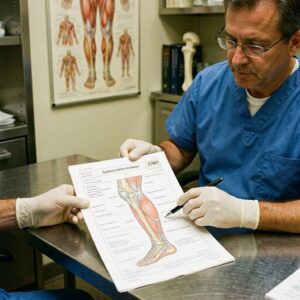
CPT Code for Gastrocnemius Recession
The Short Answer: Which CPT Code Do You Use?
The primary CPT code for a gastrocnemius recession is 27687.
This code describes a surgical procedure on the leg. The official descriptor for 27687 is: “Gastrocnemius recession, open, Strayer procedure.”
However, that is not the full story. In some cases, you might use a different code. Why? Because surgical techniques vary. Some surgeons perform a different approach. Others perform the surgery endoscopically.
Let us explore your options.
Alternative Codes to Know
| CPT Code | Procedure Description | When to Use |
|---|---|---|
| 27687 | Open gastrocnemius recession (Strayer) | Most common. Open approach with complete release. |
| 27686 | Tenotomy, open, gastrocnemius | Partial or incomplete release. Rare for isolated recession. |
| 29855 | Endoscopic gastrocnemius recession | Minimally invasive approach. Check payer policies first. |
Important Note: Always verify your specific payer’s guidelines. Medicare and private insurers may have different coverage rules for these codes.
Understanding the Procedure: What Is a Gastrocnemius Recession?
Before we go deeper into coding, let us understand the surgery itself. This helps you document correctly.
A gastrocnemius recession is a surgical procedure for the calf. The goal is to lengthen the gastrocnemius muscle tendon unit. This treats conditions like equinus deformity.
Equinus means you have limited ankle dorsiflexion. In simple terms, you cannot pull your toes up toward your shin. This causes problems like:
-
Plantar fasciitis that does not heal.
-
Flatfoot deformities.
-
Diabetic foot ulcers.
-
Achilles tendon tightness.
During the surgery, the surgeon cuts or releases the gastrocnemius fascia. This allows the muscle to slide. The ankle gains more range of motion. The Strayer procedure (CPT 27687) is the traditional open method.
Why Does the Code Matter?
Using the wrong code leads to claim denials. Denials delay payment. They also increase administrative work. Worse, an incorrect code could trigger an audit.
Using the correct CPT code for gastrocnemius recession ensures:
-
Faster reimbursement.
-
Compliance with payer contracts.
-
Accurate patient records.
-
Reduced audit risk.
Deep Dive into CPT 27687: Open Gastrocnemius Recession (Strayer)
Let us examine code 27687 in detail. This is your most likely code. Understanding its official definition helps you apply it correctly.
Official Descriptor and Lay Terms
The AMA’s official descriptor is: Gastrocnemius recession, open, Strayer procedure.
In plain English, this means:
-
Open: The surgeon makes a skin incision. They do not use an endoscope.
-
Gastrocnemius recession: The surgeon releases the gastrocnemius muscle from the Achilles tendon.
-
Strayer procedure: A specific technique. The surgeon identifies the gastrocnemius fascia. They cut it transversely. This allows the muscle belly to retract proximally.
Surgical Steps (For Documentation)
Good documentation supports the code. Your operative note should include these steps:
-
Patient positioning (prone or supine with leg elevated).
-
Incision placement (usually medial or posterior).
-
Identification of the gastrocnemius fascia.
-
Dissection of the fascia.
-
Transverse incision of the gastrocnemius aponeurosis.
-
Ankle dorsiflexion to confirm increased range of motion.
-
Hemostasis and wound closure.
If your note misses key elements, a coder may downcode or deny the claim.
When Is 27687 NOT Appropriate?
Do not use 27687 for:
-
An isolated Achilles tendon repair (use 27680 or 28200).
-
A simple tenotomy (cutting the tendon without recession).
-
A procedure on the plantaris tendon alone.
-
An endoscopic approach.
Honesty here is critical. Auditors review op notes carefully.
The Endoscopic Alternative: CPT 29855
Some surgeons prefer an endoscopic gastrocnemius recession. This is a minimally invasive approach. It uses a small camera and tiny incisions.
The correct CPT code for endoscopic gastrocnemius recession is 29855.
The official descriptor is: Arthroscopically aided treatment of gastrocnemius recession.
However, be careful. Many payers consider this code experimental or investigational. Why? Because the long-term outcomes are similar to open surgery. But the costs are often higher.
Table: Open vs. Endoscopic Coding Comparison
| Feature | Open (27687) | Endoscopic (29855) |
|---|---|---|
| Incision size | 3-5 cm | 1-2 cm (two incisions) |
| Visualization | Direct | Camera-assisted |
| Payer acceptance | Widely accepted | Variable. Check first. |
| Reimbursement | Established | Often lower or denied. |
| Documentation complexity | Moderate | High (need photos/video). |
Pro Tip: Before performing an endoscopic recession, obtain prior authorization. Write a letter explaining medical necessity. Attach peer-reviewed literature supporting the technique.
Documentation Essentials for Success
Your documentation determines your payment. Here is what every operative note must include for a gastrocnemius recession.
Required Elements for CPT 27687
-
Diagnosis: Link the procedure to a specific ICD-10-CM code. Common diagnoses include:
-
M21.529 (Equinus deformity, unspecified ankle)
-
M72.2 (Plantar fascial fibromatosis)
-
E11.621 (Diabetes with foot ulcer)
-
M20.12 (Hallux rigidus with pes planus)
-
-
Medical necessity: Explain why conservative treatment failed. List physical therapy, stretching, orthotics, or injections.
-
Procedure details: Mention “open Strayer gastrocnemius recession.”
-
Findings: Describe the tight gastrocnemius fascia.
-
Intraoperative range of motion: State the pre-release and post-release ankle dorsiflexion angles.
-
Complications: If none, state “None.”
Sample Operative Note Excerpt
*“A 4 cm longitudinal incision was made over the medial calf. Dissection was carried down to the fascia of the gastrocnemius muscle. The distal aspect of the gastrocnemius aponeurosis was identified 2 cm proximal to the Achilles tendon insertion. A transverse release was performed. The ankle was then dorsiflexed from -5 degrees to +15 degrees. Hemostasis was achieved. The wound was closed in layers.”*
This note clearly supports CPT 27687.
Common Billing Mistakes and How to Avoid Them
Even experienced billers slip up. Here are the most frequent errors with the CPT code for gastrocnemius recession.
Mistake #1: Coding for Both Legs Incorrectly
Some patients need bilateral surgery. How do you code that?
-
Use modifier 50 (Bilateral procedure) on a single line of 27687.
-
Do not bill two units of 27687 with modifiers LT and RT for this code. Some payers accept LT/RT, but modifier 50 is the AMA standard.
Example: *27687 – 50*
Mistake #2: Bundling Issues
A gastrocnemius recession is sometimes performed with other foot surgeries. For instance, a patient might need a plantar fasciotomy or a bunion correction.
Check National Correct Coding Initiative (NCCI) edits. Some codes are bundled. You may need a modifier to separate them.
Common bundled services (check payer policy):
-
Achilles tendon repair (27680)
-
Plantar fasciotomy (28060)
-
Triple arthrodesis (28715)
Use modifier -59 (Distinct procedural service) if the procedures are separate and not overlapping.
Mistake #3: Unlisted Procedure Code (Use with Caution)
Some coders panic and use an unlisted code like 27999 (Unlisted procedure, leg). Avoid this if possible.
Unlisted codes require a paper claim. You must attach a cover letter and operative report. Reimbursement is unpredictable. Only use 27999 for a truly novel technique not described by 27687 or 29855.
Reimbursement Rates and Global Period
Money matters. Let us talk about what you can expect to collect. Please note: rates vary by payer, region, and contract.
Medicare National Average (Facility Price)
As a reference, the 2024 Medicare Physician Fee Schedule national average for CPT 27687 is approximately:
-
Facility payment (hospital outpatient): $380–$450
-
Non-facility payment (office surgery): $520–$650
These are professional fees only. The facility fee is separate.
Global Period
CPT 27687 has a 90-day global period. This means:
-
The surgical fee includes routine postoperative care for 90 days.
-
You cannot bill separately for E/M services related to the surgery during this time.
-
Exceptions: Complications or unrelated problems.
Private Payer Variations
Private insurers often pay higher. However, they may require prior authorization. Common commercial rates range from $650 to $1,200 for the professional component.
ICD-10-CM Codes That Support Medical Necessity
A strong diagnosis justifies the surgery. Here are the most frequently used ICD-10 codes with gastrocnemius recession.
| ICD-10 Code | Diagnosis | Documentation Tips |
|---|---|---|
| M21.521 | Acquired equinus deformity, right ankle | Note loss of dorsiflexion >10 degrees. |
| M21.522 | Acquired equinus deformity, left ankle | Include goniometer measurements. |
| M21.529 | Acquired equinus deformity, unspecified | Use only if laterality unknown. |
| M72.2 | Plantar fascial fibromatosis (Ledderhose) | Note failure of 6 months of conservative care. |
| E11.621 | Type 2 diabetes with foot ulcer | Link ulcer location and Wagner grade. |
| G71.0 | Muscular dystrophy (spastic equinus) | Include neurology consultation notes. |
| S93.401 | Sprain of ankle, unspecified (chronic) | Document chronic instability with tightness. |
Remember: One diagnosis may not be enough. If the patient has equinus AND plantar fasciitis, list both. This strengthens medical necessity.
Step-by-Step Billing Workflow
Follow this checklist to submit a clean claim for a gastrocnemius recession.
-
Verify benefits: Is the patient’s plan active? Does it cover foot surgery?
-
Check prior authorization: Many payers require it for 27687. Do not skip this step.
-
Confirm diagnosis codes: Use specific, laterality-specific codes.
-
Select CPT code: Start with 27687 unless endoscopic (29855).
-
Add modifiers:
-
Bilateral? Add modifier 50.
-
Multiple procedures? Add modifier 51 or 59 as needed.
-
-
Review operative note: Does it match the code descriptor?
-
Submit claim electronically: Use your billing software.
-
Track the claim: Follow up after 14 days.
-
Appeal denials quickly: Most payers have strict deadlines.
Real-World Denial Reasons and How to Appeal
Even careful practices get denials. Here are the top reasons payers reject the CPT code for gastrocnemius recession.
Denial: “Not Medically Necessary”
Why it happens: The payer does not see proof of failed conservative care.
How to fix: Submit documentation of:
-
3+ months of physical therapy.
-
Home stretching logs.
-
NSAID trials.
-
Corticosteroid injections (if appropriate).
Appeal letter tip: Quote your local coverage determination (LCD). Many Medicare jurisdictions have LCDs for equinus surgery.
Denial: “Procedure Not Covered”
Why it happens: Some plans exclude “foot deformities” or “elective procedures.”
How to fix: Check the patient’s plan benefits. If excluded, you may need to bill the patient directly after signing an advance beneficiary notice (ABN).
Denial: “Coding Mismatch”
Why it happens: Your ICD-10 code does not support 27687.
Example: Using M72.2 (plantar fasciitis) alone. Many payers view plantar fasciitis as a non-covered indication for recession.
How to fix: Add a primary diagnosis of equinus (M21.52-). List plantar fasciitis as secondary.
Frequently Asked Questions (FAQ)
1. Is there a separate CPT code for gastrocnemius recession with Achilles tendon lengthening?
No. If the surgeon lengthens both the gastrocnemius and the Achilles tendon, you code the primary procedure. Use 27687 for the recession. Do not add a separate code for the Achilles lengthening unless specifically performed on a different tendon. NCCI bundles these.
2. Can I bill physical therapy on the same day as the surgery?
No. Postoperative physical therapy performed on the day of surgery is included in the global surgical package. Bill subsequent PT sessions starting the day after surgery.
3. What is the difference between a gastrocnemius recession and an Achilles tendon lengthening?
A recession releases only the gastrocnemius muscle fascia. The Achilles tendon remains intact. A lengthening (Z-lengthening) cuts and re-sutures the Achilles itself. These are different procedures with different codes.
4. How do I code a revision gastrocnemius recession?
If the patient had a previous recession and needs a repeat, add modifier 78 (Return to OR for related procedure) or 76 (Repeat procedure by same physician). Use the same CPT code 27687. Attach the prior op note.
5. Does Medicare cover gastrocnemius recession?
Yes, for specific indications like acquired equinus deformity with failed conservative care. However, local coverage varies. Check your MAC’s LCD. Some jurisdictions require an ankle dorsiflexion of less than 5 degrees.
6. What is the correct CPT code for an endoscopic gastrocnemius recession?
That is 29855 (Arthroscopically aided treatment of gastrocnemius recession). But verify payer coverage first. Many commercial plans do not cover it.
7. Should I use modifier 22 for increased procedural complexity?
Rarely. If the patient has severe scarring or obesity that adds significant time, you may append modifier 22 (Increased procedural service). Expect to send records. Payment is not guaranteed.
Additional Resources for Coders and Surgeons
No single guide can replace official sources. Bookmark these links for reference.
Official Coding Resources
-
American Medical Association (AMA): CPT® Professional Edition – Buy the current manual.
-
CMS NCCI Edits: Search the quarterly updates for bundling checks.
-
AHA Coding Clinic: Read official coding advice for musculoskeletal procedures.
Local Coverage Determinations (LCDs)
Search for your Medicare Administrative Contractor (MAC). Example MACs include:
-
Novitas
-
Palmetto GBA
-
Noridian
-
CGS
Use keyword: “Equinus deformity surgery LCD” on your MAC’s website.
Professional Societies
-
American College of Foot and Ankle Surgeons (ACFAS): Offers coding webinars.
-
American Academy of Orthopaedic Surgeons (AAOS): Publishes coding guides.
Link to Helpful Resource
For a complete list of foot and ankle CPT codes with relative value units (RVUs), visit the CMS Physician Fee Schedule Search tool:
https://www.cms.gov/medicare/physician-fee-schedule/search
(Enter code 27687 for current payment rates.)
Final Takeaways for Your Practice
Let us wrap up with a quick summary.
Do this:
-
Use CPT 27687 for open Strayer gastrocnemius recession.
-
Document preoperative and postoperative ankle range of motion.
-
Confirm medical necessity with failed conservative care.
-
Check for LCDs in your region.
Avoid this:
-
Using unlisted codes (27999) as a first choice.
-
Billing bilateral cases without modifier 50.
-
Ignoring NCCI bundling with other foot procedures.
-
Performing endoscopic recession without prior authorization.
Conclusion
The correct CPT code for gastrocnemius recession is typically 27687 for the open Strayer procedure. Use 29855 only for endoscopic cases with verified payer approval. Always support your code with strong documentation, including range of motion measurements and failed conservative treatment. Clean claims lead to faster payment and fewer audits.
Disclaimer: This article is for educational purposes only. Coding and reimbursement rules change frequently. Always verify with current CPT manuals, payer policies, and local coverage determinations. The author and publisher assume no liability for any billing decisions made based on this content.