If you have ever sat in a dentist’s chair and heard the words “this tooth needs a crown,” you know the feeling that follows. There is the worry about the procedure itself, the concern about the cost, and often, the sheer confusion when the front desk hands you a treatment plan filled with letters, numbers, and jargon.
One of the most common questions we hear is, “What is the dental code for a metal crown?”
It sounds like a simple question, but the answer is a little more detailed than you might expect. In the world of dental insurance and billing, there isn’t just one single code. Instead, there are several codes that differentiate the type of metal used, the fabrication process, and the specific situation of the tooth.
Understanding these codes is not just for dental professionals. It is for you, the patient. When you understand the language on your treatment plan and your insurance explanation of benefits (EOB), you gain confidence. You can ask better questions, verify that you are being billed correctly, and make informed decisions about your oral health.
In this guide, we are going to walk through everything you need to know about the dental codes for metal crowns. We will look at the specific codes, what they mean, how much you might expect to pay, and how insurance typically handles them. By the end, you will be able to look at a dental estimate and know exactly what you are looking at.

Dental Code for a Metal Crown
Why Metal Crowns Are Still a Top Choice
Before we dive into the codes themselves, it helps to understand why metal crowns are still widely used. In an era where everyone seems to want porcelain and tooth-colored restorations, metal crowns hold a unique and important place in dentistry.
Metal crowns, often made from gold alloy, nickel-chromium, or cobalt-chromium, are incredibly durable. They can withstand the immense force of chewing and grinding better than any other material. If you have a molar at the very back of your mouth that takes the brunt of your chewing force, a metal crown is often the most reliable solution.
Dentists refer to these as “high noble” or “base metal” crowns depending on the composition. This distinction is crucial because it directly affects the dental code used.
The Strength Factor
Metal crowns rarely chip or break. Porcelain crowns, while beautiful, can fracture over time. For patients who grind their teeth at night (a condition known as bruxism), a metal crown is often the safest bet because it wears down at a rate similar to natural enamel.
The Preservation Factor
Because metal is incredibly strong, the crown can be made slightly thinner than a porcelain crown. This means your dentist often has to remove less of your natural tooth structure to place a metal crown compared to a porcelain or zirconia crown.
The Aesthetic Trade-Off
Let’s be honest: metal crowns are not invisible. They are silver or gold in color. For front teeth, this is rarely an option. But for molars, where aesthetics are less of a concern, the durability far outweighs the look.
Understanding the why behind the material helps you understand the which behind the code.
The Primary Dental Codes for Metal Crowns
In the Current Dental Terminology (CDT) code set, which is maintained by the American Dental Association (ADA), there are three main codes you will see associated with metal crowns. They are categorized based on the type of alloy used to fabricate the crown.
Here is a breakdown of the core codes:
D2790: Crown, Full Cast, High Noble Metal
This is the code for a full metal crown made from a high noble metal.
But what does “high noble” mean? In dentistry, an alloy is considered high noble if it contains at least 60% noble metal, and at least 40% of that must be gold. Noble metals include gold, platinum, and palladium.
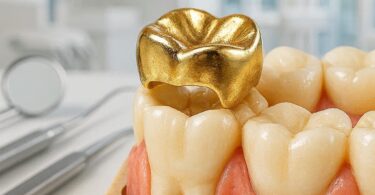
If you see D2790 on your treatment plan, you are looking at a crown that is primarily made of gold. These are the classic “gold crowns.” They are considered the gold standard (pun intended) for durability and precision fit. They are the most biocompatible and cause the least amount of wear to the opposing teeth.
D2791: Crown, Full Cast, Predominantly Base Metal
This code is used for a full metal crown made from a predominantly base metal.
Base metals include nickel, chromium, and cobalt. For an alloy to fall under this code, the content of noble metal (like gold) is less than 25% (or specifically, it does not meet the criteria for high noble or noble).
These crowns are silver in color. They are incredibly hard and strong. However, some patients have allergies or sensitivities to nickel, which is commonly found in these alloys. If you have a known nickel allergy, this is a code you would want to ask your dentist about before proceeding.
D2792: Crown, Full Cast, Noble Metal
This code sits in the middle. It is for a full metal crown made from a noble metal alloy that does not qualify as high noble.
To fall under this code, the alloy must contain at least 25% noble metal (gold, platinum, or palladium), but less than 60%. It is a mix. These crowns are often a good balance between cost and quality. They offer better biocompatibility than base metal crowns but are less expensive than high noble (gold) crowns.
Quick Reference Table: Metal Crown Codes
| CDT Code | Description | Metal Composition | Color | Key Benefit |
|---|---|---|---|---|
| D2790 | High Noble Metal | ≥ 60% noble metal (≥40% gold) | Gold/Yellow | Best fit, biocompatible, long-lasting |
| D2792 | Noble Metal | ≥ 25% noble metal (less than 60%) | Silver/Yellowish | Good balance of cost and durability |
| D2791 | Base Metal | < 25% noble metal | Silver/Gray | Most affordable, extremely hard |
Important Note for Patients: Do not assume that a “silver” crown is automatically a base metal crown (D2791). Some noble metal crowns can also appear silver. If the alloy content is important to you due to allergies or personal preference, ask your dentist for the specific lab slip or material certification. A reputable dental office will provide this information transparently.
How Insurance Views Metal Crown Codes
Insurance companies are very particular about which code they will pay for. Generally speaking, dental insurance is designed to cover the least expensive adequate treatment. This is called the “least expensive alternative treatment” (LEAT) clause.
If a dentist submits a claim for D2790 (High Noble Metal), the insurance company might look at the patient’s plan and say, “We will cover this at the rate of D2791 (Base Metal) because that is the least expensive option that meets medical necessity.”
This is a common source of confusion for patients. You might think you have 50% coverage for a crown, but when you receive the bill, you owe significantly more than 50% because the insurance company “downgraded” the material.
Understanding the Downgrade
-
Scenario: Your dentist recommends a D2790 (Gold) crown for your molar.
-
Insurance: They pay their portion based on the fee for D2791 (Base Metal).
-
Result: You are responsible for the difference between the dentist’s fee for D2790 and the insurance payment (which was calculated on D2791).
It is always wise to ask your dental office if your insurance plan downgrades metal crown materials. Some PPO plans have a “non-downgrade” clause for posterior teeth, but this is becoming rarer.
Beyond the Metal: Related Codes You Need to Know
When you look at a treatment plan for a metal crown, you will rarely see just one code. There are several supportive codes that go along with the crown procedure. Understanding these helps you understand the total cost.
D2950: Core Buildup, Including Any Pins
If a tooth has a large cavity or a crack, there may not be enough solid tooth structure left to hold the crown. The dentist must rebuild the foundation of the tooth before placing the crown. This is called a core buildup.
This is a separate procedure with its own fee. It is not included in the crown code. If you see D2950 on your estimate, it is a necessary step to ensure the crown has a stable base to sit on.
D0230: Intraoral Periapical Radiographic Image
Before a crown is placed, the dentist needs to see the root of the tooth and the bone around it. This requires an x-ray. The code D0230 often appears as a “periapical” film—a specific x-ray of that single tooth.
D0330: Panoramic Radiographic Image
Sometimes, a full panoramic x-ray (Panorex) is needed to get a broad view of the jaw and the surrounding teeth. This is another separate code.
D9310: Consultation
If you are seeing a specialist, like a prosthodontist, for the crown, you might see a consultation code for the initial visit where the treatment plan was discussed.
The Process: From Diagnosis to Cementation
To fully grasp why these codes appear on your bill, it helps to walk through the journey of a metal crown. This process usually takes two visits.
The First Visit: Preparation and Impressions
During the first visit, the dentist numbs the area and shapes the tooth. They remove the old filling or decay and create a “prepped” tooth that looks like a small peg. This is where the core buildup (D2950) might happen.
Once the tooth is shaped, the dentist takes a mold (impression) of your teeth. This mold is sent to a dental laboratory. The lab technician uses that mold to fabricate your custom metal crown, whether it is D2790, D2791, or D2792.
To protect your prepped tooth while the lab works (usually 2-3 weeks), the dentist places a temporary crown. This temporary is usually made of acrylic and is not as strong as your final crown.
The Second Visit: Placement and Cementation
At the second visit, the dentist removes the temporary crown. They try in the new metal crown to check the fit, the bite, and the color (though color is less relevant for metal).
Once everything looks perfect, they cement the crown permanently onto the tooth. At this point, the procedure is complete.
Why Billing Takes Time
Dentists typically do not bill the crown until the second visit when the crown is placed. However, they often collect an estimate of your portion at the first visit to cover the lab fee and the upcoming work.
Costs Associated with Metal Crown Codes
The cost of a metal crown varies widely based on geographic location, the dentist’s experience, and the specific lab used. However, we can provide a realistic range.
-
D2791 (Base Metal): This is generally the most affordable metal crown. The fee can range from $800 to $1,500.
-
D2792 (Noble Metal): This sits in the middle. The fee typically ranges from $900 to $1,800.
-
D2790 (High Noble Metal / Gold): This is the premium option. Because gold prices fluctuate and the material is expensive, fees range from $1,200 to $2,500+.
Cost Factors:
-
Laboratory Fees: The lab that makes the crown charges the dentist. A gold crown requires a specialized lab and more expensive materials.
-
Specialist Fees: If you see a prosthodontist (a specialist in crowns and bridges) instead of a general dentist, the fee is often 20-30% higher.
-
Geographic Location: A crown in Manhattan or San Francisco will cost significantly more than one in a rural town.
Quote from a Billing Specialist:
*“I often tell patients to look at the crown procedure as a three-part investment: the dentist’s skill, the lab’s precision, and the material quality. If you see a price that seems too good to be true for a D2790 gold crown, ask where the crown is being made. High-quality domestic labs cost more, but they offer better fit and longevity.”*
Alternatives to Full Metal Crowns
Sometimes, you might be deciding between a metal crown and another material. It is useful to know how the codes for these alternatives compare to the metal codes.
Porcelain-Fused-to-Metal (PFM)
The code for this is D2750 (High Noble Metal) or D2751 (Base Metal), depending on the metal substructure.
PFM crowns have a metal inner shell for strength and a porcelain outer layer for aesthetics. They are a middle ground. They offer better looks than full metal but are slightly weaker because the porcelain can chip. They are very common for premolars and molars where a patient wants a tooth-colored option but needs durability.
All-Ceramic or Zirconia
The codes for these include D2740 (Porcelain/Ceramic) and D2794 (Zirconia, though zirconia is technically a ceramic).
Zirconia crowns are incredibly strong and tooth-colored. They have become a popular alternative to metal crowns in the last decade. They are metal-free, biocompatible, and do not show a dark line at the gum. However, they are generally more expensive than base metal crowns and require slightly more tooth reduction.
Comparison Table: Metal vs. Alternatives
| Feature | Full Metal (D2790/1/2) | PFM (D2750/1) | Zirconia (D2794) |
|---|---|---|---|
| Aesthetics | Poor (Silver/Gold) | Good (Tooth-colored) | Excellent (Tooth-colored) |
| Durability | Excellent | Good (Porcelain can chip) | Excellent |
| Tooth Reduction | Minimal | Moderate | Moderate to High |
| Cost | Moderate to High | Moderate | High |
| Best Use | Molars, Grinders | Premolars, Anterior (if needed) | Anywhere (popular for molars) |
Common Scenarios: Putting It All Together
Let’s look at a few real-world scenarios to see how these dental codes for metal crowns play out in a patient’s experience.
Scenario 1: The Grinder
Patient: Tom, a 55-year-old man who grinds his teeth at night. His lower left first molar (tooth #19) has a large old filling that has cracked.
Treatment Plan:
-
D2790 – Crown, Full Cast, High Noble Metal (Gold)
-
D2950 – Core Buildup
-
D0230 – Periapical X-ray
Outcome: Tom’s dentist recommends gold because it is the most durable material for his grinding habit. Tom pays a premium for D2790, but the crown lasts him 25 years without issue.
Scenario 2: The Budget-Conscious Patient
Patient: Sarah, a 30-year-old with dental insurance. Her upper second molar (#2) needs a crown after a root canal.
Treatment Plan:
-
D2791 – Crown, Full Cast, Predominantly Base Metal
Outcome: Sarah’s insurance covers 50% of the crown. Because the dentist used D2791 (base metal), the insurance does not downgrade it. Sarah’s out-of-pocket cost is low, and she gets a durable, functional crown for a back tooth where no one will see it.
Scenario 3: The Allergic Reaction
Patient: Mark has a known nickel allergy from jewelry. He needs a crown on his lower right molar (#30).
Treatment Plan:
-
D2792 – Crown, Full Cast, Noble Metal
Outcome: Mark’s dentist avoids D2791 (which contains nickel) and opts for a noble metal crown with a high palladium content. It costs a bit more than a base metal crown, but it eliminates the risk of an allergic reaction and provides a safe, long-term solution.
How to Read Your Dental Treatment Plan
When you receive a treatment plan, it can look like a spreadsheet of confusion. Here is how to interpret the section for a metal crown.
-
Look at the Code: Is it D2790, D2791, or D2792? This tells you the material composition.
-
Check the Tooth Number: Ensure the crown is listed on the correct tooth. Dentists use the Universal Numbering System (1-32 for adults).
-
Identify the Fee: This is the total fee the dentist charges.
-
Find the Insurance Estimate: Look for a column labeled “Insurance Estimate” or “Plan Pays.” This is what the insurance might pay.
-
Calculate Your Portion: Your portion is the total fee minus the insurance estimate. Remember the downgrade rule.
Pro Tip: Ask the front desk for a “pre-determination” or “pre-authorization” from your insurance company. This is a document where the insurance company reviews the treatment plan (with specific codes) and tells you in writing exactly how much they will pay before you start the work. It is the most reliable way to avoid surprise bills.
Important Notes for Readers
Before we wrap up, here are some critical pieces of information to keep in mind.
-
Warranties: Many dental offices offer a warranty on crowns, usually between 1 and 5 years. However, this often only applies if the crown was placed by the dentist and you maintain regular 6-month cleanings. If you break the crown on a piece of hard candy, the warranty may not cover it.
-
Recurrent Decay: A crown does not make the tooth immune to cavities. You can still get decay at the margin (where the crown meets the tooth). If this happens, the crown may need to be replaced. This is not considered a failure of the crown, but a failure of oral hygiene.
-
No CDT Code for “Same Day” Metal Crowns: If your dentist uses CAD/CAM technology (like CEREC) to mill a crown in the office in a single day, they are almost certainly using ceramic or zirconia. There is currently no standard CDT code for a “same-day” metal crown. Metal crowns are almost always made by an external lab.
-
CDT Code Updates: The CDT codes are updated every year. While D2790, D2791, and D2792 have been stable for a long time, it is always a good practice to ensure you are looking at the current year’s code set if you are verifying a bill.
Conclusion
Navigating the world of dental insurance and procedural codes does not have to be a headache. When it comes to the dental code for a metal crown, remember that the three primary codes—D2790 (high noble), D2791 (base metal), and D2792 (noble metal)—tell you the story of the material used.
Understanding these codes empowers you to make a choice that balances durability, biocompatibility, and cost. Whether you opt for the long-lasting gold of D2790 or the budget-friendly strength of D2791, you are investing in a restoration designed to keep your smile functional for years to come. Always ask questions, request pre-determinations, and work with a dental team that values transparency.
Frequently Asked Questions (FAQ)
1. Is a gold crown (D2790) better than a base metal crown (D2791)?
From a purely technical standpoint, gold crowns (high noble) offer a superior fit, are kinder to opposing teeth, and have the longest track record for longevity. Base metal crowns are still very strong and durable, but they are harder and may cause wear on the teeth they bite against over a very long period. The “best” choice depends on your budget, your oral habits, and any metal allergies.
2. Why does my insurance only want to pay for D2791 when my dentist used D2790?
This is the “downgrade” clause mentioned earlier. Most insurance plans only cover the cost of the least expensive acceptable material. They view D2791 as the baseline for a functional metal crown. They will pay their portion based on that code, and you are responsible for the upgrade cost to D2790.
3. Can I request a specific code from my dentist?
You can absolutely discuss material options with your dentist. You cannot “demand” a specific code if the dentist does not use that material. For example, if your dentist only uses a specific lab that fabricates high noble crowns, they cannot bill D2791. However, a good dentist will discuss the pros and cons of each material type with you so you can choose what fits your needs.
4. Does the dental code cover the root canal too?
No. A root canal (codes like D3310 for an anterior tooth or D3330 for a molar) is a separate procedure. If a tooth needs a root canal and a crown, both codes will appear on your treatment plan. The crown protects the tooth after the root canal treatment is complete.
5. How long should a metal crown last?
With excellent oral hygiene and regular dental visits, a high noble metal crown (D2790) can last 20 to 40 years, or even a lifetime. Base metal crowns (D2791) also have excellent longevity, often 15-25 years. The primary reasons for failure are usually recurrent decay under the crown or issues with the tooth’s root, not the crown itself.
Additional Resource
For the most up-to-date information on dental procedure codes, you can visit the American Dental Association’s official CDT code page. The ADA is the authoritative source for the CDT code set, offering code books and resources for both professionals and patients.
Link: ADA.org/CDC (Note: This is the official resource for the Current Dental Terminology codes.)
Disclaimer: This article is for informational purposes only and does not constitute medical, dental, or financial advice. Dental codes, insurance policies, and fees vary by provider, location, and plan. Always consult with your licensed dentist and insurance provider to verify coverage and treatment options specific to your situation.