
If you work in a dental practice, you know that accuracy is everything. This is especially true when it comes to dental coding. One wrong code can mean a denied claim, a frustrated patient, and lost revenue for the practice.
Among the most common—and sometimes confusing—procedures to code is the porcelain-fused-to-metal (PFM) crown. For decades, the PFM crown has been a gold standard in restorative dentistry, offering a winning combination of strength and aesthetics. But when it comes to translating that clinical work into a billable code, things can get a little tricky.
This guide is designed to be your go-to resource. We will break down the world of ADA codes for PFM crowns in a way that is simple, clear, and practical. Whether you are a new dental assistant, a seasoned office manager, or a dentist looking to sharpen your coding skills, you’ll find everything you need right here.
We’ll cover not just the codes themselves, but the clinical scenarios that dictate which code to use, the critical documentation you need to support your claim, and the common pitfalls that lead to denials. Let’s dive in and demystify the ADA codes for PFM crowns together.
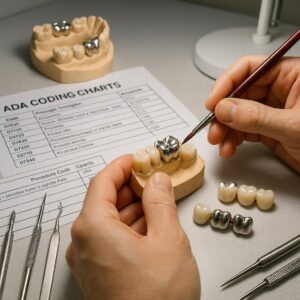
ADA Codes for PFM Crowns
Understanding the Basics: What is a PFM Crown?
Before we get into the codes, it’s important to have a solid grasp of what a PFM crown actually is. This foundation will make it much easier to understand the nuances of coding.
A porcelain-fused-to-metal crown is a type of dental restoration that covers the entire visible portion of a tooth. As the name suggests, it is made of two distinct layers:
-
A metal substructure: This is the inner core of the crown, providing the strength and durability needed to withstand the forces of biting and chewing. Common metals used include high-noble metals (like gold), noble metals, or base-metal alloys.
-
A porcelain outer layer: This layer is fused to the metal core during a high-heat process. The porcelain is crafted to match the color, translucency, and texture of the patient’s natural teeth, providing the aesthetic appeal.
For many years, PFM crowns were the go-to choice for restoring posterior teeth (premolars and molars) where strength was the primary concern. They are also used on anterior teeth when a patient requires maximum durability, though all-ceramic or zirconia crowns have become increasingly popular for front teeth due to superior aesthetics.
The key takeaway here is that a PFM crown is a single, fixed prosthesis. It is not a temporary crown, and it is not a bridge. This distinction is crucial for correct coding.
The Core ADA Codes for PFM Crowns
The American Dental Association (ADA) maintains the Current Dental Terminology (CDT) code set. These are the codes that must be used on dental claims forms. For PFM crowns, there are three primary codes you need to know. They are all found under the “Crowns–Single Restorations Only” section.
Let’s look at them in detail.
D2750: Crown – Porcelain Fused to High Noble Metal
This is the code for a PFM crown that uses a high noble metal substructure. But what does “high noble metal” mean?
According to ADA guidelines, a high noble metal alloy must contain at least 60% noble metal (gold, platinum, palladium) by weight, of which at least 40% must be gold. These are often referred to as “gold crowns” or “high-gold” crowns, even when they have porcelain fused to them.
When to use D2750:
-
The PFM crown is fabricated using a high noble metal alloy.
-
It is used on any tooth (anterior or posterior).
-
The crown is a single, full-coverage restoration.
-
It is cemented or bonded into place as a definitive, permanent restoration.
This is often considered the “premium” PFM crown code due to the higher cost of materials. The laboratory fee for a high noble metal crown is typically higher, and the ADA code reflects that.
D2751: Crown – Porcelain Fused to Predominantly Base Metal
This code is for a PFM crown with a predominantly base metal substructure. Base metals include nickel, chromium, and beryllium.
For a metal to be classified as “predominantly base metal,” it must contain less than 25% noble metal (gold, platinum, palladium) by weight.
When to use D2751:
-
The PFM crown is fabricated using a base metal alloy.
-
It is used on any tooth.
-
It is a single, permanent full-coverage restoration.
Base metal crowns are generally less expensive than high noble metal crowns. They are known for their exceptional strength and hardness, but some patients may have sensitivities or allergies to metals like nickel. This code reflects the different material cost and characteristics.
D2752: Crown – Porcelain Fused to Noble Metal
This is the middle ground. D2752 is used for a PFM crown with a noble metal substructure.
A noble metal alloy must contain at least 25% noble metal (gold, platinum, palladium) by weight, but it does not meet the 60% threshold required for a high noble metal classification. The gold content is typically lower than in high noble alloys.
When to use D2752:
-
The PFM crown is fabricated using a noble metal alloy.
-
It is used on any tooth.
-
It is a single, permanent full-coverage restoration.
Noble metal crowns offer a balance between the cost-effectiveness of base metals and the biocompatibility and handling characteristics of high noble metals. They are a very common choice in many general dental practices.
A Quick Comparison: D2750 vs. D2751 vs. D2752
Choosing the right code comes down to the specific alloy used in the dental laboratory. To help clarify, here is a simple comparison table.
| ADA Code | Description | Metal Type | Noble Metal Content | Typical Characteristics |
|---|---|---|---|---|
| D2750 | PFM – High Noble Metal | High Noble | ≥ 60% noble metal (≥ 40% gold) | Highest biocompatibility, excellent fit, highest lab cost |
| D2752 | PFM – Noble Metal | Noble | 25% – 60% noble metal | Good balance of cost and performance, widely used |
| D2751 | PFM – Predominantly Base Metal | Base Metal | < 25% noble metal | Very high strength, lower cost, potential metal sensitivity |
Important Note: You must code based on the actual alloy used. Never guess. Your laboratory invoice or prescription sheet should always specify the type of metal alloy. If you are unsure, ask your lab technician. Coding based on what you think was used is a recipe for a claim denial or audit.
Clinical Scenarios and Code Selection
Let’s bring these codes to life with some common clinical scenarios. Seeing how the codes apply in practice can help solidify your understanding.
Scenario 1: The Posterior Molar
A patient presents with a cracked mandibular first molar (tooth #19). The tooth is vital, and after evaluation, the dentist determines a full-coverage crown is needed. The dentist prescribes a PFM crown for strength. The laboratory invoice states that the crown is fabricated with a “high noble metal alloy (86% noble metal, 68% gold).”
-
Correct Code: D2750
Scenario 2: The Cost-Conscious Patient
A patient needs a crown on a maxillary first premolar (tooth #5). The tooth has had root canal treatment. The patient is on a budget but wants the durability of a PFM. The dentist and patient agree to use a base metal alloy crown to reduce the patient’s out-of-pocket cost. The lab invoice confirms a nickel-chromium (base metal) alloy was used.
-
Correct Code: D2751
Scenario 3: The Standard of Care
A patient requires a crown on a mandibular second premolar (tooth #20). The dentist routinely uses a noble metal alloy for PFM crowns, which has a gold content of around 40-50%, but not enough to be classified as “high noble.” The lab invoice lists the alloy as “noble metal.”
-
Correct Code: D2752
Beyond the Core Code: The Critical Role of Documentation
Knowing which code to use is just the first step. The second, equally important step is ensuring your documentation supports that code. If an auditor or insurance company reviews the claim, your clinical notes must tell the same story as the codes you submitted.
Here is a checklist of what your documentation should include to support a PFM crown code.
The Narrative or Clinical Notes
A strong clinical note should answer the “who, what, where, when, why, and how.” For a PFM crown, it should include:
-
Reason for the Crown: Clearly state the diagnosis. Is it for a fractured tooth, a tooth with recurrent decay, a cracked tooth syndrome, after root canal treatment, or to replace a failed restoration? The “medical necessity” is the foundation of the claim.
-
Tooth Number: Always specify the exact tooth number using the ADA Universal Numbering System.
-
Type of Restoration: State that a “permanent full-coverage porcelain-fused-to-metal crown” is planned.
-
Metal Type: This is crucial. The note should ideally state the prescribed metal type (e.g., “high noble metal,” “noble metal,” “base metal”) based on the prescription to the lab.
-
Supporting Clinical Findings: Include details from the clinical exam, such as “tooth #3 has a distal crack extending subgingivally,” or “tooth #14 has a large, failing MOD amalgam with recurrent caries.”
-
Radiographic Evidence: Note that a periapical or bitewing radiograph was taken and supports the diagnosis (e.g., “Radiographs reveal recurrent decay on the mesial of tooth #19, extending to the pulp chamber”).
The Laboratory Prescription and Invoice
Your lab documentation is your best friend for supporting the specific code. It serves as the definitive proof of what was fabricated.
-
Keep the Lab Prescription: A copy of the lab prescription should be in the patient’s chart. This is where you specified the alloy type.
-
Keep the Lab Invoice: The invoice from the lab will explicitly state the type of alloy used. This is the single most important document to tie the clinical work to the specific code (D2750, D2751, or D2752). If an auditor asks, “How do you know it was high noble metal?” your answer is “Because the lab invoice says so.”
“I’ve seen many claims denied simply because the documentation was vague. A simple note like ‘crown #30’ is not enough. You need the full story: why, what type, and the lab confirmation. The lab invoice is your shield in an audit.” — A seasoned dental billing consultant.
Related Codes and Modifiers
A PFM crown procedure is rarely a standalone event. It often involves other procedures that need to be coded alongside the crown. Understanding these related codes is essential for accurate billing.
Codes Often Used with PFM Crowns
-
D2950: Core Buildup, Including Any Pins: This is a very common adjunct code. If a tooth has significant structural loss from decay or a fracture, a core buildup is needed to create a solid foundation for the crown. This is a separate service and is billable in addition to the crown code. The documentation must clearly show why a buildup was necessary (e.g., “tooth has less than 50% coronal structure remaining”).
-
D2954: Prefabricated Post and Core: When a tooth has had root canal therapy and there is insufficient coronal tooth structure, a post may be placed to retain the core. This code is for a prefabricated post. It is a separate service.
-
D3330: Endodontic Therapy, Molar (or D3320 for premolar, D3310 for anterior): Root canal treatment is often performed on teeth that will later receive a crown. This is a separate procedure and is billed on its own.
-
D2390: Resin-Based Composite Crown, Anterior: This is not a PFM code, but it’s important to know the distinction. If you are placing a direct composite crown (built up in the mouth) rather than an indirect lab-fabricated PFM, you would use this code.
-
D9995: Teledentistry – Synchronous; Real-Time Encounter: If the treatment plan was established via a teledentistry consultation, this code may be used in conjunction with the evaluation code, but not typically with the crown code itself.
Modifiers
Modifiers are two-character codes added to a procedure code to provide additional information about the service. While not always required for a single PFM crown, they are essential in specific situations.
-
Modifier -RT (Right) and -LT (Left): These are used to identify which side of the arch the procedure was performed on. While many insurers can figure this out from the tooth number, some require these modifiers for specific teeth or when multiple procedures are done.
-
Modifier -52 (Reduced Services): This is used when a procedure is partially reduced or eliminated at the dentist’s discretion. For example, if a PFM crown is planned but, due to unforeseen circumstances, the dentist decides to only complete a temporary crown and not the definitive one, you might use this modifier. It must be accompanied by a detailed explanation.
-
Modifier -59 (Distinct Procedural Service): This modifier indicates that a procedure was separate and distinct from other services performed on the same day. It is often used to “unbundle” codes that an insurer might consider inclusive. For example, if a core buildup (D2950) is performed on a different surface or is truly separate from the crown preparation, some payers may require this modifier to ensure payment. Use this with caution as it is a frequent target for audits. It should only be used when there is a clear, documented clinical reason.
The Importance of the X-Ray
Radiographs are a critical part of the documentation for any crown procedure. Most insurance companies require proof of the need for a crown, and radiographs provide that evidence.
-
Pre-operative radiograph: A radiograph taken before treatment begins. This shows the condition of the tooth, the existing restoration, the level of decay, the bone level, and the status of the root and surrounding structures. This is the most important image for justifying medical necessity.
-
Post-operative (or seat) radiograph: A radiograph taken after the crown is cemented. This is often required by insurers to verify that the crown is properly seated, the margins are closed, and there are no gaps or overhangs.
Failing to include these images with your claim (if requested) or in your patient’s record can lead to a denial.
Common Coding Mistakes and How to Avoid Them
Even experienced dental teams can make mistakes. Being aware of the most common pitfalls can help you prevent them.
Mistake 1: Coding for the Wrong Type of Crown
This is the most fundamental error. Submitting D2750 when the lab used a base metal alloy is both incorrect and will likely result in the insurer paying only the lower D2751 rate, or denying the claim altogether.
-
Solution: Always, always, always verify the metal type on the lab invoice before submitting the claim. Do not rely on memory.
Mistake 2: Not Documenting Medical Necessity
A claim for a crown without a clear, documented reason is a red flag. “Patient wants a nicer smile” is not medical necessity. “Tooth has a vertical fracture extending below the gumline” is.
-
Solution: Ensure your clinical notes explicitly state the diagnosis and the reason a full-coverage crown is the appropriate treatment. Avoid vague terms like “crown for aesthetics.”
Mistake 3: Unbundling the Core Buildup
Some insurers consider a core buildup (D2950) to be part of the crown preparation, especially if the tooth structure was simply “cleaned up” before taking an impression. A core buildup should only be billed when there is significant structural loss that requires a separate, identifiable procedure.
-
Solution: Document the reason for the buildup. Use specific language like “Less than 50% of coronal tooth structure remains after removal of caries. A core buildup was necessary to create a retentive form for the crown.”
Mistake 4: Submitting the Claim Before the Service is Complete
Some practices submit the claim for the crown when the impression is taken (the “prep” appointment). The ADA codes are for the definitive crown, which is not placed until the seat appointment. Submitting too early can confuse the insurer.
-
Solution: Submit the claim after the final crown is cemented, and all services are complete.
Mistake 5: Using the Wrong Code for a Bridge
PFM codes (D2750, D2751, D2752) are strictly for single crowns. A PFM bridge (a fixed partial denture) has its own set of codes, such as D6750 (PFM high noble metal pontic and retainers). Using a single crown code for a bridge is a major error.
Navigating Insurance and Payer Policies
One of the biggest challenges in dental coding is that not all insurance companies are the same. While the ADA codes are standardized, how each payer interprets and applies them can vary.
The Concept of “Downgrading”
A very common practice among dental insurance plans is “downgrading.” This happens when a patient has a plan that covers the “least expensive alternative treatment.”
For example, a patient may have a plan that only covers a base metal PFM crown (D2751) as its “benefit level.” If the dentist places a high noble metal PFM crown (D2750) because it’s clinically appropriate, the insurance company may still process the claim, but they will pay only what they would have paid for the base metal crown. The patient is then responsible for the difference in cost.
What can you do?
-
Know the plan: Before treatment, always verify the patient’s benefits. Find out if the plan has downgrading clauses for crown materials.
-
Communicate with the patient: If you know the plan will downgrade, inform the patient upfront. Explain the clinical benefits of the recommended crown and provide a clear estimate of their financial responsibility.
-
Appeal when necessary: If the plan downgrades a crown that was clinically necessary (e.g., a patient with a known nickel allergy must have a high noble metal crown), you can submit an appeal with documentation supporting the medical necessity of the higher-level material.
Pre-Authorization (Predetermination)
For expensive procedures like crowns, it is often wise to submit a pre-authorization (or predetermination) to the insurance company before starting treatment.
A pre-authorization is not a guarantee of payment, but it is an estimate of what the plan is likely to pay based on the codes you submit. This process:
-
Confirms the patient’s eligibility and remaining benefits.
-
Provides an estimate of the patient’s out-of-pocket cost.
-
Allows you to see if the plan has any specific requirements or limitations for PFM crowns (like downgrading).
This step is invaluable for managing patient expectations and avoiding billing surprises.
The Rise of Alternative Materials
While the PFM crown remains a workhorse in dentistry, it’s important to acknowledge the changing landscape. Full-contour zirconia and lithium disilicate (e.g., e.max) crowns are gaining significant popularity, especially for their superior aesthetics and lack of a metal substructure.
Here is how these compare in coding:
| Crown Type | ADA Code(s) | Key Characteristics |
|---|---|---|
| PFM – High Noble | D2750 | Metal core with porcelain overlay. Excellent strength, good aesthetics, well-established. |
| PFM – Noble | D2752 | Metal core with porcelain overlay. Good balance of cost and performance. |
PF
You may also like
dental code for in office whiteningA bright, confident smile can change how you feel when you walk into a room. You have probably seen... 
The Essential Guide to Mastering the CO 183 Denial CodeDealing with claim denials is one of the most frustrating parts of medical billing. You provide... 
dental code for athletic mouth guardIf you have ever stood at a dentist’s front desk or browsed your insurance benefits, you might have... 
The Complete Guide to the Dental Code for Anterior VeneerLet’s be honest for a second. Dental codes can feel like a secret language. You sit in the... 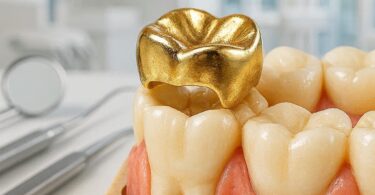
Dental Code for Open Face Gold CrownIf you have ever sat in a dentist’s chair and heard the words “open face gold crown,” you probably... 
dental code for broken retainerYou notice it while flossing. Or maybe you wake up and feel a sharp plastic edge against your... About the author wmwtl |