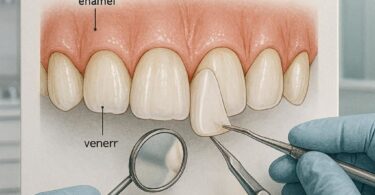
If you have just finished your orthodontic treatment—whether it was with traditional braces or clear aligners—you are likely entering the most critical phase: the retention phase. This is the period where all that hard work is protected. One of the most popular and effective methods for keeping your smile straight is the bonded lingual retainer.
But if you are looking at your dental bill or a treatment plan from your orthodontist, you might see a series of codes and numbers that look like a foreign language. One question that comes up frequently is, “What is the dental code for a bonded lingual retainer?”
Understanding these codes is not just about satisfying curiosity. It can help you understand what you are paying for, verify your insurance claims, and ensure your dental records are accurate. For dental professionals, using the correct code is essential for proper reimbursement and maintaining clear patient records.
In this guide, we will break down everything you need to know about the dental code for a bonded lingual retainer. We will explore what this code means, how it differs from other retainer codes, what the procedure involves, and how to navigate the billing process with confidence.
Let’s dive in.
Dental Code for Bonded Lingual Retainer
Table of Contents
ToggleWhat Exactly is a Bonded Lingual Retainer?
Before we get into the codes and numbers, it is helpful to understand exactly what a bonded lingual retainer is. This knowledge makes the billing codes feel less abstract and more connected to the actual dental work being done.
A bonded lingual retainer is a thin, custom-made wire that is fixed to the back (lingual side) of your teeth. Unlike a removable plastic retainer (like an Essix or Hawley retainer), this one is bonded—or glued—into place. It is designed to be a permanent or long-term solution to prevent your teeth from shifting back to their original positions.
Why is it Called “Lingual”?
The term “lingual” simply refers to the side of the tooth that faces the tongue. So, a lingual retainer is a retainer placed on the tongue-side of the teeth. This makes it invisible to others when you smile or talk, which is a major reason why many patients prefer it over removable options.
How is it Placed?
The process of placing a bonded lingual retainer is typically straightforward. Your orthodontist or dentist will first clean and prepare the surface of the teeth that will receive the wire. They will then use a specialized bonding agent to attach a custom-bent wire to the teeth. The wire usually runs from canine to canine (the pointy teeth) on the lower jaw, or between the upper canines as well, depending on your specific needs.
A curing light is used to harden the bonding material, securing the wire firmly in place. Once set, your provider will check your bite to ensure the wire does not interfere with how your teeth come together.
The Lifespan of a Bonded Retainer
One of the most important things to understand about a bonded lingual retainer is that “permanent” is a bit of a misnomer. While it is designed to stay in place for many years, it is not truly permanent. The wire can break, the bonding can wear down, or the retainer may need to be removed for other dental work. This is where the dental codes become crucial, as different scenarios require different codes.
The Main Dental Code: D8680
When we talk about the specific dental code for a bonded lingual retainer, we are referring to a specific code in the Current Dental Terminology (CDT) code set. The CDT codes are published by the American Dental Association (ADA) and are updated annually. These are the standard codes used by dental insurance companies and dental offices across the United States.
The primary code for placing a bonded lingual retainer is D8680.
Breaking Down D8680
The official descriptor for code D8680 is “Orthodontic retainer.” This is a broad code, but it is the correct one to use when an orthodontist or dentist is fabricating and placing a fixed (bonded) or removable retainer after the completion of active orthodontic treatment.
It is important to understand that D8680 is typically used when the retainer is placed as the final step in a comprehensive orthodontic treatment plan. In other words, if you have just finished your braces or aligner treatment and your provider is placing your bonded retainer, this is the code you will likely see on your statement.
When D8680 is Used
-
Post-Orthodontic Placement: The most common scenario. A patient completes active treatment (e.g., braces), and the provider places a bonded lingual retainer to maintain the results.
-
Single Arch or Both Arches: The code can be used for a retainer placed on the upper arch, lower arch, or both. If both are done on the same day, the provider may bill D8680 twice, often with a modifier to indicate the second arch.
-
Fabrication and Placement: This code encompasses the entire process—taking impressions or scans, fabricating the custom wire, and bonding it to the teeth.
Alternative Codes and Related Procedures
While D8680 is the primary code for a bonded lingual retainer, it is not the only code you might encounter. Dental billing can be complex, and different situations call for different codes. Understanding these alternatives can help you avoid confusion if you see a different code on your bill.
D8670: Comprehensive Orthodontic Treatment
This is a code you might have seen during your active orthodontic treatment. D8670 is used for comprehensive orthodontic treatment—the monthly adjustments, wire changes, and ongoing care. Once treatment is complete and the braces are removed, this code is no longer used. The transition from D8670 to D8680 marks the official end of active treatment.
D8695: Repair of Orthodontic Appliance
Let’s say you have had your bonded lingual retainer for a few years. One day, while flossing, you feel that a section of the wire has come loose from a tooth. The retainer is not completely broken, but it needs to be re-bonded.
In this case, the code used would likely be D8695, which is for the “repair of orthodontic appliance.” This code is used to describe the work of reattaching a loose section of a fixed retainer or fixing a broken wire. It is a common procedure because bonded retainers, while durable, do require occasional maintenance.
D8999: Unspecified Orthodontic Procedure
Sometimes, a procedure does not fit neatly into a specific code. This is where D8999 comes in. This is a “catch-all” code used for unspecified orthodontic procedures. If a dentist performs a complex re-bonding that involves multiple teeth or a significant amount of chair time beyond a simple repair, they might use D8999 and attach a detailed narrative explaining the work.
However, for a standard placement of a bonded lingual retainer, D8680 is almost always the correct and preferred code.
A Comparative Look: Fixed vs. Removable Retainers
To fully appreciate the billing for a bonded retainer, it helps to compare it with the billing for removable retainers. Both fall under the same broad code (D8680), but the context and the procedure are different.
| Feature | Bonded Lingual Retainer | Removable Retainer (Hawley or Essix) |
|---|---|---|
| CDT Code | D8680 | D8680 |
| Placement | Bonded (glued) to the back of teeth | Fits over the teeth, can be taken out |
| Visibility | Invisible from the front | May be visible, especially Hawley with a wire |
| Patient Compliance | High—patient cannot remove it | Low—requires patient to remember to wear it |
| Maintenance | Requires careful flossing with special tools | Easy to clean; can be soaked in cleaner |
| Repair/Rebond | Usually billed under D8695 (repair) | Replacement billed under D8680 again |
| Cost Implication | Often slightly higher due to chair time and materials | Often slightly lower but depends on the type |
As you can see, even though the initial code for placement is the same (D8680), the long-term maintenance and associated costs can differ significantly.
Navigating Insurance Coverage for Bonded Lingual Retainers
One of the most common questions patients have is, “Will my insurance cover the cost of my bonded lingual retainer?” The answer is not always straightforward. Dental insurance plans vary widely, and orthodontic coverage is often handled differently than general dental coverage.
Understanding Orthodontic Benefits
Most dental insurance plans that include orthodontic benefits have a lifetime maximum. This is a set dollar amount—often between $1,000 and $3,000—that the plan will pay toward orthodontic treatment. This maximum typically covers everything from the initial braces to the final retainers.
If your insurance has already paid out the lifetime maximum during your active treatment, you may be responsible for the full cost of the retainer.
Is D8680 Always Covered?
When D8680 is billed as part of the completion of a comprehensive orthodontic case (D8670), it is usually included in the overall orthodontic fee. In this scenario, the retainer is not an additional charge. Instead, it is considered the final step of the treatment you have already been paying for.
However, if you are having a bonded retainer placed years after your orthodontic treatment ended, or if your original orthodontist did not place one, the situation changes. In that case, D8680 may be billed as a standalone procedure, and coverage will depend on whether your plan includes “post-orthodontic retention” benefits.
A Note on Medical Insurance
In very rare cases, such as when a bonded lingual retainer is placed to stabilize teeth after a traumatic injury or as part of a reconstructive jaw surgery, medical insurance might be involved. However, for the vast majority of cases, this is a dental/orthodontic procedure billed under dental insurance.
The Importance of Using the Correct Code
For dental professionals, using the correct dental code is about more than just getting paid. It is a matter of legal compliance, ethical billing, and maintaining accurate patient records.
Avoiding Claim Denials
Insurance companies have automated systems that screen claims. If a code does not match the procedure or if it is used incorrectly, the claim can be automatically denied. For example, using a code for a removable retainer when the service was actually for a bonded retainer repair could lead to a denial or an audit.
Clear Communication
Accurate codes also serve as a form of shorthand communication between the dental office, the insurance company, and the patient. When you see D8680 on your statement, you know it relates to the retainer phase of your care. If you see D8695, you know it was a repair. This clarity helps prevent billing disputes and confusion.
What to Expect: The Patient’s Financial Journey
If you are a patient about to receive a bonded lingual retainer, it is helpful to know what to expect financially. Here is a typical journey:
-
Treatment Plan Presentation: Your orthodontist will present your final treatment plan. If your orthodontic fee included retainers, they will likely mention that there is no additional charge for the bonded retainer. If it is a separate fee, they will provide a cost estimate.
-
Insurance Verification: The office will submit a pre-treatment estimate (pre-authorization) to your insurance company to confirm coverage for D8680. This is not a guarantee of payment, but it gives you a good idea of what to expect.
-
Placement Appointment: The retainer is placed. The office submits the claim with D8680 to your insurance.
-
Explanation of Benefits (EOB): You receive an EOB from your insurance company showing what they paid and what your responsibility is.
-
Patient Payment: You pay any remaining balance.
Maintenance and Repair: What Happens Down the Road?
As mentioned earlier, a bonded lingual retainer is durable but not indestructible. Over time, you may need to have it repaired. Understanding how repairs are billed can help you budget for the long-term care of your smile.
Common Issues
-
Debonding: The glue (bonding agent) fails, and the wire becomes detached from one or more teeth.
-
Wire Fracture: The wire itself breaks, usually due to biting into something hard or accidental trauma.
-
Recurrent Decay: If oral hygiene is not meticulous, cavities can form around the bonding areas, requiring the retainer to be removed for fillings.
Billing for Repairs
When a repair is needed, the dental code is typically D8695. This code covers the work of re-bonding a loose retainer or repairing a broken wire. It is usually a lower fee than the initial placement (D8680) because it involves less time and fewer materials.
However, if the retainer is severely damaged or if it has been years since it was placed, your dentist may recommend replacing it entirely. In that case, D8680 would be used again for the replacement.
Important Considerations for Patients
If you are considering a bonded lingual retainer or have one already, here are some key points to keep in mind regarding the dental codes and the overall process.
Note: Always ask your dental provider for a detailed treatment plan that includes the CDT codes. This allows you to verify the procedure with your insurance company before the work is done. It is your right as a patient to understand the financial aspect of your care.
Oral Hygiene is Crucial
One of the downsides of a bonded lingual retainer is that it can make flossing and cleaning more difficult. The wire creates a barrier that can trap food particles and plaque. If you do not maintain excellent hygiene, you are at a higher risk for gum inflammation (gingivitis) and cavities between the teeth.
Your dentist or hygienist may recommend special tools, such as:
-
Superfloss: This floss has a stiff end that can be threaded under the wire.
-
Interdental Brushes: Small brushes that fit between the teeth and under the wire.
-
Water Flossers: A device that uses a stream of water to flush out debris from around the wire and between teeth.
Investing time in proper cleaning now can save you from needing costly repairs or even replacement of the retainer down the line.
Long-Term Commitment
A bonded lingual retainer is often referred to as a “permanent” retainer, but it is best to think of it as a long-term commitment. Many orthodontists recommend keeping it in place indefinitely to prevent late-term shifting, which is common as we age. If you decide to have it removed later, be prepared for a removal procedure, which may involve grinding off the bonding material and polishing the teeth.
Frequently Asked Questions (FAQ)
Here are some of the most common questions people have about the dental code for bonded lingual retainers.
Q: Is the dental code for a bonded lingual retainer the same as for a removable retainer?
A: Yes, for the initial placement, both fall under the same code: D8680. The difference lies in the description of the service and the materials used, but the code itself is the same.
Q: Will my insurance cover D8680 if I get a bonded retainer years after my braces?
A: It depends on your plan. If you have remaining orthodontic lifetime benefits, it may be covered. However, if your lifetime maximum was exhausted during your active treatment, you will likely be responsible for the full cost.
Q: What code is used if my bonded retainer breaks?
A: The code for repairing a broken or loose bonded retainer is D8695 (repair of orthodontic appliance).
Q: Why does my bill have D8680 and D8670 on the same day?
A: This is uncommon. D8670 is for active treatment, and D8680 is for the retention phase. They are usually billed on different days. If you see both, it is best to ask your dental office for clarification, as it might indicate the final debanding (removal of braces) and retainer placement on the same day.
Q: Can a general dentist place a bonded lingual retainer?
A: Yes, many general dentists are trained to place bonded lingual retainers. However, it is most commonly performed by orthodontists. The code used (D8680) is the same regardless of which type of dental professional performs the service.
Conclusion
Navigating dental codes can feel overwhelming, but understanding the key code—D8680—for a bonded lingual retainer empowers you to take control of your dental care. Whether you are a patient reviewing a treatment plan or a dental professional ensuring accurate billing, knowing the difference between D8680 for placement and D8695 for repairs is essential.
A bonded lingual retainer is a fantastic tool for maintaining the results of your orthodontic treatment, offering a discreet and compliance-free way to keep your smile straight. By understanding the billing process, you can approach this final phase of your orthodontic journey with confidence, knowing exactly what to expect and how to manage the long-term care of your investment.
Additional Resources
For more detailed information on dental coding and orthodontic procedures, the American Dental Association (ADA) provides the official Current Dental Terminology (CDT) code set. You can visit their website to learn more about coding standards and updates.
-
Link: American Dental Association – CDT Codes
(Note: This link directs to the official ADA resource for the most up-to-date coding information.)
Disclaimer: This article is for informational purposes only and does not constitute medical, dental, or financial advice. Dental codes and insurance coverage vary by provider, plan, and location. Always consult with your dental insurance provider and your treating dentist or orthodontist for information specific to your situation.