If you are considering brightening your smile with a professional treatment, you have likely heard the term “in-office bleaching.” It sounds simple enough: you go to the dentist, they apply a whitening agent, and you leave with a brighter smile. However, when you look at the treatment plan or the bill, you might see a confusing alphanumeric code that leaves you scratching your head.

Dental Code for In-Office Bleaching
That code is usually D9972.
Understanding what this code actually represents is more important than you might think. It dictates how the procedure is documented, how your dental practice bills for it, and—most importantly—whether your insurance will contribute a single penny toward the cost.
In this guide, we will break down everything you need to know about the dental code for in-office bleaching. We’ll strip away the jargon, explain the nuances, and give you the knowledge you need to navigate your cosmetic dental journey with confidence.
What Is the Correct Dental Code for In-Office Bleaching?
The standardized dental procedure code used by dentists across the United States (under the Current Dental Terminology, or CDT, code set) for in-office bleaching is D9972.
To be precise, the full descriptor for this code is: External bleaching – per arch – in-office.
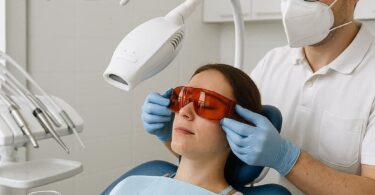
This code is specifically designated for cosmetic procedures performed by a dentist or a trained dental hygienist within the dental office setting. It covers the application of a high-concentration peroxide gel (usually hydrogen peroxide) that is activated by light, heat, or a chemical catalyst to whiten the teeth significantly in a single appointment.
It is crucial to distinguish D9972 from other whitening codes. There is a separate code, D9973, for External bleaching – per arch – take-home. This refers to the custom-fitted trays and whitening gel you use at home.
If you see D9972 on your treatment plan, your dentist is planning to do the work in the chair.
A Closer Look at the CDT Code: D9972
To truly understand what you are paying for, let’s dissect the code as defined by the American Dental Association (ADA), which maintains the CDT codes.
-
Code: D9972
-
Nomenclature: External Bleaching – Per Arch – In-Office
-
Category: Cosmetic (usually not covered by insurance)
-
Typical Components: This code covers the entire in-office procedure, including the isolation of the gums (applying a protective barrier), application of the bleaching agent, activation (if applicable), and post-procedure fluoride application to soothe sensitivity.
It is important to note that D9972 is billed “per arch.” That means you will often see it listed twice if you are having both your upper and lower teeth whitened. For example, a full mouth in-office bleaching treatment might appear on your invoice as:
-
D9972 (Upper Arch)
-
D9972 (Lower Arch)
D9972 vs. Other Cosmetic Dental Codes
One of the biggest sources of confusion for patients is the difference between in-office bleaching and other related procedures. Because teeth whitening falls under the umbrella of “cosmetic dentistry,” it is often grouped with other services, but the codes are entirely different.
Here is a quick breakdown of how D9972 stacks up against similar codes.
| Code | Procedure Description | Setting | Key Difference |
|---|---|---|---|
| D9972 | In-Office Bleaching | Dentist’s chair | High-concentration gel; immediate results; one or two appointments. |
| D9973 | Take-Home Bleaching | Patient’s home | Custom trays; low-concentration gel; gradual results over 1–2 weeks. |
| D9970 | Enamel Microabrasion | Dentist’s chair | Removes superficial stains; uses acid and abrasion; different from chemical whitening. |
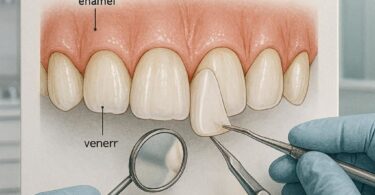
| D2960 | Porcelain Veneer | Dentist’s lab | Permanent restoration; covers the tooth; not a bleaching procedure. |
| D2990 | Resin Infiltration | Dentist’s chair | Treats white spots; cosmetic micro-invasive procedure for enamel lesions. |
If you are quoted D9970 instead of D9972, do not assume it is the same. D9970 is for removing intrinsic stains via abrasion, not for overall whitening of the tooth structure.
Why Insurance Usually Won’t Cover D9972
This is the most critical part of the conversation for most patients. The dental code D9972 falls squarely under the category of cosmetic dentistry.
Most standard dental insurance plans are designed to cover procedures that are deemed “medically necessary.” These include:
-
Preventive care (cleanings, exams)
-
Basic restorative care (fillings, extractions)
-
Major restorative care (crowns, bridges, dentures)
Teeth whitening, coded as D9972, is considered an elective cosmetic procedure. It does not restore function, treat disease, or alleviate pain. Consequently, the vast majority of dental insurance plans will not cover in-office bleaching.
The Rare Exceptions: When D9972 Might Be Covered
While it is exceedingly rare, there are specific, documented scenarios where a portion of the cost for D9972 might be covered or written off. However, this almost always requires a pre-authorization and a specific medical diagnosis.
Here are the few instances where you might see insurance involvement:
-
Pre-Orthodontic Treatment: In some cases, if a patient has severe tetracycline staining or fluorosis that must be addressed before orthodontic treatment (braces) to ensure a successful outcome, an insurance company might consider it medically necessary.
-
Trauma-Related Staining: If a tooth darkens due to trauma (a dead tooth) and bleaching is used as an alternative to a crown to restore the tooth’s natural appearance, the procedure may be billable under restorative codes rather than cosmetic. However, this is usually treated with internal bleaching (walking bleach technique), which uses a different code.
Important Note: Do not expect your insurance to cover D9972. If a dental office tells you they will “run it through insurance,” they are likely just applying it to your annual maximum to see if any “cosmetic allowance” exists. Very few plans have this.
What Is Included in a D9972 Procedure?
Understanding what the code D9972 covers helps you understand the value of the service. You are not just paying for a gel. You are paying for the expertise, safety protocols, and immediate results that distinguish professional whitening from drugstore strips.
When you undergo a procedure billed under D9972, the process typically includes:
-
Oral Examination and Screening: Before whitening, the dentist must ensure your gums are healthy and there are no untreated cavities. Whitening on compromised teeth can cause severe pain and damage.
-
Gum Isolation: A liquid rubber dam or a resin barrier is applied to the gums to protect the soft tissue from the high-concentration peroxide. This is a critical safety step that prevents chemical burns.
-
Application of Bleaching Agent: The dentist or hygienist applies the professional-grade hydrogen peroxide (typically 25% to 40%).
-
Activation: While not always necessary, many offices use a specialized curing light, laser, or LED light to accelerate the chemical reaction and enhance the results.
-
Reapplication: The process is usually repeated in cycles (e.g., three 15-minute applications) to achieve the desired shade.
-
Fluoride or Desensitizing Treatment: After the bleaching, a fluoride varnish or desensitizing agent is often applied to reduce the sensitivity that commonly follows whitening.
The Average Cost Associated with D9972
Since insurance rarely covers D9972, cost is a primary concern for patients. The price of in-office bleaching varies significantly based on geographic location, the prestige of the dental practice, and the technology used (laser whitening vs. traditional light activation).
On average, you can expect to pay:
-
Low End: $300 – $400 (per arch)
-
Average Range: $500 – $800 (for full mouth, both arches)
-
High End/Laser Whitening: $1,000 – $1,500+ (for full mouth)
If a practice offers a “special” for $199 whitening, verify the code. It may be for take-home trays (D9973) or a single-arch introductory offer that requires a new patient exam (D0150) to be purchased separately.
Comparing Costs: In-Office vs. Take-Home
To help you visualize the cost-benefit analysis, here is a comparison between the in-office code (D9972) and the take-home code (D9973).
| Feature | In-Office Bleaching (D9972) | Take-Home Bleaching (D9973) |
|---|---|---|
| Average Cost | $500 – $1,200 | $200 – $400 |
| Time Investment | 1 hour | 1–2 weeks (wearing trays nightly) |
| Speed of Results | Immediate (instant gratification) | Gradual (results seen over days) |
| Concentration | High (25-40% Hydrogen Peroxide) | Low (10-22% Carbamide Peroxide) |
| Sensitivity | Higher immediate sensitivity; managed in-office | Lower, but prolonged sensitivity possible |
| Supervision | 100% by dental professional | At-home, with initial professional fitting |
The Role of the CDT Code in Treatment Planning
For dentists, using the correct code—D9972—is not just about billing. It is a matter of compliance and ethics. The Current Dental Terminology (CDT) codes are updated annually. Using the wrong code (such as billing a filling code for whitening) is a form of insurance fraud.
When you see D9972 on your treatment plan, it should be accompanied by a narrative or a discussion that clarifies:
-
This is a cosmetic service.
-
It is elective.
-
Payment is expected at the time of service (most practices do not extend credit for cosmetic procedures).
How to Prepare for Your D9972 Appointment
If you have decided to move forward with the procedure associated with D9972, preparation is key to a comfortable experience and great results.
1. Schedule a Cleaning First
It is generally recommended to have a professional dental prophylaxis (cleaning) a week or two before your bleaching appointment. Plaque and calculus can block the whitening agent from penetrating the enamel evenly, leading to patchy results.
2. Understand Sensitivity Risks
In-office bleaching with high-concentration peroxide can cause temporary sensitivity. Dentists often recommend taking ibuprofen (Advil) an hour before the appointment to mitigate this. They may also provide you with prescription-strength fluoride gel or potassium nitrate toothpaste to use in the days leading up to the appointment.
3. Know Your Starting Point
D9972 works best on natural teeth. It does not whiten:
-
Crowns
-
Veneers
-
Fillings (composite or amalgam)
-
Bridges
If you have restorations on your front teeth, in-office bleaching will whiten the natural teeth around them, making the restorations look darker by comparison. A good dentist will warn you about this during the consultation.
The Aftercare Protocol Following D9972
The results of your in-office bleaching are not permanent. They are the beginning of a maintenance routine. To protect your investment, you will need to follow a strict aftercare plan.
The “White Diet”
For the first 24 to 48 hours after the D9972 procedure, your enamel is highly porous and susceptible to staining. This period is often called the “white diet” period. You should avoid:
-
Coffee and tea
-
Red wine
-
Tomato sauce
-
Berries
-
Soy sauce
-
Smoking or tobacco use
Stick to white or pale foods: chicken, rice, bananas, yogurt, and clear liquids.
Maintenance
Most patients benefit from a combination of follow-up care:
-
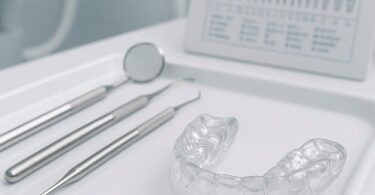
Touch-up Trays: Many practices include a set of take-home trays (D9973) with the in-office service to allow for periodic touch-ups.
-
Whitening Toothpaste: While it doesn’t change the intrinsic color, it helps maintain surface stain removal.
-
Annual Touch-up: A single in-office touch-up once a year can keep the smile bright.
Potential Pitfalls and Realistic Expectations
While D9972 is a safe and effective procedure, it is essential to maintain realistic expectations. The results are not “Hollywood white” for everyone.
1. Intrinsic Staining
Teeth that are stained due to tetracycline antibiotics (taken during childhood) or fluorosis (excess fluoride) are often resistant to external bleaching. Patients with these conditions may require a series of in-office treatments or a combination of in-office and take-home trays to see significant improvement. Sometimes, veneers or crowns are the only solution for severe intrinsic stains.
2. Existing Restorations
As mentioned earlier, D9972 does not affect existing fillings or crowns. If you have a single crown on a front tooth, bleaching the surrounding teeth will likely necessitate replacing that crown to match the new shade. This is an additional cost you must factor in.
3. Gum Irritation
Even with the best isolation, some patients experience mild gum irritation or “zingers” (sharp, fleeting pains) during the procedure. This is normal and typically subsides within 24 hours.
A Step-by-Step Walkthrough of Your Appointment
To demystify the process, here is what a typical appointment for D9972 looks like from start to finish.
-
Arrival and Consent: You will sign a consent form acknowledging the cosmetic nature of the procedure and the risks of sensitivity.
-
Shade Selection: The dentist will record your current shade using a shade guide (e.g., A2 to B1) to document the improvement.
-
Retractor Placement: A cheek retractor is placed to keep your lips away from your teeth.
-
Gum Protection: A light-cured resin barrier is painted onto your gums and cured with a blue light. This hardens to protect the soft tissue.
-
Application: The peroxide gel is applied to the teeth.
-
Activation: If using a light, it is positioned over your mouth. You will wear protective eyewear. This phase usually lasts 15-20 minutes.
-
Reapplication: The gel is suctioned off, and a new layer is applied. This cycle repeats 2 to 4 times depending on the desired result and the manufacturer’s protocol.
-
Rinse and Fluoride: After the final cycle, the gel and gum barrier are removed. A fluoride or desensitizing agent is applied.
-
Results: You look in the mirror to see the immediate transformation.
Why the “In-Office” Code Matters for Your Safety
One might ask: “Why pay so much for D9972 when I can buy a $40 kit at the pharmacy?”
The difference lies in safety and supervision. The high-concentration peroxide used in D9972 is not legally available for over-the-counter purchase. If misused, it can cause severe chemical burns to the gums and irreversible damage to the enamel if applied improperly.
By using the D9972 code, the dental practice is asserting that a licensed professional is supervising the application, ensuring the safety of the soft tissue and the integrity of the enamel. This professional oversight is the primary justification for the higher cost associated with this code.
Conclusion
Navigating dental codes can feel like learning a foreign language, but understanding the dental code for in-office bleaching—D9972—empowers you to make informed financial and clinical decisions. This code represents a safe, fast, and professionally supervised cosmetic treatment designed to deliver immediate whitening results. While it is rarely covered by insurance due to its cosmetic nature, the value lies in the expertise, safety protocols, and instant gratification it provides, distinct from take-home alternatives (D9973). By knowing what to expect regarding cost, procedure steps, and aftercare, you can confidently pursue the bright smile you desire.
Frequently Asked Questions (FAQ)
1. Is D9972 the only code for in-office whitening?
Generally, yes. D9972 is the standard CDT code for external bleaching performed in the dental office. Some offices may use D9972 for the upper arch and D9972 again for the lower arch. There is no separate “full mouth” code; it is simply billed twice.
2. Can I use my FSA or HSA to pay for D9972?
Yes, in most cases. While dental insurance may not cover the procedure, Flexible Spending Accounts (FSA) and Health Savings Accounts (HSA) typically allow you to use pre-tax dollars for dental treatments, including cosmetic procedures like whitening. Always verify with your specific plan administrator.
3. How long do the results from D9972 last?
With proper maintenance, results can last 6 months to 3 years. Longevity depends on dietary habits (coffee, tea, smoking) and oral hygiene. Patients who invest in take-home trays (D9973) for touch-ups can extend the results indefinitely.
4. Why does my dentist recommend D9972 if I have sensitive teeth?
If you have sensitive teeth, your dentist might still recommend D9972 because the in-office procedure allows for immediate desensitization treatment (fluoride varnish) after the bleaching. They can also use desensitizing agents during the process, which is more controlled than a take-home kit where sensitivity might be prolonged.
5. Is laser whitening a different code?
No. Even if the office uses a laser or LED light to activate the gel, the procedure is still coded as D9972. The technology is considered part of the “in-office bleaching” technique. The cost difference usually reflects the advanced technology used, not a different billing code.