If you have ever sat in a dentist’s chair and heard the words “mandibular partial denture,” you probably had a few questions. What does that even mean? How much is it going to cost? And what is that strange combination of letters and numbers—the dental code—that the front desk keeps mentioning?
You are not alone. Dental codes can feel like a secret language. But understanding them is the key to understanding your treatment, your insurance benefits, and your out-of-pocket costs.
In this guide, we are going to pull back the curtain on the dental code for mandibular partial denture. We will explore what these codes mean, why they matter, and how they translate into the actual appliance you will wear. Whether you are a patient trying to navigate your dental insurance, or a new dental professional looking to solidify your coding knowledge, this article is designed to be your go-to resource.
Let us start with the basics.

dental code for mandibular partial denture
What Exactly is a Mandibular Partial Denture?
Before we dive into the codes, it helps to understand what we are actually talking about.
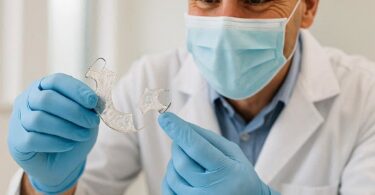
A mandibular partial denture is a removable dental appliance designed to replace one or more missing teeth on the lower jaw—the mandible. Unlike a full denture, which replaces an entire arch of teeth, a partial denture fills in the gaps where natural teeth are missing.
Think of it as a puzzle piece. The partial denture attaches to your remaining natural teeth using clasps or precision attachments. This helps keep it stable and prevents it from moving around when you eat or speak.
Why Would Someone Need a Mandibular Partial?
There are several reasons why a dentist might recommend this type of appliance. Sometimes, a patient has lost teeth due to injury, decay, or gum disease. Other times, a partial denture is used to prevent the remaining teeth from shifting into the empty spaces, which can cause bite problems down the road.
The mandibular partial denture is often chosen because it is a cost-effective, non-invasive way to restore function and aesthetics. It does not require surgery, unlike dental implants, and it is typically more affordable than a fixed bridge.
The Role of Dental Codes
So, where do the codes come in?
Dental codes, officially known as Current Dental Terminology (CDT) codes, are maintained by the American Dental Association (ADA). Every year, these codes are updated to reflect changes in dental procedures and technology. When your dentist submits a claim to your insurance company, they translate your treatment into these codes.
If the code is wrong, the claim gets denied. If you do not understand the code, you might not understand why your insurance paid a certain amount—or why they paid nothing at all.
Understanding the dental code for your mandibular partial denture puts you back in the driver’s seat.
The Primary Dental Codes for Mandibular Partial Dentures
When it comes to coding for a lower partial denture, there is not just one single code. The dentist will choose a code based on several factors: what the denture is made of, how it attaches to your teeth, and whether it is a new denture or a replacement for an old one.
Let us break down the most common codes you will encounter.
D5211: Mandibular Partial Denture – Resin Base (Including Retainers, Clasps, and Teeth)
This is one of the most frequently used codes for a lower partial denture. The “resin base” refers to the pink or gum-colored acrylic material that forms the main body of the denture.
This type of partial denture is often called an “acrylic partial.” It is a common choice for temporary or transitional dentures, but it can also serve as a long-term solution depending on the patient’s needs.
What is included:
-
The resin (acrylic) base
-
The artificial teeth
-
The retainers and clasps (usually made of metal or flexible material)
When it is used:
D5211 is typically used when the partial denture is designed to be economical or when the patient needs a denture quickly after extractions. It is also common for cases where only a few teeth are being replaced.
D5212: Mandibular Partial Denture – Cast Metal Base (Including Retainers, Clasps, and Teeth)
If you have heard someone mention a “metal partial” or a “cast partial,” this is the code they are referring to. D5212 describes a mandibular partial denture with a cast metal framework. The base is made of a metal alloy, usually chrome cobalt, which is strong, durable, and allows for a thinner, more comfortable design.
What is included:
-
The cast metal framework
-
The resin or acrylic base that sits over the metal (often used to support the teeth and mimic gum tissue)
-
The artificial teeth
-
Retainers and clasps (which are part of the metal framework)
When it is used:
This is the gold standard for removable partial dentures. A cast metal partial is more durable, fits more precisely, and is generally more comfortable than an acrylic partial. It is ideal for patients who need a long-term, stable restoration.
D5225: Mandibular Partial Denture – Flexible Base (Including Retainers, Clasps, and Teeth)
In recent years, flexible partial dentures have become increasingly popular. These are made from a thermoplastic material like nylon. They are lightweight, comfortable, and do not contain any metal.
The code D5225 is used for a mandibular partial denture with a flexible base. These appliances are often favored by patients who have metal allergies or who simply want a more natural-looking option.
What is included:
-
The flexible thermoplastic base
-
The artificial teeth
-
Flexible, gum-colored clasps that blend in with the natural tissue
When it is used:
D5225 is a great option for patients who need a partial denture but are concerned about the appearance of metal clasps. Because the material is flexible, it can also be more gentle on the remaining natural teeth.
D5226: Mandibular Partial Denture – Flexible Base (Including Retainers, Clasps, and Teeth) – MAXILLARY
This is the upper jaw (maxillary) counterpart to D5225. While we are focusing on mandibular codes in this article, it is helpful to know the distinction. If you see D5226 on a treatment plan, it refers to an upper flexible partial denture.
The Difference Between D5211, D5212, and D5225
To make things clearer, let us look at a comparison table. This will help you see at a glance which code corresponds to which type of appliance.
| CDT Code | Description | Base Material | Best For |
|---|---|---|---|
| D5211 | Mandibular Partial Denture – Resin Base | Acrylic (pink plastic) | Temporary dentures, transitional healing, budget-conscious treatment |
| D5212 | Mandibular Partial Denture – Cast Metal Base | Chrome cobalt metal framework with acrylic overlay | Long-term, durable, precise fit, most common for permanent partials |
| D5225 | Mandibular Partial Denture – Flexible Base | Thermoplastic nylon (Valplast, etc.) | Metal-free option, aesthetics, comfort, patients with metal allergies |
Beyond the Basic Code: Additional Services You Might See
When you look at a treatment plan for a mandibular partial denture, you will often see more than just one code. The partial itself is just one part of the process. Several other procedures may be necessary to prepare your mouth for the new appliance.
Diagnostic Codes
Before any work begins, your dentist needs to assess your situation. You will likely see these codes on your initial treatment plan.
-
D0150: Comprehensive Oral Evaluation
This is the new patient exam. The dentist evaluates your entire oral health, takes medical history, and discusses your treatment goals. -
D0210: Intraoral – Complete Series of Radiographic Images
Also known as a full mouth series of X-rays, this code covers the images needed to see the health of your remaining teeth and bone. -
D0330: Panoramic Radiographic Image
A panoramic X-ray shows the entire mandible and maxilla in one image. It is particularly useful for planning partial dentures because it reveals the position of the roots of remaining teeth and the overall bone structure.
Preparation Codes
If you have teeth that need to be extracted or prepared to receive the partial, those procedures will have their own codes.
-
D7140: Extraction, Erupted Tooth or Exposed Root
This is the code for a simple extraction. If a tooth needs to be removed before the partial is made, this code will appear on the treatment plan. -
D7210: Surgical Extraction of Erupted Tooth
If a tooth is broken off at the gum line or requires surgical intervention, this more complex code is used. -
D2750: Crown – Porcelain Fused to High Noble Metal
Sometimes, a remaining tooth needs to be crowned to serve as a better anchor for the partial denture. This is especially common when using precision attachments instead of clasps.
Adjustment and Repair Codes
Once the partial is delivered, you might need follow-up care. These codes cover that.
-
D5410: Adjust Complete Denture – Mandibular
This code is for adjusting the fit of a full lower denture. However, adjustments for partial dentures are often bundled into the original fee. If a separate adjustment is needed after the warranty period, a code like this might be used. -
D5511: Repair Broken Complete Denture Base – Mandibular
If the base of your partial cracks, this code covers the repair. -
D5520: Replace Missing or Broken Teeth – Complete or Partial Denture (Each Tooth)
If an artificial tooth breaks off, this code is used to add a new one.
How Insurance Processes Mandibular Partial Denture Codes
Understanding the code is one thing. Understanding how insurance uses that code to decide what they will pay is another.
Insurance companies typically follow a set of rules called “frequency limitations.” For removable prosthetics like partial dentures, the most common limitation is the five-year rule.
The Five-Year Rule
Most dental insurance plans will only pay for a new partial denture once every five to seven years. If you lose or break your partial before that time is up, insurance may not cover a replacement unless there is a documented medical necessity (like damage that cannot be repaired).
This is a critical point. If your dentist submits a code for a new partial (D5212) and your insurance shows that they paid for the same code on the same arch less than five years ago, the claim will almost certainly be denied.
Predetermination of Benefits
Because partial dentures are a significant expense, most dentists will send a predetermination of benefits to your insurance company before starting treatment.
This is a pre-approval process. The dental office submits the codes (like D5212, along with any necessary extractions or crowns) to the insurance company. The insurance company responds with a document that outlines:
-
What they will pay
-
What your portion will be
-
Whether the treatment is covered
A predetermination is not a guarantee of payment, but it is a reliable estimate. It gives you the chance to review the costs before committing to treatment.
In-Network vs. Out-of-Network
The dental codes themselves do not change based on your insurance network. A D5212 is a D5212, whether your dentist is in-network or out-of-network.
However, the amount the insurance pays can vary significantly. In-network dentists have contracted rates with insurance companies. Out-of-network dentists do not, which means your out-of-pocket costs will likely be higher.
What to Look for on Your Treatment Plan
When you receive a treatment plan from your dentist, it can look overwhelming. There are columns of numbers, abbreviations, and costs. But once you know what you are looking for, it becomes much easier to read.
Here is a typical breakdown of what you might see:
| Code | Description | Fee | Insurance Estimate | Patient Portion |
|---|---|---|---|---|
| D0150 | Comprehensive Oral Evaluation | $120.00 | $80.00 | $40.00 |
| D0330 | Panoramic X-ray | $95.00 | $60.00 | $35.00 |
| D7140 | Extraction, Tooth #30 | $175.00 | $120.00 | $55.00 |
| D5212 | Mandibular Partial – Cast Metal Base | $1,450.00 | $1,000.00 | $450.00 |
| Total | $1,840.00 | $1,260.00 | $580.00 |
In this example, the patient is responsible for the deductible, copayments, and any portion that exceeds the insurance’s allowable fee.
The Step-by-Step Process of Getting a Mandibular Partial Denture
To fully appreciate the dental codes, it helps to understand the clinical process. Each step of the way, specific codes are used to capture the work being done.
Step 1: The Consultation and Diagnosis
This is where the comprehensive exam (D0150) and X-rays (D0210 or D0330) come into play. The dentist evaluates your oral health, discusses your options, and determines whether a partial denture is the right choice.
If you have any teeth that need to be extracted, those are scheduled at this time.
Step 2: The Preliminary Impressions
Once your mouth is ready (extractions have healed, or teeth have been prepared), the dentist takes preliminary impressions. These are usually made with alginate, a goopy, flavorful material that sets quickly.
These impressions are used to create diagnostic models—stone replicas of your mouth. The dentist uses these models to design the partial and plan the placement of clasps and rests.
Step 3: The Framework Try-In
If you are receiving a cast metal partial (D5212), the next step is the framework try-in. The dental lab sends back the metal framework, and the dentist places it in your mouth to check the fit, the position of the clasps, and the overall stability.
At this appointment, the dentist is verifying that the foundation is correct before the teeth are added. There is no specific code for this appointment; it is typically considered part of the global fee for the partial.
Step 4: The Wax Try-In
Once the framework is approved, the lab adds wax and artificial teeth to the framework. You return to the dentist for a wax try-in.
This is a critical appointment. You get to see what the partial will look like in your mouth. The dentist checks the bite, the way your teeth come together, and the appearance of the teeth.
Adjustments are made at this stage. Once you give your approval, the partial is sent back to the lab for processing. This is often the longest step in the process.
Step 5: The Delivery
Finally, the finished partial denture is delivered. The dentist places it in your mouth, checks the fit, makes any necessary adjustments, and gives you instructions on how to care for it.
This delivery appointment is also included in the global fee for the partial denture code.
Step 6: The Follow-Up
One to two weeks after delivery, you will have a follow-up appointment. This is usually covered under the initial fee, but if significant adjustments are needed, a separate adjustment code (like D5410) may be billed.
Factors That Influence the Cost
The dental code tells you what type of partial you are getting. But the final cost can vary based on several other factors.
Geographic Location
Dental fees vary significantly by region. A D5212 in a major metropolitan area may cost $1,800, while the same code in a rural area might be $1,200. This is due to differences in overhead costs, rent, and labor.
Laboratory Fees
The dental laboratory that fabricates the partial charges the dentist a fee. This lab fee is often the single largest expense in the process. High-quality labs that use premium materials and employ experienced technicians charge more.
The dentist passes this cost along to the patient, usually with a markup to cover their own time and expertise.
The Dentist’s Experience and Expertise
A dentist who has been practicing for 20 years and specializes in prosthodontics (the branch of dentistry focused on replacing missing teeth) may charge more than a general dentist who only does a few partials a year.
This is not just about cost—it is about value. An experienced dentist is more likely to create a partial that fits well, functions properly, and lasts for years.
Material Upgrades
Even within the same CDT code, there are material choices that affect cost. For example, a cast metal partial (D5212) can be made with different types of metal alloys. High noble metal (gold) is more expensive than base metal alloys.
For flexible partials (D5225), there are different brands and grades of thermoplastic materials. Higher-end materials offer better durability and a more natural appearance.
Alternative Treatment Options and Their Codes
A mandibular partial denture is not the only way to replace missing teeth on the lower jaw. Depending on your situation, you might consider other options. Here are the codes for the most common alternatives.
D6010: Surgical Placement of Implant Body
This is the code for placing a dental implant. An implant is a titanium post that is surgically inserted into the jawbone. Once healed, it can support a crown, bridge, or denture.
D6058: Abutment Supported Porcelain/Ceramic Crown
If you replace a single missing tooth with an implant, this code (or a similar one) is used for the crown that goes on top of the implant.
D6240: Pontic – Porcelain Fused to High Noble Metal
This code is for a fixed dental bridge. A bridge replaces one or more missing teeth by anchoring to the adjacent natural teeth, which are crowned. This is a non-removable option.
D5110: Complete Denture – Mandibular
If you are missing all of your lower teeth, you would need a complete denture, not a partial. The code for a full lower denture is D5110.
A Comparison of Replacement Options
To help you weigh your options, here is a comparison table that looks at the most common ways to replace missing teeth on the lower jaw.
| Option | CDT Code | Pros | Cons | Typical Cost Range |
|---|---|---|---|---|
| Cast Metal Partial | D5212 | Durable, precise fit, long-lasting, affordable compared to implants | Removable, visible metal clasps | $1,200 – $2,500 |
| Flexible Partial | D5225 | Metal-free, comfortable, natural appearance | Less durable than metal, can stain over time, difficult to repair | $1,000 – $2,200 |
| Fixed Bridge | D6240 (per unit) | Non-removable, feels like natural teeth | Requires shaving down healthy adjacent teeth, more expensive | $2,500 – $5,000 (per 3-unit bridge) |
| Implant-Supported Crown | D6010 + D6058 | Best for single tooth replacement, preserves bone, no impact on adjacent teeth | Invasive surgery, higher upfront cost, longer treatment time | $3,000 – $6,000 per tooth |
| Implant-Supported Bridge | D6010 (multiple) + D6060 series | Replaces multiple teeth without affecting natural teeth, stable, preserves bone | Expensive, requires surgery, healing period required | $5,000 – $15,000+ |
Frequently Asked Questions About Dental Codes for Mandibular Partial Dentures
Let us address some of the most common questions patients have when they see these codes on their treatment plan.
Q: Why does my treatment plan have a code for a maxillary partial when I am getting a lower partial?
This is usually a simple clerical error. Sometimes, when generating a treatment plan, the wrong code is selected. If you see D5226 (maxillary flexible partial) but you are getting a lower partial, ask the front desk to double-check the code. It should be D5225 for a flexible lower partial.
Q: Can I use my FSA or HSA to pay for a D5212?
Yes. Flexible Spending Accounts (FSAs) and Health Savings Accounts (HSAs) typically cover dental procedures, including partial dentures. The dental code is used by the FSA/HSA administrator to verify that the expense is qualified. Always keep your itemized treatment plan as proof of the medical expense.
Q: What does “global fee” mean for a partial denture?
A global fee means that the single code (like D5212) covers all the appointments related to that procedure. This includes impressions, try-ins, delivery, and standard adjustments within a certain time frame (often 90 days). It does not include extractions, crowns, or other preparatory work.
Q: My insurance denied my claim for D5212 because they say I already had one. What can I do?
First, check your explanation of benefits (EOB) to see when the previous partial was done. If it has been less than five years, your dentist may need to submit documentation showing why a replacement is necessary. This could be because the old partial no longer fits, it is damaged beyond repair, or your oral health has changed. If the denial stands, you may be responsible for the full fee.
Q: Is there a code for a “flipper” or temporary partial?
Yes, but it is important to distinguish between a temporary and a permanent partial. A temporary acrylic partial, often called a “flipper,” is usually coded as D5820 or D5821 (interim partial denture). These are intended for short-term use, often during healing after extractions.
Q: What is the difference between D5212 and D5225 in terms of insurance coverage?
Insurance coverage varies, but many plans consider the cast metal partial (D5212) the standard of care and may cover it more generously. Flexible partials (D5225) are sometimes considered “upgrades” or “alternative materials,” and insurance may cover them at a lower percentage, or not at all, if a cast metal option is available.
Common Billing Mistakes and How to Avoid Them
Even experienced dental offices can make errors when submitting claims for partial dentures. Being aware of these common mistakes can help you spot issues before they delay your treatment.
Using the Wrong Arch Code
Sometimes, a claim is submitted with D5211 (mandibular) when the patient actually received a maxillary partial. This seems like a small error, but it can cause a denial because the insurance company expects to see a code for the upper arch. The correct code for an upper acrylic partial is D5213.
Missing the Five-Year Rule
As mentioned earlier, the five-year rule catches many patients by surprise. If a dentist does not check the patient’s history before submitting the claim, they may assume coverage exists when it does not. This is why predeterminations are so important.
Bundling Issues
Some insurance plans consider certain procedures to be “bundled” into the partial denture fee. For example, if a dentist bills separately for a “framework try-in” or a “wax try-in,” the insurance company may deny those codes, stating they are included in the global fee for D5212.
Incorrect Tooth Numbers
Partial denture codes often require the submission of tooth numbers to indicate which teeth are being replaced. If the tooth numbers are missing or incorrect, the claim may be rejected for incomplete information.
How to Talk to Your Dentist About Codes
You do not need to be a dental billing expert to have a productive conversation with your dentist about codes. But a little knowledge goes a long way.
Here are a few questions you can ask during your consultation:
-
“Which code are you using for my partial, and why did you choose that option for me?”
-
“Can you provide a predetermination of benefits so I know what my insurance will cover?”
-
“Are there any alternative codes or materials that might offer better insurance coverage?”
-
“Is the fee for the partial global, or will I be billed separately for appointments?”
-
“How long is the warranty or adjustment period after delivery?”
Asking these questions shows that you are engaged in your treatment and helps ensure there are no surprises later.
The Importance of Accurate Coding for Dental Practices
From the perspective of a dental practice, accurate coding is not just about getting paid. It is about compliance, ethics, and patient trust.
When a dental office uses the correct code for a mandibular partial denture, they are:
-
Ensuring the insurance claim is processed correctly
-
Avoiding potential audits or accusations of fraud
-
Providing the patient with a clear, honest treatment plan
-
Building a reputation for transparency and reliability
If you are a dental professional reading this, take the time to review your coding practices. Make sure your team understands the nuances between D5211, D5212, and D5225. A small coding error can lead to a frustrated patient, a denied claim, and hours of administrative work to fix it.
Future Trends in Partial Denture Coding
Dental coding is not static. The CDT codes are updated annually, and new codes are added as technology evolves.
One area to watch is digital dentistry. More and more partial dentures are being designed and fabricated using CAD/CAM (computer-aided design and computer-aided manufacturing) technology. While there is not yet a separate code for “CAD/CAM partial denture,” this may change in the coming years.
Similarly, 3D printing is becoming more common in dental labs. As the technology becomes mainstream, we may see new codes that reflect the digital workflow.
For now, the codes we have discussed—D5211, D5212, and D5225—remain the standard for mandibular partial dentures.
A Note on Finding a Qualified Dentist
If you are in the early stages of exploring a mandibular partial denture, finding the right dentist is crucial. Not all dentists have the same level of experience with removable prosthetics.
A general dentist can certainly provide excellent care. However, if your case is complex—for example, if you have very few remaining teeth, severe bone loss, or a complicated bite—you may want to seek out a prosthodontist.
A prosthodontist is a dental specialist who has completed three additional years of training beyond dental school, focusing on the restoration and replacement of teeth. They are experts in dentures, partials, implants, and bridges.
When you visit a prosthodontist, you can expect them to be intimately familiar with the dental codes we have discussed. They will likely use D5212 (cast metal) as their standard for mandibular partials, unless there is a specific reason to choose a different material.
Caring for Your Mandibular Partial Denture
Once your partial is delivered, how you care for it will directly impact how long it lasts. While this is not directly related to dental coding, it is an important part of the overall journey.
Daily Cleaning
Just like natural teeth, partial dentures need to be cleaned every day. Food particles and plaque can accumulate under the clasps and on the base, leading to decay on the remaining natural teeth and irritation of the gums.
Use a soft-bristled toothbrush and a non-abrasive denture cleaner. Avoid using regular toothpaste, as it can scratch the acrylic or flexible material.
Soaking Overnight
Most partial dentures should be kept moist when not in the mouth. If the material dries out, it can warp and lose its fit. Soak your partial in water or a denture cleaning solution overnight.
Handling with Care
Partial dentures are durable, but they are not indestructible. If you drop them on a hard surface, they can crack or break. When cleaning your partial, do so over a soft towel or a sink filled with water to cushion a potential fall.
Regular Dental Visits
Your dentist will want to see you regularly to check the fit of your partial and the health of your remaining teeth. Over time, your gums and bone can change shape, which may cause the partial to become loose. Your dentist can often adjust the partial to restore a snug fit.
Conclusion
Navigating the world of dental codes does not have to be overwhelming. When it comes to the dental code for mandibular partial denture, the three main codes you will encounter are D5211 for resin base, D5212 for cast metal base, and D5225 for flexible base. Each code represents a different type of appliance with its own set of benefits, costs, and considerations.
Understanding these codes empowers you to make informed decisions about your dental care. It allows you to read your treatment plan with confidence, ask your dentist the right questions, and anticipate what your insurance will cover. Whether you are choosing a durable cast metal partial or a comfortable metal-free alternative, knowing the language of dental billing puts you in control.
Remember, the code is just a starting point. The real value lies in the quality of the care you receive, the skill of your dentist, and the long-term health of your smile.
Additional Resources
For more information on dental codes and patient rights, you can visit the American Dental Association’s official CDT Code website:
https://www.ada.org/en/publications/cdt
For help understanding your dental insurance benefits, the National Association of Dental Plans (NADP) offers patient resources:
https://www.nadp.org
Frequently Asked Questions (FAQ)
1. What is the most common dental code for a mandibular partial denture?
The most common code is D5212, which describes a mandibular partial denture with a cast metal base. This is considered the standard for long-term, durable removable partials.
2. Does insurance cover D5225 flexible partials?
Coverage varies by plan. Some insurance companies cover flexible partials at the same rate as cast metal partials. Others consider them an alternative material and may cover a lower percentage, or they may only cover the cost equivalent to a cast metal partial, leaving you to pay the difference.
3. How long does it take to get a mandibular partial denture?
The process typically takes 4 to 6 weeks from the initial impressions to the final delivery. This includes time for extractions to heal (if needed), lab fabrication, and try-in appointments.
4. Can I eat normally with a mandibular partial denture?
Yes, but there is an adjustment period. Start with soft foods and gradually introduce harder foods. Avoid sticky, hard, or tough foods that could dislodge or damage the partial.