If you have ever found yourself sitting in a dentist’s chair, nodding along as the treatment coordinator rattles off a string of numbers and letters, you are not alone. Dental codes can feel like a foreign language. One term that often pops up—and causes a bit of confusion—is the “Nesbit.”
You might have heard it called a “Nesbit partial,” a “snap-on smile,” or simply a “flipper.” But when it comes to your insurance claim and your bill, what is the actual dental code for Nesbit?
Understanding this code is crucial. It determines how much your insurance pays, how much you pay out-of-pocket, and what kind of material your dentist uses. In this guide, we are going to demystify the coding system, break down the different types of Nesbit appliances, and give you the tools you need to navigate your treatment plan with confidence.
We will look at why there isn’t just one single code, how dentists choose the right one, and what you can expect in terms of cost and coverage.
Dental Code for Nesbit
What Exactly is a Nesbit?
Before we dive into the numbers, let’s establish what we are actually talking about. The term “Nesbit” is a bit of a relic in modern dentistry, but it remains widely used in dental offices and insurance billing.
Historically, a Nesbit is a type of unilateral partial denture. That is a fancy way of saying it replaces one or more missing teeth on just one side of the mouth. Unlike a traditional partial denture that hooks onto teeth on both sides of a gap, a Nesbit is designed to fill a single space.
There are two common modern interpretations of the Nesbit:
-
The Traditional Cast Metal Unilateral Partial: This is a rigid appliance usually made of a metal framework (often cobalt-chromium) with acrylic teeth and pink gum-like material. It clasps onto the adjacent teeth for support.
-
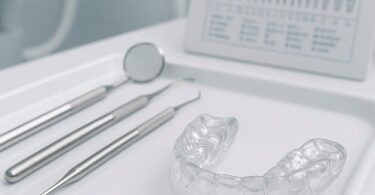
The Flexible “Snap-On” Nesbit: This is the more popular version today. It is made of a flexible, biocompatible material (like nylon or Valplast) that snaps into place over the existing teeth. Because it has no metal, it is often called an “invisible partial” or a “snap-on smile.”
Because these two appliances are made of drastically different materials and require different laboratory techniques, they fall under different dental codes.
The Main Dental Codes for Nesbit Appliances
Here is the reality: there is no single code in the American Dental Association (ADA) Current Dental Terminology (CDT) manual labeled “Nesbit.” Instead, dentists use codes that describe the type of partial denture being fabricated.
Depending on the materials used, your Nesbit will likely fall into one of the following categories:
D6240: The Cast Metal Partial Denture
D6240 is the code for a “partial denture – cast metal framework with resin denture bases (including rests and clasps).”
This is the classic, traditional Nesbit. If your dentist recommends a durable, long-lasting solution that involves a metal skeleton (framework) that fits snugly against your teeth, they will likely bill using D6240.
-
When is this used? For patients who need a strong, permanent-feeling replacement for one or two missing teeth on one side. It is ideal for back teeth (molars) where chewing force is high.
-
Material: A rigid metal framework (chrome cobalt or gold) with acrylic teeth and pink acrylic for the gums.
-
Pros: Extremely durable, long-lasting (5-10+ years), thin and strong.
-
Cons: Metal clasps can be visible when you smile; requires precise fitting; more expensive upfront.
D6245: The Flexible Partial Denture
D6245 is the code for a “partial denture – flexible base.”
If you are getting the modern, metal-free “snap-on” version of a Nesbit, this is likely the code your dentist will use. These are commonly referred to by brand names like Valplast, Flexite, or DuraFlex.
-
When is this used? For patients who prioritize aesthetics and comfort. Because there is no metal, the pink flexible material blends seamlessly with the gum tissue, and the clasps are made of the same translucent material.
-
Material: Nylon or acrylic resin that is flexible and unbreakable.
-
Pros: Aesthetic (no metal), comfortable, hypoallergenic, lighter weight.
-
Cons: Less rigid than metal, can stain over time, cannot be easily repaired or relined if the fit changes.
D6250: The Resin Partial Denture (Interim)
D6250 is the code for a “partial denture – resin base (including rests and clasps).”
Often called a “flipper,” this is the most affordable option. While it can be used as a permanent solution, it is technically coded as an interim (temporary) prosthesis. However, many patients wear these for years.
-
When is this used? Often used as a “healing” or “transitional” denture. For example, if you just had an extraction and are waiting for an implant, or if you need a cheap, quick solution.
-
Material: All acrylic (plastic). The teeth and the pink base are one solid piece of acrylic.
-
Pros: Least expensive option, quick to fabricate (often same-day or one-week turnaround).
-
Cons: Least durable; can break easily; thicker and bulkier than metal or flexible options; can feel bulky on the roof of the mouth.
Comparative Table: Nesbit Codes at a Glance
To help you visualize the differences, here is a breakdown of how these codes compare when used for a Nesbit appliance.
| Dental Code | Common Name | Material | Durability | Aesthetics | Typical Cost Range |
|---|---|---|---|---|---|
| D6240 | Cast Metal Nesbit | Metal Framework / Acrylic | High (5-15 years) | Moderate (Metal visible) | $$ – $$$ |
| D6245 | Flexible / Snap-On | Nylon / Flexible Resin | Medium (3-8 years) | High (Metal-free) | $$ – $$$ |
| D6250 | Acrylic Flipper | Acrylic Plastic | Low (1-5 years) | Low to Moderate | $ |
Why the Code Matters for Your Insurance
This is where understanding the dental code for your Nesbit becomes financially critical. Insurance companies are sticklers for specific codes, and they interpret coverage based on the code used—not the name of the appliance.
Here are a few scenarios you might encounter:
Scenario 1: The Upgrade Denial
Your dentist recommends a D6245 (flexible Nesbit) because it looks better and feels great. However, your insurance plan might only cover the cost of a D6250 (the acrylic interim denture). If the dentist submits D6245, the insurance might say, “We don’t cover flexible partials,” or, “We downgrade benefits to the cheapest alternative.”
What does this mean for you? You may be responsible for the difference between what the insurance pays for the cheap one and the cost of the nicer one.
Scenario 2: The Frequency Limit
Most dental insurance plans have a frequency limitation on partial dentures. They often cover a partial denture only once every five, seven, or ten years.
-
If you break your acrylic Nesbit (D6250) after two years, the insurance likely will not pay for a replacement.
-
If you get a metal Nesbit (D6240), it usually resets that five-year clock.
Scenario 3: The “Unilateral” Factor
Some insurance adjusters are old-school. If they see a claim for a unilateral partial (one side only), they might try to classify it as a “bridge” or a “pontic” code. A good dental billing team will ensure the claim clearly justifies the need for a removable appliance rather than a fixed bridge, using the appropriate D6240 or D6245 codes.
What Influences the Choice of Code?
Your dentist doesn’t just randomly pick a code. The choice between D6240, D6245, and D6250 depends on several clinical factors. Understanding these factors can help you have a better conversation with your dentist.
1. Location of the Missing Tooth (Anterior vs. Posterior)
-
Posterior (Back teeth): If you are missing a molar, the chewing force is immense. Most dentists will lean toward D6240 (cast metal) because acrylic (D6250) or even flexible (D6245) materials may not withstand the pressure of grinding and chewing food long-term.
-
Anterior (Front teeth): If you are missing a front tooth (like a lateral incisor or canine), aesthetics are the priority. Here, D6245 (flexible) is often the king because it hides the clasps and looks natural. D6240 with metal clasps might be too visible, and D6250 might look bulky.
2. The Health of Adjacent Teeth
-
Strong, healthy teeth: Cast metal (D6240) works well because it requires some tooth structure to rest on.
-
Teeth with fillings or crowns: Flexible (D6245) can be gentler on abutment teeth because the clasps are softer than metal.
-
Mobile or compromised teeth: If the teeth next to the gap are loose due to gum disease, a removable Nesbit might not be advisable at all. A dentist might avoid the code entirely and suggest an implant or a different solution.
3. Patient Allergies
-
If a patient has a known allergy to nickel (found in many metal alloys) or acrylic, the dentist must use D6245 (flexible base) to avoid a reaction. In this case, the billing code is chosen for medical necessity.
Step-by-Step: The Billing Process
If you are scheduled to get a Nesbit, here is how the billing process usually unfolds. It involves more than just one code.
Step 1: The Diagnostic Codes
Before the appliance code is billed, the dentist must establish why you need it. This involves diagnostic codes (often called ICD-10 codes) like:
-
K08.1: Loss of teeth due to accident, extraction, or periodontal disease.
-
K08.409: Partial loss of teeth, unspecified cause.
Step 2: The Pre-Treatment Estimate
A savvy dentist will send a “pre-authorization” to your insurance. They will submit the proposed code (e.g., D6240) along with X-rays and a narrative explaining why you need it. The insurance will then send back an estimate of what they will pay. This is the most crucial step to avoid surprise bills.
Step 3: The Appointment Codes
The actual fabrication of the Nesbit involves multiple appointments, each with its own code:
-
D0470: Diagnostic cast (the mold/impression of your mouth).
-
D5875: Modification of the partial denture (if adjustments are made).
-
D5999: Occasionally, a lab fee passthrough is billed if the lab cost is separate.
Step 4: The Delivery Code
Finally, when you come in to pick up your Nesbit and the dentist seats it in your mouth, they will use the code you chose initially (D6240, D6245, or D6250) with a status modifier indicating it is “delivered.”
How to Verify Your Nesbit Code
Before you agree to treatment, take control of your financial health. Here is a checklist of questions to ask your dental office:
-
“What is the exact CDT code you will be billing for my partial?”
-
Why: This forces them to clarify whether it’s metal, flexible, or acrylic.
-
-
“Has this code been pre-authorized with my insurance?”
-
Why: If they say no, ask for a pre-authorization. It takes a few weeks but saves you thousands.
-
-
“If insurance denies this code, what is my financial responsibility?”
-
Why: This clarifies whether the office expects you to pay the full fee or if they will accept the insurance’s downgrade.
-
-
“Is there a warranty or remake clause associated with this code?”
-
Why: Some codes (like D6250) often have no warranty if it breaks. Others (D6240) might have a one-year remake warranty.
-
Common Pitfalls and Misconceptions
Let’s clear up some frequent misunderstandings regarding Nesbit codes.
Myth: “My insurance covers a Nesbit partial 50%.”
Reality: Insurance covers codes, not names. If your dentist uses D6245 (flexible) and your plan only covers D6240 (cast metal) or D6250 (acrylic) at 50%, you might be left paying 100% of the difference between the flexible cost and the covered amount.
Myth: “It’s just a temporary tooth, so it should be cheap.”
Reality: Even an acrylic flipper (D6250) requires laboratory work, impressions, and chair time. While it is the cheapest option, it is still a precision medical device. A D6250 can still cost several hundred dollars depending on your location and lab fees.
Myth: “I can just use the same code for a reline.”
Reality: If your Nesbit starts to fit poorly because your gums or bone structure change, you cannot reuse the original fabrication code. You will need a D5750 (reline for partial denture) or a D5610 (repair). This is a separate code and usually involves a separate cost.
The Cost Perspective: What the Code Means for Your Wallet
While we cannot give exact prices (they vary wildly by city and dentist), here is a general idea of how the code influences the final fee.
-
D6250 (Acrylic Flipper): $300 – $700
-
Why: Minimal lab time, inexpensive materials. Often used as a temporary while waiting for implants.
-
-
D6240 (Cast Metal): $800 – $2,500
-
Why: High lab fees for metal casting. Requires precise fitting to prevent breakage. This is a permanent, high-quality solution.
-
-
D6245 (Flexible): $900 – $2,000
-
Why: Specialized materials and processing equipment. The lab needs specific injectors for nylon/resin, which adds to the cost.
-
Important Note: If you are getting a “Snap-On Smile” brand appliance, it is almost always coded as D6245 (flexible base), regardless of whether it is a Nesbit or a full arch.
How to Ensure You Get the Right Nesbit Code
To ensure you are getting the best value and the correct billing, here is a step-by-step action plan.
-
Review Your Insurance Booklet: Look for the section on “Major Restorative Services.” See if there is a distinction between “Acrylic Partial” and “Cast Metal Partial.”
-
Ask for a Paper Treatment Plan: Don’t accept a verbal quote. Get a printed treatment plan with the specific CDT codes listed.
-
Understand Material Upgrades: If you want a flexible (D6245) but insurance only covers metal (D6240), ask the office if they will submit D6240 to insurance and accept that payment, while you pay the remaining difference for the material upgrade. This is very common.
-
Check the Dentist’s Lab Source: Some dentists send Nesbits to large, cheap labs resulting in poor fit. A good dentist uses a reputable lab. Don’t be afraid to ask, “Who is making this, and what is their reputation?”
The Future of Nesbit Coding
Dental coding evolves. The ADA updates the CDT manual every year. Recently, there has been a push to create more specific codes for digital dentistry.
If you are getting a Nesbit made via CAD/CAM (Computer-Aided Design and Manufacturing), it might still fall under the traditional codes (D6240/D6245), but the narrative description on the claim form will likely mention “digital impression” or “CAD/CAM.”
Some newer codes are emerging to cover “overdentures” and “implant-supported” removable prosthetics, but for a traditional Nesbit that clasps onto natural teeth, D6240, D6245, and D6250 remain the standard.
Conclusion
Navigating the world of dental codes doesn’t have to be overwhelming. While there is no single “dental code for Nesbit,” understanding the three primary codes—D6240 (cast metal), D6245 (flexible), and D6250 (acrylic)—empowers you to make informed decisions about your oral health and finances. By asking the right questions, verifying pre-authorizations, and understanding what each code represents materially, you can ensure you get the right appliance for your smile without any billing surprises.
Frequently Asked Questions (FAQ)
Q1: Is a Nesbit considered a partial denture or a bridge?
A: A Nesbit is a type of partial denture. It is removable. A bridge is cemented onto the teeth permanently. Therefore, it uses partial denture codes (D6240, D6245, D6250), not bridge codes (D6240 is not a bridge code).
Q2: Will my dental insurance cover a flexible (D6245) Nesbit?
A: It depends on your plan. Many PPO plans cover flexible partials, but some HMO or discount plans may only cover the acrylic (D6250) version. Always check your “Schedule of Benefits” or ask for a pre-authorization.
Q3: Can I get a Nesbit if I only have one tooth missing?
A: Yes. A Nesbit is specifically designed for unilateral tooth replacement—meaning replacing one or two teeth on the same side. This is actually the classic scenario for a Nesbit.
Q4: What happens if my Nesbit breaks? Which code is used for repair?
A: If your appliance breaks, the dentist will use a repair code, such as D5610 (repair resin partial denture) or D5620 (repair cast metal partial denture). This is separate from the initial fabrication code.
Q5: Why is my dentist charging me a separate lab fee?
A: Sometimes, the lab cost is built into the code fee (D6240). Other times, offices use a passthrough code like D5999 to bill the exact lab expense to you or your insurance. Ask your office if the quoted code is “inclusive of lab” or “lab separate.”
Additional Resources
For further reading and to verify the official codes, we recommend visiting the American Dental Association (ADA) CDT Code website. This is the authoritative source for current dental terminology.
Resource Link: ADA CDT Code Information (Open in a new tab)
Disclaimer: This article is for informational purposes only and does not constitute medical or billing advice. Dental coding can vary by region and insurance carrier. Always consult with your dental provider and insurance company for specific coverage details.
Author: Professional Dental Writer
Date: March 22, 2026