If you have woken up with a sore jaw, a dull headache, or the unsettling realization that you have been grinding your teeth all night, you have likely entered the world of bruxism treatment. One of the most common and effective solutions is a night guard, also known as an occlusal appliance. But when you sit in the dentist’s chair, the conversation often shifts from comfort to numbers and codes. Suddenly, you are faced with a term that sounds more like a secret agent alias than a dental procedure: the dental code for a night guard appliance.
Understanding this code is not just about satisfying curiosity. It is the key to unlocking how your dental insurance works, understanding your out-of-pocket costs, and ensuring you receive the correct appliance for your specific condition. In this guide, we will walk through everything you need to know about these alphanumeric identifiers, from the standard codes to the nuances of insurance claims and the different types of appliances available.
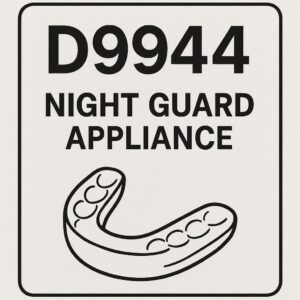
Dental Code for Night Guard Appliance
What Exactly is a Night Guard?
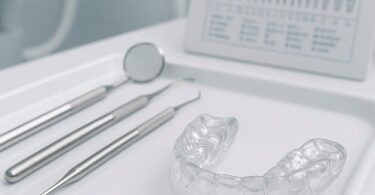
Before we dive into the intricacies of billing codes, let’s establish a clear picture of what we are discussing. A night guard—or occlusal guard—is a removable dental appliance, typically made of hard acrylic or a combination of hard and soft materials. You wear it while you sleep to create a physical barrier between your upper and lower teeth.
This barrier serves two primary purposes. First, it protects the enamel of your teeth from the excessive wear and tear caused by grinding (bruxism) or clenching. Second, it provides a cushioning effect that reduces the strain on your jaw muscles and temporomandibular joints (TMJ), alleviating pain and preventing long-term damage.
The Main Code: D9940
When a dentist prescribes a standard, hard, or hard/soft split night guard to manage bruxism, the code used is D9940. This is the cornerstone of our discussion. The official description for D9940 is “Occlusal guard, by report.”
This code is used for a custom-fabricated appliance made in a dental laboratory based on impressions (molds) taken of your teeth. It is considered the gold standard for protecting teeth from the effects of grinding.
What “By Report” Means
You might notice the phrase “by report” attached to the code. This is a critical detail. In dental billing, “by report” means that the simple code alone does not tell the full story. The dentist or their billing specialist must submit a narrative report along with the claim. This report must explain the medical necessity for the appliance.
The report typically includes:
-
Symptoms: Patient complaints of jaw pain, headaches, tooth sensitivity, or muscle fatigue.
-
Clinical Findings: Evidence of tooth wear (attrition), muscle tenderness upon palpation, or limited jaw movement.
-
Diagnosis: A specific diagnosis code (like bruxism or TMJ disorder) that justifies why the night guard is not just a cosmetic or convenience item, but a medically necessary treatment.
When is D9940 Used?
D9940 is the appropriate code for the vast majority of night guards used for:
-
Bruxism (Teeth Grinding): To prevent further wear and damage.
-
Myofascial Pain: To relax overworked jaw muscles.
-
TMJ Disorders: To stabilize the jaw joint and reduce inflammation.
The Newer Code: D9941
Dental coding is not static. As technology and materials evolve, new codes emerge to better describe the procedures. In recent years, a new code was introduced to address a specific type of appliance: D9941.
D9941 is defined as “Occlusal guard, hard, laboratory processed, including adjustment.” This code was introduced to differentiate between a standard hard guard and other variations.
D9940 vs. D9941: A Comparison
The distinction between these two codes can be confusing, even for dental office staff. To help clarify, here is a comparative breakdown of how these codes are generally applied.
| Feature | D9940 (Occlusal guard, by report) | D9941 (Hard occlusal guard, lab processed) |
|---|---|---|
| Typical Material | Hard acrylic or Hard/Soft split (dual laminate) | Primarily hard acrylic |
| Primary Use | Bruxism, TMJ disorders, muscle relaxation | Bruxism, particularly for heavy grinders |
| Insurance View | Often considered a “standard” night guard | Often considered a “premium” or “hard” guard |
| Lab Process | Custom fabricated from impressions | Custom fabricated from impressions |
| Key Difference | Used for a broader range of appliances, including soft guards | Specifically designated for a hard laboratory-processed guard |
Which Code is “Better”?
From a patient perspective, the code used matters primarily for insurance. Historically, some insurance plans would only reimburse for D9940, while others have specific fee schedules for D9941. The best code is the one that accurately describes the appliance you are receiving. A reputable dentist will use the code that matches the product delivered. If you are a heavy grinder, a hard acrylic guard (D9941) is often more durable and effective than a soft one.
Related Codes: When a Night Guard Isn’t Just a Night Guard
While D9940 and D9941 are the stars of the show, they rarely travel alone. The process of getting a night guard involves multiple steps, each with its own potential code. Understanding these related codes helps explain the total cost of treatment.
D7876: The TMJ Appliance
This is where things get specific. D7876 is used for a “splint, mandibular.” In the context of TMJ disorders, this is often a repositioning splint or anterior bite plane. Unlike a standard night guard (which simply protects teeth), a TMJ splint is designed to alter the position of the jaw to relieve pressure on the joint itself.
If you are being treated for a diagnosed TMJ disorder rather than simple bruxism, your dentist or a TMJ specialist may use D7876 instead of D9940.
Diagnostic Codes (The “Why”)
Every claim for a night guard must be supported by a diagnostic code (ICD-10). These codes explain the medical reason for the treatment. Common diagnostic codes accompanying D9940 include:
-
K03.81: Bruxism (Teeth Grinding)
-
M26.60: Temporomandibular joint disorder, unspecified (TMJ)
-
M26.62: Arthralgia of temporomandibular joint (TMJ pain)
-
R43.8: Other disturbances of smell and taste (rare, but sometimes linked) – Note: This is less common; bruxism or TMJ codes are the primary drivers.
Supportive Codes
The night guard itself is not the only item on the bill. You will typically see these supporting codes:
-
D0150 or D0120: Comprehensive or periodic oral evaluation. The dentist must examine you before prescribing a guard.
-
D0470: Diagnostic casts. This covers the cost of pouring and mounting the impressions (the molds of your teeth) so the lab can create the appliance.
-
D9951: Occlusal adjustment (if needed). Sometimes, after the guard is delivered, minor adjustments to your natural teeth may be required to ensure the guard fits perfectly.
The Insurance Maze: Coverage and Reimbursement
Now we arrive at the question that occupies most of our minds: Will my insurance pay for this? The answer is complicated, but understanding the code is the first step to navigating it.
Medical vs. Dental Insurance
This is the most critical distinction. A night guard is a dental appliance, but it is often used to treat a condition that straddles the line between dentistry and medicine. Bruxism and TMJ disorders can cause severe headaches, neck pain, and ear pain—symptoms that fall under a medical doctor’s purview.
-
Dental Insurance: Most standard dental insurance plans consider night guards under “major restorative” services. There is often a waiting period (e.g., 6-12 months after the policy starts) and a percentage coverage structure. Typically, a plan will cover 50% of the cost of a night guard after you meet your deductible.
-
Medical Insurance: If your bruxism or TMJ is causing significant medical issues (like chronic migraines or verified joint damage), your medical insurance may cover the appliance. However, you need to submit the claim using a medical code (CPT code), not a dental code. This process often requires prior authorization and a detailed referral from your dentist.
Why Claims Get Denied
Insurance companies are notoriously finicky about night guards. Here are the most common reasons for denial related to coding:
-
Missing Narrative: As mentioned with D9940, if the “by report” narrative is insufficient or missing, the claim will be rejected.
-
Timing: Most plans only cover one night guard every 3 to 5 years. If you had one recently, a new claim will be denied.
-
Lack of Medical Necessity: If the diagnostic codes only show “routine” care or if there is no evidence of wear or pain, the insurance will deem the guard “elective” and deny coverage.
-
Code Mismatch: If a dentist uses D9941 (hard guard) but the insurance plan only covers D9940, the patient may be left with a balance.
Important Note for Readers: Before proceeding with treatment, ask your dentist’s office to perform a “pre-authorization” or “predetermination” of benefits. This is a request sent to your insurance company before the work is done. It tells you—in writing—exactly what the insurance will pay, what codes are being used, and what your estimated out-of-pocket cost will be. This is the best way to avoid surprises.
Types of Night Guards and Their Coding Implications
The code used often correlates to the type of appliance. Different materials and designs suit different patients. Here is a quick guide to the types you might encounter.
Soft Night Guards
-
Material: Flexible, rubber-like plastic.
-
Best For: Mild clenchers or those with light grinding habits.
-
Coding: Typically D9940. Because soft guards are often fabricated in-house or through simpler lab processes, they fall under the general occlusal guard code.
-
Pros: Comfortable, easy to adapt to.
-
Cons: Can actually stimulate clenching in heavy grinders because the soft texture invites chewing.
Hard Night Guards
-
Material: Rigid, durable acrylic.
-
Best For: Heavy grinders and those needing TMJ stabilization.
-
Coding: Often D9940 or D9941, depending on the dentist’s preference and insurance plan specifics. D9941 is specifically designed for this type.
-
Pros: Extremely durable, provides a smooth surface that discourages grinding.
-
Cons: Can feel bulky initially; requires precise adjustment by the dentist.
Hard/Soft (Dual Laminate) Night Guards
-
Material: A hard acrylic core with a soft, flexible lining.
-
Best For: Patients who want the durability of a hard guard with the comfort of a soft liner.
-
Coding: Typically D9940. While it combines materials, it is still considered a standard occlusal guard. However, due to its complexity, it is more expensive to fabricate.
-
Pros: Combines comfort and durability.
-
Cons: More expensive than single-material guards.
TMJ Splints (Anterior Bite Planes)
-
Material: Hard acrylic, often covering only the front teeth.
-
Best For: Patients diagnosed with specific TMJ disorders that require jaw repositioning.
-
Coding: D7876 (or sometimes other TMJ-specific codes).
-
Pros: Therapeutically designed to treat joint pathology.
-
Cons: Not interchangeable with a night guard for simple bruxism.
The Cost Factor: What to Expect
Since insurance coverage varies, understanding the raw cost of these appliances is essential. The price is heavily influenced by the code and the complexity of the appliance.
| Appliance Type | Common Code | Average Cost (Without Insurance) | Typical Insurance Coverage |
|---|---|---|---|
| Soft Night Guard | D9940 | $200 – $500 | 50% (after deductible) |
| Hard Night Guard | D9940 / D9941 | $400 – $800 | 50% (after deductible) |
| Dual Laminate Guard | D9940 | $500 – $1,000 | 50% (often less if plan caps D9940) |
| TMJ Splint | D7876 | $700 – $1,500+ | Often covered under medical if medically necessary |
Note: These are estimates. Urban areas and specialist offices (prosthodontists or TMJ specialists) will generally be at the higher end of these ranges.
A Step-by-Step Journey: From Diagnosis to Delivery
To fully grasp how the code fits into the process, let’s walk through the typical patient journey.
Step 1: The Consultation (Code: D0150)
You visit the dentist complaining of jaw pain or noting that your partner says you grind your teeth. The dentist performs a comprehensive exam, checking for wear facets on your teeth, muscle tenderness, and joint sounds.
Step 2: Diagnosis (ICD-10 Code)
The dentist diagnoses you with bruxism (K03.81). They determine that a night guard is medically necessary to prevent further damage and relieve your symptoms.
Step 3: Impressions (Code: D0470)
The dental assistant takes impressions (molds) of your upper and lower teeth. These are sent to a dental laboratory. The lab uses them to create a precise model of your mouth.
Step 4: Lab Fabrication (Code: D9940 or D9941)
The lab fabricates the appliance based on the dentist’s prescription. If the dentist wants a hard acrylic guard, they will use the code D9941 if their software and insurance protocols support it, or they may use D9940 with a detailed “by report” explanation.
Step 5: Delivery and Adjustment (Included in the code)
You return to the dentist’s office. They place the guard, check the fit, and make minor adjustments to ensure it is comfortable and does not interfere with your bite or breathing. This adjustment is considered part of the initial procedure code.
Step 6: Billing and Follow-Up
The office submits the claim: D0150 (exam), D0470 (casts), and D9940 (occlusal guard) with the diagnosis K03.81. They attach a narrative explaining your symptoms and the clinical findings. A few weeks later, the insurance pays their portion, and you are responsible for the remainder.
Tips for a Smooth Claim Process
To ensure your experience with the dental code for a night guard appliance is as smooth as possible, follow these practical tips.
-
Ask for the Codes Upfront: Before scheduling the delivery appointment, ask your dentist’s front desk, “What codes will you be billing for this?” Knowing whether it is D9940, D9941, or D7876 allows you to call your insurance to verify coverage.
-
Get It in Writing: A verbal confirmation from an insurance representative is not always binding. Request a predetermination. This document outlines the exact coverage based on the codes provided.
-
Check Medical Benefits: If your symptoms are severe (headaches, ear pain, limited jaw opening), ask your dentist if they can provide documentation to support a medical claim. You may have better coverage under your medical plan, especially if you have already met your medical deductible.
-
Keep Records: Night guards are not lifetime devices. They wear out. Keep your receipts and explanation of benefits (EOB) statements. If you need a replacement in 3-5 years, you will have the previous codes and documentation ready.
-
Don’t Settle for OTC: While pharmacy “boil-and-bite” guards are cheap (using no dental code), they are not a substitute for a custom appliance. They can actually worsen TMJ issues by shifting your bite. A custom guard (D9940/D9941) is a medical device tailored to your unique anatomy.
The Future of Dental Coding for Occlusal Guards
The dental coding system (CDT) is updated annually by the American Dental Association. The introduction of D9941 was a major step toward specificity. In the future, we may see further distinctions based on digital workflows.
As digital dentistry grows, we may see codes specifically for:
-
CAD/CAM Night Guards: Appliances milled from a digital scan rather than a physical impression. Currently, these fall under D9940 or D9941.
-
3D Printed Appliances: As 3D printing becomes more prevalent, the distinction between lab-processed and in-office printed guards may lead to new sub-codes.
For now, D9940 remains the workhorse code, but the trend is clearly toward greater specificity to ensure that patients receive the precise appliance they need and that insurance reimbursement matches the complexity of the treatment.
Conclusion
Navigating dental insurance and treatment codes can feel overwhelming, especially when you are dealing with the discomfort of bruxism or TMJ. The dental code for a night guard appliance—most commonly D9940—is more than just a billing number. It represents a pathway to relief, protecting your teeth, your jaw, and your overall well-being.
Whether it is D9940 for a standard occlusal guard, D9941 for a hard laboratory-processed guard, or D7876 for a TMJ splint, understanding these codes empowers you to have informed conversations with your dentist and your insurance provider. By asking the right questions and ensuring the proper documentation is in place, you can confidently invest in a custom appliance that offers lasting comfort and protection, ensuring many mornings of pain-free, restful sleep.
Frequently Asked Questions (FAQ)
1. What is the exact dental code for a night guard?
The most common code is D9940, which stands for “Occlusal guard, by report.” For a hard, laboratory-processed guard, the code D9941 is also used.
2. Does dental insurance cover night guards?
Many dental insurance plans cover a portion (often 50%) of the cost of a night guard under major restorative services. However, coverage depends on your specific plan, and a predetermination of benefits is highly recommended.
3. Why is there a difference between D9940 and D9941?
D9940 is a general code for occlusal guards, often requiring a narrative report. D9941 is a more specific code for a hard occlusal guard processed in a laboratory. Dentists may use one over the other based on the type of guard and the insurance plan’s requirements.
4. Can I bill my medical insurance for a night guard?
Yes, in some cases. If your bruxism or TMJ disorder is causing significant medical issues (like chronic migraines or severe joint pain), your medical insurance may cover the appliance, though it requires different (CPT) coding and often a referral.
5. How often will insurance pay for a new night guard?
Most insurance plans have a frequency limitation, typically allowing one night guard every 3 to 5 years. This can vary, so checking your policy or asking for a predetermination is essential.
6. What if my dentist uses a code my insurance doesn’t recognize?
If your insurance does not recognize D9941, a skilled billing specialist can often use D9940 with a detailed narrative to describe the hard guard. If you are concerned, ask the office to verify coverage with both codes before proceeding.
7. Is a store-bought night guard the same as a D9940 appliance?
No. A store-bought, “boil-and-bite” guard is not a custom appliance and does not correspond to a dental code. It does not require a prescription and is generally not covered by insurance. It is also less effective and can sometimes worsen jaw issues.
Additional Resources
For more detailed information on dental coding and TMJ disorders, we recommend visiting the American Dental Association’s official site for the current CDT (Current Dental Terminology) code set.
Link: American Dental Association – CDT Codes
(Note: This link directs to the official source for dental coding information.)
Disclaimer: This article is for informational purposes only and does not constitute medical or dental advice, diagnosis, or treatment. Dental insurance plans and coding practices vary widely. You should always consult with your licensed dentist and insurance provider to discuss your specific treatment needs and coverage options. The codes and information referenced are based on standard practices as of the publication date but are subject to change.