If you have ever woken up with a sore jaw, a nagging headache, or noticed that your teeth look a little flatter than they used to, you have likely heard about occlusal guards. Often called night guards or bite splints, these appliances are a dentist’s first line of defense against bruxism (teeth grinding) and temporomandibular joint (TMJ) disorders.
But when you sit in the dentist’s chair and they say, “You need an occlusal guard,” the next logical question usually involves money. How much will this cost? Will my insurance cover it? And what exactly is the dental code for occlusal guard that appears on that confusing bill?
Navigating dental insurance codes can feel like learning a foreign language. You look at your explanation of benefits (EOB) and see a string of letters and numbers—D9944, D9945, D7880—and you have no idea what you are paying for.
This guide is designed to change that. We are going to break down everything you need to know about occlusal guard dental codes. We will look at the differences between the various codes, explain why your dentist uses one over another, and give you the tools to understand your insurance coverage so there are no surprises.
Whether you are a patient trying to understand a bill, or someone who just got diagnosed with bruxism and wants to be prepared, you have come to the right place.

Dental Codes for Occlusal Guards
What is an Occlusal Guard? (And Why Do You Need One?)
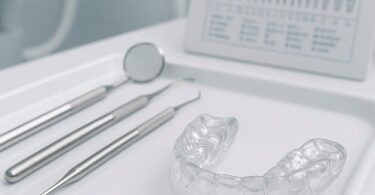
Before we dive into the numbers, let’s establish a clear foundation. An occlusal guard is a removable dental appliance, typically made of hard acrylic or a combination of hard and soft materials. You wear it over your teeth—usually the upper arch, though sometimes the lower—to create a physical barrier.
The primary purpose is to prevent the damage caused by grinding (bruxism) or clenching. Without this guard, you are essentially using your teeth as tools to grind against each other. Over time, this leads to:
-
Worn-down enamel (shortening of teeth)
-
Chipped or fractured teeth
-
Increased tooth sensitivity
-
Gum recession
-
Chronic jaw pain and headaches
However, not all guards are created equal. This is where the dental codes start to come into play. The code used by your dentist tells a story about the type of appliance you are receiving, the complexity of its fabrication, and its intended purpose.
The Main Dental Codes for Occlusal Guards
In the world of dentistry, we use the Current Dental Terminology (CDT) codes. These are maintained by the American Dental Association (ADA). When it comes to occlusal guards, there are three primary codes you will likely encounter, plus a fourth that sometimes gets confused with them.
Here is a quick overview:
| Code | Description | Typical Material | Common Use |
|---|---|---|---|
| D9944 | Occlusal guard – hard appliance, full arch | Hard acrylic | Severe bruxism, long-term durability |
| D9945 | Occlusal guard – soft appliance, full arch | Flexible vinyl/soft acrylic | Mild to moderate bruxism; patients with soft tissue sensitivity |
| D9946 | Occlusal guard – hard/soft hybrid, full arch | Hard acrylic with soft liner | Moderate to severe bruxism; combines durability with comfort |
| D7880 | Occlusal orthotic device | Hard acrylic (adjustable) | TMJ therapy; repositioning the jaw |
Let’s unpack these codes in detail.
D9944: The Hard Appliance
The code D9944 represents a hard occlusal guard for a full arch. This is the classic “night guard” that has been used in dentistry for decades. It is fabricated from a hard, durable acrylic resin.
Why choose a hard guard?
Dentists often prefer hard guards for patients who are “power grinders.” If you wake up with your jaw muscles feeling like you have been chewing gum for eight hours straight, the durability of a hard appliance is necessary. Hard acrylic does not wear down easily, and it provides a smooth surface that allows the teeth to glide against it rather than gripping it, which can sometimes reduce muscle activity.
What to expect:
Because this is a laboratory-fabricated appliance (usually requiring impressions sent to a dental lab), it is considered a permanent or long-term solution. It is not an over-the-counter “boil and bite” guard. The cost is higher than a soft guard due to the lab fees and the dentist’s time to ensure the bite is perfectly balanced.
D9945: The Soft Appliance
D9945 is used for a soft occlusal guard. These are made from a softer, more pliable material, often a type of vinyl or a softer grade of acrylic.
Who is this for?
Soft guards are generally recommended for patients with mild to moderate bruxism. They are also sometimes used for patients who are new to wearing guards. The soft material can feel less intrusive in the mouth during the initial adjustment period.
A note of caution:
While soft guards are comfortable, they are not ideal for everyone. Some dental research suggests that soft materials can actually encourage clenching. If a patient has severe bruxism, a soft guard might be chewed through quickly, or the “squishy” nature of the material might cause the jaw muscles to work harder to stabilize the mandible. For patients with significant grinding habits, a hard guard (D9944) or a hybrid (D9946) is often a better long-term investment.
D9946: The Hybrid (Hard/Soft)
This is often considered the “gold standard” for many general dentists. D9946 describes a hard/soft hybrid occlusal guard.
This appliance combines the best of both worlds. It has a hard inner layer (or hard base) that provides durability and a stable bite, and a soft outer layer that cushions the opposing teeth. The soft layer is usually a thin, resilient material bonded to the hard acrylic.
Why is this code important?
From a clinical perspective, the hybrid offers the durability of a hard guard with the comfort of a soft one. From an insurance perspective, this is where things can get tricky. D9946 is a relatively newer code compared to D9944 and D9945. While insurance companies do recognize it, they often reimburse at a similar rate to the hard appliance (D9944), despite the fact that it is more expensive for the dentist to fabricate due to the dual-layer processing.
D7880: The Occlusal Orthotic (TMJ Focus)
This is a separate category. D7880 is the code for an occlusal orthotic device. While it looks similar to an occlusal guard, its purpose is fundamentally different.
An occlusal guard (D9944, D9945, D9946) is primarily designed to protect the teeth from the effects of grinding and clenching. An occlusal orthotic (D7880) is designed to reposition the jaw.
If you have a TMJ disorder (TMD) involving joint pain, clicking, or locking, your dentist might use an orthotic. This device is carefully calibrated to change the way your upper and lower teeth come together, placing the condyle (the ball of the jaw joint) into a more relaxed or stable position. It is a therapeutic device, not just a protective one.
Billing implications:
Because D7880 is considered a treatment for a medical condition (TMJ disorder), insurance coverage for this code often falls under medical insurance rather than dental insurance—or a combination of both. This changes the billing process significantly and often requires a separate pre-authorization.
How Insurance Handles Occlusal Guard Codes
One of the most common frustrations patients face is discovering that their dental insurance does not cover their occlusal guard—or only covers a fraction of it. Understanding why this happens can save you a lot of stress.
The “Once Per Lifetime” Rule
Dental insurance is not like health insurance. It is designed to cover preventive care and basic restorative work, but it often views occlusal guards as “major restorative” or “orthodontic” services. Many plans have a specific limitation: they will only cover an occlusal guard once every 3, 5, or even 10 years. Some plans explicitly state “once per lifetime.”
This means that if you had a night guard made ten years ago under a previous employer’s insurance, your current insurance may deny the claim because the code was used on your record.
Frequency Limitations
Insurance companies use a database to track services by your Social Security number. If they see a D9944 billed two years ago, and another dentist bills a D9945 today, they will likely deny the new claim as “too frequent.”
Important Note: If your guard breaks or wears out before the insurance frequency limit is up, you should still get a new one for your health. However, you will likely have to pay out-of-pocket. It is worth asking your dentist to submit a “narrative” with the claim explaining why the replacement is medically necessary (e.g., “wear and tear,” “fracture of appliance”), but success rates vary by carrier.
The “Missing Tooth” Clause
This is a lesser-known but crucial detail. Some dental insurance policies tie coverage for occlusal guards to the condition of your dentition. If you are missing a certain number of teeth (for example, more than three molars), the insurance company may argue that a full-arch occlusal guard is not stable or “medically necessary” because it lacks adequate abutment teeth to hold it in place. In these cases, they may deny the claim entirely.
Deductibles and Maximums
Even if the code is covered, you are still subject to your annual deductible and annual maximum. If you have already had a crown, a root canal, or a deep cleaning earlier in the year, you may have exhausted your insurance benefits. In that scenario, even if the dental code for occlusal guard is covered at 80%, you might owe the full amount because there is no money left in your plan for the year.
Dental Code vs. Medical Code: Why It Matters
We briefly touched on D7880 and TMJ, but it is important to understand the distinction between dental codes (CDT) and medical codes (ICD-10 and CPT).
-
Dental Codes (CDT): Used for services performed in a dental office primarily related to teeth and oral structures. These are billed to dental insurance.
-
Medical Codes (ICD-10/CPT): Used for services related to the diagnosis and treatment of disease. These are billed to medical insurance.
If your occlusal guard is being used to treat bruxism (tooth grinding), it is almost always a dental code. However, if the guard is being used to treat TMJ disorder (a medical condition involving the jaw joint and muscles), some dentists or TMJ specialists will attempt to bill it to medical insurance.
Why does this distinction matter?
Medical insurance often has better coverage for durable medical equipment (DME) than dental insurance does for prosthetics. However, the process is stricter. You usually need a specific medical diagnosis (like ICD-10 code M26.60 for temporomandibular joint disorder) and a pre-authorization stating that the device is medically necessary to treat a diagnosed condition, not just to protect teeth from wear.
If you are seeing a dentist for jaw pain, headaches, or joint sounds, ask them if they are willing to submit a medical pre-authorization for D7880. It can sometimes save you hundreds of dollars, but it requires more paperwork and time.
Over-the-Counter (OTC) vs. Professional Occlusal Guards
It is impossible to discuss codes and costs without addressing the elephant in the room: Why not just buy a cheap one from the pharmacy?
You can walk into any drugstore and buy a “night guard” for $20 to $50. These usually fall under the “boil and bite” category. They are not assigned a dental code because they are not dental devices fabricated by a licensed professional.
The problem with OTC guards:
While they might seem like a good deal initially, they often cause more harm than good for serious grinders.
-
Fit: A one-size-fits-all guard does not distribute biting forces evenly. It can create pressure points, causing teeth to shift or exacerbating TMJ pain.
-
Material: Soft OTC guards often encourage clenching. Because they are bulky and uneven, patients tend to bite down harder to keep them in place.
-
Longevity: They wear out quickly, and if you swallow a piece of broken acrylic, that is a medical emergency.
A professionally fabricated guard (D9944, D9945, D9946) involves a dental impression, bite registration to ensure your jaw is in a relaxed position, and laboratory processing to ensure a precise fit. You are paying for the dentist’s expertise to balance your occlusion—ensuring that when you bite down, the force is evenly distributed across all teeth. This prevents the secondary damage that OTC guards can cause.
What Determines the Cost?
When you see the dental code for occlusal guard on your treatment plan, the fee attached to it can vary wildly. In the United States, the price for a professional occlusal guard typically ranges from $300 to $1,200 depending on several factors.
| Factor | Impact on Cost |
|---|---|
| Geographic Location | Urban areas and high-cost-of-living cities generally have higher fees. |
| Type of Guard (Code) | D9945 (soft) is usually the least expensive. D9944 (hard) is mid-range. D9946 (hybrid) and D7880 (orthotic) are typically the most expensive due to lab complexity. |
| Lab Fees | High-quality dental labs charge more for premium materials and articulation (mounting models to simulate your jaw movement). |
| In-Network vs. Out-of-Network | If your dentist is “in-network” with your insurance, they have a contracted rate. If they are out-of-network, you may pay the full fee and then get reimbursed (if coverage applies). |
How to Talk to Your Dentist About Billing
To avoid a surprise bill, you should become an active participant in the financial conversation. Here are three questions you should ask before agreeing to treatment:
-
“What code will you be using, and why?”
Ask if they are using D9944, D9945, or D9946. Understanding which one they are recommending helps you understand the type of appliance you are getting. If they say D9946, ask why the hybrid is better for your specific grinding habits. -
“Can you verify my insurance coverage for this specific code?”
Do not assume that because the front desk says “we take your insurance” that the guard is covered. Ask them to run a pre-treatment estimate (predetermination) with your insurance company. This is a formal request for the insurance company to tell you in writing exactly what they will pay before the work is done. It is the best way to avoid surprises. -
“Is this for bruxism or TMJ?”
If you are having jaw pain, ask if the guard falls under D7880 (orthotic) and if they intend to bill medical insurance. If they are billing dental insurance for a TMJ orthotic, you need to confirm that your dental plan covers TMJ therapy—many do not.
Alternatives and Adjacent Codes
Sometimes, the codes above are not the only ones on your bill. You might see other associated codes.
-
D0470 – Diagnostic cast: If the dentist sends impressions to a lab, the lab work itself is usually included in the guard code. However, sometimes a separate code is used if extensive diagnostic mounting is required.
-
D9920 – Behavior management: Rarely used for adults, but for children or patients with extreme anxiety, you might see this.
-
D7899 – This is an older code that has been replaced or is used in specific states for orthotic adjustments. Always check with your provider if you see a code you do not recognize.
Maintaining Your Occlusal Guard
Regardless of which code was used to bill for your guard, how you treat it determines how long it lasts. An occlusal guard is an investment. Here is how to protect it.
Do’s
-
Rinse immediately after removal: Bacteria love the warm, moist environment.
-
Brush gently: Use a soft toothbrush and non-abrasive toothpaste (or mild dish soap). Avoid toothpaste with baking soda or whitening agents, as these are too harsh and will scratch the acrylic, creating hiding spots for bacteria.
-
Store it properly: Always keep it in a hard plastic case when not in use. If you leave it on a napkin, it will likely get thrown away. If you leave it on the bathroom counter, it will get knocked into the sink.
-
Bring it to your checkups: Your dentist should check the fit and wear patterns every six months during your cleaning. They can polish out minor rough spots and ensure the occlusion is still balanced.
Don’ts
-
Do not use hot water: Boiling water or a dishwasher will warp the acrylic, rendering the guard useless.
-
Do not let pets near it: Dogs seem to find night guards irresistible. The cost of a replacement is rarely covered by insurance.
-
Do not ignore cracks: If you see a crack forming, call your dentist immediately. If the guard splits in half while you sleep, the sharp edges can cut your gums or pose a choking hazard.
A Realistic Look at Insurance Coverage
Let’s look at a few scenarios to illustrate how the dental code for occlusal guard plays out in real life.
Scenario 1: The Preventive Plan
Patient A has a PPO dental plan with 80% coverage for major services after a $50 deductible. The dentist uses code D9946 with a fee of $700.
-
Insurance contracted rate: $600
-
Patient pays deductible: $50
-
Insurance pays 80% of remaining $550 = $440
-
Patient owes: $160
Scenario 2: The “Once Every 5 Years” Limitation
Patient B has the same plan, but had a D9944 billed by a previous dentist 3 years ago.
-
The insurance company denies the claim citing frequency limitation.
-
Patient owes: $700 (full fee)
Scenario 3: The Missing Tooth Denial
Patient C has a missing first and second molar on the lower arch. The dentist wants to make a lower guard (D9944).
-
Insurance denies coverage because the arch is not “intact” enough to support the guard, deeming it not a standard of care.
-
Patient owes: $650
Scenario 4: Medical Billing for TMJ
*Patient D has diagnosed TMJ disorder. Dentist uses D7880. Medical insurance (BCBS) requires pre-auth. Pre-auth is approved.*
-
Medical plan covers DME at 100% after a $200 deductible.
-
Patient already met deductible with a primary care visit.
-
Patient owes: $0
As you can see, the same physical piece of plastic can cost the patient anywhere from $0 to $700 based entirely on how it is coded, what insurance is billed, and the specific clauses in the policy.
Frequently Asked Questions (FAQ)
1. Is there a difference between a night guard and an occlusal guard?
No. The terms are used interchangeably. However, “occlusal guard” is the official dental terminology used in coding and clinical notes. “Night guard” is the colloquial term.
2. Why does my dentist use D9946 instead of D9944?
D9946 (hard/soft) offers superior comfort for the gums and opposing teeth while maintaining the structural integrity of a hard inner core. Many dentists believe this provides the best protection for severe grinders who also complain of soft tissue sensitivity.
3. Can I claim my occlusal guard on my FSA or HSA?
Yes. If you have a Flexible Spending Account (FSA) or Health Savings Account (HSA), occlusal guards are almost always considered qualified medical expenses. You can use these pre-tax funds to pay for the guard, even if your insurance denies coverage.
4. How often should an occlusal guard be replaced?
Generally, every 3 to 5 years. However, if you are a heavy grinder, you might wear through a hard guard in 2 years. You know it is time to replace it when you can see holes forming, cracks appearing, or if the guard no longer fits snugly (which can happen if your teeth shift or the acrylic warps).
5. Will my insurance cover a replacement if my dog eats it?
Typically, no. Insurance covers “loss” very rarely. However, if you have a “replacement” rider on your policy (common in some union plans), it might be covered. Otherwise, this is considered an out-of-pocket expense. Keep your guard case closed and away from pets.
6. What is the difference between D9944 and D9945 in terms of durability?
D9944 (hard acrylic) is significantly more durable. D9945 (soft) tends to wear down faster. If you grind heavily, a soft guard might last only 6 to 12 months before it shows significant wear facets or tears.
Additional Resources
For more authoritative information on bruxism and dental appliances, the American Dental Association (ADA) provides patient education resources.
Link: Mouthguards – ADA.org
This link offers official insights into the differences between athletic mouthguards and occlusal guards, along with general oral health guidelines.
Conclusion
Navigating the world of dental insurance and occlusal guards comes down to understanding the numbers. The dental code for occlusal guard—whether it is D9944, D9945, D9946, or D7880—is not just a billing formality. It is a specific identifier that dictates the type of appliance you receive, its longevity, and how your insurance plan will respond.
By understanding the differences between hard, soft, and hybrid appliances, and by asking your dentist the right questions about pre-authorizations and frequency limitations, you can take control of the process. Remember, an occlusal guard is an investment in the long-term health of your teeth and jaw. While the upfront cost can feel daunting, it is almost always less expensive than restoring teeth destroyed by years of grinding.
Disclaimer: This article is for informational purposes only and does not constitute medical, dental, or legal advice. Dental codes, insurance policies, and fee structures vary by location, provider, and carrier. Always consult with your licensed dentist and insurance provider regarding your specific treatment plan and coverage.
Author: Dental Health Writer & Industry Analyst
Date: March 23, 2026