If you have ever tried to look up a diagnosis code for a skin condition, you know it can feel like walking through a maze. When it comes to hidradenitis suppurativa (HS), the search for the right code is often frustrating.
You might type in “hidradenitis” and see a few options. Some look close. Others seem completely wrong. And if you are a medical coder, a billing specialist, or a patient trying to understand your paperwork, getting this right matters.
The good news? The correct code exists, and it is more straightforward than you think. In this guide, we will walk through everything you need to know. We will cover the specific code, the clinical picture behind it, how to document different stages of the disease, and common billing traps to avoid.
Let us start with the simple answer, then build from there.
The Simple Answer: One Code to Remember
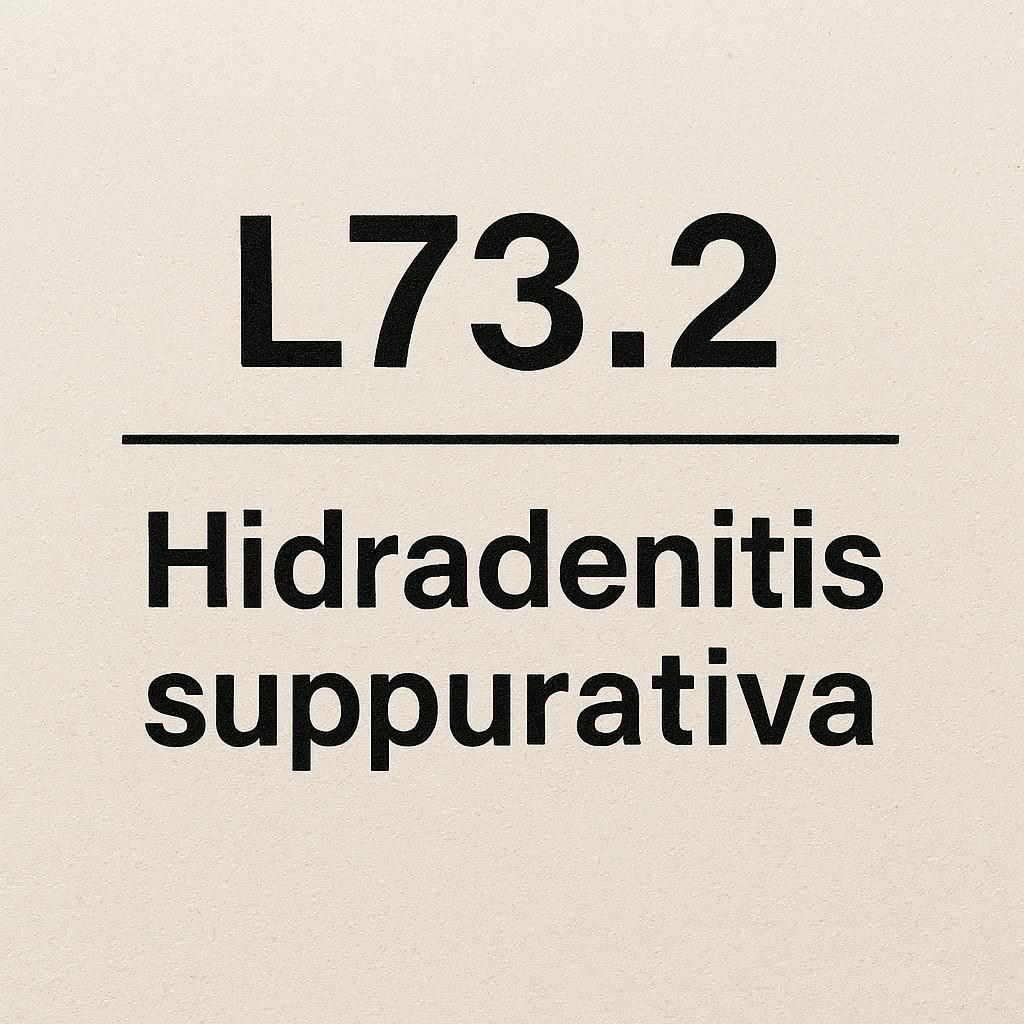
When you search for the icd 10 code for hidradenitis, you will land on one specific alphanumeric sequence.
L73.2 – Hidradenitis suppurativa
That is it. This is the dedicated, billable code for HS in the ICD-10-CM system. You do not need to look under general abscess codes or other skin infections. L73.2 is the official, specific code for this chronic condition.
Why Is This Code Important?
Before the ICD-10 system, coding for HS was messy. Coders often used generic codes for skin abscesses or follicular disorders. This made it hard to track the true prevalence of the disease. It also caused insurance claim denials because the codes did not match the patient’s documented condition.
With L73.2, the system recognizes hidradenitis suppurativa as a distinct diagnosis. This helps researchers collect better data. It also helps patients get appropriate coverage for treatments like biologics or surgery.
A Quick Note on Terminology
You might see “hidradenitis” used alone or “acne inversa” in some old charts. Both refer to the same condition. The official code L73.2 covers all these terms. If your physician writes “acne inversa” in the notes, you still use L73.2.
Understanding Hidradenitis Suppurativa: The Clinical Picture
You cannot code a condition well if you do not understand what it looks like in real life. Let us take a step back.
Hidradenitis suppurativa is a chronic inflammatory skin disease. It affects the hair follicles in areas that have apocrine sweat glands. These are the sweat glands found in your armpits, groin, buttocks, and under the breasts.
The disease causes painful, deep-seated nodules and abscesses. Over time, these lesions can rupture, leak foul-smelling fluid, and form tunnels under the skin. Doctors call these tunnels sinus tracts or fistulas.
Who Gets Hidradenitis Suppurativa?
This condition is more common than many people realize. Studies suggest it affects about 1 in 100 people, though many cases go undiagnosed.
- It is more common in women than men.
- It often starts after puberty, typically between ages 20 and 40.
- There is a strong link to smoking and obesity.
- It can run in families, suggesting a genetic component.
Common Misconceptions
Many people think HS is just bad acne or poor hygiene. This is not true. HS is an inflammatory condition, not an infection caused by dirt. Antibiotics often help with secondary infections, but they do not cure the underlying disease.
Another myth is that HS is contagious. It is not. You cannot catch it from someone else.
How Physicians Diagnose HS
A dermatologist usually makes the diagnosis based on three simple criteria:
- Typical lesions – Nodules, abscesses, or tunnels.
- Typical locations – Armpits, groin, buttocks, under breasts.
- Recurrence – At least two flare-ups within six months.
There is no blood test or biopsy required for diagnosis, though doctors may order tests to rule out other conditions like Crohn’s disease.
Hurley Staging and Coding
Coders do not need the Hurley stage to assign L73.2. However, the stage often appears in the medical record because it guides treatment. Here is a simple breakdown:
| Hurley Stage | Description | Typical Treatment |
|---|---|---|
| Stage I | One or more abscesses, no sinus tracts or scarring | Topical treatments, antibiotics |
| Stage II | Recurrent abscesses with sinus tracts and scarring in one or more areas | Oral antibiotics, biologics, minor surgery |
| Stage III | Diffuse involvement with multiple interconnected sinus tracts across a large area | Major surgery, biologics, pain management |
Again, all three stages use the same code: L73.2. The stage influences the level of medical decision making, not the diagnosis code itself.
Proper Documentation: Why It Matters
You can use the correct icd 10 code for hidradenitis, but if your documentation is weak, claims will still get denied. Insurers want to see specific details in the medical record.
What to Include in the Patient’s Chart
A well-documented HS visit should include:
- Location of lesions – Left axilla, right groin, etc.
- Type of lesions – Nodules, abscesses, draining sinus tracts, scarring.
- Severity – Mild, moderate, severe, or Hurley stage.
- Symptoms – Pain level on a 1–10 scale, drainage, odor, interference with daily activities.
- Duration of current flare – Days, weeks, or months.
- Previous treatments – What has been tried and what worked or failed.
- Impact on quality of life – Missing work, trouble walking, difficulty raising arms.
A Real Documentation Example
Here is an example of a good progress note:
“Patient is a 34-year-old female with known hidradenitis suppurativa, Hurley stage II. She presents today with a painful flare in the bilateral groin. Exam reveals three inflamed nodules and one draining sinus tract on the right side, plus two healing lesions on the left. Patient rates pain at 7/10. She has tried oral doxycycline for two weeks with minimal improvement. She reports missing two days of work this month due to pain with walking.”
This note clearly justifies the use of L73.2. It also supports the level of evaluation and management service billed.
Common Coding Mistakes and How to Avoid Them
Even experienced coders can make errors. Let us look at the most frequent mistakes with hidradenitis codes.
Mistake #1: Using Abscess Codes
A coder sees “abscess” in the note and reaches for L02 series codes (cutaneous abscess, furuncle, carbuncle). This is incorrect. HS is a specific chronic condition, not a simple abscess. The abscesses in HS are a symptom of the underlying disease.
- Wrong code: L02.91 (Cutaneous abscess, unspecified)
- Correct code: L73.2 (Hidradenitis suppurativa)
Mistake #2: Coding Only the Infection
Sometimes a patient with HS develops a secondary bacterial infection. In this case, you can code both conditions. But you must list L73.2 as the primary diagnosis, not the infection.
- Primary: L73.2
- Secondary: appropriate infection code (e.g., B95.6 for Staphylococcus aureus)
Mistake #3: Confusing HS with Folliculitis
Folliculitis is a different condition. It involves inflamed hair follicles but usually appears as small red bumps, not the deep nodules and tunnels of HS.
| Condition | ICD-10 Code |
|---|---|
| Hidradenitis suppurativa | L73.2 |
| Folliculitis, unspecified | L73.9 |
| Acne vulgaris | L70.0 |
If the physician writes “folliculitis” in the diagnosis, do not change it to L73.2 unless they have specifically documented HS.
Treatment Codes That Pair with L73.2
Once you have the correct diagnosis code, you will likely need to pair it with procedure codes. Here are common treatments for HS and their CPT codes.
Medical Management
| Treatment | CPT Code(s) | Notes |
|---|---|---|
| Office visit, new patient | 99202–99205 | Based on medical decision making or time |
| Office visit, established patient | 99212–99215 | Based on medical decision making or time |
| Incision and drainage of abscess | 10060 or 10061 | Only for a single abscess; not the preferred long-term HS treatment |
| Biopsy of skin | 11102–11107 | To rule out other conditions |
Surgical Treatment
Many patients with advanced HS need surgical procedures.
| Procedure | CPT Code | Description |
|---|---|---|
| Excision of HS lesion, simple | 11400–11446 | Based on size and location |
| Excision of HS lesion, complex | 13100–13153 | Includes closure requiring more than suturing |
| Marsupialization | 10040 | Creating a pouch to allow drainage |
| Wide excision with grafting | 15002–15005 | For large affected areas |
Biologic Therapies
Biologics have changed the treatment landscape for moderate to severe HS. Each drug has its own administration code.
| Biologic | J-Code (if applicable) | Administration CPT |
|---|---|---|
| Adalimumab (Humira) | J0135 | 96365 (infusion) or 96372 (injection) |
| Infliximab (Remicade) | J1745 | 96365–96367 (infusion) |
Always check your payer policies. Many require prior authorization for biologics in HS treatment.
Special Scenarios and Additional Codes
Sometimes, a patient with HS has other related conditions. You might need to add additional codes to tell the full story.
Pain Management
HS is often extremely painful. If the physician documents chronic pain due to HS, you can add a pain code.
- G89.29 – Other chronic pain
- G89.4 – Chronic pain syndrome (requires specific documentation)
Do not use G89.29 for every HS patient. Only use it when the physician clearly documents that pain is a significant, separately managed issue.
Mental Health Impact
Living with a chronic, painful, and sometimes disfiguring condition takes a toll. Many HS patients experience depression or anxiety.
- F41.1 – Generalized anxiety disorder
- F32.9 – Major depressive disorder, single episode, unspecified
These are separate diagnoses. Your physician must document them independently. Do not assume depression just because the patient has HS.
Obesity and Metabolic Syndrome
There is a strong association between HS and obesity. If your patient has documented obesity, code it.
- E66.9 – Obesity, unspecified
- E66.01 – Morbid obesity due to excess calories
Again, only code obesity if the physician specifically diagnoses and documents it in the note.
Billing Tips for Different Payers
Insurance companies have different rules for HS. Let us look at three common payer types.
Medicare
Medicare recognizes L73.2 as a valid diagnosis. However, Medicare has specific coverage criteria for certain treatments. For example, Medicare may cover incision and drainage for an acute abscess in HS, but they will not cover extensive surgical excision without proper documentation of failed conservative treatments.
Tip for Medicare: Always include a detailed treatment history. Show what has been tried and why it failed.
Commercial Insurance
Most commercial plans follow standard medical policies. Some have specific clinical guidelines for HS. For biologic therapies, you almost always need prior authorization.
Tip for commercial plans: Submit a prior authorization request with photos of the lesions, documentation of failed treatments, and the Hurley stage.
Medicaid
Medicaid coverage varies by state. Many state Medicaid programs cover HS treatments, but they may restrict certain procedures or require step therapy.
Tip for Medicaid: Check your state’s fee schedule and medical policy manual for any HS-specific guidelines.
The Patient’s Perspective: Understanding Your Medical Records
If you are a patient reading this, you might wonder why any of this matters to you. The truth is, the code on your paperwork affects your insurance coverage, your out-of-pocket costs, and even your ability to get certain medications.
How to Find Your Diagnosis Code
You have the right to see your medical records and your “superbill” (the invoice sent to your insurance). Look for a section labeled “Diagnosis Codes” or “ICD-10 Codes.” You should see L73.2 somewhere on that list.
If you see a different code, ask your provider’s billing office why. Sometimes it is a simple typo. Other times, you may need to ask your doctor to correct the documentation.
What to Do If Your Claim Is Denied
Insurance denials happen. If your claim for an HS treatment is denied, check the explanation of benefits (EOB). Look at the reason code.
Common denial reasons for HS claims:
- “Not medically necessary” – This often means the documentation did not show failed conservative treatments.
- “Experimental or investigational” – Some insurers still consider certain HS surgeries experimental. Appeal with peer-reviewed literature.
- “Coding mismatch” – The procedure code may not match L73.2 in the insurer’s system. Call your insurer to clarify.
Do not give up after one denial. Many patients win appeals. Work with your doctor’s office to submit additional documentation.
Future Changes to Coding Guidelines
ICD-10 codes are updated every year on October 1. The good news is that L73.2 has been stable since the transition from ICD-9. It is unlikely to change or be deleted.
However, new codes are sometimes added for specific subtypes or complications. Keep an eye on the CDC’s ICD-10 update site for any changes. Also watch the American Academy of Dermatology’s coding bulletin for specialty-specific updates.
What Might Change?
Coding experts have discussed creating separate codes for:
- Mild HS without sinus tracts
- Moderate HS with sinus tracts
- Severe HS with widespread involvement
Nothing has been announced yet. For now, L73.2 remains the only specific code.
Frequently Asked Questions (FAQ)
Q: Can I use L73.2 for a patient who has not yet been diagnosed by a dermatologist?
A: No. The code requires a confirmed diagnosis of hidradenitis suppurativa. If the physician suspects HS but is not sure, use a symptom code like R23.8 (other skin changes) until the diagnosis is confirmed.
Q: Does L73.2 cover both axillary and groin involvement?
A: Yes. The code does not differentiate by location. The documentation should specify the involved body areas, but the code itself is the same.
Q: What is the difference between L73.2 and L73.8?
A: L73.8 is for “other specified follicular disorders.” Use L73.8 only for conditions clearly not HS. For example, some rare hair follicle disorders use L73.8. Always check the physician’s exact diagnosis.
Q: I saw a code called “acne inversa” in an old coding book. Do I still use that?
A: No. Acne inversa is the same as hidradenitis suppurativa. In modern ICD-10, both map to L73.2. Do not use any code labeled “acne inversa” unless you are working with a legacy system.
Q: How do I code HS in a pregnant patient?
A: You still use L73.2. Pregnancy does not change the diagnosis code. However, you may add O99.89 (other specified diseases and conditions complicating pregnancy) if the HS is impacting the pregnancy management. This is rare.
Q: Can I use L73.2 for a patient in remission with no active lesions?
A: Yes. HS is a chronic condition. Even when a patient is in remission, they still have the diagnosis. Code L73.2 for follow-up visits, maintenance therapy, or surveillance.
Additional Resources
For more information, refer to the American Academy of Dermatology (AAD) coding resources. The AAD maintains a free coding guide for hidradenitis suppurativa. You can access it at:www.aad.org/member/practice/coding
Also check the CDC’s official ICD-10 (CM) browser for the most current code set and any annual updates.
Conclusion
To summarize, the correct icd 10 code for hidradenitis is L73.2. This single code applies to all stages and locations of the disease. Proper documentation of lesion type, location, severity, and treatment history is essential for clean claims. Avoid common mistakes like using abscess codes, and always pair L73.2 with appropriate procedure codes and secondary diagnoses when clinically indicated.
Disclaimer: This information is for educational and professional coding guidance purposes only. It does not constitute medical advice. Always consult a qualified physician for diagnosis and a certified medical coder for billing specifics.
Author: Technical Medical Writing Team
Date: APRIL 26, 2026