If you have ever sat in a dentist’s chair—or sat with your child in a pediatric dentist’s chair—you know that the experience comes with its own language. Between the whirring of tools and the friendly chatter, there is a stream of numbers and terms that can feel like a secret code. For parents, one of the most common points of confusion comes when a dentist recommends pulling a baby tooth.
You might hear the dentist say, “We’ll need to do an extraction,” and then watch as the front desk staff types a series of numbers into a computer. One number, in particular, tends to cause a lot of questions: the primary tooth extraction code.
Understanding this code is not just about satisfying curiosity. It is about understanding what you are paying for, what the procedure actually entails, and how to ensure your child’s dental health is handled correctly. In the world of dental billing, codes tell a story. They describe the complexity of the work, the time it takes, and the specific tools used.
This guide is designed to decode that story for you. We will walk through everything you need to know about extracting a primary tooth, from the simple to the complex, so you can walk into your next appointment feeling informed and confident.
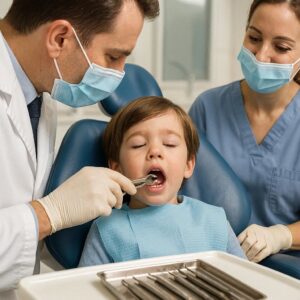
Primary Tooth Extraction Code
Table of Contents
ToggleWhy Baby Teeth Sometimes Need to Come Out Early
Before we dive into the specific codes, it helps to understand why a dentist might recommend removing a primary tooth in the first place. Many parents assume that since baby teeth are temporary, they don’t require much intervention. But the reality is quite different.
Primary teeth serve as natural space maintainers. They hold the spot for permanent teeth, guiding them into the correct position. Removing a primary tooth is not a decision dentists take lightly. There are several common scenarios where extraction becomes the best option.
Severe Tooth Decay
Tooth decay is the most common chronic disease in children. When a cavity is small, a filling works wonders. But if decay spreads deep into the tooth, reaching the nerve (pulp), it can cause significant pain and infection. If the decay is so extensive that a filling or a crown (like a stainless steel crown) cannot save the tooth, extraction is the next step.
Trauma or Injury
Kids are active. A fall off a bike, a tumble on the playground, or a bump to the mouth during sports can loosen or fracture a baby tooth. If the damage is too severe for the tooth to remain stable or functional, removal becomes necessary.
Over-Retained Primary Teeth
Sometimes, a permanent tooth starts to come in behind a baby tooth that refuses to budge. You might notice two rows of teeth—a situation often called “shark teeth.” In these cases, the stubborn baby tooth needs to be extracted to allow the permanent tooth to move into its correct position.
Orthodontic Preparation
In certain situations, a dentist or orthodontist may remove specific baby teeth to help correct crowding or to guide the eruption of permanent teeth. This is often a planned part of early interceptive orthodontic treatment.
Infection or Abscess
When a tooth becomes infected, an abscess (a pocket of pus) can form at the root. While antibiotics can manage the infection temporarily, removing the source—the tooth—is often the only way to clear it completely and prevent it from spreading to the developing permanent tooth underneath.
Understanding the reason for the extraction is crucial because it often determines which specific billing code is used. Not all extractions are the same. A simple, wiggly tooth that comes out with a gentle tug is a very different procedure from a tooth that has broken off at the gum line or is fused to the bone.
The Standard Code: D7140
In the world of dental coding, the Current Dental Terminology (CDT) codes are the standard. These codes are published by the American Dental Association (ADA) and are used by dentists and insurance companies across the country to ensure everyone is speaking the same language.
When it comes to removing a tooth that is visible above the gum line and can be removed with forceps in a straightforward manner, the code is almost always D7140.
What D7140 Covers
The code D7140 is defined as “Extraction, erupted tooth or exposed root (elevator and forceps removal).” Let’s break that down into plain English.
-
Erupted tooth: This means the tooth has broken through the gum tissue and is visible in the mouth. It does not require any cutting of the gums to access it.
-
Elevator and forceps removal: These are the two primary tools used. An elevator is a small instrument used to gently loosen the tooth in its socket. Forceps are the plier-like tools used to grasp the tooth and lift it out.
When you see D7140 on a treatment plan or an insurance claim, it signifies a routine extraction. For a primary tooth, this typically describes the removal of a baby tooth that is either already a little loose or can be loosened with minimal effort. It is considered the baseline, most common procedure for pulling a tooth that is fully visible.
What is Usually Included in the D7140 Fee?
When a dentist charges for a D7140, the fee typically covers:
-
Local anesthetic (numbing gel and injection)
-
The use of elevators and forceps
-
The dentist’s time and skill
-
Post-operative instructions
-
Basic gauze for bleeding control
A Note on “Simple” vs. “Surgical”
It is important to clarify the term “simple extraction.” In dental terminology, “simple” does not mean it is a breeze for the patient. It simply means the tooth is fully visible and does not require surgical intervention.
For a parent, hearing the word “simple” might feel reassuring. However, it is always okay to ask the dentist for specifics. A simple extraction of a primary tooth is often very quick, especially if the tooth is already loose due to natural exfoliation.
When a Simple Extraction Isn’t Enough: D7210
There are times when a primary tooth cannot be removed with a simple tug. Perhaps the tooth is badly broken down from decay, leaving nothing for the forceps to grab onto. Perhaps the tooth has not erupted fully, or it is ankylosed—a condition where the baby tooth fuses to the jawbone, preventing it from loosening naturally.
In these cases, the dentist moves to a different code: D7210.
What D7210 Covers
D7210 is defined as “Extraction, erupted tooth requiring removal of bone and/or sectioning of tooth, and including elevation of mucoperiosteal flap if indicated.” Again, let’s translate that.
-
Removal of bone: Sometimes, a small amount of bone covering the tooth or root needs to be removed to access it.
-
Sectioning of tooth: For teeth with multiple roots (like primary molars), the dentist may need to cut the tooth into pieces to remove it safely. This prevents excessive force that could harm the developing permanent tooth underneath.
-
Elevation of mucoperiosteal flap: This is a fancy way of saying the dentist makes a small incision in the gum to create a flap, allowing them to see and access the tooth and bone better.
This is classified as a surgical extraction. It is a more complex procedure that requires more time, different instruments, and often, a higher level of skill.
Why a Primary Tooth Might Need D7210
It can be surprising to learn that a baby tooth might require a surgical extraction. After all, aren’t they supposed to fall out easily? Here are the common reasons:
| Scenario | Why D7140 (Simple) Isn’t Enough |
|---|---|
| Severe Decay | The crown (top) of the tooth is completely destroyed. There is nothing for the forceps to grip. The dentist must access the roots surgically. |
| Ankylosis | The tooth is fused to the bone. It won’t loosen with standard techniques. The dentist must carefully separate it from the bone. |
| Roots that won’t resorb | Sometimes, the roots of a baby tooth do not dissolve (resorb) as they should, making the tooth very difficult to extract in one piece. Sectioning may be required. |
| Fractured Tooth | If the tooth broke off at the gum line from trauma, the remaining root is below the surface, requiring a surgical approach. |
It is crucial for parents to understand that if a dentist recommends D7210 for a primary tooth, it is usually because they are prioritizing safety. Trying to remove a severely broken tooth with simple forceps can put excessive pressure on the jaw and the developing permanent tooth bud. A surgical approach allows for more control and less trauma to the surrounding structures.
D7111: The Corner Case for Primary Teeth
There is a third code that exists specifically for primary teeth, and it often causes the most confusion for parents. This code is D7111.
What D7111 Covers
D7111 is defined as “Extraction, coronal remnants – primary tooth.” Let’s simplify that.
-
Coronal remnants: This refers to the remains of the crown (the part of the tooth you see above the gum). In essence, this code is used when the top of the tooth is gone—likely due to decay—and only the roots are left. The dentist is extracting the root tips or fragments that are still in the gum.
This code is a specific subset of a simple extraction. It is used when the procedure does not require surgical intervention (like cutting the gum or bone) but the tooth is essentially “non-restorable” due to the crown being missing.
The Insurance Perspective on D7111
This is where things get nuanced. Not all dental insurance plans recognize D7111 as a valid code for primary teeth. Some insurance carriers prefer dentists to use D7140 for all extractions that do not involve surgical techniques, regardless of the tooth’s condition.
If you see D7111 on your treatment plan, it indicates the dentist is being very specific about the condition of the tooth. However, it is always wise to check with your insurance provider to understand how they classify this procedure.
| Code | Procedure Name | When It’s Used |
|---|---|---|
| D7111 | Extraction, coronal remnants – primary tooth | The crown (top) of the baby tooth is gone; only root fragments remain. Non-surgical. |
| D7140 | Extraction, erupted tooth or exposed root | The tooth is visible and intact; removed with forceps and elevator. |
| D7210 | Surgical extraction | Requires cutting gum, removing bone, or sectioning the tooth. |
Beyond the Extraction: Additional Services and Codes
Pulling the tooth is rarely the only service provided during the appointment. Dentists often perform other procedures to ensure the extraction is successful, comfortable, and safe. These services are billed separately, so it is helpful to understand them.
D9230: Inhalation of Nitrous Oxide (Laughing Gas)
For many children, dental anxiety is real. Nitrous oxide is a mild sedative that helps children relax. It is inhaled through a small mask over the nose. The effects wear off quickly once the gas is turned off.
If your child is nervous, the dentist may recommend nitrous oxide. It is billed under its own code, usually D9230.
D9220 or D9242: Deep Sedation or General Anesthesia
For extensive procedures, very young children, or children with special needs, a dentist or dental anesthesiologist may recommend deeper sedation or general anesthesia. This is often done in a hospital setting or a specialized surgical center.
These are serious medical procedures that require extensive monitoring. The codes for these services (like D9220 for general anesthesia) are separate from the extraction codes and represent a significant portion of the total cost.
D9910: Application of Topical Fluoride
In some cases, particularly if the extraction was due to decay, the dentist may apply fluoride varnish to the remaining teeth to help strengthen them and prevent future cavities. This is a separate preventive service.
X-Rays: D0220, D0230, D0272, etc.
Before any extraction, a dentist needs to see what is happening below the surface. X-rays are essential. They reveal the shape of the roots, the proximity to the permanent tooth bud, and any signs of infection.
-
D0220: Intraoral – periapical first film (a detailed view of one or two teeth)
-
D0230: Intraoral – periapical each additional film
-
D0272: Bitewing – two films (commonly used to check for decay)
-
D0330: Panoramic film (a full view of all teeth and jaws)
These X-ray codes are almost always separate from the extraction code.
The Cost Factor: What You Can Expect to Pay
Understanding the codes is one thing; understanding what you will actually pay is another. The cost of a primary tooth extraction varies widely based on your geographic location, the specific dentist, and your insurance coverage.
To give you a realistic picture, let’s look at typical price ranges before insurance.
| Service | Typical Cost Range (Without Insurance) |
|---|---|
| D7111 (Coronal Remnants) | $75 – $175 per tooth |
| D7140 (Simple Extraction) | $100 – $250 per tooth |
| D7210 (Surgical Extraction) | $200 – $500 per tooth |
| D9230 (Nitrous Oxide) | $50 – $150 per visit |
| D0220 (Single X-Ray) | $25 – $50 |
The Insurance Variable
If you have dental insurance, your out-of-pocket cost will depend on your plan’s specifics. Here are some common insurance factors to consider:
-
Deductible: Some plans require you to meet a yearly deductible before they pay for services.
-
Co-insurance: Many plans cover a percentage of the extraction. For basic services like extractions (D7140), coverage is often 80%. For major services (which D7210 might fall under), coverage might be 50%.
-
Frequency Limitations: Most insurance plans limit coverage for extractions to once per tooth, per lifetime, which makes perfect sense.
-
Medical vs. Dental: In cases of trauma (e.g., a tooth knocked out in an accident), some medical insurance policies may cover the extraction. It’s always worth asking if a medical claim is possible.
Important Note: Always ask for a pre-treatment estimate. A good dental office will submit the proposed treatment codes to your insurance company before the procedure to get a clear estimate of what they will pay and what your responsibility will be. This prevents surprises later.
What to Expect During the Appointment
Knowing the codes is one part of the puzzle. Knowing what your child will experience is another. A child’s comfort is the top priority for any reputable pediatric dentist. Here is a step-by-step look at what typically happens during a primary tooth extraction.
1. The Conversation
The dentist or a dental hygienist will explain everything to you and your child in age-appropriate terms. They might use “tell-show-do,” a technique where they describe the instrument, show it to the child, and then do the procedure. They will also discuss the type of anesthetic to be used.
2. Numbing the Area
This is the part most children (and adults) worry about. The dentist will first apply a topical gel to the gum. This gel numbs the surface so the child barely feels the pinch of the needle. The injection (local anesthetic) is then given to fully numb the tooth and surrounding area.
The dentist will wait a few minutes to ensure the area is completely numb. They will often test this by gently poking the gum and asking the child if they feel pressure (they should) but no pain.
3. The Extraction
-
For a simple extraction (D7140): The dentist uses an elevator to gently expand the socket and loosen the tooth. Then, they use forceps to grasp the tooth and remove it. This is often very quick.
-
For a surgical extraction (D7210): The dentist may make a small incision, lift a flap of gum, and possibly remove a tiny amount of bone or section the tooth. You will hear instruments, and the process takes a bit longer.
Throughout the procedure, a dental assistant is usually present to support the child, keep the area dry with suction, and provide comfort.
4. After the Extraction
Once the tooth is out, the dentist will place a piece of sterile gauze over the socket. They will ask your child to bite down on it firmly. This pressure helps form a blood clot, which is the first step in healing. The dentist will explain how long to keep the gauze in place—usually about 30 minutes.
Post-Operative Care: Helping Your Child Heal
The care you provide after the extraction is just as important as the procedure itself. Proper aftercare prevents complications like dry socket (though rare in children) and infection, and it ensures a smooth, comfortable recovery.
The First 24 Hours
-
Gauze: Keep the gauze in place as instructed. If bleeding continues, replace it with a fresh, damp gauze and apply firm pressure.
-
Rest: Encourage your child to rest for the remainder of the day. Avoid strenuous activities.
-
Ice: Apply an ice pack to the outside of the face in the area of the extraction for 10-20 minutes at a time. This helps reduce swelling.
-
No Spitting: Do not let your child spit forcefully. Spitting can dislodge the blood clot.
-
No Straws: Avoid straws for at least a week. The sucking action can also dislodge the clot.
-
Soft Foods: Stick to soft, cool foods like yogurt, applesauce, smoothies (eaten with a spoon), and lukewarm soup.
After the First 24 Hours
-
Rinsing: After the first day, you can start gentle saltwater rinses (a half-teaspoon of salt in a cup of warm water) two to three times a day. This keeps the area clean.
-
Brushing: Continue to brush your child’s teeth, but be very gentle around the extraction site. Avoid the socket directly for a few days.
-
Pain Management: Over-the-counter children’s pain relievers like ibuprofen or acetaminophen are usually sufficient to manage any discomfort. Follow the dosage instructions based on your child’s weight and age.
Signs to Watch For
While complications are rare, it is important to know when to call the dentist. Contact your dentist if you notice:
-
Bleeding that doesn’t stop with firm pressure
-
Severe pain not controlled by medication
-
Fever or chills
-
Swelling that gets worse after 48 hours
-
A foul taste or pus from the socket
Frequently Asked Questions (FAQ)
Here are some of the most common questions parents have about primary tooth extractions and the associated codes.
1. Is pulling a baby tooth the same as pulling an adult tooth?
No, not exactly. The procedure is similar in technique, but the goals are different. When extracting a primary tooth, the dentist is acutely aware of the developing permanent tooth bud underneath. They use less force and take extra care to avoid damaging the permanent tooth.
2. Why did my dentist use D7140 instead of D7111?
This often comes down to documentation preferences. Some dentists find D7140 to be a more universally accepted code by insurance companies. As long as the procedure performed was appropriate, both codes can be correct depending on the tooth’s condition. If you are curious, ask your dentist to explain why they chose that specific code for your child’s situation.
3. Will my insurance cover the full cost?
It depends on your plan. Most dental insurance plans cover a significant portion of basic extractions (D7140) after the deductible. Surgical extractions (D7210) may have a different coverage percentage. The best way to know is to request a pre-treatment estimate from your dentist’s office.
4. Does my child need to be put to sleep for a tooth extraction?
Usually, no. Most primary tooth extractions are performed with just local anesthetic (numbing). However, for children with high anxiety, very young children, or for complex surgical extractions, sedation or general anesthesia may be recommended for safety and comfort.
5. How long does it take for the hole to close?
The gum tissue usually closes over the socket within two weeks. The bone underneath takes longer to fill in, but you won’t notice that from the surface. By the time the permanent tooth is ready to erupt, the area will be ready.
6. What is a “space maintainer,” and will my child need one?
A space maintainer is an appliance placed in the mouth to hold open the space left by an extracted primary tooth. If a baby tooth is lost too early (years before the permanent tooth is due to come in), the surrounding teeth can drift into the empty space, causing crowding and orthodontic problems. Your dentist will tell you if a space maintainer is necessary.
7. My child’s permanent tooth is coming in behind the baby tooth. What code is used?
This is a classic over-retained primary tooth scenario. The extraction is typically coded as a simple extraction (D7140) because the baby tooth is usually fully erupted and often already loose.
How to Read Your Dental Treatment Plan
Dental treatment plans can look intimidating. They are often filled with codes, numbers, and abbreviations. But once you know what to look for, they become much easier to understand.
A typical treatment plan will list:
-
Code: The CDT code (e.g., D7140)
-
Description: A brief explanation (e.g., Extraction, erupted tooth)
-
Tooth Number: The tooth being treated (using the Universal Numbering System; primary teeth are letters A through T)
-
Fee: The dentist’s standard fee for that service
-
Insurance Estimate: What the insurance is expected to pay
-
Patient Responsibility: What you will owe
Take the time to review this with the front office staff. Do not be shy about asking questions. A good dental team will be happy to walk you through every line item.
Choosing the Right Dentist for Your Child
The codes and the costs matter, but what matters most is the experience for your child. A negative dental experience at a young age can create lifelong dental anxiety. Choosing a provider who specializes in or has extensive experience with children is invaluable.
Here are a few things to look for:
-
Pediatric Dentist: These specialists complete two to three additional years of training after dental school, focusing on child psychology, growth and development, and managing children with special needs.
-
Communication Style: Does the dentist explain things to you and your child? Do they use positive, reassuring language?
-
Sedation Options: If your child is anxious, does the office offer options like nitrous oxide or have a relationship with a dental anesthesiologist?
-
Reviews: Look at online reviews, but focus on comments about how the staff treats children, especially those who are nervous.
The Long-Term View: Protecting the Permanent Teeth
When we talk about extracting a primary tooth, it is easy to focus solely on the immediate procedure. But the bigger picture is the health and alignment of the permanent teeth that will serve your child for a lifetime.
If a primary tooth is removed due to decay, it is a strong signal to double-check oral hygiene habits and dietary sugars. The bacteria that caused the decay in the baby tooth are the same bacteria that will attack the permanent teeth as they come in.
If a primary tooth is removed early (more than a year before the permanent tooth is expected), the dentist will likely discuss a space maintainer. While it adds a step to the process, this small appliance can save thousands of dollars in orthodontic treatment later by preventing teeth from shifting into the wrong positions.
A Note on Unethical Billing Practices
While the vast majority of dental professionals are ethical and honest, it is important for consumers to be informed. Occasionally, a parent might see a code on their bill that does not seem to match the procedure that was performed.
For example, if a dentist extracted a fully erupted, wiggly baby tooth but billed a surgical extraction (D7210), that would be a red flag. Similarly, billing for a procedure that wasn’t performed (like an x-ray that was never taken) is fraudulent.
If you ever question a charge:
-
Ask the office manager to explain why that specific code was used.
-
Request your clinical notes. The description of the procedure should match the code.
-
If you suspect fraud, you can report it to your insurance company or your state’s dental board.
Conclusion
Understanding the primary tooth extraction code is more than just a lesson in dental billing. It is a tool that empowers you to make informed decisions about your child’s health. Whether it is the simple D7140 for a loose tooth, the specific D7111 for a broken-down one, or the surgical D7210 for a complex case, each code tells a story about the care your child will receive.
By familiarizing yourself with these codes, the procedures they represent, and the costs involved, you can navigate your child’s dental appointment with confidence. You can ask the right questions, understand your treatment plan, and focus on what truly matters—helping your child maintain a healthy, happy smile.
Additional Resources
For more information on pediatric dental health and understanding dental codes, you can visit the American Academy of Pediatric Dentistry’s parent resource center at:
https://www.aapd.org/resources/parent/
Disclaimer: This article is for informational purposes only and does not constitute medical or financial advice. Dental codes, insurance policies, and fees vary by provider and location. Always consult with a qualified dental professional for diagnosis and treatment options specific to your child’s needs.