If you have ever sat in a dental chair, listening to the quiet hum of the suction and the scrape of a metal instrument, you have probably heard the phrase “routine cleaning.” But behind that simple term lies a very specific piece of alphanumeric language that dictates how much you pay, how often you can come back, and what your insurance company thinks about your oral health.
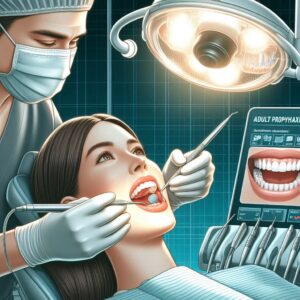
Dental Code for Prophylaxis Adult
That language is the Current Dental Terminology (CDT) code.
For millions of adults, the code that governs their dental visit is D1110. However, the conversation around this code has become surprisingly complex. Is a standard cleaning always covered? What if your gums are a little inflamed? What if you have a history of gum disease?
In this comprehensive guide, we will unpack everything you need to know about the dental code for prophylaxis adult. We will explore the difference between a simple cleaning and a therapeutic one, dissect insurance pitfalls, and give you the tools to advocate for your oral health without getting lost in administrative jargon.
Whether you are a patient trying to decipher an Explanation of Benefits (EOB) or a new dental professional looking to solidify your coding knowledge, this guide is designed to be your lasting reference.
Table of Contents
ToggleWhat is a Prophylaxis? Understanding the “Routine Cleaning”
Before we dive into the code itself, let’s define the procedure. The word “prophylaxis” originates from the Greek prophylaktikos, meaning “to guard beforehand.” In dentistry, a prophylaxis is a preventive procedure performed to prevent disease.
It is not just about making your teeth look shiny. A professional prophylaxis is a therapeutic service aimed at controlling local irritational factors (plaque and calculus) to maintain oral health.
The Clinical Reality of a Standard Cleaning
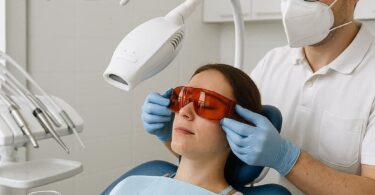
When a dentist or dental hygienist performs a prophylaxis on an adult, they are performing a specific set of tasks:
-
Supragingival Scaling: Removal of plaque and calculus (tartar) from the crown of the tooth—the part you can see above the gumline.
-
Subgingival Scaling (Limited): Gentle removal of deposits just slightly below the gumline, but only if there is no evidence of bone loss or periodontitis.
-
Polishing: Using a rubber cup and prophylactic paste to remove stains and smooth the tooth surfaces, making it harder for plaque to adhere.
-
Fluoride/Desensitizing (Optional): Application of fluoride varnish or desensitizing agents, often billed separately but frequently included in “preventive” visits.
It is crucial to understand that a prophylaxis is intended for a healthy mouth. If the patient has active periodontal disease (gum disease), a prophylaxis is no longer considered “preventive”; it is considered insufficient treatment.
The Code: D1110 – Prophylaxis – Adult
The American Dental Association (ADA) publishes the CDT code set annually. The code designated for a standard cleaning for an adult is D1110.
According to the ADA’s CDT definition, D1110 is defined as: “A procedure to remove plaque, calculus, and stains from the tooth structures in the permanent and transitional dentition. It is intended to control local irritational factors.”
Who Qualifies for D1110?
The “Adult” designation typically refers to patients with permanent dentition (adult teeth) who do not exhibit clinical signs of periodontal disease. However, the “adult” label is not strictly age-based. You can be 25 or 85. If your gums are healthy—no bleeding, no bone loss, no deep pockets—D1110 is the appropriate code.
D1110 vs. D1120: The Child Version
It is helpful to compare the adult code to its pediatric counterpart to understand the distinction. While D1110 is for adults, D1120 is for children (primary/transitional dentition). However, if a teenager has all their permanent teeth and healthy gums, many offices will still use D1110. The distinction is more about the dentition present than the patient’s age.
| Feature | D1110 (Adult Prophylaxis) | D1120 (Child Prophylaxis) |
|---|---|---|
| Target Dentition | Permanent teeth | Primary (baby) or mixed dentition |
| Complexity | Generally higher due to increased calculus buildup over time | Generally lower, focusing on habit counseling and prevention |
| Insurance Frequency | Typically 2 times per year (6 months) | Typically 2 times per year (6 months) |
| Typical Patient | Adults with healthy gums | Children and adolescents |
The Great Debate: D1110 vs. D4910 (Periodontal Maintenance)
If there is one area where confusion reigns supreme, it is the difference between D1110 and D4910.
If you have ever been told you need a “deep cleaning” (scaling and root planing) or if you have been diagnosed with periodontitis, you will likely never see D1110 on your billing statement again. Instead, you will see D4910: Periodontal Maintenance.
This is not a “heavy cleaning” or an “upgrade.” It is a distinctly different procedure with a different clinical purpose.
D4910 – Periodontal Maintenance
According to the ADA, D4910 is defined as: “A procedure for patients who have previously undergone periodontal treatment (e.g., scaling and root planing, periodontal surgery). It includes removal of bacterial plaque and calculus from supragingival and subgingival regions, site-specific scaling and root planing, and polishing.”
Why This Matters
When a patient has a history of gum disease, the “pockets” (the space between the gum and the tooth) are deeper than 3-4mm. A standard prophylaxis cleans above the gumline and slightly below. A periodontal maintenance procedure cleans both above and below the gumline thoroughly to manage the disease and prevent relapse.
The Insurance Trap
Here is where patients often get frustrated. You walk into the dentist for your “regular six-month cleaning,” but the bill comes back with a different code. You might think the office “upcoded” you to charge more. However, if your dental chart shows a history of periodontal disease, billing D1110 would actually be fraudulent.
Insurance companies view D1110 as “preventive” (usually covered at 100%).
Insurance companies view D4910 as “basic/restorative” (usually covered at 70-80%, leaving a patient copay).
If an office bills D1110 for a patient with active periodontitis or a history of it, and the insurance company audits that chart, the dentist is forced to pay back the money. Consequently, offices are strict about using the correct code.
Key Differences in a Snapshot
| Aspect | D1110 (Prophylaxis) | D4910 (Periodontal Maintenance) |
|---|---|---|
| Patient Status | Healthy gums; no bone loss | History of periodontitis; post-treatment |
| Clinical Focus | Preventive; supra/mild subgingival | Therapeutic; deep subgingival management |
| Frequency | Usually every 6 months | Often every 3-4 months |
| Insurance Coverage | Typically 100% (Preventive) | Typically 80% (Basic) |
| Goal | Prevent disease | Maintain stability after disease |
Beyond the Clean: Associated Codes and Procedures
A visit for a prophylaxis is rarely just the cleaning. To provide comprehensive care, dental offices often utilize additional codes alongside D1110. Understanding these can help you understand the total cost of your visit.
D1206 / D1208 – Topical Fluoride
Fluoride varnish is no longer just for kids. Many adults benefit from fluoride application, especially those with a history of cavities, dry mouth (xerostomia), or sensitivity.
-
D1206: Topical fluoride varnish; therapeutic application for moderate to high caries risk.
-
D1208: Topical application of fluoride (excluding varnish).
D0210 / D0270 / D0272 – X-Rays (Radiographs)
Preventive visits almost always involve x-rays. You cannot bill a cleaning without the necessary diagnostics to ensure the gums and bone are healthy.
-
D0210: Intraoral – complete series of radiographic images (Full mouth x-rays, usually taken every 3-5 years).
-
D0270: Bitewing – single image (often used for check-ups).
-
D0272: Bitewings – two images (common for recall visits).
-
D0274: Bitewings – four images (the most common recall x-ray set).
D0180 – Periodontal Evaluation
If a patient is a new patient or if there is suspicion of gum disease, the dentist may bill D0180 (comprehensive periodontal evaluation). This is a detailed assessment of pocket depths, bleeding, recession, and mobility. While sometimes included in a comprehensive exam (D0150), it is a distinct code when periodontal health is the focus.
Insurance Frequency Limitations: The “2 Per Year” Myth
One of the most common misunderstandings about dental insurance is the concept of frequency. Most PPO (Preferred Provider Organization) plans state they cover two cleanings per year. However, the wording matters.
Calendar Year vs. Benefit Period
-
Calendar Year: The benefit resets on January 1st. If you had a cleaning in December, you can have another in January.
-
Benefit Year (12 months): The benefit resets 12 months from the last date of service. If you had a cleaning on March 24, 2025, you cannot have another covered until March 24, 2026.
Frequency for D4910
For periodontal maintenance (D4910), insurance companies often recognize that patients need more frequent visits—typically every 3 to 4 months (3 to 4 times a year). However, they may still limit the number of covered visits. Some plans cover 4 per year; others only cover 2, requiring the patient to pay out-of-pocket for the “alternating” cleanings.
Navigating the “Downgrade” Scenario
There is a frustrating scenario that occurs frequently in dental offices. The dentist diagnoses the patient as needing D4910 (periodontal maintenance) due to history of gum disease. The patient agrees. The claim is sent to insurance.
The insurance company sends back a payment saying, “We have downgraded D4910 to D1110.”
What Does a Downgrade Mean?
This does not mean the insurance company is telling the dentist to do a different procedure. It means the insurance company is only willing to pay the allowance for the cheaper code (D1110), leaving the patient responsible for the difference between the D4910 fee and the D1110 allowance.
Example:
-
Office fee for D4910: $110
-
Insurance allowance for D1110: $80
-
Insurance pays 80% of $80 = $64
-
Patient responsibility: $110 – $64 = $46
The patient is left with a balance because the insurance plan does not recognize the medical necessity of D4910, despite the dentist’s diagnosis.
How to Handle This
If you receive a downgrade, you have the right to appeal. Ask your dentist’s billing coordinator to send a narrative to the insurance company, attaching periodontal charting (pocket depths) and x-rays to prove that the patient has a history of periodontitis, making D4910 the only clinically appropriate code.
The Cost of D1110 Without Insurance
For those without dental insurance, or for those who have maxed out their annual maximum, understanding the cash price for a prophylaxis is essential.
The cost of D1110 varies dramatically based on geographic location (urban vs. rural), the type of practice (corporate vs. private boutique), and whether x-rays and an exam are included.
Average Fee Ranges (As of 2026)
-
D1110 (Prophylaxis – Adult): $75 – $150
-
D0150 (Comprehensive Oral Evaluation): $60 – $120
-
D0210 (Full Mouth X-rays): $100 – $200
-
D0274 (Bitewings – 4 images): $50 – $90
Membership Plans
In response to the limitations of traditional insurance, many dental offices now offer in-house membership plans. For a flat annual fee (often $300–$400), patients receive:
-
Two D1110 cleanings
-
Two exams
-
Two sets of x-rays
-
A discount (usually 10-20%) on other procedures
These plans are often a better value than traditional insurance for healthy adults who do not require major restorative work.
Common Coding Errors and How to Spot Them
Even experienced offices can make mistakes. As a patient, reviewing your Explanation of Benefits (EOB) is a good habit. Here are common red flags:
1. D1110 Billed for a Child
If a 7-year-old receives a cleaning and the office bills D1110 instead of D1120, insurance will likely deny it. While this is usually a simple clerical error, it can delay payment.
2. D1110 and D4910 on the Same Day
You cannot bill a prophylaxis and a periodontal maintenance procedure on the same day for the same patient. These are mutually exclusive. If a patient has active disease, they get D4910. If they are healthy, they get D1110. Doing both in one visit is clinically redundant and a surefire way to get a claim rejected.
3. Missing X-rays
Most insurance plans require current x-rays (usually within 6-12 months) to pay for a prophylaxis. If the office submits a claim for D1110 without the corresponding x-ray code (D0274, etc.), the claim may be pended or denied.
The Role of Medical Coding: When Dentistry Meets Medicine
A growing trend in dentistry is the integration of medical billing. Many patients do not realize that dental cleanings are sometimes covered by medical insurance, particularly for patients with specific systemic conditions.
Gingivitis and Periodontitis as Medical Diagnoses
While D1110 is a dental code, the underlying condition (gingivitis) is actually a medical diagnosis (ICD-10 code K05.10). For patients with conditions like:
-
Diabetes (E11.9)
-
Pregnancy (O99.01)
-
Heart disease (I25.10)
-
Head and neck cancer radiation history (Z90.01)
…the prophylaxis or periodontal maintenance may be considered medically necessary to manage the systemic condition. Some dental offices are now equipped to bill medical insurance for D1110 or D4910 to supplement or replace dental benefits.
Future of Coding: Teledentistry and Remote Monitoring
As technology evolves, so do the codes. While D1110 remains a staple, new codes are emerging that change how preventive care is delivered.
D9995 – Teledentistry – Synchronous
This code is used for live, real-time consultation via video. While you cannot get a physical prophylaxis via teledentistry, this code allows for “virtual” exams that determine the necessity of a D1110 visit. It helps triage patients and is particularly useful for rural areas or homebound adults.
D9996 – Teledentistry – Asynchronous
This involves “store and forward” technology, where a patient sends photos or data to the dentist for review.
D4346 – Scaling in Presence of Gingival Inflammation
This is a newer code (added in recent years) that fills the gap between D1110 and D4910. It is used for patients who have severe gingivitis (inflammation and bleeding) but no bone loss (periodontitis). It allows the office to bill for a more intensive cleaning than a routine prophylaxis without requiring the diagnosis of periodontitis. This code is often a middle ground that insurance companies are still learning to process consistently.
How to Prepare for Your Prophylaxis Appointment
To ensure your visit goes smoothly and your billing is accurate, a little preparation goes a long way.
1. Know Your Insurance Benefits
Before you go, call your insurance or check your portal.
-
How many cleanings per year are allowed?
-
Is D1110 covered at 100%?
-
Are x-rays covered separately?
-
Is there a waiting period? (Some plans require you to be enrolled for 6-12 months before covering major work, though preventive is usually immediate.)
2. Bring a List of Medications
Dry mouth (xerostomia) caused by medications (like antihistamines, antidepressants, or blood pressure meds) increases the risk of decay. Your hygienist needs to know this to tailor the prophylaxis and recommend fluoride.
3. Be Honest About Your History
If you switched dentists, tell the new office if you have had “deep cleanings” or gum surgery in the past. If you hide this history, the hygienist might mistakenly bill D1110, risking an audit and a future bill for the difference when the insurance denies it.
List: 5 Questions to Ask Your Dentist’s Front Desk
To avoid surprises, consider asking these questions when scheduling your appointment:
-
1. “Will my cleaning be coded as D1110 or D4910 based on my last perio charting?”
-
2. “Are my x-rays current, or will I need to pay for a new set today?”
-
3. “Does my insurance plan have a ‘downgrade’ policy for periodontal maintenance?”
-
4. “If I need fluoride, is that included in the cleaning code, or is it separate?”
-
5. “What is the out-of-pocket cost if I haven’t met my deductible?”
The Importance of Periodontal Charting
You cannot discuss D1110 without discussing the diagnostic tool that justifies it: the periodontal chart.
Every 12 to 24 months (or more frequently for patients with disease), a hygienist uses a probe to measure the space between your gum and tooth. They record six measurements per tooth.
What the Numbers Mean
-
1-3mm: Healthy. No bleeding. Suitable for D1110.
-
4mm: Watch area. May indicate gingivitis. If no bone loss, may still be suitable for D1110, but the dentist might recommend a higher frequency.
-
5mm+ with bleeding: Active disease. The patient requires scaling and root planing (D4341/D4342) followed by D4910 (periodontal maintenance) for life.
If you receive a bill for D4910 and you believe your gums are healthy, ask to see your charting. If the chart shows all 2s and 3s with no bleeding and no bone loss, the code may be incorrect. If the chart shows 5s and 6s, D4910 is correct.
Geographic Variations in Coding
While the CDT codes are standardized across the United States, the application of these codes can vary slightly based on state dental boards and regional insurance norms.
California and New York
In states with high costs of living, it is common to see “site-specific” add-ons. While not standard, some offices in metropolitan areas may add a code for D1999 (unspecified preventive procedure) to cover the cost of advanced hygiene products or extended appointment times, though this is less common.
The South and Midwest
In regions with lower overhead, D1110 is often bundled with the exam and x-rays as a “new patient special” or “recall visit” package. Patients in these areas frequently pay less out-of-pocket for the same D1110 procedure.
A Note on Dental Therapists and Hygienists
Who performs your D1110 procedure matters for billing, though typically not for the patient’s cost. In most states, a Registered Dental Hygienist (RDH) is the primary provider for prophylaxis.
However, in some states (like Minnesota and Maine), Advanced Dental Therapists or Dental Therapists can perform D1110 in public health settings or community clinics under collaborative agreements with dentists. This is crucial for increasing access to preventive care in underserved communities. If you visit a community health center, the provider performing your D1110 might be a dental therapist, but the code remains the same.
The Rise of “Minimally Invasive” Hygiene
Modern dentistry is shifting away from the old model of “drill and fill” toward prevention. This affects how D1110 is performed.
Air Polishing vs. Traditional Scaling
Traditionally, D1110 involved hand scalers and ultrasonic instruments. Today, many offices use air polishing (a jet of compressed air, water, and fine powder) to remove stains and biofilm. While this is often included in the D1110 fee, some offices may charge an additional fee (or use a separate code) if they use specialized technology like Guided Biofilm Therapy (GBT) . GBT is a protocol that uses a specific air polishing system (like EMS) to remove biofilm before traditional scaling, resulting in less discomfort and better results. If your office uses GBT, they may have a slightly higher fee for D1110 to account for the advanced technology and time.
International Perspectives: How Does the US Compare?
If you are reading this from outside the US, you might wonder how the D1110 system stacks up globally.
-
Canada: Uses similar codes (11111 for prophylaxis). However, Canadian provincial health plans rarely cover dental; coverage is usually through employer benefits.
-
United Kingdom: The NHS (National Health Service) uses a banding system. A routine cleaning (scale and polish) is typically included in Band 1 (£25.80), which includes the exam and x-rays. There is no complex coding for the patient to navigate.
-
Australia: Uses item numbers. “Removal of calculus” (011) and “removal of plaque” (012) are separate billable items.
The US system is unique in its complexity due to the private insurance model and the detailed coding structure required for reimbursement.
List: Top 3 Myths About D1110
Let’s debunk some persistent myths that circulate among patients.
Myth 1: “My insurance pays for two cleanings a year, so I can get them whenever.”
Reality: Insurance pays for two within the frequency limitation. If your plan is based on a calendar year and you had cleanings in November and December of last year, you may have to wait until January of the next year to use your new benefits. Always check your “last date of service.”
Myth 2: “If I have gum disease, I can just get a regular cleaning instead of a deep cleaning to save money.”
Reality: A D1110 on a patient with active periodontitis is clinically inappropriate. It cleans the crown but leaves the bacteria in the deep pockets. Over time, this leads to worsening bone loss, loose teeth, and eventual tooth loss. It is a short-term “savings” that results in long-term catastrophe.
Myth 3: “The dentist makes more money if they code D4910 instead of D1110.”
Reality: While D4910 generally has a higher fee than D1110, insurance often pays a lower percentage for D4910 (80% vs. 100%). Furthermore, treating periodontal disease takes more time, specialized instruments, and often involves higher overhead for the office. The profit margin is often similar; the difference is in the level of care required.
Managing Your Oral Health Budget
Understanding D1110 is about more than just knowing a code; it’s about financial planning for your health.
If You Have Insurance
-
Maximize Preventive Benefits: Since D1110 is often covered at 100%, use it. Do not skip cleanings because you are “busy.” You are leaving free money (and health) on the table.
-
Understand the UCR (Usual, Customary, and Reasonable): Insurance companies set a maximum fee they will pay for D1110 in your area. If your dentist charges $150 and the insurance UCR is $100, you are responsible for the $50 difference unless your dentist is in-network (contracted).
If You Don’t Have Insurance
-
Dental Schools: If you live near a dental school, you can receive D1110 for a fraction of the cost (often $30–$50). The appointment takes longer (2-3 hours), but it is supervised by licensed faculty and is exceptionally thorough.
-
Community Health Centers: Federally Qualified Health Centers (FQHCs) offer sliding scale fees based on income. You can receive a prophylaxis and exam for as little as $20–$40 depending on your income level.
-
Membership Plans: As mentioned earlier, these offer predictability. If you are a healthy adult, paying $400/year for unlimited cleanings (usually 2) and x-rays is often cheaper than paying retail.
The Future of Preventive Codes
The ADA Code Maintenance Committee meets regularly to update the CDT. As we look toward the future of D1110 and related codes, several trends are emerging:
-
Integration of Systemic Health: There is increasing pressure to link D1110 with medical ICD-10 codes to allow for medical billing. In the future, we may see a “hybrid” code that allows for easy cross-billing between dental and medical insurance for patients with diabetes or cardiovascular disease.
-
Value-Based Care: Instead of paying per procedure (fee-for-service), insurance companies are experimenting with “value-based” models where dentists are paid a lump sum to keep a panel of patients healthy. In these models, the distinction between D1110 and D4910 may blur, focusing instead on outcomes (stable gum health) rather than the specific code used.
-
Artificial Intelligence (AI) in Coding: AI software is now being used to audit dental charts. Soon, AI may automatically suggest the correct code (D1110 vs. D4910) based on radiographic bone levels and probing depths, reducing human error.
Quotation: The Philosophy of Prevention
*“The best way to predict your dental future is to create it through consistent, appropriate preventive care. A prophylaxis—whether D1110 or D4910—is not an expense. It is the most cost-effective investment you can make in your long-term health, preventing the need for crowns, implants, and dentures down the road.”*
— Dr. Sarah Jenkins, DDS, Clinical Educator
Conclusion: Empowering Your Dental Journey
Navigating the world of dental codes can feel overwhelming, but understanding the distinction between D1110 (prophylaxis – adult) and its counterparts like D4910 is one of the most valuable skills a patient can have.
Remember: D1110 is a code designed for a healthy mouth. It is your standard, six-month cleaning intended to prevent disease. If you have healthy gums and no history of bone loss, this is the code you should expect to see on your bill, typically covered fully by insurance.
However, if you have a history of gum disease, your treatment shifts to D4910 (periodontal maintenance) . This is not a penalty; it is a necessary therapeutic intervention to manage a chronic condition. While it may come with a higher out-of-pocket cost, it is the standard of care required to keep your teeth for a lifetime.
By asking questions, reviewing your periodontal charting, and understanding your insurance benefits, you can avoid billing surprises and ensure you receive the precise level of care your oral health requires. The dental code is not just a bureaucratic hurdle; it is a roadmap to a healthier smile.
Frequently Asked Questions (FAQ)
1. Is D1110 the same as a “routine cleaning”?
Yes. D1110 is the official CDT code for a routine cleaning, technically called a “prophylaxis,” for an adult with permanent teeth and healthy gums.
2. Why did my dentist bill D4910 instead of D1110?
If you have a history of periodontal disease (gum disease with bone loss), a standard prophylaxis (D1110) is not sufficient to manage your condition. D4910 (periodontal maintenance) is the appropriate code to maintain gum health after treatment for periodontitis.
3. Will my insurance pay for D1110 if I have gum disease?
Usually, yes, but if the dentist bills D1110 for a patient with documented periodontitis, it is considered coding fraud. The correct code for patients with a history of gum disease is D4910, even if the patient feels their gums are “fine.”
4. How often can I get D1110?
Most insurance plans cover D1110 twice per calendar year (every 6 months). Some plans limit it to once every 12 months. Always check your specific plan’s frequency limitations.
5. What is the difference between D1110 and D4346?
D1110 is for a healthy mouth (no inflammation, no bone loss). D4346 (scaling in the presence of generalized gingival inflammation) is for patients who have severe gingivitis (swollen, bleeding gums) but have not yet lost bone support. It is a step between a regular cleaning and periodontal maintenance.
6. Does Medicare cover D1110?
Original Medicare (Parts A and B) does not cover routine dental cleanings (D1110). However, some Medicare Advantage (Part C) plans offer dental benefits that include coverage for D1110, often with a copay. You must check your specific plan.
7. Can I refuse D4910 and ask for D1110?
You can, but dentists are ethically bound to provide the standard of care. If a dentist diagnoses you with periodontitis, providing a D1110 would be considered negligent. You have the right to seek a second opinion, but you cannot demand an inappropriate code.
8. Why does my D1110 claim show “not covered” when I have insurance?
Common reasons include: (1) You have reached your annual maximum for the year. (2) You have a waiting period for new coverage. (3) You have had the cleaning more frequently than the plan allows. (4) You did not have current x-rays on file.
Additional Resource
For the most up-to-date information on dental codes, insurance regulations, and to verify your specific plan’s coverage, we recommend the following authoritative resource:
-
American Dental Association (ADA) – CDT Code Information
Link: https://www.ada.org/en/publications/cdt
Why it’s useful: This is the official source for the Current Dental Terminology (CDT) codes. Here you can find the official definitions, coding guidelines, and updates for D1110, D4910, and all other dental procedure codes. It is the definitive resource for understanding the clinical intent behind each code.
Disclaimer: This article is for informational purposes only and does not constitute medical, dental, or legal advice. Dental coding can vary by insurance provider, state regulations, and individual practice protocols. Always consult your dentist or insurance carrier to confirm coverage for your specific treatment.
Author: Dental Resource Team
Date: March 24, 2026