If you have ever left a dental appointment with a sore jaw, a new crown that feels “too high,” or a set of clear aligners that just changed your bite, you might have heard the term “occlusal adjustment.” It sounds clinical. It sounds precise. But when you get the bill, you might find yourself staring at a string of letters and numbers that looks like a secret code.
That code is usually D9951.
Navigating dental insurance codes can feel like learning a new language. You are not alone if you have looked at a treatment plan and wondered what an “occlusal adjustment” actually entails, why it costs what it does, or why your insurance didn’t cover it the way you expected.
In this guide, we are going to unpack everything you need to know about the dental code for occlusal adjustment. We will look at what the procedure involves, when it is necessary, how it fits into the broader world of dental billing, and—most importantly—how to understand the costs associated with it.
Whether you are a patient trying to decipher an explanation of benefits or a dental professional looking for clarity on documentation requirements, this article is designed to be your reliable resource.
Let’s start with the basics.
Dental Code for Occlusal Adjustment
What Exactly is an Occlusal Adjustment?
Before we dive into the code itself, it helps to understand what an occlusal adjustment really is. In the simplest terms, your “occlusion” is how your teeth come together when you close your mouth. Ideally, all your teeth should meet evenly, allowing your jaw muscles to relax and your temporomandibular joint (TMJ) to function smoothly.
When that harmony is off, even by a fraction of a millimeter, it can cause problems.
An occlusal adjustment is the process of selectively reshaping the biting surfaces of your teeth to create a more balanced bite. It is sometimes referred to as “equilibration.” The goal is to remove interferences—those little spots where your teeth hit too early or too hard—so that when you bite down, the force is distributed evenly across all your teeth.
Think of it like tuning a musical instrument. If one string is too tight, the whole chord sounds wrong. Your bite works the same way. If one tooth is hitting too hard, it can lead to pain, cracked teeth, or excessive wear over time.
This procedure is typically performed using very fine burs (drills) or hand instruments. It is subtle. Often, the changes are so minor that you cannot see them with the naked eye, but you can certainly feel the difference.
Introducing the Code: D9951
In the Current Dental Terminology (CDT) code set, which is maintained by the American Dental Association (ADA), the specific code for this procedure is D9951.
The official descriptor for D9951 is: Occlusal adjustment – limited.
There is also a related code, D9952, which stands for Occlusal adjustment – complete. While this article focuses primarily on D9951, it is important to understand the distinction between the two because it affects both the scope of the treatment and how it is billed.
D9951 vs. D9952: What’s the Difference?
The difference between these two codes comes down to the extent of the treatment. Insurance companies and dental providers look at these as two distinct services.
| Code | Descriptor | Typical Scenario |
|---|---|---|
| D9951 | Occlusal adjustment – limited | Addressing a specific tooth or a small area. Often done after a crown, filling, or implant placement to refine the bite. |
| D9952 | Occlusal adjustment – complete | A comprehensive reshaping of multiple teeth (usually all or most of the dentition) to address widespread bite issues, TMJ disorders, or generalized wear patterns. |
For most patients, D9951 is the code you will see on your statement. It is the “touch-up” or the “fine-tuning” appointment. It is the visit where you sit in the chair, the dentist places that blue or red marking paper on your teeth, asks you to bite down, and then polishes off the high spots.
D9952 is a much more involved procedure. It might require multiple visits, models of your teeth (diagnostic casts), and a detailed treatment plan. It is not something that happens spontaneously during a routine check-up.
When is D9951 Used?
The dental code for occlusal adjustment (D9951) is one of the most commonly used “mop-up” codes in dentistry. It rarely stands alone as the primary reason for a visit, but it frequently accompanies other procedures.
Here are the most common scenarios where you will see D9951 applied.
Post-Restorative Adjustment
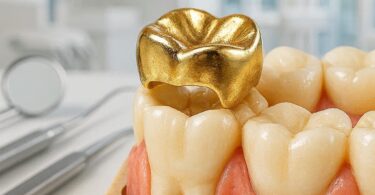
This is the most frequent use case. When a dentist places a new crown, a filling, a bridge, or an onlay, the goal is to replicate the original anatomy of the tooth. However, because anesthesia is often used during these procedures, it is difficult for the patient to give accurate feedback on how the bite feels.
Once the anesthetic wears off, the patient may feel that the new restoration is “too high.” It might feel like the only tooth touching when they bite down. This is a common occurrence, and it is not a sign of poor dentistry; it is simply a matter of final refinement.
When the patient returns—or even stays in the chair after the numbness subsides—the dentist will perform a limited occlusal adjustment to remove those high spots. That service is billed using D9951.
Treatment for TMJ Pain or Muscle Spasms
Sometimes, a patient presents with headaches, jaw pain, or muscle soreness. Upon examination, the dentist may find that the bite is unstable. There might be a “balancing side interference”—a spot where the back teeth hit prematurely when the patient moves their jaw sideways.
In these cases, a limited occlusal adjustment can relieve the pressure on the joint and allow the muscles to relax. While full equilibration (D9952) is often the long-term solution for TMJ disorders, a limited adjustment (D9951) can be used to address an acute problem or a specific area of concern.
Orthodontic Finishing
After braces or clear aligner therapy, the teeth are in their new positions. However, sometimes the bite does not settle perfectly. The teeth might not mesh together as seamlessly as they should.
An orthodontist or general dentist may perform an occlusal adjustment to “fine-tune” the bite after the active phase of orthodontic treatment is complete. This ensures that the teeth are not only straight but also functional.
Prevention of Tooth Fracture
If a patient has a history of cracking teeth or shows signs of “fracture lines” (craze lines) on certain teeth, it may be because those teeth are taking the brunt of the biting force. A dentist may perform a limited occlusal adjustment to reduce the load on a vulnerable tooth, distributing the force to other, stronger teeth.
What the Procedure Actually Looks Like
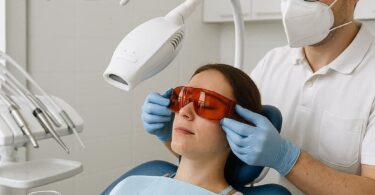
If you have never had an occlusal adjustment before, the process is surprisingly low-tech, yet it requires a great deal of skill. There is no loud drilling, no needles, and usually no anesthetic.
Here is a step-by-step look at what happens during a D9951 procedure.
1. Identification of High Spots
The dentist places a thin, articulating paper—usually red or blue—between your teeth. You are asked to bite down firmly. The paper transfers ink to the points of contact. High spots appear as dark, concentrated marks, while normal contacts appear as even, lighter marks.
2. Selective Grinding
Using a fine-grit diamond bur or a specialized polishing stone, the dentist gently reduces the identified high spot. This is done in very small increments. The goal is to remove the interference without removing healthy tooth structure.
3. Verification
After a slight reduction, the dentist cleans the area and places the articulating paper again. You bite down once more. The goal is to achieve an even distribution of contact points.
4. Patient Feedback
Even though the procedure is usually painless, the dentist will often ask you to bite down and let them know if it feels “even” or if you still feel one tooth hitting first. Your subjective feeling is crucial to the success of the adjustment.
5. Polishing
Once the bite feels comfortable and the marks show a balanced pattern, the adjusted areas are polished to a smooth finish. This prevents rough spots that could irritate your tongue or accumulate plaque.
Insurance Coverage for D9951: The Tricky Part
If you are reading this article, chances are you are trying to figure out why your insurance did not pay for your occlusal adjustment. This is one of the most misunderstood areas of dental billing.
The honest truth is that most dental insurance plans do not cover occlusal adjustments, or they cover them under very specific circumstances.
Why is it often denied?
There are a few reasons why D9951 frequently ends up as a patient responsibility.
1. Bundled Services
Many insurance carriers consider occlusal adjustment to be part of the “global period” of a restorative procedure. When you pay for a crown (D2740 or D2750), the insurance company assumes that the fee for the crown includes the final adjustment. If the dentist bills D9951 separately on the same day as a crown delivery, it is often denied as “bundled” or “inclusive.”
2. Medical vs. Dental Necessity
For occlusal adjustments related to TMJ pain or headaches, some medical insurance plans may cover the service. However, standard dental insurance plans frequently have exclusions for “occlusal equilibration” or “bite adjustment.” They view it as a maintenance procedure rather than a “medically necessary” dental treatment.
3. Frequency Limitations
If a plan does cover occlusal adjustment, they often have strict frequency limitations. You might be allowed one unit of D9951 every 12 months or every 24 months. If you need adjustments more frequently, they will be denied.
4. Documentation Issues
For D9951 to be considered for coverage, the dentist’s notes must clearly explain why the adjustment was necessary. Vague notes like “patient complains of high bite” are often insufficient. Insurance adjusters look for specifics: which teeth were adjusted, the clinical findings (e.g., “premature contact noted on tooth #30”), and how the adjustment resolved the issue.
When Does Insurance Cover It?
There are specific scenarios where coverage is more likely.
-
Post-Orthodontic Treatment: Some plans include a benefit for occlusal adjustment as part of the orthodontic finishing phase.
-
Medical Necessity for TMJ: If the adjustment is part of a documented treatment plan for temporomandibular joint dysfunction (TMD), and if the patient has medical insurance that includes TMJ benefits, D9951 may be covered under the medical plan. This requires coordination of benefits and often a pre-authorization.
-
Trauma: If a tooth was fractured due to an accident and an occlusal adjustment is needed to stabilize the opposing dentition, some plans will cover it as part of the trauma treatment.
Cost Considerations
Since insurance coverage is spotty, it is helpful to understand the out-of-pocket cost for D9951.
The fee for an occlusal adjustment varies widely based on geographic location, the type of dental practice, and whether the adjustment is performed by a general dentist or a specialist (like a prosthodontist).
On average, you can expect to pay:
-
In-network insurance rate: If covered, the negotiated fee might range from $50 to $150.
-
Out-of-pocket (non-insurance): In private practices, the fee for D9951 typically ranges from $75 to $250.
-
Specialist (Prosthodontist/TMJ Specialist): For complex adjustments or if D9951 is part of a comprehensive TMD evaluation, fees can range from $150 to $400.
It is important to note that if D9951 is performed on the same day as another major procedure (like a crown seating), many dentists will waive the adjustment fee as a courtesy, recognizing that it is a refinement of the previous work. However, this is a matter of practice policy, not a rule.
Documentation and Coding Best Practices (For Dental Professionals)
For dentists and office managers, accurate documentation is the key to getting D9951 paid—or at least clearly justifying the fee to the patient. If you are coding for this service, there are several best practices to follow to avoid audits and denials.
1. Use the Correct Code
Do not substitute D9951 for a different code just to get paid. Some offices have historically used “D9110” (palliative treatment) to cover bite adjustments, but this is inappropriate and constitutes coding fraud. D9110 is for the relief of pain without a formal procedure. If you are grinding teeth, it is D9951.
2. Document the “Why”
Your narrative should answer three questions:
-
Why is this necessary? (e.g., “Patient reports sensitivity on tooth #19 after crown cementation. Articulating paper reveals heavy premature contact.”)
-
What did you do? (e.g., “Selective reduction of distobuccal cusp of tooth #19 using fine diamond bur.”)
-
What was the result? (e.g., “Contacts equalized. Patient reports bite feels comfortable.”)
3. Understand the Global Period
If you are delivering a crown on the same day as the adjustment, do not be surprised if the insurance bundles the payment. You can avoid patient frustration by explaining this upfront. Let the patient know that while you are happy to refine the bite, the insurance company likely considers this part of the crown fee.
4. Pre-Authorization for D9952
If you are planning a complete occlusal equilibration (D9952), always send a pre-authorization to the insurance company. This procedure requires significant chair time. Without pre-approval, you risk the insurance denying the entire claim or only paying a fraction of the fee.
Common Questions Patients Ask
It is normal to have questions when you see a code like D9951 on a bill. Here are some of the most frequent questions patients ask, along with straightforward answers.
Q: I just had a filling. Why am I being charged extra for the bite adjustment?
A: This is a common point of confusion. While most dentists strive to get the bite perfect while you are numb, it is sometimes impossible to know how the filling feels until the anesthesia wears off. The adjustment visit requires the dentist’s time, instruments, and expertise. However, many practices include a short grace period (like one week) where adjustments are complimentary. It is worth asking your office about their policy.
Q: My insurance denied D9951. Do I still have to pay?
A: Yes, generally. Unless the dentist has a specific policy that they will not charge for denied services (which is rare), the responsibility for payment falls to the patient. However, it is wise to ask the office if they verified coverage beforehand. If they told you it was covered and it wasn’t, you have grounds to discuss the bill with the office manager.
Q: How long does an occlusal adjustment take?
A: A limited adjustment (D9951) usually takes between 10 and 20 minutes. A complete equilibration (D9952) can take several hours spread over multiple appointments.
Q: Does it hurt?
A: The procedure itself does not hurt because the dentist is only removing very thin layers of enamel, which has no nerve endings. However, if the adjustment is being done to relieve pain from a cracked tooth or TMJ disorder, the area may be sore for a day or two afterward as the muscles and ligaments adjust to the new bite.
Q: Can too much occlusal adjustment be a bad thing?
A: Absolutely. Enamel is the hardest substance in the human body, but it does not grow back. A skilled dentist removes the absolute minimum amount of tooth structure necessary to achieve a balanced bite. Removing too much enamel can lead to sensitivity and weaken the tooth. This is why it is essential to have this procedure performed by a professional with experience in occlusion.
How to Read Your Explanation of Benefits (EOB)
If you have recently had D9951 performed, you may have received an Explanation of Benefits (EOB) from your insurance company. These documents can be confusing. Here is how to decode the common messages you might see next to D9951.
| EOB Code/Message | What It Means |
|---|---|
| Not Covered / Excluded Service | The insurance plan specifically excludes occlusal adjustment from the benefits. You are responsible for the full fee. |
| Bundled / Inclusive | The insurance paid for the primary procedure (e.g., crown) and considers the adjustment part of that fee. They will not pay extra. |
| Frequency Limitation Exceeded | You have already had this service performed within the allowed time frame (e.g., once per 12 months). |
| No Benefit for This Category | Your plan may not have TMJ or occlusion benefits. |
| Payable with Documentation | This is a request for the dentist to send notes. If the notes justify medical/dental necessity, they may pay it. |
If you see “Payable with Documentation,” contact your dentist’s office to ensure they submitted the necessary chart notes. If they did not, you might be able to ask them to resubmit with the notes attached.
Alternative and Related Codes
While D9951 is the star of this show, it is helpful to know about other codes that are sometimes confused with it or used in conjunction with it.
-
D9952: Occlusal adjustment – complete. As mentioned, this is the full-mouth equilibration.
-
D9110: Palliative (emergency) treatment of dental pain. This is a “holding” code used for emergency visits. It is not a substitute for D9951.
-
D9430: Office visit for observation (during regularly scheduled hours). Sometimes used if a patient comes in for a quick check without treatment.
-
D9995/D9996: Teledentistry codes. Occasionally used for remote consultations regarding bite discomfort.
-
D7880: Occlusal orthotic device (night guard) adjustment. If you have a night guard and need it adjusted, this is the code, not D9951.
Protecting Your Bite: Prevention and Maintenance
While occlusal adjustments are effective, it is better to avoid needing frequent adjustments in the first place. Here are a few ways to protect your bite and reduce the need for repeated D9951 claims.
The Role of Night Guards (Occlusal Orthotics)
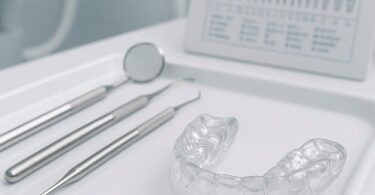
If you grind your teeth at night (bruxism), you are constantly wearing down your enamel and subjecting your jaw muscles to excessive force. A custom-fitted night guard (D7880 or D7899) absorbs the force of grinding and protects your natural bite. Without a night guard, you may find yourself needing occlusal adjustments every few years to smooth out the wear patterns.
Regular Dental Check-Ups
Minor bite issues often do not cause pain until they become major problems. During a routine exam, a dentist can detect premature wear patterns or small fractures early. Addressing a high spot when it first appears (often with a minor adjustment) is easier and less expensive than waiting until a tooth cracks.
Communication with Your Dentist
When you receive a new filling or crown, do not be shy about the bite. If it feels “off” after the anesthetic wears off, call the office. The sooner you address a high bite, the less likely it is to cause secondary issues like tooth pain, muscle soreness, or damage to the opposing tooth.
The Importance of Specialist Referrals
In some cases, a general dentist may recommend that an occlusal adjustment be performed by a specialist. If your bite is severely compromised, or if you have a complex history of TMJ surgery, it is wise to seek out a prosthodontist or a dentist who has advanced training in occlusion and temporomandibular disorders.
A prosthodontist is a specialist who focuses on the restoration and replacement of teeth. They have three additional years of training beyond dental school, much of which focuses on the science of occlusion (how teeth come together). If your dentist mentions D9952 (complete equilibration), they may refer you to a prosthodontist to ensure the complex mapping of your bite is done correctly.
Understanding the Risks and Limitations
While D9951 is a low-risk procedure, it is not without its limitations. Being informed helps you set realistic expectations.
Sensitivity: In rare cases, removing enamel can cause temporary sensitivity to cold or pressure. This usually subsides within a few weeks as the tooth adjusts. If the sensitivity persists, it may indicate that too much enamel was removed, or that the tooth had an underlying issue (like a crack) that was exacerbated.
Relapse: Teeth are not static. They shift over time. An occlusal adjustment performed today may need to be revisited in a few years due to natural tooth movement, new restorations, or changes in the jaw joint.
Non-Resolution of Pain: It is important to understand that D9951 is a mechanical solution. If a patient has chronic myofascial pain (muscle pain) that is not primarily caused by a bite interference, an occlusal adjustment may provide little to no relief. In these cases, a multidisciplinary approach involving physical therapy, trigger point injections, or stress management is often required.
Patient Rights and Informed Consent
Before you agree to an occlusal adjustment, you have the right to understand what the procedure entails and what the financial responsibility will be.
-
Ask for a Treatment Plan: If the adjustment is planned in advance (as opposed to being done during an emergency visit), request a written treatment plan that includes the code D9951 and the estimated fee.
-
Verify Insurance: Ask the front desk if they have verified your insurance coverage for this specific code. Do not assume that because the dentist recommended it, insurance will pay for it.
-
Discuss Alternatives: Ask if there are alternatives to occlusal adjustment. For example, if a tooth is hitting too hard, could a night guard be used to protect it instead of grinding the tooth down?
Informed consent is not just a signature on a form. It is a conversation. A good dental office will take the time to explain why they are recommending D9951 and what your financial responsibility will be.
How to Handle a Billing Dispute
Occasionally, a patient and a dental office may disagree about the billing for D9951. If you find yourself in this situation, here is a calm, methodical way to handle it.
-
Review the EOB: Look at your insurance explanation of benefits. Determine if the denial came from the insurance company or if the office never submitted the claim.
-
Request the Chart Notes: Ask the office for a copy of the clinical notes for the date of service. See if the notes clearly document the need for the adjustment. If the notes are lacking, the office may be willing to write off the balance due to insufficient documentation.
-
Communicate in Writing: If a phone call does not resolve the issue, send a polite, concise email or letter outlining your concern. State that you were not informed of the cost, or that you were told the service would be covered.
-
Consult Your State Dental Board: If you believe the office engaged in fraudulent billing (e.g., billing for a service not performed), you can file a complaint with your state dental board. This is a last resort and usually reserved for egregious violations.
The Future of Occlusal Coding
The world of dental coding is dynamic. The ADA updates the CDT codes every year, though major changes typically occur every two years.
As of 2026, D9951 remains the standard code for limited occlusal adjustment. However, there is ongoing discussion in the dental community about the valuation of this code. Many dentists argue that the current relative value units (RVUs) assigned to D9951 do not adequately reflect the time, skill, and technology (such as digital occlusion analysis) involved in modern equilibration.
There is also a growing trend toward digital occlusion. Devices like the T-Scan (a digital bite analysis sensor) allow dentists to visualize occlusal forces in real-time on a computer screen. While this technology improves the accuracy of adjustments, it is currently included under the D9951 code. There is no separate code for “digital occlusal analysis,” though this may change in future code revisions.
For now, if your dentist uses advanced technology to perform your occlusal adjustment, the billing code remains D9951.
Conclusion
Navigating dental procedures and their corresponding codes does not have to be a mystery. The dental code for occlusal adjustment, D9951, serves a vital role in ensuring your bite functions smoothly, whether it is after a new crown, during orthodontic finishing, or as part of managing jaw discomfort. While the procedure is minimally invasive and often provides significant relief, the billing side of things can be complex.
Insurance coverage is inconsistent, documentation is key, and understanding the difference between a limited adjustment (D9951) and a complete equilibration (D9952) is essential for both patients and providers. By staying informed, asking the right questions, and maintaining open communication with your dental team, you can ensure that your occlusal adjustment is both clinically effective and financially transparent.
Frequently Asked Questions (FAQ)
1. Is D9951 the same as “bite adjustment”?
Yes. “Bite adjustment” is the common term for the procedure coded as D9951. It refers to the selective grinding of teeth to improve how they come together.
2. How often can I have an occlusal adjustment?
If your insurance covers it, frequency limits vary by plan—commonly once every 12 to 24 months. However, if you need it more frequently due to ongoing dental work, your dentist may perform it regardless of insurance limitations, though you will likely pay out of pocket.
3. Will my medical insurance cover D9951?
Sometimes. If the occlusal adjustment is performed to treat temporomandibular joint disorder (TMD) or chronic orofacial pain, it may be billable to medical insurance. You will need to check your medical plan’s specific TMJ benefits.
4. Does D9951 include the use of a T-Scan?
Yes. Whether the dentist uses traditional articulating paper or a digital scanner like the T-Scan, the service is still reported using D9951 (or D9952 for a complete evaluation).
5. Is it normal to be sore after an occlusal adjustment?
Mild soreness is normal for a day or two. Your muscles and joints are adjusting to a new bite. However, if you experience sharp pain or if the bite feels “hollow” (like no teeth are touching), contact your dentist immediately.
6. Can a hygienist perform an occlusal adjustment?
In most jurisdictions, occlusal adjustment is considered a irreversible procedure that alters tooth structure. It must be performed by a dentist. A hygienist may polish the area after the dentist has completed the adjustment.
Additional Resources
For further reading and to verify the latest coding standards, you can refer to the following trusted resources:
-
American Dental Association (ADA) CDT Code Book: The official source for dental coding. You can purchase the latest edition at ada.org.
-
American Academy of Orofacial Pain (AAOP): A resource for understanding the relationship between occlusion, TMD, and pain management. Visit aaop.org.
-
National Association of Dental Plans (NADP): For information on dental insurance coverage trends and consumer resources. Visit nadp.org.
Disclaimer: This article is for informational purposes only and does not constitute medical, legal, or billing advice. Dental codes and insurance policies vary by region and carrier. Always consult with your dental provider and insurance company for specific coverage details.
Author: Professional Dental Billing Specialist
Date: March 23, 2026