Knee manipulation under anesthesia (MUA) is a specialized orthopedic procedure used to treat stiffness and restricted range of motion (ROM) following knee surgery or trauma. This intervention is typically employed when conservative treatments like physical therapy fail to restore mobility.
The CPT code for knee manipulation under anesthesia (27570) is crucial for accurate medical billing and reimbursement. However, understanding when and how to use this code requires a deep dive into the clinical, procedural, and administrative aspects of the treatment.
This comprehensive guide explores knee MUA in detail, covering indications, procedural steps, coding nuances, recovery protocols, and alternative therapies. Whether you’re a healthcare provider, coder, or patient, this article provides valuable insights into this often-misunderstood procedure.
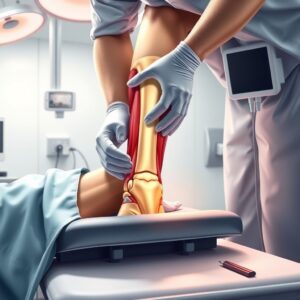
cpt code knee manipulation under anesthesia
2. Understanding Knee Manipulation Under Anesthesia (MUA)
Knee MUA is a non-invasive surgical technique where a physician manually breaks down adhesions and scar tissue while the patient is under anesthesia. The goal is to improve joint mobility without requiring an open surgical procedure.
Why is MUA Necessary?
After knee surgery (e.g., total knee arthroplasty or ACL reconstruction), some patients develop arthrofibrosis—a condition where excessive scar tissue limits movement. If physical therapy alone doesn’t resolve stiffness, MUA may be recommended.
Types of Anesthesia Used
-
General anesthesia (most common)
-
Regional anesthesia (spinal or epidural)
-
Sedation with local anesthesia (less common)
3. Indications for Knee MUA
MUA is not a first-line treatment but is considered when:
✔ Post-surgical stiffness persists beyond 6-8 weeks.
✔ ROM is less than 90 degrees flexion despite therapy.
✔ Painful adhesions restrict functional mobility.
Common Scenarios Requiring MUA
-
Total Knee Replacement (TKR) complications
-
Post-traumatic knee stiffness
-
Failed conservative rehabilitation
4. Contraindications and Risks
While MUA is generally safe, certain conditions increase risks:
| Contraindications | Potential Risks |
|---|---|
| Active infection | Fracture (rare) |
| Unhealed fractures | Hematoma formation |
| Severe osteoporosis | Nerve/vascular injury |
| Unstable joint implants | Recurrent stiffness |
Patients with poor bone quality or recent surgical wounds may not be ideal candidates.
5. CPT Coding for Knee MUA (CPT 27570)
The CPT code 27570 is designated for:
“Manipulation of knee joint under anesthesia, including application of traction or other fixation devices.”
Key Coding Considerations
-
Modifier Use: Modifier -22 (Increased Procedural Services) may apply if extensive manipulation is needed.
-
Bundling Rules: MUA is not separately billable if performed during the global period of a prior knee surgery.
-
Documentation Requirements: Must include pre/post-ROM measurements and medical necessity.
6. Procedure Breakdown: Step-by-Step
-
Pre-Procedure Evaluation
-
Assess ROM, pain levels, and imaging (X-ray/MRI).
-
-
Anesthesia Administration
-
Patient is sedated to ensure muscle relaxation.
-
-
Manipulation Technique
-
The surgeon applies controlled force to break adhesions.
-
-
Post-MUA Assessment
-
Immediate ROM testing and pain management.
-
7. Post-Procedure Recovery and Rehabilitation
-
First 24-48 Hours: Ice, elevation, and pain control.
-
Physical Therapy: Begins immediately to maintain gains in ROM.
-
Long-Term Follow-Up: Regular monitoring to prevent re-stiffening.
8. Clinical Outcomes and Success Rates
Studies show:
-
75-90% success rate in improving flexion.
-
Best results when performed within 3 months of initial surgery.
9. Billing and Reimbursement Considerations
-
Medicare Coverage: Typically covers MUA if medically necessary.
-
Private Payers: May require prior authorization.
-
Denial Prevention: Ensure proper documentation linking MUA to failed PT.
10. Alternative Treatments to Knee MUA
-
Arthroscopic Lysis of Adhesions (CPT 29884)
-
Open Surgical Release (for severe cases)
-
Continued Aggressive PT
11. FAQs
Q1: How long does a knee MUA procedure take?
A: Typically 10-30 minutes, excluding anesthesia time.
Q2: Can MUA be repeated if stiffness returns?
A: Yes, but multiple MUAs increase complication risks.
Q3: Does insurance cover knee MUA?
A: Most do if deemed medically necessary.
12. Conclusion
Knee manipulation under anesthesia (CPT 27570) is an effective solution for post-surgical stiffness unresponsive to therapy. Proper patient selection, precise coding, and structured rehab are key to success. Always document medical necessity to ensure reimbursement.