Navigating the world of dental insurance and treatment codes can often feel like learning a new language. You sit in the dentist’s chair, hear the term “onlay,” and then later, you receive a treatment plan filled with alphanumeric codes that seem to hold the key to your out-of-pocket costs.
If you are looking for the dental code for onlay, you have likely realized that it is not a one-size-fits-all situation. Unlike a simple filling, onlays occupy a unique space in restorative dentistry. They are more extensive than a standard filling but less invasive than a full crown.
In this guide, we will walk you through everything you need to know about the specific Current Dental Terminology (CDT) codes used for onlays. We will explore the differences between the codes, what materials they apply to, how insurance typically views them, and how to make sure you understand your treatment plan.
By the end of this article, you will feel confident walking into your next dental appointment, ready to ask the right questions about your onlay procedure.

Dental Code for Onlay
Table of Contents
ToggleWhat Exactly Is a Dental Onlay?
Before we dive into the specific codes, it is helpful to understand what an onlay actually is. This knowledge makes the billing codes much easier to grasp.
Think of a dental onlay as a middle ground between a filling and a crown. When a tooth has too much damage for a simple filling but is still healthy enough to avoid the full coverage of a crown, an onlay is often the perfect solution.
Unlike a traditional filling that is packed into the tooth while soft and then hardened, an onlay is fabricated outside of the mouth. It is a solid piece—usually made of porcelain, gold, or composite resin—that is bonded to the tooth in a separate appointment.
Onlay vs. Inlay
You will often hear these two terms together. While they are similar, there is a key distinction:
-
Inlay: This restoration sits inside the cusps (the raised points) of the tooth. It is contained within the tooth structure.
-
Onlay: This restoration extends over one or more of the cusps of the tooth. It “onlays” the tooth, providing structural support to the cusps that might otherwise fracture.
Because an onlay covers the chewing surface and extends down the sides of the tooth, it offers strength and protection while preserving as much healthy tooth structure as possible.
Why Choose an Onlay?
Dentists often recommend onlays for several reasons:
-
Structural Integrity: They preserve more natural tooth than a crown.
-
Durability: High-quality materials like porcelain or gold can last for decades.
-
Aesthetics: Porcelain onlays are color-matched to your natural teeth, making them virtually invisible.
-
Biocompatibility: The materials used are gentle on the gums and surrounding teeth.
Now that we understand the clinical side, let’s look at how the dental world categorizes this procedure for billing and insurance purposes.
The Official CDT Codes for Onlays
The American Dental Association (ADA) publishes the Current Dental Terminology (CDT) code set, which is updated annually. These are the codes that dentists use to communicate with insurance companies.
For onlays, there are three primary codes you will see. They are categorized primarily by the type of material used.
D2710: Crown – Resin-Based Composite (Indirect)
This code is used for an indirect resin-based composite onlay. The term “indirect” is crucial here. It means the restoration is fabricated outside the mouth, usually in a dental laboratory, and then bonded to the tooth.
What is Resin-Based Composite?
This is a tooth-colored material made of a mixture of plastic and glass particles. When used as an indirect onlay, it is heat-cured or pressure-cured in a lab, making it stronger than the direct composite (white filling) that is placed in a single visit.
When is D2710 used?
-
When the onlay is made of high-quality, lab-processed composite resin.
-
When the restoration covers one or more cusps.
-
When the dentist believes a strong, aesthetic, and more affordable alternative to porcelain is suitable.
Important Note: D2710 is often considered a more budget-friendly option compared to porcelain. However, some insurance plans may view this as a “filling” upgrade rather than a crown, which can affect coverage.
D2712: Crown – ¾ Cast Metal (High Noble Metal)
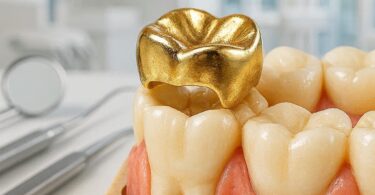
This code applies to an onlay made of cast metal. Specifically, “High Noble Metal” refers to an alloy containing a significant percentage of gold, platinum, or palladium. This is the classic “gold onlay” or “gold inlay” that has been used in dentistry for over a century.
Why Choose High Noble Metal?
Gold onlays are considered the gold standard (pun intended) for longevity. They are incredibly durable, cause minimal wear to opposing teeth, and fit with remarkable precision. They do not chip or fracture like porcelain can.
When is D2712 used?
-
When the onlay is fabricated from cast gold or a high noble alloy.
-
When durability is the primary concern, often for molars that endure heavy chewing forces.
-
When the patient is not concerned about the metallic appearance.
D2714: Crown – Cast Metal (Predominantly Base Metals)
This code is similar to D2712 in terms of process, but it differs in material composition. D2714 is used for onlays made from cast metals that are not high noble. These are typically “predominantly base metals,” such as nickel-chromium or cobalt-chromium alloys.
When is D2714 used?
-
For onlays made of non-precious or semi-precious metals.
-
When a strong, metal restoration is needed but the cost of gold is prohibitive.
-
It is less common than D2712 for onlays specifically, but it is an option for patients who want the strength of metal without the high noble price tag.
A Note on Accuracy:
While D2710, D2712, and D2714 are technically categorized under “Crowns – Single Restorations” in the CDT manual, they are universally accepted as the standard codes for onlays. If your dentist uses these codes, they are billing for an indirect restoration that covers one or more cusps—which is the definition of an onlay.
How Do These Codes Differ from Crown Codes?
This is one of the most common points of confusion. Why is the onlay code in the “crown” section of the code book?
The short answer is that the process of making an onlay is much more similar to making a crown than it is to placing a filling. Both onlays and crowns involve:
-
Tooth preparation (shaping the tooth).
-
Taking an impression (digital or physical).
-
Placing a temporary restoration.
-
Sending the case to a laboratory for fabrication.
-
A second appointment for cementation or bonding.
However, the difference lies in the cusp coverage. A crown covers the entire tooth (all cusps). An onlay covers only one or more cusps, leaving the rest of the natural tooth structure intact.
Here is a quick comparison table to illustrate the differences:
| Feature | D2710 / D2712 / D2714 (Onlay) | D2740 (Porcelain Crown) | D2750 (PFM Crown) |
|---|---|---|---|
| Cusp Coverage | Partial (one or more cusps) | Full (all cusps) | Full (all cusps) |
| Tooth Reduction | Conservative | Aggressive | Aggressive |
| Material | Composite, Gold, Base Metal | Ceramic | Porcelain fused to metal |
| Aesthetics | Varies (excellent for porcelain/composite, poor for metal) | Excellent | Good |
| Longevity | 10-25+ years depending on material | 10-15+ years | 10-15+ years |
| Typical Cost | Moderate to High | High | Moderate to High |
Navigating Insurance Coverage for Onlays
Insurance coverage for onlays can be tricky. Because the codes fall under the crown section, some insurance plans treat them exactly like crowns. Others, however, have specific policies for onlays.
Common Insurance Scenarios
Scenario 1: Treated as a Crown
In many cases, if an insurance company sees code D2710 (composite) or D2712 (gold), they will apply the patient’s “major restorative” coverage. This usually means the plan covers 50% of the cost after the deductible, assuming the patient has met their waiting period.
Scenario 2: Treated as a Filling (The “Upgrade” Problem)
Sometimes, insurers classify D2710 (indirect composite) as a filling. They might say, “We cover a standard amalgam or direct composite filling, but this is an ‘upgrade’ to an indirect restoration.” In this case, they may only pay the benefit amount equivalent to a standard filling, leaving the patient to pay the difference between that amount and the actual cost of the onlay.
Scenario 3: Non-Covered Benefit
Some older or more basic insurance plans simply do not cover onlays. They view them as an elective alternative to a crown. If the plan only covers fillings and crowns, the onlay may be denied entirely.
How to Verify Your Coverage
To avoid surprises, it is wise to take a proactive approach. Here are a few steps you can take:
-
Request a Pre-Treatment Estimate: Ask your dentist’s office to send a pre-authorization to your insurance company. This is not a guarantee of payment, but it gives you a written estimate of what the insurance is likely to pay.
-
Ask the Right Questions: When calling your insurance, don’t just ask, “Do you cover onlays?” Instead, ask, “How does your plan process codes D2710, D2712, and D2714? Are they considered a crown benefit or a filling benefit?”
-
Review Your Plan’s “Missing Tooth Clause”: Some plans have a clause that they will not pay for a crown (or onlay) if the tooth was missing before the policy started. This is rarely an issue for onlays, but it is good to be aware of.
Decoding Your Treatment Plan
When you receive a treatment plan from your dentist, it usually looks like a spreadsheet. Here is a breakdown of how an onlay typically appears.
| Code | Description | Fee | Insurance Est. | Patient Est. |
|---|---|---|---|---|
| D2710 | Crown – Resin-Based Composite (Indirect) | $1,200.00 | $600.00 | $600.00 |
| D2950 | Core Buildup, including pins | $250.00 | $125.00 | $125.00 |
| D0220 | Intraoral – Periapical First Film | $35.00 | $35.00 | $0.00 |
What do these additional codes mean?
-
D2950 – Core Buildup: This is a common code seen alongside onlays and crowns. If a tooth has a large cavity or an old filling, the dentist may need to build up the foundation of the tooth to support the onlay. This is a separate procedure and is often covered as part of the major restorative service.
-
D0220/D0230 – X-rays: Diagnostic x-rays are often billed separately to confirm the health of the tooth root and bone before the procedure.
Reader Note: Always ask your dental office for a breakdown of the codes. A good billing coordinator will walk you through each code and explain why it is necessary for your specific case.
Factors That Influence the Cost
The cost of an onlay can vary significantly based on several factors. Understanding these can help you see why one quote might differ from another.
1. Geographic Location
Dental fees are higher in metropolitan areas like New York or Los Angeles compared to rural areas. Overhead costs, including rent and staff salaries, directly impact the fees charged.
2. Material Selection
As the codes suggest, material matters.
-
D2710 (Composite): Generally the most affordable option among onlays. It offers good aesthetics and strength but may not last as long as metal.
-
D2714 (Base Metal): Mid-range in cost. Strong, but not as biocompatible or durable as high noble metals.
-
D2712 (High Noble Metal): The most expensive metal option, but valued for its longevity, precision fit, and biocompatibility.
-
Porcelain Onlays: While technically coded under crown codes (like D2740), if a porcelain onlay is placed, the cost is often comparable to or higher than gold due to the advanced technology and artistry required.
3. Laboratory Fees
Every time a dentist sends an onlay to a lab, they pay a lab fee. This fee varies based on the lab’s location, the materials used, and the complexity of the case. The dentist’s fee typically includes the lab fee plus their professional time and expertise.
4. Technology Used (CEREC vs. Lab)
Some dental offices use CAD/CAM technology, such as the CEREC system, to create onlays in a single visit. In these cases, the dentist might use a different code or a specific modifier. Single-visit onlays eliminate the need for a temporary restoration and a second appointment. While this is convenient, the cost is often similar to lab-fabricated onlays due to the expensive equipment involved.
What to Expect During the Onlay Procedure
Understanding the process helps justify the codes and the associated fees. It is not a simple “drill and fill” situation. It is a multi-step process that requires significant skill and time.
Appointment 1: Preparation and Impression
-
Anesthesia: The tooth and surrounding area are numbed.
-
Removal: The dentist removes the old filling or decay.
-
Core Buildup (if needed): If the tooth lacks enough structure, a core buildup (D2950) is placed.
-
Impression: A highly accurate impression of the tooth is taken. This can be a traditional putty impression or a digital scan.
-
Temporary: A temporary onlay is placed to protect the tooth while the lab fabricates the permanent one.
The Lab Phase
This is where the onlay is created. Using the impression, a dental technician sculpts the onlay to exact specifications. This can take one to three weeks, depending on the lab’s workload and the complexity of the restoration.
Appointment 2: Bonding or Cementation
-
Trial: The temporary is removed, and the permanent onlay is tried in to check the fit, color, and bite.
-
Adjustments: Minor adjustments are made to ensure the patient bites comfortably.
-
Bonding: The onlay is permanently bonded to the tooth using a high-strength adhesive. For metal onlays, cement is often used. For porcelain and composite, a resin bonding system is typical.
-
Final Polish: The restoration is polished for a smooth finish.
The Importance of Accurate Coding
For patients, understanding the code is about understanding their bill. For dentists, accurate coding is a matter of ethics and legality. Using the wrong code—whether intentionally or accidentally—is considered insurance fraud.
If a dentist places a gold onlay but bills it under a porcelain crown code (D2740) to get a higher reimbursement, that is fraudulent. Similarly, billing a simple filling as an onlay to increase the fee is unethical and can lead to audits and penalties.
As a patient, if you see a code on your treatment plan that doesn’t match the conversation you had with your dentist, do not hesitate to ask, “I noticed this code is for a crown. Can you explain how that applies to my onlay?” A reputable office will be happy to clarify.
Frequently Asked Questions (FAQ)
Q1: Is an onlay better than a crown?
It depends on the condition of your tooth. Onlays are better when there is enough healthy tooth structure left to support the restoration. They are more conservative. Crowns are necessary when the tooth is too damaged or decayed to support an onlay. Your dentist will recommend the option that gives the tooth the best chance for long-term survival.
Q2: Will my insurance definitely cover code D2710?
Not always. While D2710 is the standard code for a composite onlay, some insurance companies view it as an alternative to a filling. They may only cover the cost of a standard filling, leaving you responsible for the balance. A pre-treatment estimate is the best way to know for sure.
Q3: How long do onlays last?
Longevity depends on material and oral hygiene.
-
Gold Onlays (D2712): Can last 20 to 40 years or more with proper care.
-
Porcelain Onlays: Typically last 10 to 15 years.
-
Composite Onlays (D2710): Usually last 7 to 10 years, though they can last longer with excellent care.
Q4: Can an onlay be replaced with a crown later?
Yes. If an onlay fails or if the tooth structure beneath it decays further, a crown is often the next step. The onlay is removed, and the tooth is prepared for a crown. In some cases, the onlay serves as a “life extender” for a tooth that would have otherwise required a crown years earlier.
Q5: Why is there a separate code for a core buildup (D2950)?
The core buildup is a separate procedure that rebuilds the foundation of the tooth. Without a solid foundation, an onlay (or any restoration) cannot properly bond to the tooth. The tooth must have enough solid structure to support the onlay, and if it doesn’t, the core buildup provides that support.
Additional Resources
For those who want to dive deeper into the technical aspects of dental coding or verify the latest updates from the American Dental Association, here are some trusted resources:
-
American Dental Association (ADA) – CDT Code: The official source for current dental terminology and coding guidelines.
-
National Association of Dental Plans (NADP): A resource for understanding dental benefits and how plans are structured.
-
Link: https://www.nadp.org
-
Conclusion
Understanding the dental code for onlay is more than just memorizing numbers like D2710, D2712, and D2714. It is about understanding the value of the treatment you are receiving. These codes represent a sophisticated, conservative approach to saving a tooth—an approach that balances the need for strength with the desire to preserve natural structure.
Whether you are opting for the durability of a gold onlay (D2712), the aesthetics of a composite onlay (D2710), or the strength of a base metal onlay (D2714), knowing the code allows you to engage confidently with your dental team and your insurance provider. By asking the right questions and reviewing your treatment plan carefully, you can ensure that your dental care aligns with both your health goals and your budget. Remember, a well-placed onlay is an investment in your long-term oral health, offering a durable, functional, and often beautiful solution for a compromised tooth.