Let’s be honest for a moment. If you have ever flipped through a codebook or browsed an electronic health record system, you have probably stopped and blinked at least once. You read a description, paused, and thought: Wait, someone actually needed to write that down?
You are not alone.
The world of medical coding is vast, detailed, and sometimes genuinely surprising. Among the tens of thousands of diagnosis codes in the ICD-10-CM (International Classification of Diseases, 10th Revision, Clinical Modification), you will find entries that sound funny, odd, or even completely ridiculous at first glance.
But here is the real truth. Almost every one of those so-called “ridiculous” codes exists for a serious, practical, and sometimes even life-saving reason.
In this guide, we are going to take a calm, professional, and friendly walk through the most unusual ICD-10 codes. We will explain why they exist, how they work in real clinical settings, and what they teach us about the fascinating complexity of human health.
No mockery. No misinformation. Just clear, honest, and useful insight.

What Exactly Are ICD-10 Codes?
Before we explore the unusual corners of the code set, let us briefly review what ICD-10 codes actually are.
The ICD-10 is the global standard for reporting diseases, injuries, and health conditions. In the United States, the clinical modification (ICD-10-CM) contains over 72,000 codes. Healthcare providers use these codes for:
- Diagnosing patients
- Billing insurance companies
- Tracking public health trends
- Conducting medical research
- Planning hospital resources
Each code follows a specific alphanumeric format. For example, S62.0 means a fractured scaphoid bone in the wrist. The system is designed to be granular. The more detail, the better the data.
But granularity sometimes leads to codes that, on the surface, seem strange.
Note: No code is truly “ridiculous” to the patient or provider who needs it. A strange-sounding description often covers a very real, very specific medical situation.
Why Do “Ridiculous” Codes Even Exist?
This is the most important question we will answer today.
Medical coding is not designed to be entertaining. It is designed to be precise. Imagine a doctor in an emergency room sees a patient who was injured in a very specific way. The doctor needs to document exactly what happened. Insurance needs to understand why a particular treatment was necessary. Public health officials may need to track unusual injury patterns.
Without specific codes, all that valuable information would be lost inside vague general categories.
So, when you see a code that makes you smile or raise an eyebrow, remember these three reasons:
- Specificity improves patient care. The more accurately you describe an injury, the better you can treat it.
- Insurance requires details. Vague codes get denied. Detailed codes get paid.
- Public safety relies on data. Tracking unusual accidents helps prevent future harm.
With that in mind, let us look at some of the most commonly cited “ridiculous” ICD-10 codes. We will treat each one with respect while acknowledging why people find them amusing.
The Most Surprising ICD-10 Codes (And Why They Matter)
Below is a curated list of codes that often appear in discussions about strange medical classifications. For each one, we will explain the real-world scenario that justifies its existence.
Category 1: Animal-Related Encounters
Animals cause a surprising number of human injuries. The ICD-10 system takes this very seriously.
| Code | Description | Why It Exists |
|---|---|---|
| W61.33XA | Pecked by turkey, initial encounter | Turkey bites and pecks are rare but real, especially on farms. |
| W61.42XA | Struck by goose, initial encounter | Geese are territorial. This code helps track aggressive bird incidents. |
| W56.21XA | Bitten by orca, initial encounter | Orcas in captivity or the wild can bite handlers or swimmers. Rare but reportable. |
| W55.41XA | Bitten by pig, initial encounter | Pig bites happen more often than people think, especially to farmers and children. |
| V91.07XA | Burn due to water-skis on fire | A very specific accident scenario involving fuel leaks and water sports. |
Let us pause here. W56.21XA (bitten by orca) sounds like a joke. But if you work at a marine park, that is a genuine occupational hazard. Public health needs to track these incidents to improve safety regulations.
Category 2: Unusual Fall Locations
Falls are a leading cause of injury. So, the ICD-10 tracks where you fell with impressive detail.
| Code | Description | Realistic Scenario |
|---|---|---|
| W17.1XXA | Fall into hole, initial encounter | Construction sites, farms, or even backyards with uncovered drains. |
| W18.01XA | Fall from bed into a bucket | An elderly person getting up at night could easily trip over a cleaning bucket. |
| W16.221A | Fall into swimming pool striking wall | A diver misjudges distance and hits the pool edge. |
| W10.2XXA | Fall on ice and snow involving skis | A common winter sports injury needing specific tracking. |
Category 3: Space and Extreme Environment Injuries
Yes, there are codes for injuries in space. Why? Because astronauts exist, and space tourism is growing.
| Code | Description | Why It Is Necessary |
|---|---|---|
| X52 | Prolonged stay in weightless environment | Astronauts experience muscle atrophy, fluid shifts, and bone density loss. |
| X34 | Earthquake | Used by disaster response teams and insurers after seismic events. |
| X37 | Cataclysmic storm | Covers hurricanes, cyclones, and typhoons. |
Before you smile at X52, remember that astronauts on the International Space Station need medical documentation just like everyone else.
Category 4: Self-Inflicted and Social Misadventures
This category includes some codes that seem almost unbelievable. However, they cover real, often painful, situations.
- Y93.D1 – Activity, knitting and crocheting
Believe it or not, repetitive strain injuries from knitting are real. So are accidental needle punctures. - Y92.146 – Swimming pool of prison as place of occurrence
Prisons have swimming pools for recreational therapy. Injuries there need a specific location code. - R46.1 – Bizarre personal appearance
This code describes a patient whose appearance is notably odd or neglectful. Psychiatrists use it to document potential self-care deficits. - Y92.240 – Chicken coop as place of occurrence
Farm injuries are common. A chicken coop presents unique risks: pecking, falls from roosts, and equipment injuries.
Important note: Codes like R46.1 are never meant to be superficial or judgmental. They help clinicians document behavioral observations that may indicate underlying mental or physical health conditions.
A Closer Look at the “Struck by Duck” Code Family
Few code categories get as much attention as those involving birds. Let us examine one family honestly.
W61 – Contact with birds (domestic)
This category includes:
- W61.0XX – Contact with parrot
- W61.1XX – Contact with macaw
- W61.2XX – Contact with other psittacines
- W61.3XX – Contact with chicken
- W61.4XX – Contact with turkey
- W61.5XX – Contact with goose
- W61.6XX – Contact with duck
Within each bird type, there are subcodes for:
- Bitten by
- Struck by
- Pecked by
Why so specific? Different birds cause different types of injuries. A duck bills and flaps, potentially causing soft tissue bruising or eye injuries. A turkey uses sharp spurs. A goose can break skin with its beak and bruise with its wings.
Emergency departments see these injuries more often than you might expect, especially in rural and suburban areas during spring and summer.
Real Clinical Scenario
A 45-year-old farmer presents with a swollen, infected hand. He reports that a goose struck his hand while he was collecting eggs. The wound shows signs of cellulitis.
The correct code sequence might be:
- W61.42XA – Struck by goose, initial encounter
- L03.011 – Cellulitis of right finger
Without the specific bird code, public health officials cannot identify patterns. If five similar goose-related injuries occur in one month, the local health department might investigate an unusually aggressive animal population.
The “Space Walk” and Other Environmental Codes
Let us return to X52 – Prolonged stay in weightless environment.
This code is not theoretical. Space agencies like NASA and private companies like SpaceX employ physicians who must document astronaut health. Prolonged weightlessness causes:
- Bone density loss
- Muscle atrophy
- Fluid redistribution
- Vision changes
- Sleep disorders
The code X52 allows space medicine specialists to track these predictable but serious conditions.
Similarly, X51 – Travel and motion covers space travel alongside conventional air and sea motion sickness.
A Quick Table of Environmental Codes People Find Surprising
| Code | Description | Actual Use Case |
|---|---|---|
| X52 | Prolonged stay in weightless environment | Astronaut health monitoring |
| X53 | Lack of food | Malnutrition and famine tracking |
| X54 | Lack of water | Dehydration emergencies in disaster zones |
| X31 | Exposure to excessive natural cold | Hypothermia from winter storms or mountain accidents |
| X30 | Exposure to excessive natural heat | Heatstroke during heatwaves |
None of these are ridiculous when you consider humanitarian aid, disaster response, or space exploration.
Why Do People Call These Codes “Ridiculous”?
It is completely fair to acknowledge that some codes sound funny. Language matters. When you see “pecked by turkey” printed in a professional codebook, the juxtaposition of formal medical terminology with a barnyard animal creates an unexpected moment of humor.
But here is the distinction we always want to make: the code description might sound funny. The patient’s injury is not funny at all.
An emergency physician once told me, “I have seen a man with a turkey-related eye injury, an elderly woman who fell into a bucket, and a child who was bitten by a pet pig. Every single one of those patients was in pain, scared, and in need of serious care. The codes gave me the language to help them.”
That perspective changes everything.
The Danger of Mocking Medical Codes
Online lists that mock ICD-10 codes often go viral. They get shares, laughs, and comments. But those same lists can:
- Discourage patients from reporting unusual injuries honestly
- Embarrass people who experienced strange accidents
- Undermine public trust in medical documentation
- Spread misinformation about why codes exist
We are not here to mock. We are here to inform.
How to Look Up Unusual ICD-10 Codes Correctly
If you genuinely need to find a specific unusual code for clinical or educational purposes, follow these professional steps.
Step 1 – Start with the Alphabetic Index
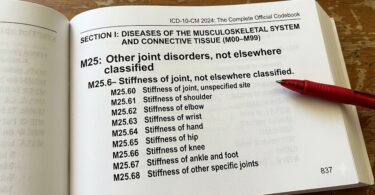
The ICD-10-CM manual includes an alphabetic index at the front. Look up the main term. For animal injuries, try:
- Animal
- Bite
- Contact
- Pecking
- Struck by
Step 2 – Verify the Code in the Tabular List
Never use a code directly from the index. Always verify it in the tabular list (the main numerical section). Check:
- Any required additional digits (7th character extensions)
- Excludes 1 and Excludes 2 notes
- Inclusion terms
Step 3 – Check for Specificity
Most unusual codes require a 7th character:
- A – Initial encounter (active treatment)
- D – Subsequent encounter (routine healing)
- S – Sequela (long-term effects)
Step 4 – Use Official Resources Only
Avoid random online lists. Use:
- Official ICD-10-CM books (AHA press)
- CMS.gov code downloads
- Authorized training platforms like AAPC or AHIMA
Resource Warning: Many websites list “funny” codes without context. Always cross-reference with official government or professional coding sources.
The Educational Value of Strange Codes
Medical coding students often remember unusual codes better than common ones. There is a simple psychological reason: novelty improves recall.
When you learn that W61.33XA means “pecked by turkey,” your brain creates a vivid mental image. That image sticks. And next time you study a related concept, your memory of that code helps you navigate the larger category.
Educators sometimes use these codes as teaching tools to explain:
- The importance of the 7th character
- How to use external cause codes (Chapter 20)
- The relationship between injury and activity codes (Y93 category)
- Why place of occurrence codes matter (Y92 category)
Classroom Example
A coding instructor might present this scenario:
A patient arrives at urgent care after being struck in the face by a large duck while feeding birds at a public park. The patient has a bruised cheekbone but no fracture.
Students must assign:
- S00.83XA – Contusion of other part of head
- W61.62XA – Struck by duck, initial encounter
- Y92.830 – Park as place of occurrence
- Y93.K9 – Activity, other involving animal care
That is four codes for one duck strike. Suddenly, the specificity makes sense.
Common Misconceptions About Unusual Codes
Let us clear up some persistent myths.
Myth 1: “No one actually uses these codes.”
Truth: Every code in the manual is used somewhere, by someone, at some time. Low-volume codes still matter. A code used only ten times per year might save lives by helping researchers spot a rare injury pattern.
Myth 2: “Doctors just pick random codes.”
Truth: Professional medical coders (certified through organizations like AAPC or AHIMA) assign codes based on detailed documentation. They undergo rigorous training and continuing education.
Myth 3: “Insurance companies invented strange codes to deny claims.”
Truth: The World Health Organization (WHO) maintains the ICD system. Insurance companies use it, but they did not invent it. The goal is global health data standardization, not claim denial.
Myth 4: “Strange codes are new.”
Truth: Previous versions (ICD-9) also had unusual entries. ICD-10 simply expanded specificity. For example, ICD-9 had “contact with orca” as well, but fewer people noticed.
Practical Advice for Patients
If you experience an unusual injury, do not hide the details out of embarrassment.
- Tell your doctor exactly what happened. Include animals, objects, and activities.
- Do not downplay strange causes. A goose strike is as valid as a fall from a ladder.
- Ask questions. You have the right to understand how your injury is coded.
- Review your medical records. Accurate coding depends on accurate documentation.
Your honest report helps your doctor provide better care. It also contributes to accurate public health data that could prevent similar injuries for other people.
Practical Advice for Medical Coders
If you are a coding professional encountering an unusual code for the first time:
- Do not panic. Open your manual or trusted software.
- Verify each character. Unusual codes often have long, complex sequences.
- Check for required additional diagnoses. A strange external cause code almost always pairs with a main injury or illness code.
- Document your query. If physician documentation is unclear, send a query. Do not guess.
- Remember your training. Unusual does not mean incorrect.
A Quick Coding Checklist for Strange Codes
- Is the main diagnosis clearly documented?
- Does the external cause code match the documented mechanism?
- Is the place of occurrence specific?
- Is the patient’s activity documented?
- Have you applied the correct 7th character?
- Does any Excludes note apply?
The Future of Medical Coding
ICD-10 will eventually be replaced by ICD-11. The new version, already adopted by many countries, includes even more specificity. It also uses a digital-first structure with greater precision.
What does that mean for “ridiculous” codes?
ICD-11 may consolidate some rarely used codes but will also introduce new ones for emerging health scenarios. For example, codes for injuries related to e-scooters, drone accidents, and space tourism are likely to appear.
The goal remains unchanged: accurate, detailed, useful health data.
A Balanced Perspective: Laughing With Respect
Is it okay to smile at V91.07XA – Burn due to water-skis on fire?
Yes, within reason. The image of burning water skis while someone is also water-skiing is absurd on its face. But behind that absurdity is a real person who experienced a frightening and painful accident involving a fuel leak, an engine, and open water.
We can appreciate the strangeness of human experience without mocking the patient.
Think of these codes as a testament to the unpredictability of life. People fall into holes. They get pecked by turkeys. They trip over buckets in the dark. And dedicated medical professionals stand ready to document it all, without judgment, so we can learn, improve, and heal.
A Detailed Table of Commonly Cited Unusual ICD-10 Codes
| Code | Description | Real-World Frequency | Why It Exists |
|---|---|---|---|
| W61.43XA | Pecked by turkey, initial encounter | Rare but documented in farm injuries | Avian-related trauma tracking |
| W56.22XA | Struck by orca, initial encounter | Extremely rare (captive marine settings) | Occupational safety for animal handlers |
| W55.42XA | Struck by pig, initial encounter | Uncommon but reported by veterinarians | Agricultural injury surveillance |
| W17.2XXA | Fall into a hole, initial encounter | Common in construction and rural areas | Workplace safety monitoring |
| Y92.146 | Swimming pool of prison | Very rare | Legal and correctional health documentation |
| Y93.D1 | Knitting and crocheting | Frequent for repetitive strain | Activity-related injury tracking |
| R46.1 | Bizarre personal appearance | Used in psychiatric evaluations | Behavioral observation documentation |
| X52 | Prolonged weightlessness | Frequent for space agencies | Aerospace medicine data |
| W18.01XA | Fall from bed into bucket | Rare but reported | Home safety research |
| W61.62XA | Struck by duck | Documented in parks and waterways | Wildlife interaction tracking |
Frequently Asked Questions (FAQ)
Q1: Are ICD-10 ridiculous codes real or just internet jokes?
A: They are real codes found in the official ICD-10-CM manual. Internet lists often pull them directly from government-published code sets.
Q2: Can a patient be embarrassed if their injury uses a strange code?
A: Patients should never feel embarrassed. Medical coders are trained to use codes factually and without judgment. The code does not reflect on the patient’s character.
Q3: Do insurance companies deny claims based on strange codes?
A: Not typically. Denials usually happen for missing documentation, incorrect modifiers, or lack of medical necessity, not because a code sounds unusual.
Q4: Will ICD-11 get rid of these codes?
A: Some may be revised or consolidated. However, ICD-11 generally increases specificity, so new “unusual” codes will likely appear.
Q5: How can I look up an unusual code without making mistakes?
A: Use the official ICD-10-CM alphabetic index first, then verify in the tabular list. Always check for 7th character requirements and Excludes notes.
Q6: Why do animal bite codes specify the exact animal?
A: Different animals carry different bacteria (e.g., pasteurella from cat bites, capnocytophaga from dog bites). Specific codes help researchers track infection patterns.
Q7: Should I list a funny code on my resume or portfolio as a coder?
A: It is fine to mention unusual codes as an example of your attention to detail and understanding of specificity. Focus on the clinical reasoning, not the humor.
Q8: Are there codes for alien abduction or supernatural events?
A: No. ICD-10 codes are evidence-based and clinically grounded. No credible code covers supernatural or unproven phenomena.
Additional Resource
For the most accurate, up-to-date, and searchable version of the ICD-10-CM code set, visit the official Centers for Medicare & Medicaid Services (CMS) ICD-10 page:
This government resource provides complete code files, official guidelines, and regular updates. Bookmark it for any serious coding work.
Conclusion
ICD-10 codes that seem ridiculous at first glance are not jokes. They are precise, necessary, and often life-saving tools for healthcare documentation. Whether a code describes a turkey peck, a fall into a hole, or a prolonged space mission, each exists to improve patient care, support accurate billing, and help researchers track real-world injuries. By looking beyond the surface humor, we gain a deeper respect for the complexity of medicine and the human body.
Disclaimer: This article is for informational and educational purposes only. It is not a substitute for professional medical advice, coding certification, or legal guidance. Always consult official ICD-10-CM manuals and qualified coding specialists for accurate billing and documentation.
Author: Technical Health Writer
Date: APRIL 24, 2026