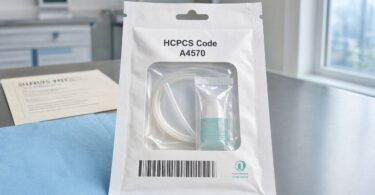
Navigating the world of durable medical equipment billing can feel like learning a foreign language. The codes, the modifiers, the documentation requirements—they all stack up quickly. Among these codes, HCPCS Code E0431 plays a vital role for patients who need oxygen therapy to maintain their independence and quality of life. This article serves as your definitive resource. We will walk through every aspect of this code, from its basic definition to advanced billing nuances.
Oxygen therapy represents a lifeline for individuals with chronic respiratory conditions. When you see a patient carrying a small tank or a portable unit while walking through a park or shopping for groceries, you are likely looking at equipment billed under E0431. This code specifically describes a portable gaseous oxygen system, and understanding it correctly can make the difference between a denied claim and a timely reimbursement.
We designed this guide with multiple readers in mind. Durable medical equipment suppliers will find deep dives into documentation and audits. Billers and coders will uncover specific modifier combinations and denial resolution strategies. Patients and caregivers will gain clarity on what their insurance covers and why a specific type of equipment appears on their paperwork. Let’s settle in and explore this essential code together.
Defining HCPCS Code E0431: The Foundation
A clear definition sets the stage for everything that follows. A misunderstanding at this level creates cascading errors in billing, coverage determinations, and patient expectations.
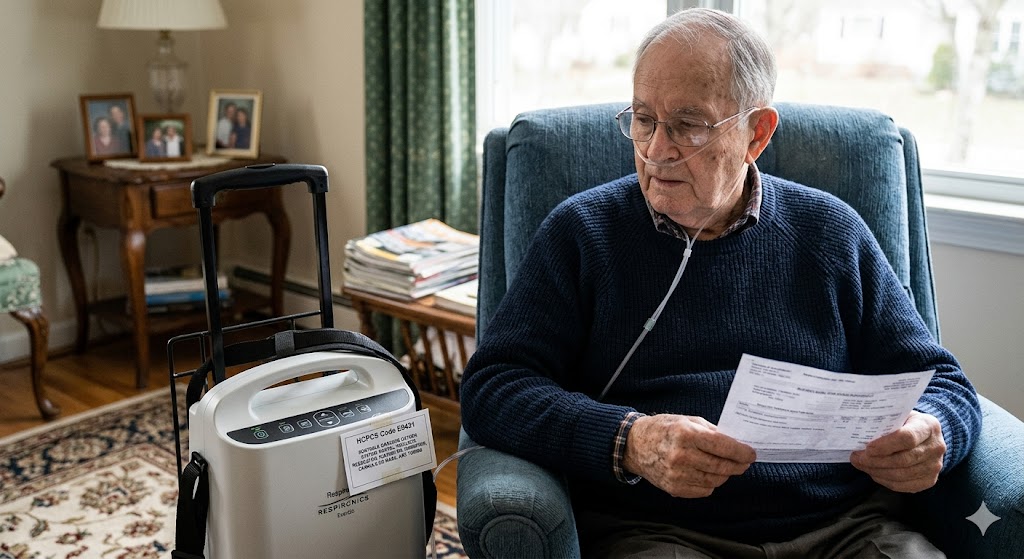
HCPCS Code E0431 describes a portable gaseous oxygen system. This system includes a portable oxygen tank, a regulator, a flow meter, and a carrying case or cart. The unit delivers oxygen in gaseous form, as opposed to liquid oxygen. The patient inhales the gas through a nasal cannula or face mask. The system weighs less than a stationary concentrator and enables the patient to leave the home while maintaining their prescribed oxygen flow rate.
The code falls under the Level II HCPCS system, which Medicare and other payers use to identify products, supplies, and services not covered by CPT codes. The “E” prefix indicates durable medical equipment. Within the Medicare Durable Medical Equipment, Prosthetics, Orthotics, and Supplies (DMEPOS) fee schedule, E0431 occupies a specific niche: portable oxygen equipment that is rented, not purchased, in most cases.
Key Equipment Characteristics
A portable gaseous oxygen system billed under E0431 includes specific components. Recognizing these components helps suppliers verify that they are providing and billing the correct equipment type.
- The Cylinder or Tank: A lightweight aluminum or composite cylinder holds compressed oxygen gas. These tanks come in various sizes, typically ranging from small M2 cylinders to larger M6 or M9 cylinders. The size affects the duration of oxygen delivery at a given flow rate.
- The Regulator and Flow Meter: The regulator reduces the high pressure inside the tank to a safe, usable level. The flow meter controls the rate of oxygen delivery, usually adjustable from 0.5 to 8 liters per minute for continuous flow. Some regulators also feature a conserving device capability.
- The Conserving Device (Optional): Many modern E0431 systems include an oxygen conserving device. This device releases oxygen only during inhalation, dramatically extending the life of a single tank. The conserving device usually has multiple settings that correspond to different minute volumes.
- The Carrying Case or Cart: The system includes a means to transport the tank. Smaller tanks fit into a shoulder bag or backpack. Larger tanks sit on a wheeled cart with a handle for easy pulling.
Important Note: E0431 strictly refers to gaseous oxygen systems. Liquid oxygen portable systems fall under a different code, E0434. Billing the wrong code for the physical state of the oxygen constitutes a major compliance error.
Why Gaseous vs. Liquid Matters
The distinction between gaseous and liquid oxygen matters profoundly for coding and reimbursement. Gaseous oxygen systems store oxygen as a compressed gas at pressures up to 2,000 to 3,000 psi. Liquid oxygen systems store oxygen as a cryogenic liquid at temperatures below -297°F. Liquid oxygen systems provide a much larger volume of oxygen from a smaller, lighter container. However, liquid oxygen evaporates over time, even when the patient does not use it.
Payers reimburse gaseous and liquid portable systems at different rates. Billing a gaseous system code when providing a liquid system—or vice versa—triggers claim denials and potential audit flags. Suppliers must verify the physical state of the oxygen in the equipment they provide.
Clinical Indications: Who Qualifies for E0431?
Coverage for E0431 does not exist in a vacuum. The patient must meet specific medical necessity criteria for portable oxygen in general, and the addition of a portable system requires further justification.
General Oxygen Therapy Qualifications
Medicare and most commercial payers follow a similar framework for determining oxygen therapy eligibility. The patient must have a qualifying blood gas study performed in a specific manner. This study demonstrates significant hypoxemia.
- Arterial Blood Gas (ABG) Criteria: A resting PaO2 at or below 55 mmHg, or a resting arterial oxygen saturation at or below 88%, qualifies the patient for home oxygen therapy.
- Alternative Criteria with Secondary Conditions: A resting PaO2 of 56 to 59 mmHg or an arterial oxygen saturation of 89% qualifies the patient if they also demonstrate dependent edema suggesting congestive heart failure, pulmonary hypertension, cor pulmonale, or secondary polycythemia (hematocrit greater than 56%).
- Exercise-Induced Hypoxemia: During exercise testing, a drop in PaO2 to 55 mmHg or below, or an arterial oxygen saturation at or below 88%, qualifies the patient for supplemental oxygen during exertion.
- Sleep-Induced Hypoxemia: Nocturnal desaturation demonstrated during a sleep study can also qualify a patient, with specific criteria depending on the payer.
Additional Criteria for Portable Oxygen (E0431)
Meeting the criteria for stationary oxygen does not automatically justify a portable system. The physician must document the specific need for mobility. Medicare requires that the patient be mobile within the home and that the portable system be necessary to allow the patient to perform activities of daily living while maintaining adequate oxygenation.
The physician must document that the patient can operate the portable system safely, or has a caregiver who can assist. The medical record must show that the patient’s clinical condition requires oxygen during ambulation and that a portable system is the appropriate method of delivery.
Clinical Documentation Quote: “The beneficiary is mobile within the home and requires continuous oxygen therapy to maintain SpO2 above 90% during activities of daily living. A portable gaseous oxygen system (E0431) is medically necessary to ensure adequate oxygenation while the patient moves about the home and attends necessary medical appointments.”
The Importance of Portability: Beyond the Medical Definition
Portable oxygen represents more than a billing code. It represents freedom. A patient tethered to a stationary concentrator cannot easily cook in the kitchen, shower, or step outside to collect the mail. A portable system under E0431 restores a portion of that independence.
Manufacturers design modern E0431 systems with patient lifestyles in mind. The tanks weigh significantly less than older steel cylinders. The carrying cases feature padded shoulder straps and discreet designs. The conserving devices operate almost silently, with a subtle click that the patient feels more than hears. These design choices encourage patient adherence because the equipment does not advertise the patient’s medical condition to the world.
For a patient with chronic obstructive pulmonary disease (COPD), interstitial lung disease, or pulmonary fibrosis, the ability to leave the house reduces the psychological burden of their illness. Social isolation is a known comorbidity of severe respiratory disease. Portable oxygen facilitates social interaction, light exercise, and the maintenance of daily routines that support mental health.
Reimbursement Framework for E0431
The reimbursement landscape for E0431 involves monthly rental payments, capped rental periods, and specific modifier requirements. Suppliers must master these details to maintain a healthy revenue cycle.
The Capped Rental Model
Medicare classifies E0431 as a capped rental item. This classification means that the supplier bills a monthly rental fee for a maximum number of months. After the capped rental period ends, the supplier must continue to provide the equipment for the remainder of the patient’s medical need, up to the reasonable useful lifetime of the equipment. During this post-capped period, the supplier bills for maintenance and servicing but not for the equipment itself.
The standard capped rental period for oxygen equipment spans 36 months of continuous use. After month 36, the supplier transfers the title of the equipment to the beneficiary, or the beneficiary chooses to receive a new system and a new capped rental period begins. In practice, oxygen equipment requires ongoing refills, maintenance, and servicing, which the supplier continues to bill using specific codes after the capped rental period.
Monthly Rental Payment Structure
For E0431, the supplier bills a monthly rental using the appropriate HCPCS code and modifier combination. The modifier indicates whether the service is for the first month, months two through three, months four through thirty-six, or post-capped rental.
| Modifier | Period Description | Key Billing Considerations |
|---|---|---|
| RR | Rental (general use) | Indicates the item is being rented. Always required for oxygen equipment claims. |
| KH | First month rental (DMEPOS capped rental) | Used for the initial month of rental only. |
| KI | Second or third month rental (DMEPOS capped rental) | Used for months two and three of the rental period. |
| KJ | Months four through thirty-six rental | Used for the bulk of the capped rental period. |
| LL | Lease/rental (use when DME is leased) | Specific to certain lease arrangements; verify payer guidelines. |
| UE | Used durable medical equipment | Indicates the equipment provided is previously used. |
Suppliers must track the month of service accurately. Billing the wrong modifier for the rental month triggers a denial. The supplier must maintain detailed records of the initial delivery date and each subsequent month’s billing.
Fee Schedule Allowances
The Medicare fee schedule sets a monthly allowed amount for E0431. This amount varies by geographic region, based on the durable medical equipment fee schedule locality. The allowed amount covers the equipment itself, the oxygen contents (refills), and all necessary accessories, such as the cannula, tubing, and connectors. The supplier cannot bill separately for these accessories during the rental period.
In 2024 and 2025, the national average monthly allowed amount for E0431 under the capped rental period fluctuates. Suppliers should consult their specific DME MAC jurisdiction’s fee schedule lookup tool for the most current rates. The rates typically fall within a range that reflects the cost of providing the equipment, delivering oxygen refills, and maintaining the system.
Modifier Strategies and Common Billing Scenarios
Correct modifier usage on an E0431 claim determines whether the claim processes cleanly or lands in a denial queue. Let’s explore realistic billing scenarios that illustrate modifier application.
Scenario 1: New Patient, Initial Month
A 72-year-old male with COPD receives a qualifying ABG result of PaO2 53 mmHg. His physician prescribes home oxygen therapy, including a stationary concentrator and a portable gaseous oxygen system for ambulation. The supplier delivers both systems on March 10th.
Claim for March:
- E0431 with RR and KH modifiers
- One unit of service
- Diagnosis code J44.9 (Chronic obstructive pulmonary disease, unspecified)
The supplier bills the initial month rental for E0431. The KH modifier tells the DME MAC that this represents the first month of the capped rental period.
Scenario 2: Rental Months Two and Three
The same patient continues using the E0431 system through April and May.
Claim for April and May (billed separately each month):
- E0431 with RR and KI modifiers
- One unit of service each month
The KI modifier signals months two and three. The supplier must bill each month separately, not combine them into a single claim line.
Scenario 3: Rental Months Four Through Thirty-Six
From June of the first year through the thirty-sixth month of continuous use, the supplier continues monthly billing.
Monthly Claim for Months 4-36:
- E0431 with RR and KJ modifiers
- One unit of service per month
The KJ modifier covers the long maintenance period. The supplier must track the month count diligently. An interruption in medical need that causes the patient to stop using the equipment may reset the rental period, but a voluntary return without a change in medical need does not.
Scenario 4: Post-Capped Rental (Month 37+)
After 36 months of continuous rental, the patient still requires portable oxygen. The supplier continues to provide the equipment, oxygen refills, and maintenance. The supplier no longer bills for the equipment rental itself but bills for the oxygen contents and maintenance.
Claim for Month 37 and Beyond:
- A different code, often E0431 with a specific modifier indicating contents only (check local coverage article for exact guidance, as some jurisdictions transition to a contents-only code after the capped rental).
Modifier Combination Table
The following table summarizes the standard modifier combinations for E0431 through the rental lifecycle.
| Rental Month | Required Modifiers | Claim Action |
|---|---|---|
| Month 1 | RR + KH | Bill for initial rental month. |
| Months 2-3 | RR + KI | Bill each month separately. |
| Months 4-36 | RR + KJ | Bill each month, track month count. |
| Month 37+ | Varies by jurisdiction | Transition to contents/maintenance billing. |
Audit Prevention Tip: Always verify the correct month count before submitting the claim. A single month off can result in an overpayment that you must refund upon audit. Use a robust rental tracking system, ideally integrated with your billing software.
Documentation Requirements: Building a Bulletproof File
Payers require specific documentation before they will adjudicate an E0431 claim favorably. Suppliers who master documentation requirements reduce denials and pass audits with confidence.
The Prescription and Detailed Written Order
The foundation of every oxygen claim is the prescription, also called the Standard Written Order (SWO). The SWO must contain specific elements that the DME MACs require.
The SWO must include:
- Beneficiary’s full name
- Order date (must be prior to or on the delivery date)
- Specific HCPCS code or detailed description of the item (E0431 or “portable gaseous oxygen system”)
- Prescribing physician’s signature and date
- Physician’s National Provider Identifier (NPI)
A verbal or preliminary order can initiate the dispensing process, but the supplier must obtain a detailed written order within a specified timeframe, typically within 45 days of the verbal order. Without a timely and complete SWO, the claim lacks a valid basis for payment.
Proof of Delivery
The supplier must create and retain proof of delivery documentation. This documentation confirms that the beneficiary (or their authorized caregiver) received the equipment on a specific date.
Proof of delivery must include:
- Beneficiary’s name
- Delivery address
- Delivery date
- Detailed description of the item delivered (E0431 portable gaseous oxygen system, including tank size, regulator, and carrying case)
- Quantity delivered
- Beneficiary or caregiver signature and date
Electronic signatures are acceptable if the system captures the signer’s identity and intent. The delivery document should also note any instructions provided to the beneficiary regarding the safe use and maintenance of the equipment.
Medical Records Supporting Medical Necessity
The DME MAC may request medical records during an audit to verify that the patient met the medical necessity criteria at the time the equipment was dispensed. The supplier must retain these records, even if the physician’s office generated them.
Essential medical records include:
- The qualifying blood gas study (ABG or oximetry) performed within the required timeframe (usually 30 days prior to the initial date of service for chronic conditions, or during the inpatient stay for acute conditions)
- The physician’s evaluation documenting the diagnosis, the rationale for oxygen therapy, and the need for a portable system
- Documentation of the patient’s mobility within the home and the specific activities that portable oxygen will facilitate
- Any re-certification testing required at intervals (often at 12 months and then annually for chronic oxygen therapy)
Re-Certification of Medical Need
Initial coverage for oxygen therapy typically extends for a specific period, after which the physician must re-certify the ongoing medical need. Medicare requires a re-certification at 12 months for group I criteria and at 36 months for group II criteria, though local policies may vary. The re-certification must include a new qualifying blood gas study (unless the patient’s condition is irreversible and the initial test was already below the threshold, based on specific payer guidance). The supplier must monitor recertification due dates and alert the physician’s office proactively.
LCD and NCD Landscape: Navigating Policy
Medicare coverage for oxygen therapy is governed by both National Coverage Determinations (NCDs) and Local Coverage Determinations (LCDs). Understanding these policies ensures that the supplier’s billing practices align with payer expectations.
National Coverage Determination (NCD) for Home Oxygen
The NCD for home oxygen therapy (NCD 240.2) establishes the national framework. It defines the qualifying blood gas thresholds, the conditions that justify oxygen therapy, and the general coverage categories. All DME MACs must adhere to the NCD. However, NCDs often leave room for interpretation, which is where LCDs and local coverage articles enter the picture.
Local Coverage Determinations (LCDs) and Articles
Each DME MAC jurisdiction publishes an LCD for oxygen and oxygen equipment. The LCD clarifies the NCD, adds specific documentation requirements, and sometimes defines coverage for portable systems with more granularity. The accompanying local coverage article provides billing and coding instructions, including modifier requirements and codes that the DME MAC considers bundled or separately billable.
Suppliers must identify their DME MAC jurisdiction and regularly review the active LCD and article. Policies change. A coverage requirement that existed last year may have been updated. Ignorance of a policy change does not protect against claim denials.
Key points commonly addressed in LCDs:
- Definition of “portable” and criteria for medical necessity of a portable system
- Required contents of the written order
- Frequency of oxygen contents refill billing
- Separate billing rules for oxygen-related accessories after the rental period
Audit and Compliance: Staying Ahead of Scrutiny
Oxygen equipment claims face intense scrutiny from Medicare audit contractors. The Office of Inspector General (OIG) and the Comprehensive Error Rate Testing (CERT) program consistently identify oxygen equipment as an area with high improper payment rates. Suppliers who proactively audit their own files reduce their risk of significant repayment demands.
Common Audit Findings for E0431
Understanding common errors helps suppliers build preventive measures into their workflow.
| Audit Finding | Root Cause | Prevention Strategy |
|---|---|---|
| Missing or incomplete written order | Order not obtained, or missing required elements | Implement a SWO checklist; audit orders upon receipt. |
| Medical necessity not documented | Qualifying test absent, too old, or results above threshold | Request test results before delivery; verify dates. |
| Incorrect modifier usage | Rental month miscount, wrong modifier for period | Use automated rental tracking with built-in modifier logic. |
| Portable system not justified | Physician note lacks documentation of mobility need | Provide a standardized form capturing mobility and activities. |
| Refill frequency inconsistent with prescribed flow rate | Billing for more refills than clinically feasible | Compare refill billing to prescribed LPM and tank duration. |
Developing an Internal Audit Program
An effective internal audit program identifies problems before an external auditor does. Suppliers should conduct quarterly reviews of a random sample of active E0431 claims.
Internal audit steps:
- Pull the full patient file for the selected claim.
- Verify the SWO is complete, signed, and dated prior to delivery.
- Verify the qualifying test meets payer criteria and was timely.
- Verify proof of delivery is complete and matches the billed equipment.
- Verify the rental month count and modifier are correct.
- Document findings and implement corrective actions for any errors discovered.
The cost of an internal audit program pales in comparison to the cost of a large extrapolated overpayment from a Medicare audit contractor. Prevention truly pays.
The Patient Journey: From Prescription to Daily Use
Let’s step away from the billing mechanics and consider the patient’s experience. Understanding this journey helps suppliers and billers appreciate the human context behind the claims.
The Diagnosis and Prescription
Mary, a 68-year-old retired teacher, notices increasing shortness of breath while walking her dog. Her primary care physician orders spirometry, which reveals moderate COPD. A pulmonologist performs an arterial blood gas test. The result: PaO2 52 mmHg while breathing room air. The pulmonologist prescribes home oxygen therapy: a stationary concentrator for nighttime and resting use, and a portable gaseous oxygen system for daily activities.
Equipment Selection and Education
The DME supplier’s respiratory therapist visits Mary’s home. The therapist assesses Mary’s living environment, her oxygen needs at various activity levels, and her physical ability to manage portable equipment. Together, they select an E0431 system: a lightweight M6 aluminum cylinder with a pneumatic conserving device set at a 2 LPM equivalent flow rate. The carrying case resembles a stylish shoulder bag, which Mary appreciates.
The therapist teaches Mary how to read the pressure gauge, change tanks, use the conserving device properly, and recognize signs of oxygen depletion. The therapist stresses the critical safety rules: no smoking near oxygen, keep the tank away from open flames, and store tanks upright in a secured position.
Daily Life with E0431
Mary discovers that the E0431 system gives her back a version of her old life. She walks her dog again, albeit at a slower pace and with the shoulder bag slung across her body. She attends her book club meetings, setting her tank discreetly beside her chair. She manages her tank changes independently, using a home transfill device connected to her stationary concentrator to refill her portable cylinders. The supplier delivers backup cylinders every two weeks and checks the equipment function at each visit.
Mary’s adherence to her oxygen therapy improves her energy levels, her sleep quality, and her overall sense of well-being. The E0431 code on her Explanation of Benefits represents the administrative side of a technology that actively participates in her daily life.
Comparative Analysis: E0431 vs. Other Oxygen Codes
Context clarifies coding. Comparing E0431 to related HCPCS codes prevents billing errors and helps suppliers explain equipment differences to patients and referral sources.
E0431 (Portable Gaseous) vs. E0434 (Portable Liquid)
| Feature | E0431 (Portable Gaseous) | E0434 (Portable Liquid) |
|---|---|---|
| Oxygen storage state | Compressed gas | Cryogenic liquid |
| Container type | Aluminum or composite cylinder | Insulated liquid reservoir (dewar) |
| Weight for equivalent duration | Heavier per hour of oxygen | Lighter per hour of oxygen |
| Oxygen loss when idle | None (gas does not evaporate) | Yes (liquid boils off over time, roughly 1-2 pounds per day) |
| Reimbursement rate | Lower monthly rental | Higher monthly rental |
| Typical patient use case | Patients needing moderate portability; those who can manage cylinder changes | Patients needing maximum portability and long-duration away from home; those who benefit from a lighter primary portable |
| Transfilling capability | Can be transfilled from a home stationary concentrator | Requires liquid oxygen home reservoir for refilling |
Suppliers must bill E0434 only when they actually provide a liquid oxygen portable system. A gaseous system misrepresented as liquid constitutes a false claim.
E0431 vs. E1392 (Portable Oxygen Concentrator)
A portable oxygen concentrator (POC) represents a fundamentally different technology. Instead of storing oxygen, a POC extracts it from ambient air on demand. POCs typically use pulse-dose delivery and run on rechargeable batteries.
| Feature | E0431 (Portable Gaseous) | E1392 (Portable Oxygen Concentrator) |
|---|---|---|
| Oxygen source | Pre-filled compressed gas cylinder | Ambient air (requires electricity/battery) |
| Oxygen supply limit | Finite (cylinder empties) | Unlimited as long as battery power exists |
| Refill logistics | Requires tank exchanges or home transfill | No refills needed; recharge batteries |
| Reimbursement model | Capped rental for equipment, separate for contents | Purchase option or capped rental |
| Travel convenience | Tanks must be procured at destination for travel | Can travel without oxygen resupply; FAA-approved |
| Delivery mode | Continuous flow, conserving device optional | Primarily pulse dose; some models offer continuous flow |
The increasing availability of POCs has shifted some patients away from gaseous systems. However, many clinicians still prescribe gaseous systems for patients who require continuous flow oxygen during exertion, as many POCs struggle to deliver adequate continuous flow at higher rates for extended periods.
Code Family Quick Reference
| HCPCS Code | Description |
|---|---|
| E0424 | Stationary gaseous oxygen system, rental |
| E0430 | Stationary liquid oxygen system, rental |
| E0431 | Portable gaseous oxygen system, rental |
| E0434 | Portable liquid oxygen system, rental |
| E0439 | Stationary oxygen contents, gaseous (1 month) |
| E0440 | Stationary oxygen contents, liquid (1 month) |
| E0441 | Portable oxygen contents, gaseous (1 month) |
| E0442 | Portable oxygen contents, liquid (1 month) |
| E1390 | Oxygen concentrator, single delivery port |
| E1392 | Portable oxygen concentrator, rental |
| E1405 | Oxygen and water vapor enriching system with heated delivery |
The Oxygen Contents Code: E0441 and Its Relationship to E0431
E0431 covers the portable equipment rental. The oxygen inside the tank requires a separate code: E0441. This code describes a month’s supply of gaseous oxygen contents for a portable system.
Billing Contents During the Capped Rental Period
During the 36-month capped rental period for E0431, the supplier bundles the cost of oxygen contents into the monthly rental payment. The supplier does not bill E0441 separately. The DME MAC considers the contents included in the E0431 rental allowance.
Billing Contents After the Capped Rental Period
After the capped rental period ends, the patient’s equipment title transfers (if applicable), but the patient still needs oxygen refills. The supplier then bills E0441 for the ongoing monthly contents supply. The supplier may also bill for maintenance and servicing of the equipment.
Determining Reasonable Refill Quantities
The supplier must deliver a quantity of oxygen that meets the patient’s prescribed flow rate and usage pattern. Auditors scrutinize refill frequencies to detect overutilization or billing for more oxygen than clinically necessary.
Example calculation:
- Prescribed continuous flow: 2 LPM
- Estimated daily portable usage: 3 hours
- Daily portable oxygen volume: 2 LPM × 60 minutes × 3 hours = 360 liters per day
- Monthly portable oxygen volume: 360 liters × 30 days = 10,800 liters per month
- A single M6 cylinder at full pressure holds approximately 165 liters of gaseous oxygen (with a conserving device, the equivalent duration is much longer).
The supplier should document the patient’s prescribed flow rate, estimated hours of portable use, and the refill schedule that this usage justifies. When an auditor sees a refill schedule that vastly exceeds the clinically expected usage, they will demand an explanation—and possibly a refund.
Documenting the Need for a Conserving Device
Many E0431 systems include an oxygen conserving device. This device improves oxygen utilization efficiency and extends the life of a portable cylinder. However, some payers require specific justification for a conserving device, especially if the device carries an additional cost above the standard E0431 rental.
Clinical Advantages of a Conserving Device
- Extended Cylinder Duration: A conserving device can multiply the usable time of a cylinder by a factor of 3:1 to 7:1, depending on the patient’s respiratory rate and the device’s efficiency.
- Reduced Weight Burden: Because a smaller cylinder lasts longer, the patient can carry a lighter tank, reducing the physical burden and improving compliance.
- Improved Oxygen Delivery Efficiency: By delivering oxygen only during the early phase of inhalation, the device minimizes oxygen wasted during exhalation.
Physician Documentation for the Device
The physician’s order or progress note should mention the clinical rationale for the conserving device. Acceptable justifications include:
- Patient’s high minute ventilation during exertion, which would deplete a standard continuous flow cylinder too quickly
- Patient’s physical limitation that prevents carrying a larger, heavier cylinder
- Demonstrated improvement in oxygen saturation during ambulation when using the conserving device compared to continuous flow
Documentation Example: “Due to the patient’s active lifestyle and need for prolonged ambulation, a pneumatic oxygen conserving device is prescribed with the E0431 portable gaseous system. The device enables the patient to achieve adequate oxygenation (SpO2 >90%) during community ambulation while using a lightweight cylinder that the patient can manage independently.”
Troubleshooting Common Denials for E0431
Even well-prepared claims face denials. A structured denial management process recovers revenue and corrects systemic issues.
Denial: Medical Necessity Not Established
Reason: The payer did not receive or could not verify the qualifying test results.
Resolution:
- Obtain the actual blood gas or oximetry report from the physician’s office.
- Verify the test date is within the required window (usually 30 days prior to initial setup).
- Submit a redetermination with the test report, highlighting the qualifying values.
- Include a cover letter explaining the oversight and referencing the NCD/LCD criteria.
Denial: No Valid Written Order
Reason: The SWO was missing, unsigned, undated, or dated after the delivery date.
Resolution:
- If the order was truly never obtained, you may have limited recourse for the initial period. Obtain a compliant order immediately for ongoing billing.
- If the order exists but lacked a signature or date, obtain a corrected order from the physician. Note: Backdating an order is fraudulent. The physician should sign with the current date and note the date the original verbal order was given.
- Implement a hold on delivery until a complete SWO is in hand for all future setups.
Denial: Incorrect Modifier Combination
Reason: The claim submitted with RR and KJ modifiers for what should have been the first month.
Resolution:
- Review your rental start date and month count.
- Submit a corrected claim with the appropriate modifier (KH for month one).
- Update your rental tracking tool to prevent recurrence.
Denial: Exceeded Refill Frequency
Reason: The payer’s system flagged that the billed refills exceeded a utilization threshold based on the prescribed flow rate.
Resolution:
- Calculate the clinically expected refill frequency based on the prescription.
- If the billing was correct (e.g., the patient used more oxygen than expected), obtain a revised prescription reflecting the higher usage, supported by clinical documentation.
- If the billing was an error, submit a corrected claim with the appropriate number of refills.
- Document all refill deliveries meticulously, including the patient’s acknowledgement of receipt.
Technology Advances Impacting E0431 Utilization
The oxygen therapy landscape is not static. Technological and regulatory shifts continuously influence the utilization of E0431 systems.
The Rise of Home Transfill Systems
Home transfill systems allow patients to refill their portable E0431 cylinders from a stationary concentrator. The patient connects the empty cylinder to the transfill device, which compresses oxygen from the concentrator into the cylinder. This system reduces the supplier’s delivery burden and gives patients greater control over their oxygen supply.
From a billing perspective, the transfill device is included in the stationary system rental, or billed separately if payer policy allows. The supplier must verify that the patient can safely operate the transfill equipment. The contents code E0441 may be billed less frequently because the patient partially self-supplies their portable oxygen. Accurate record-keeping becomes even more critical to justify the refill quantities that the supplier does deliver.
Smart Portable Cylinders and Telemonitoring
Emerging technology integrates Bluetooth-enabled pressure sensors into portable oxygen cylinders. These sensors communicate with a smartphone app that tracks cylinder pressure, estimates remaining duration, and can even notify the supplier when the patient’s inventory runs low.
For suppliers, this technology offers an objective record of patient usage. If an auditor questions refill frequency, the supplier can produce a digital log showing exactly when the patient’s cylinder pressure dropped, correlating with clinical use patterns. While not yet standard, this technology may become a compliance differentiator for forward-thinking suppliers.
The Shift Toward Portable Concentrators
Portable oxygen concentrators continue to gain market share. For some patients, a POC offers greater freedom, especially for air travel. The FAA approves specific POC models for in-flight use, whereas gaseous oxygen cylinders generally cannot fly. Patients who travel frequently may transition from an E0431 system to an E1392 POC.
However, gaseous portable systems retain distinct advantages: they deliver reliable continuous flow, they require no batteries or charging, and they operate silently with a properly maintained regulator. The choice between gaseous and POC should always be patient-specific, driven by clinical needs rather than supplier preference.
Payer-Specific Considerations: Medicare Advantage and Commercial Plans
While traditional Medicare sets the standard, Medicare Advantage and commercial payers often introduce their own twists on E0431 coverage and reimbursement.
Medicare Advantage Plans
Medicare Advantage plans must cover all items that traditional Medicare covers. However, the plans may apply their own prior authorization rules, use a different network of contracted suppliers, or require specific forms that traditional Medicare does not. The supplier must verify every Advantage patient’s plan requirements before delivering equipment.
Critical steps for Advantage patients:
- Check the plan’s medical policy for oxygen therapy; it may mirror the NCD/LCD but add requirements.
- Obtain prior authorization if the plan requires it. Many Advantage plans require prior authorization for oxygen equipment rentals. Delivering before authorization approval risks non-payment.
- Use the plan’s contracted network. An out-of-network provider may not receive payment, or the patient may face higher cost-sharing.
Commercial Payers
Commercial insurance policies vary widely. Some follow Medicare guidelines almost exactly. Others impose more restrictive criteria, such as requiring an ABG rather than oximetry, or limiting portable oxygen coverage to specific diagnoses. The supplier must request and retain the patient’s specific plan policy. Never assume that a commercial plan covers E0431 identically to Medicare.
Medicaid Programs
State Medicaid programs each maintain their own DME fee schedules and coverage policies for E0431. Some states carve out oxygen equipment to managed care organizations, adding another layer of complexity. The supplier must verify the patient’s specific Medicaid eligibility, the covered codes, and any state-specific prior authorization or documentation requirements.
Operational Best Practices for DME Suppliers
Running a profitable and compliant oxygen program requires more than just coding knowledge. Operational excellence ensures that patients receive high-quality care while the business remains financially healthy.
Inventory Management for Gaseous Cylinders
Gaseous cylinders represent a significant asset investment. Suppliers must track cylinder locations, ensure timely rotation to prevent expired hydrostatic testing, and maintain an adequate safety stock to meet patient demand.
Best practices:
- Implement a barcode or RFID tracking system for all cylinders.
- Schedule regular hydrostatic testing according to Department of Transportation (DOT) requirements (typically every 5 years for aluminum cylinders used in medical oxygen service).
- Establish par levels based on patient census, average refill frequency, and turnaround time for cylinder filling or exchange.
- Train delivery technicians on proper cylinder handling, vehicle securing, and patient home safety assessment.
Delivery and Patient Education Protocols
The initial delivery of an E0431 system is a critical touchpoint. A rushed or incomplete setup creates safety risks and patient dissatisfaction.
Delivery checklist:
- Verify patient identity and match equipment to the prescription.
- Assemble the system and test function with the patient present.
- Set the prescribed flow rate and demonstrate adjustment.
- Fit the nasal cannula and verify comfort.
- Teach cylinder gauge reading, tank change procedures, and conserving device operation (if applicable).
- Conduct a home safety inspection: confirm working smoke detectors, no open flames in oxygen area, adequate ventilation.
- Explain the refill delivery schedule and whom to call for after-hours emergencies.
- Obtain proof of delivery signature.
Revenue Cycle Management for Rental Items
Managing the revenue cycle for long-term rentals like E0431 requires disciplined systems. Missed billing months, incorrect modifiers, and untracked recertification dates all leak revenue.
Key processes:
- Maintain a centralized rental tracker that calculates the rental month, appropriate modifier, and recertification due date for each active patient.
- Reconcile billed months against delivered months quarterly.
- Flag patients nearing the capped rental period and manage the transition to post-capped contents billing.
- Monitor accounts receivable aging for rental claims and pursue timely appeals for denials.
Safety and Home Environment Considerations
Oxygen is not flammable, but it vigorously supports combustion. A home oxygen fire represents a catastrophic and often fatal event. Suppliers bear a responsibility to educate patients and caregivers on oxygen safety with every delivery.
Essential Safety Rules for Patients Using E0431
- No smoking in the home or near the oxygen equipment. Post “No Smoking” signs prominently.
- Keep oxygen cylinders at least 5 to 10 feet from any open flame, including gas stoves, candles, and fireplaces.
- Do not use oil-based products (petroleum jelly, certain skin lotions) on the face or around the oxygen connection, as they can ignite in an oxygen-rich environment.
- Store cylinders upright in a well-ventilated area, secured to prevent tipping. Use a cylinder stand or cart.
- Turn off the cylinder valve when the system is not in use.
- Ensure functioning smoke detectors and a fire extinguisher in the home.
- Develop and discuss a fire escape plan.
Supplier Responsibilities
Suppliers must document that they provided safety education at the initial setup and at subsequent service visits. The documentation should include the topics covered and the patient’s or caregiver’s acknowledgment of understanding. In the tragic event of an incident, this documentation demonstrates the supplier’s fulfillment of their duty to warn and educate.
Future Trends and Policy Outlook for Oxygen Equipment
The regulatory and reimbursement environment for oxygen therapy continues to evolve. Several trends on the horizon may impact E0431 utilization and billing.
Potential Expansion of Telehealth Certification
The COVID-19 public health emergency demonstrated that many evaluations could occur remotely. While Medicare currently requires an in-person visit for initial oxygen certification, some stakeholders advocate for allowing telehealth assessments for oxygen qualification in certain circumstances. Any relaxation of the in-person requirement could expand access but would also require robust remote testing documentation.
Value-Based Purchasing and Oxygen Bundling
The broader healthcare system moves toward value-based payment models. Oxygen therapy, with its well-defined equipment codes and measurable outcomes, may become a candidate for bundled payments or episodes of care. In a bundled model, the supplier would receive a single payment covering all oxygen equipment and services for a defined period, assuming financial risk for the patient’s total oxygen needs. This model would reward suppliers who optimize equipment selection, minimize unnecessary refills, and keep patients adherent and healthy.
Environmental Considerations in Oxygen Cylinder Logistics
The production, filling, and delivery of oxygen cylinders consume energy and generate emissions. Some payers and health systems are beginning to factor environmental sustainability into their purchasing and contracting decisions. Portable oxygen concentrators, which eliminate the delivery truck route entirely for refills, may gain an advantage in sustainability-conscious markets. Gaseous cylinder suppliers can respond by optimizing delivery routes, transitioning to electric vehicles, and implementing cylinder recycling programs.
Building a Center of Excellence for Oxygen Services
Forward-thinking DME suppliers can differentiate themselves by building a respiratory therapy center of excellence. This concept elevates oxygen provision from a commodity rental to a comprehensive clinical service.
Elements of a Center of Excellence
- Dedicated Respiratory Therapist Staff: RTs conduct all initial assessments, follow-up visits, and patient education. Their clinical expertise improves patient outcomes and strengthens documentation.
- Outcome Tracking: The supplier measures and tracks patient outcomes, such as oxygen saturation during follow-up visits, hospital readmission rates, and patient satisfaction scores. This data demonstrates value to referral sources and payers.
- Integrated Care Coordination: The supplier communicates regularly with the patient’s pulmonologist, primary care physician, and care coordinator. Changes in the patient’s condition are reported promptly, and prescription adjustments are implemented quickly.
- Patient Empowerment Programs: The supplier offers support groups, educational webinars, and self-management tools that help patients live fully with oxygen therapy.
A center of excellence model transforms the E0431 claim from a simple rental transaction into a supported clinical service. Payers increasingly prefer to contract with providers who can demonstrate quality outcomes, not just deliver a commodity.
Frequently Asked Questions
What exactly is HCPCS Code E0431?
E0431 is the billing code for a portable gaseous oxygen system. This system includes a lightweight compressed oxygen cylinder, a regulator, a flow meter, a carrying case or cart, and often an oxygen conserving device. It allows patients to receive oxygen therapy while moving about their home and community.
How is E0431 different from E0434?
E0431 describes a portable system that stores oxygen as a compressed gas in a cylinder. E0434 describes a portable system that stores oxygen as a super-cooled liquid in an insulated reservoir. Liquid systems (E0434) generally weigh less and last longer per fill than gaseous systems of a similar size, but liquid oxygen slowly evaporates even when the patient is not using it.
Does Medicare cover E0431, and what are the requirements?
Yes, Medicare covers E0431 when the patient meets the clinical criteria for home oxygen therapy and has a specific need for a portable system. The physician must document that the patient is mobile within the home and that the portable system is medically necessary to support activities of daily living. A qualifying blood gas study must demonstrate significant hypoxemia.
Why am I seeing a separate charge for oxygen contents?
During the 36-month capped rental period for E0431, the cost of oxygen contents is included in the monthly rental payment, and you should not see a separate contents charge. After the capped rental period ends, the equipment rental stops, but you still need oxygen refills. At that point, the supplier bills separately for the oxygen contents using code E0441.
What should I do if my E0431 claim is denied?
First, read the denial reason carefully. Common causes include missing documentation, an incomplete written order, or incorrect modifier use. Work with your billing team to obtain the missing documentation or submit a corrected claim. If the denial seems improper, file an appeal with a clear explanation and supporting records. A proactive internal audit can catch many issues before a claim is ever submitted.
Additional Resources
Medicare Coverage Database – NCD 240.2 (Home Oxygen Therapy)
This official resource details the national coverage determination that governs Medicare’s oxygen therapy benefit. You can review the qualifying criteria, documentation expectations, and covered equipment categories directly from the source.
Visit the Medicare Coverage Database
Conclusion
HCPCS Code E0431 represents far more than a billing code. It embodies a portable gaseous oxygen system that restores mobility, independence, and quality of life to patients with chronic respiratory conditions. Mastering the coding, coverage criteria, documentation, and operational workflows surrounding E0431 requires diligence, but the reward is twofold: a healthy revenue cycle for the supplier and, more importantly, a patient who can breathe easier while living a fuller life. This guide has walked you through every facet of the code, from its definition to the patient journey and from audit defense to future trends, equipping you with the knowledge to navigate this essential area of durable medical equipment with confidence.
Disclaimer
This article is intended for educational and informational purposes only. It does not constitute legal, billing, or clinical advice. Billing codes, coverage policies, and reimbursement rates change over time and vary by payer and jurisdiction. Always consult the current official policy documents, your organization’s compliance officer, or a qualified healthcare attorney for guidance specific to your situation. The authors and publisher disclaim any liability for errors, omissions, or actions taken based on the information provided.