
The decision to get a dental implant is a significant step toward restoring your smile, your chewing function, and your confidence. One of the most common and pressing questions people have is about age. You might be a parent wondering if your teenager is too young, or you might be an older adult worried you have waited too long. This comprehensive guide will answer the question, “At what age is a dental implant possible?” with absolute clarity. We will move beyond simple myths and explore the real biological and medical factors that determine candidacy. From the crucial issue of jawbone growth in adolescents to the health considerations for seniors, this article is your reliable, in-depth resource. We will provide realistic, honest information to help you or a loved one make the safest, most informed decision about the timing of dental implant surgery.
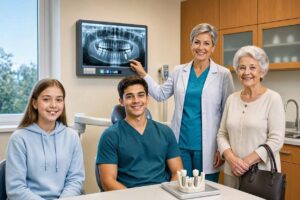
At What Age Is A Dental Implant Possible?
The Single Most Important Factor: Bone Growth and Maturity
There is no universal “magic age” where a switch flips and implants become possible. However, there is one absolute, non-negotiable biological rule: the patient’s jawbone must be fully grown and skeletally mature. A dental implant is placed directly into the jawbone and fuses with it in a process called osseointegration. Unlike a natural tooth, an implant does not have a periodontal ligament and cannot move or adapt. Once integrated, it stays in a fixed position. If an implant is placed in a jaw that is still growing, it will not move with the surrounding teeth and bone. The result is a disastrous aesthetic and functional outcome. The implant will appear to submerge or sink as the natural teeth and jaw continue to grow around it. It can end up looking like a short, malpositioned tooth, creating a severe cosmetic defect and a difficult, expensive problem to fix. This is why jaw maturity is the cornerstone of age-related candidacy for dental implants.
Defining Skeletal Maturity: How Dentists Know When Growth is Complete
Because chronological age is not a reliable indicator of physical development, dentists and oral surgeons use specific diagnostic tools to determine if a young person’s jaw has finished growing. You cannot simply look at a 17-year-old and assume they are ready. The gold standard diagnostic test is a cephalometric radiograph, a specialized lateral skull X-ray. This image allows the surgeon to analyze the growth plates in the skull and hand-wrist radiographs can also be used to assess general skeletal maturity. The key anatomical landmark is the fusion of the growth plates in the cervical vertebrae of the neck, which are visible on the cephalometric X-ray. If these plates are open, the patient is still growing. If they are fused, skeletal maturity has been reached.
For females, growth is generally complete earlier, typically around 16 to 18 years of age. For males, growth continues longer, usually ceasing between 18 and 21 years of age. These are averages. A female patient might not be ready at 17, and a male patient might be fully mature at 19. The decision to proceed with implant placement in a young patient is never based on a birthday. It is a radiographic decision. A qualified specialist will not place an implant in the aesthetic zone of a young person without a confirmed, fused skeletal growth pattern. This protects the patient from a permanent cosmetic catastrophe.
The Specific Case of Congenitally Missing Teeth in Teenagers
One of the most challenging scenarios is a teenager who is missing one or both maxillary lateral incisors, the smaller teeth next to the two front teeth. This is a common congenital condition. The patient and their parents are understandably eager to close the gap and complete their smile. The emotional and social pressures during high school are immense. However, this is precisely the situation where the age rule must be strictly applied. Placing an implant here too early, even at age 16, can lead to the infamous “submerged implant” appearance as the surrounding teeth continue to erupt downward, leaving the implant behind and creating an uneven gum line.
The standard of care is to delay implant placement until growth is radiographically confirmed to be complete. In the interim, a temporary solution is provided. This is often a high-quality, removable retainer or an esthetic flipper with a false tooth, or a fixed, bonded bridge known as a Maryland bridge. This temporary tooth preserves the space and gives the patient a natural-looking smile during their remaining growth years. Orthodontic treatment is also frequently part of the plan to open the correct amount of space for the future implant. The patient and their family must be counseled that waiting is an active phase of the treatment, not a delay in care. It is the single most important factor in ensuring the final implant restoration looks beautiful and natural for a lifetime.
Is There a Maximum Age Limit for Dental Implants?
Absolutely not. There is no upper age limit for dental implant surgery. I have seen patients in their 80s and 90s successfully receive and heal from dental implants and enjoy a vastly improved quality of life. The decision in older adults is never based on their chronological age but on their biological and medical fitness for a minor surgical procedure. An 85-year-old with well-controlled medical conditions can be a far better candidate than a 65-year-old with unstable, multiple severe diseases. Age itself is not a contraindication. The focus shifts entirely from growth to a comprehensive health assessment. The ability to eat comfortably, speak clearly, and smile with confidence is a fundamental human need at any age, and dental implants can be a life-changing solution for seniors struggling with loose or ill-fitting dentures.
Health and Medical Evaluation for the Older Adult
For an older adult, the pre-surgical evaluation is a detailed and systematic process. The dentist or oral surgeon will conduct a thorough medical history review, focusing on conditions that could affect surgical healing and osseointegration. Uncontrolled diabetes mellitus is a significant concern. Persistently high blood sugar levels impair wound healing, reduce the body’s ability to fight infection, and can interfere with the bone’s capacity to fuse to the titanium implant surface. A hemoglobin A1c test is often required to demonstrate good long-term glucose control. A level below 7.0% is generally considered a safe target for elective surgery.
Other critical areas of inquiry include a history of bisphosphonate therapy, a class of drugs used to treat osteoporosis or certain cancers. These drugs, particularly when administered intravenously, carry a risk of medication-related osteonecrosis of the jaw, a devastating condition where the jawbone fails to heal and becomes exposed. Oral bisphosphonates for osteoporosis also carry a risk, though much lower. A drug holiday, in consultation with the patient’s physician, may be considered. Cardiovascular health is assessed, including a history of heart attack, stroke, or valve replacement. Patients on anticoagulants like warfarin or direct oral anticoagulants require careful coordination with their cardiologist to manage bleeding risk during surgery. The key is that age is not the barrier. Uncontrolled or unstable medical conditions are the barriers, and many of these can be optimized and managed, making implant surgery a safe reality.
The Role of Bone Quantity and Quality in the Aging Jaw
A very real physiological challenge in older adults is bone atrophy. After a tooth is lost, the surrounding alveolar bone that once supported it begins to resorb, or shrink, over time. This is a natural, inevitable process. If a tooth has been missing for many years, a patient may present with insufficient bone width or height to stabilize an implant. This is not a function of age itself, but of the duration of edentulism. A 50-year-old who lost a tooth 30 years ago can have more severe bone loss than a 75-year-old who lost a tooth 2 years ago.
The good news is that this is not a dead end. A cone beam computed tomography (CBCT) scan is the standard diagnostic tool. This 3D X-ray provides a precise, high-resolution map of the jawbone’s volume and density. If the scan reveals insufficient bone, a bone grafting procedure can almost always be performed. This involves adding bone material—from the patient, a donor, or a synthetic source—to the deficient area and waiting several months for it to integrate and mature into solid, vascularized bone capable of receiving an implant. A sinus lift is a specific type of bone graft in the upper back jaw that raises the floor of the maxillary sinus. These augmentation procedures add time and cost to the overall treatment, but they routinely allow older patients with significant bone loss to become excellent implant candidates. The limiting factor is not age, but whether the bone deficiency can be predictably and safely corrected, which modern techniques allow with high success rates.
Oral Hygiene, Smoking, and Lifestyle Factors
A patient’s lifestyle and habits are critical determinants of long-term implant success, sometimes outweighing age. A chronic, heavy smoker who is 40 years old carries a dramatically higher risk of implant failure than a healthy, non-smoking 75-year-old. Smoking causes vasoconstriction of the small blood vessels in the oral soft tissues and bone. This reduces the delivery of oxygen, nutrients, and immune cells to the surgical site, severely impairing healing and the process of osseointegration. The failure rate of implants in smokers is significantly, and consistently, documented to be higher than in non-smokers. Most responsible implant surgeons will strongly counsel a patient to quit smoking before surgery and throughout the healing period, and some may decline to place implants in a heavy smoker with poor oral hygiene.
Uncontrolled periodontal disease is another absolute contraindication until it is treated and stabilized. A history of gum disease, even if treated, means the patient has a susceptible host response and is at higher risk for peri-implantitis, a destructive inflammatory process around an implant that is analogous to periodontitis around a natural tooth. A patient of any age must demonstrate the ability and commitment to maintain meticulous oral hygiene. They must be able to clean effectively around the implant restoration with a toothbrush, floss, and potentially a water flosser. The decision to place an implant is a partnership, and the patient’s role in long-term maintenance is as important as the surgeon’s skill.
Children and Dental Implants: A Strict Contraindication
To be unequivocally clear, dental implants are never a treatment option for children. A child’s jaw is in a state of dynamic, rapid growth. Placing an implant would be an act of malpractice, leading to severe facial deformity. The implant would become an ankylosed object around which the jaw, face, and teeth continue to develop, creating a permanent, uncorrectable aesthetic and functional mess. The treatment for tooth loss in children is always focused on space maintenance and guiding the growth of the permanent dentition. This might involve a simple space maintainer or a more complex pediatric partial denture, always with the goal of preserving the site for a future permanent solution when growth is complete. If a child loses a permanent tooth due to trauma, like an avulsed incisor from a sports injury, every effort is made to replant the tooth. If replantation fails, a resin-bonded bridge or a removable appliance is the interim solution. The conversation about an implant is deferred for a decade or more.
A Case Study Timeline: A Young Patient’s Journey
To make this concrete, let’s follow a typical case. A 15-year-old boy, Matthew, is missing his right maxillary lateral incisor. He was born without it. He is self-conscious about the gap. He and his parents visit an orthodontist and an oral surgeon. The surgeon takes a cephalometric X-ray. The analysis shows his cervical vertebral growth plates are still open; he is still growing. The surgeon explains that an implant now is impossible. The plan is: Phase 1, orthodontics to open the correct amount of space for a future implant crown. Phase 2, a temporary Maryland bridge to give him a natural-looking tooth for the next few years. Matthew is re-evaluated annually. At age 19, a new cephalometric X-ray shows his growth plates are fused. He has reached skeletal maturity. A CBCT scan is taken, confirming adequate bone. Now, and only now, the oral surgeon schedules the implant placement surgery. After a healing period, his dentist places the final crown. The result is a perfectly positioned, natural-looking tooth that will be in harmony with his smile for the rest of his life. His age at surgery was 19, but the decision was made by his biology.
Conclusion
The possibility of a dental implant is not dictated by a specific number of years but by a biological threshold: the jawbone must be skeletally mature, a point typically reached in the late teenage years and confirmed with a radiograph, making early placement a risk for severe cosmetic deformity. There is no maximum age limit, as healthy older adults in their 80s and 90s can be excellent candidates, with candidacy determined by their medical fitness, bone volume, and lifestyle habits rather than their birthday. For anyone considering an implant, a consultation with a qualified specialist who uses advanced imaging to assess both skeletal maturity and bone health is the essential first and decisive step.
Frequently Asked Questions
My daughter is 16 and very upset about a missing front tooth. Can we make an exception?
No. The risk of a permanent, disfiguring aesthetic result as her jaw continues to grow is far too high. A temporary, non-implant solution like a bonded bridge is the safe, standard interim treatment until she is skeletally mature.
I am 78 and have osteoporosis. Does this automatically disqualify me?
Not automatically, but it requires careful management. Your surgeon must know the specific medications you take. Oral bisphosphonates carry a small but real risk of jaw healing problems. A discussion with your prescribing physician is essential, but osteoporosis itself is not a contraindication to implant placement.
Will my medical insurance pay for a dental implant if I’m old and it’s medically necessary?
Medical insurance very rarely covers the implant or crown, which are considered dental procedures. It may cover the surgical extraction of teeth or a bone graft if it is medically necessary, but the implant and the tooth restoration are almost always out-of-pocket or covered by separate dental insurance with specific implant benefits. Always check your specific policy.
How long does the whole process take for an older adult?
From start to finish, including any necessary extractions and bone grafting, the process can take anywhere from four to over twelve months. If a bone graft is needed, a healing period of 3-6 months is typical before the implant is placed. After implant placement, another 3-6 months of healing for osseointegration is required before the final crown can be attached.
Can a teenager with a missing back molar get an implant sooner since it’s not visible?
The same rule applies. The growth of the entire jaw is the concern, not just the aesthetic zone. Placing an implant in the back of a growing jaw can still lead to malposition as the jaw grows, creating a functional bite problem. Skeletal maturity is a requirement for any implant in a growing patient.
Additional Resource
For comprehensive, patient-friendly information on dental implants and to find a qualified specialist, you can explore the American Academy of Implant Dentistry’s patient resources. Visit the AAID Patient Information Page


