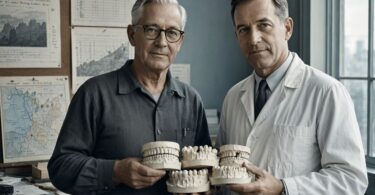
Losing teeth changes more than your smile. It alters how you eat, speak, and feel in social situations. A metal partial denture offers a time-tested solution that balances strength, longevity, and function. But if you have never seen one up close, you probably have a single pressing question: what do metal partial dentures look like?
You might picture a mouth full of shiny silver wire that screams “denture” the moment you smile. Modern dentistry tells a different story. Today’s metal partial dentures combine precise engineering with surprisingly discreet design. They look far more natural than the clunky devices of decades past, yet they still contain a hidden metal skeleton that gives them remarkable durability.
This guide walks you through every visual detail. You will learn how the metal framework sits in the mouth, what the clasps look like on natural teeth, how the acrylic base mimics gum tissue, and how the replacement teeth blend with your existing smile. By the end, you will have a realistic mental image of exactly what to expect when you look in the mirror wearing one.

What Do Metal Partial Dentures Look Like?
Understanding the Basic Structure: What You Actually See
Before diving into fine details, let’s build a complete picture of the denture as a whole. A metal partial denture, often called a cast metal framework partial, consists of several distinct components. Some you see clearly. Others hide from view.
The Three Visible Layers
When you hold a metal partial denture in your hand or see one in someone’s mouth, three primary materials catch your eye:
The Metal Framework: This thin, rigid skeleton forms the foundation. Dentists usually make it from cobalt-chromium alloy. The metal has a smooth, polished, silver-gray appearance. It looks similar to stainless steel but with a slightly darker, more muted tone. Most of this framework sits against the roof of the mouth or behind the teeth where it remains hidden during normal talking and smiling.
The Acrylic Base: This pink, gum-colored material attaches to the metal framework. It holds the replacement teeth and rests directly on the gum tissue. Dental labs carefully color-match this acrylic to your natural gums, blending pinks, slight browns, or bluish undertones depending on your individual tissue color.
The Replacement Teeth: These attach to the acrylic base. Modern denture teeth come in countless shapes, sizes, and shades. Dental labs select ones that match your remaining natural teeth. The teeth themselves are usually made from high-quality acrylic or sometimes porcelain, though acrylic dominates modern practice because it bonds better to the base.
“A well-made metal partial denture should whisper, not shout. From a conversational distance, people should notice your smile, not your dental work.” — Dental Prosthetist with 30 years of clinical experience
Front View: What Others See When You Smile
This is the view that matters most to most people. When you smile naturally, what do metal partial dentures look like to someone standing in front of you?
The short answer: if the denture fits well and the dentist planned it carefully, people see teeth and pink gum tissue. They do not see metal.
The replacement teeth sit in the acrylic base, which extends slightly below the gumline to create a seamless transition. The lab technician shapes the acrylic to mimic the natural contours of gum tissue, including subtle stippling or texture that catches light similarly to real gums.
However, depending on where your missing teeth are located, you might see a thin metal clasp wrapped around a neighboring tooth near the gumline. More on clasps shortly.
Important Note for Front Teeth Replacement: If you need to replace a visible front tooth, your dentist will usually recommend strategic clasp placement. They position clasps further back in the mouth whenever possible. For front-facing areas, they may use tooth-colored or gum-colored clasp alternatives or design the framework so the metal stays completely hidden behind remaining teeth.
The Metal Framework: The Hidden Skeleton
Understanding what metal partial dentures look like requires a close examination of the framework itself. This component gives the appliance its name and its reputation for durability.
Color and Finish
The metal framework has a distinctive metallic gray color. It is not bright chrome like a car bumper. Think instead of the subtle gray of a high-quality surgical instrument. The surface looks smooth and polished, with a slight shine that glides over oral tissues without irritation.
Dental laboratories invest significant time in finishing the metal. They polish every edge, every curve, and every surface. A well-finished framework feels slick to the touch and reflects light evenly. This attention to detail prevents food from clinging to rough spots and keeps the denture comfortable against the tongue and cheeks.
The Major Connector: The Largest Metal Piece
The major connector is the largest single piece of metal in the denture. It connects the left and right sides of the framework, providing structural rigidity. The shape depends on where you have missing teeth.
For upper dentures: The major connector usually takes the form of a broad, thin plate that crosses the palate. It might cover part of the hard palate in a U-shape or horseshoe design, or it might form a single broad strap across the middle. Some designs use an anterior-posterior strap that creates an open area in the center of the palate. From a visual standpoint, this palatal metal looks like a thin, silver-gray shield lying against the pink roof of the mouth. When you talk or laugh, this area remains hidden unless you tip your head far back.
For lower dentures: The major connector usually takes the form of a lingual bar — a slim, curved metal strip that runs along the inside of the lower teeth, near the floor of the mouth. It sits below the tongue, hugging the natural curve of the jaw. This bar is about 4 to 5 millimeters tall and perhaps 1.5 to 2 millimeters thick. From the front, nobody sees it. From the side, it remains tucked behind the teeth. Only if you deliberately pull your lower lip down and peer into the mouth would you spot this polished metal bar.
The Minor Connectors: Small Bridges
Minor connectors are smaller metal struts that branch off the major connector. They reach outward to connect with the clasps and the acrylic base. Think of them as small bridges. They cross the gum line perpendicularly, usually between teeth, and disappear into the pink acrylic.
These metal struts are thin, often just a couple of millimeters wide. Dental technicians position them in the natural spaces between teeth. From the outside, they remain invisible because they run in the embrasures — the small triangular gaps where teeth meet. You can see them if you look closely from the inside, but they blend with the shadows of the mouth.
“The art of framework design lies in hiding metal where the eye cannot follow. We use the mouth’s own geography as camouflage.” — Master Dental Technician
Clasps: The Most Visible Metal Component
Now we address the element that concerns most patients: the clasps. These small metal arms wrap around selected natural teeth to hold the partial denture securely in place. They represent the only metal that might show when you smile, depending on their location and your smile line.
What Clasps Actually Look Like
A clasp consists of a thin, gently curved metal arm that starts from the acrylic base or a minor connector, sweeps around a natural tooth, and ends with a small, rounded tip resting in a slight undercut of the tooth. The clasp arm measures roughly 1 to 1.5 millimeters in diameter — about the thickness of a standard paperclip wire.
The metal matches the framework color: a subdued silver-gray. The surface appears smooth and polished. The arm curves gracefully, following the anatomy of the tooth it grips. There is nothing jagged or sharp about it. Dental labs carefully round every edge so the clasp feels smooth against your cheek and tongue.
Most partial dentures use two or more clasps, strategically positioned on teeth at the ends of the gap or on back molars. A typical design places clasps on the first molars or premolars on both sides of the mouth.
Circumferential Clasps: The Most Common Type
The circumferential clasp, also called an Akers clasp, is the workhorse of partial denture design. It approaches the tooth from above (on upper teeth) or below (on lower teeth), wraps around more than half the tooth’s circumference, and terminates in a retentive tip.
Visually, imagine a thin wire that starts from the denture base near the chewing surface, crosses the gum line at a diagonal, and then hugs the side of the tooth. It continues around the tooth, crosses back over the gum line on the other side, and reconnects with the framework. You see a small metal line crossing the tooth at the gum margin, then a metal band wrapping the side and perhaps part of the front surface.
When someone looks directly at your smile, they might see a thin silver line crossing the gum area of a canine or premolar. If the clasp sits on a back molar, even this small line stays hidden behind the corner of your mouth.
I-Bar Clasps: A More Discreet Alternative
For patients concerned about visible metal, dentists sometimes choose I-bar clasps. These approach the tooth from the gum side rather than from above. A thin metal strut rises vertically from the denture base, crosses the gum line briefly, and contacts the tooth in a small, discreet spot on the side.
The visual advantage: when you smile, an I-bar clasp may only show a tiny metal dot or thin vertical line near the gum. The arm does not wrap around the front of the tooth. This design works especially well for teeth near the front of the mouth where aesthetics matter most.
Hidden and Tooth-Colored Clasp Options
Modern dentistry offers alternatives for patients who want zero visible metal:
Precision Attachments: Instead of visible clasps, the dentist places a small metal receptacle inside a crown on a natural tooth. The partial denture has a matching projection that snaps into this hidden receptacle. Nothing shows from the outside. The mechanism stays entirely internal. This option costs more and requires crowning the abutment teeth.
Flexible Resin Clasps: Some partial dentures use gum-colored or tooth-colored nylon clasps instead of metal. These belong to a different category called flexible partials, but it is worth mentioning that hybrid designs sometimes combine metal frameworks with a few strategically placed non-metal clasps in visible areas.
Tooth-Colored Coating: Some laboratories apply a tooth-colored composite or ceramic coating to the visible portion of a clasp. This makes the metal arm blend with the natural tooth. This technique works moderately well, though the coating can wear over time.
The Acrylic Base: Simulated Gum Tissue
Now let’s examine the pink material that holds the teeth and rests against your gums. The acrylic base plays a crucial visual role. It replaces not just teeth but also the gum tissue and underlying bone that resorbed after tooth loss.
Color Matching and Customization
Dental laboratories do not grab a single “gum pink” acrylic and call it done. They carefully blend acrylic powders and liquids to match your specific gum color. The technician considers:
-
Base color: Light pink, coral pink, or darker pink with brown undertones
-
Pigmentation: Some gums have natural brown or melanin spots; skilled technicians can replicate these
-
Translucency: Real gum tissue has some transparency; modern acrylics mimic this
-
Thickness: Thicker areas look darker and more opaque, just like real tissue
When you first receive your partial denture, the acrylic base may look slightly more uniform than natural gum tissue. Over time, as you wear the denture and it picks up subtle staining from foods and beverages, it often settles into an even more natural appearance.
Shape and Contour
The acrylic base does not look like a flat pink block. The technician carves and shapes it to replicate natural gum anatomy. You will see:
-
Interdental papillae: The small triangular gum projections that normally fill the spaces between teeth
-
Root eminences: Subtle vertical ridges on the gum that mirror the shape of tooth roots underneath
-
Mucogingival junction: A slight color and texture change where the attached gum meets the looser tissue near the cheek
This anatomical shaping prevents the “denture look” — that unnaturally smooth, puffy appearance that makes some dentures obvious. A well-contoured base casts natural shadows and catches light much like real gum tissue.
Borders and Edges
The edges of the acrylic base taper thin and follow the natural contours of your mouth. On the cheek side, the border extends into the vestibule — the trough between your gums and cheek — and ends in a softly rounded edge. On the tongue side, the border tucks neatly against the teeth and gum line.
The transition from acrylic to natural tissue is not invisible. If you run your tongue along the denture border, you will feel where the acrylic ends and your real gum begins. But visually, especially from a short distance, the transition looks smooth and unobtrusive.
The Replacement Teeth: Matching Your Natural Smile
The teeth on a metal partial denture play the starring visual role. When someone looks at your smile, they focus on the teeth, not the framework. Dental labs take great care selecting and positioning these prosthetic teeth.
Material and Appearance
Most modern denture teeth use highly cross-linked acrylic resin. This material looks remarkably like natural tooth enamel. It has:
-
Translucency at the biting edge: Just like natural teeth, the incisal edge lets some light pass through
-
Layered color: Darker at the gum line, lighter toward the biting surface
-
Surface texture: Subtle vertical ridges and developmental grooves
-
Custom staining: Some labs add faint stains to replicate years of natural wear or slight discoloration that matches your other teeth
Porcelain teeth, less common today, offer superior hardness and stain resistance. They look slightly more glassy and translucent. However, they feel firmer against opposing natural teeth and may cause more wear on them over time. They also tend to click more noticeably when they contact each other.
Size, Shape, and Shade Selection
Your dentist and the lab technician use shade guides and measurement tools to match the replacement teeth to your existing dentition. They consider:
Shade: Modern shade guides contain dozens of color tabs ranging from bleached white through yellows, grays, and browns. The technician picks the closest match and may layer multiple shades within a single tooth for realism.
Size: The lab measures your remaining teeth and references old photographs, study models, or previous dentures to select appropriately sized replacements. A front tooth that is too wide or too long instantly looks fake.
Shape: Teeth come in square, ovoid, and tapering forms. The shape should harmonize with your face shape and existing teeth. A square-jawed person with square natural teeth needs square replacement teeth.
Arrangement and Positioning
The lab sets the replacement teeth in wax first, then processes them into the acrylic base. The position matters enormously for natural appearance:
-
Teeth sit at slight rotations, not in a perfectly uniform row
-
The midline aligns with your facial midline
-
The bite plane follows your natural curve
-
Slight irregularities mimic natural dentition
Perfectly aligned, unnaturally white, cookie-cutter teeth are the hallmark of an obvious denture. Skilled technicians introduce subtle asymmetries that make the replacements indistinguishable from natural teeth at conversational distances.
Comparison Table: Metal vs. Other Partial Denture Types
To fully understand what metal partial dentures look like, it helps to compare them side by side with other common options. This table breaks down the visual characteristics of each type.
| Feature | Metal Partial (Cast Framework) | Acrylic Partial (Flipper) | Flexible Partial (Valplast/Nylon) |
|---|---|---|---|
| Framework Visibility | Thin metal bars hidden behind teeth and across palate | Thick pink acrylic may show through front gaps | No metal; translucent pink nylon base |
| Clasp Appearance | Thin silver-gray metal arms on selected teeth | Thick pink acrylic wire clasps; more visible | Gum-colored nylon clasps; blend with tissue |
| Base Thickness | Thin acrylic over metal; minimal bulk | Thick acrylic for strength; more noticeable | Thin but slightly bulkier than metal |
| Gum Tissue Match | Good; custom color-matched acrylic | Moderate; uniform pink, less customization | Good; nylon blends with tissue color |
| Tooth Appearance | High-quality acrylic or porcelain; excellent match | Basic acrylic teeth; may look less natural | High-quality acrylic; good aesthetics |
| Overall Discretion | Very good; metal mostly hidden | Fair; bulkier, clasp wire visible | Excellent; no metal anywhere |
| Longevity of Appearance | Excellent; resists staining and wear | Fair; stains, discolors over time | Good; resists staining but may discolor slightly |
| Smile Line Impact | Clasps may show on front teeth if placed there | Clasps and bulk often visible on front teeth | No clasps; very aesthetic for front teeth |
What This Table Tells You: Metal partial dentures balance aesthetics with function. They provide the most natural-looking result while maintaining slim, strong construction. Flexible partials win on pure discretion, but they lack the rigidity and longevity of a metal framework. Acrylic partials serve as affordable temporaries but look and feel bulkier.
The Visual Experience Day by Day: A Realistic Timeline
Reading about components helps, but you probably want to know what the denture actually looks like in daily life. Let’s walk through the visual experience from the first fitting onward.
The Try-In Appointment
Before the lab finishes the denture, you attend a try-in appointment. The dentist places a wax version of the denture in your mouth. The teeth sit in pink wax, and the metal framework is partially embedded.
At this stage, the metal framework looks exactly as it will in the final denture. The teeth look correct in shade and shape, but they sit in wax that appears slightly opaque and uniform pink. The dentist checks the fit, the bite, and the appearance. You look in the mirror and see roughly how the final result will appear. If something looks off — a tooth too long, a shade mismatch — the dentist sends feedback to the lab.
Delivery Day: First Look in the Mirror
On delivery day, the dentist seats the finished denture. You hold a mirror and see the result for the first time.
Initially, the acrylic base may look a bit uniform and flat compared to your natural gum tissue. This is normal. The laboratory processes the acrylic under heat and pressure, which creates a smooth surface. Over the coming weeks, minor surface wear and exposure to oral fluids will add subtle character.
The replacement teeth should blend remarkably well. If the lab did a good job, you might struggle to tell which teeth are natural and which are prosthetic at a quick glance. The clasps, if visible, will catch your eye because you know where to look. You will notice that thin silver arm crossing a tooth near the gum. But remember: you are hyper-focused on your mouth. Most people will not notice.
“Patients always see their clasps immediately. They fixate on them. But in 20 years of practice, I can count on one hand the number of times someone else commented on a patient’s clasps.” — Practicing Dentist
After a Week of Wear
By the end of the first week, the denture begins to look slightly more natural. The acrylic picks up a thin salivary film that reduces its initial shine. The replacement teeth settle into alignment with your bite. Your lips and cheeks adapt to the slight added bulk, so your smile looks relaxed rather than slightly stretched.
You also begin to adapt psychologically. The initial shock of seeing something foreign in your mouth fades. Your brain starts to accept the denture as part of your oral landscape. You stop obsessively checking the mirror.
After Several Months
Months in, the denture truly settles. The acrylic base develops a natural patina that matches your surrounding tissue even more closely. Minor wear on the replacement teeth eliminates any artificial-looking sharp edges. The clasps, if well-made, remain polished and comfortable. Your cheek and tongue muscles work around the framework without conscious thought.
Visually, the denture should still look excellent. If you maintain good oral hygiene and regular dental checkups, the appearance holds steady. Stains can build up slowly, just as on natural teeth, so proper cleaning matters.
Factors That Affect the Visual Outcome
Not all metal partial dentures look identical. Several factors influence the final appearance. Understanding these helps you communicate with your dentist and set realistic expectations.
Dentist Skill and Laboratory Quality
The single biggest factor: who makes your denture. A dentist who takes precise impressions, selects an excellent dental laboratory, and communicates detailed aesthetic instructions gets a vastly superior result compared to one who rushes through the process.
High-quality labs employ technicians who view their work as art. They layer acrylic, shape gum contours meticulously, and select teeth with an artist’s eye. Lower-cost labs produce functional but less natural-looking results.
Key Insight: Ask your dentist which lab they use and whether they consider that lab’s aesthetic work to be top-tier. You can sometimes pay a modest premium for a higher-quality lab.
Number and Location of Missing Teeth
Replacing a single missing molar at the very back of the mouth looks different from replacing four front teeth. Back-tooth replacements rarely show any metal at all. The denture sits entirely behind the smile line, and clasps anchor on neighboring back teeth where no one sees them.
Replacing front teeth demands more aesthetic consideration. The acrylic base extends into the visible smile zone. Any clasps on canines or premolars may show when you grin broadly. This situation calls for careful clasp design, possibly using I-bar clasps, precision attachments, or flexible clasp alternatives in visible areas.
Clasp Design and Placement
Your dentist chooses which teeth receive clasps and what type of clasps to use. This decision dramatically affects the visual result. Factors include:
-
Tooth shape: Some teeth have natural undercuts that allow clasps to hide in less visible areas
-
Smile line: Your dentist checks where your lip rests and moves when you smile
-
Aesthetic priorities: The dentist balances mechanical retention needs against appearance
If you express strong concerns about visible metal, a skilled dentist can often design around the issue. They might choose a clasp that approaches from the back side of the tooth or use a precision attachment on a crowned tooth.
Material Quality
Denture acrylics and teeth come in different grades. Premium denture teeth from brands like Ivoclar or Dentsply offer multi-layered color, natural translucency, and realistic surface texture. Economy teeth look flatter, more opaque, and more uniform.
Similarly, premium denture base acrylics offer better color stability, less porosity, and easier customization. They resist staining from coffee, tea, red wine, and tobacco better than basic acrylics.
Detailed Look at Upper vs. Lower Metal Partial Dentures
The visual experience differs significantly between upper and lower arches. Let’s examine each separately.
Upper Metal Partial Dentures
An upper partial denture typically has more metal visible to the wearer but less visible to others. The major connector — a palatal plate or strap — covers a portion of the roof of the mouth. When you look in the mirror with your mouth open, you see this smooth metal surface.
From the front: No one sees the palatal metal unless you yawn widely. The replacement teeth and acrylic base look like natural teeth and gums.
From below: If someone looks up into your mouth (an unusual angle), they would see the metal plate on your palate. In normal social interaction, this angle almost never occurs.
The acrylic border: Where the denture meets your natural gum on the cheek side, you see a thin pink line. This border should follow the natural curve of your gum line and remain unobtrusive.
Lower Metal Partial Dentures
A lower partial uses a lingual bar as its major connector. This bar sits behind your lower front teeth, below the tongue tip. It hugs the inside curve of your jaw.
From the front: The bar hides completely behind your teeth. Nobody sees it.
From the side: The bar sits low, near the floor of the mouth. It typically hides behind the teeth and below the tongue. Even in a broad smile, the cheek and tongue obscure it.
From above: Looking down into your own mouth, you can see the lingual bar as a slim, shiny metal strip running along the inside of your jaw. It looks like a thin metal railing tucked against the gum line.
The clasp challenge: Lower dentures often need clasps on canines or premolars, which sit more forward in the mouth. These clasps may show slightly when you smile broadly. This is the primary aesthetic challenge for lower partials.
Common Misconceptions About the Appearance of Metal Partials
Let’s clear up some myths and outdated ideas that persist about what metal partial dentures look like.
Myth 1: “They Look Like a Mouthful of Metal”
Reality: Modern metal frameworks use thin, lightweight alloys. The metal weighs less than you probably imagine. Most of the metal sits hidden from view. The visual impression is of teeth and gums, not of metal. You might see one or two small clasp arms, but “mouthful of metal” does not describe a modern partial.
Myth 2: “Everyone Will Know You Wear One”
Reality: Unless you tell people, most casual acquaintances will not notice. Close family and friends might eventually spot a clasp or notice a slight change in your speech pattern initially, but strangers and colleagues rarely detect a well-made partial. People generally do not scrutinize others’ mouths in detail.
Myth 3: “The Clasps Look Ugly and Obvious”
Reality: Clasps are thin, polished, and strategically placed. On back teeth, they hide entirely. On side teeth, they blend with the natural shadows of the mouth. Yes, you notice them because you know they exist. But ask yourself: have you ever noticed a clasp on someone else’s teeth? Most people cannot recall ever seeing one, even though millions of people wear partial dentures daily.
Myth 4: “The Fake Teeth Look Obviously Fake”
Reality: Modern denture teeth have come a long way. Layered acrylic, custom staining, and careful lab work create replacement teeth that fool the eye from conversational distance. The key is matching shade, shape, and position to your natural dentition. When those factors align, the replacements look remarkably real.
Myth 5: “Metal Partials Are Bulky and Uncomfortable-Looking”
Reality: Cast metal frameworks are actually thinner and less bulky than all-acrylic alternatives. The metal provides strength without requiring thick plastic. A metal partial denture usually feels and looks slimmer in the mouth than a temporary acrylic flipper.
How Metal Partial Dentures Compare to Natural Teeth
This section addresses the direct visual comparison. When someone looks at your smile, how do the denture-supported teeth compare to your natural ones?
Color and Translucency
Natural teeth possess a depth that comes from layers: enamel over dentin. Light penetrates the translucent enamel, bounces off the more opaque dentin layer, and reflects back. This creates a vital, lifelike appearance.
High-quality denture teeth mimic this layering. The lab uses teeth with a translucent incisal edge and a more opaque body. At conversational distance, the color looks correct. Up very close, a keen observer might notice slightly less depth in the prosthetic tooth.
Surface Texture and Light Reflection
Natural teeth have microscopic surface texture — perikymata, developmental grooves, and years of tiny wear patterns. These break up light reflection and prevent the flat, glossy look of cheap prosthetics.
Premium denture teeth incorporate surface characterization. Labs also sometimes add subtle textures to the acrylic base. The result: light plays across the prosthetic similarly to how it plays across natural teeth.
Gum Line Appearance
The transition zone where tooth meets gum looks slightly different on a denture. On a natural tooth, the gum hugs the tooth with a thin, translucent margin. On a denture, the acrylic base meets the tooth with a clean but slightly thicker junction. This is one area where careful observation can reveal the prosthetic nature, but only at very close range.
Shade Stability Over Time
Natural teeth stain and discolor gradually based on diet and habits. Denture teeth resist staining better than natural enamel in some ways, but acrylic teeth can also pick up surface stains over time. If your natural teeth darken slightly while the denture teeth remain bright, a mismatch can develop. This is why dentists sometimes recommend whitening natural teeth before matching the denture shade.
Visual Comparison of Clasp Types
Understanding clasp visibility helps you discuss options with your dentist. This table compares common clasp designs.
| Clasp Type | Description | Visibility | Best Used On |
|---|---|---|---|
| Circumferential (Akers) | Metal arm wraps around tooth from above; crosses gum line diagonally | Moderate; visible on side teeth, hidden on molars | Posterior teeth, strong retention needs |
| I-Bar | Metal arm approaches from gum side; contacts tooth in small spot | Low; minimal metal visible from front | Canines and premolars, aesthetic zones |
| Ring Clasp | Encircles nearly entire tooth; used on tipped molars | Moderate to high; more metal visible | Isolated molars with severe tipping |
| Wrought Wire | Thinner, more flexible wire; less rigid than cast clasp | Lower; thinner wire is less noticeable | Front teeth, teeth with less undercut |
| Precision Attachment | Internal mechanism; no clasp arm at all | None visible; completely hidden | Aesthetic zones, patients willing to invest more |
| Combination Clasp | Cast metal arm with wrought wire retentive tip | Low to moderate; combines strength and discretion | Various positions, balanced approach |
The Esthetic Zone: Replacing Front Teeth with a Metal Partial
When you need to replace one or more front teeth, the visual stakes rise considerably. This scenario deserves special attention.
Design Strategies for Front-Tooth Replacement
Dentists use several strategies to minimize visible metal when replacing front teeth:
Distal Extension Clasps: Instead of placing clasps on the teeth immediately adjacent to the gap, the dentist extends the framework back to clasp molars further back. The replacement teeth and base hold the front area, and the distant clasps provide retention without visible metal near the smile line.
Palatal Coverage: On upper dentures, the framework might include a broader palatal plate that provides retention through tissue contact rather than relying heavily on visible clasps. This trades some palatal coverage for better aesthetics.
Tooth-Borne Only: If you have intact teeth on both sides of the gap, the dentist can design the partial so it clips onto these teeth with hidden attachments or minimally visible clasps on the back sides.
The Acrylic Base in the Smile Zone
When replacing front teeth, the acrylic base sits prominently in the smile zone. The lab must pay extra attention to:
-
Gum color matching
-
Anatomical contouring of the fake gum tissue
-
Creating natural-looking papillae between teeth
-
Tapering the borders so they blend seamlessly
A high-quality front-tooth replacement with a metal partial can look remarkably natural. At arm’s length, most observers cannot distinguish it from natural teeth and gums.
Long-Term Visual Changes and Maintenance
Your metal partial denture will not look identical forever. Understanding how it ages helps you plan for maintenance and eventual replacement.
Acrylic Base Changes
The pink acrylic base gradually absorbs some oral fluids and can become slightly darker or more opaque over several years. It may also develop tiny surface cracks or porosity if not cleaned properly. Stains from coffee, tea, red wine, tobacco, and certain foods accumulate slowly.
Regular professional cleanings can restore much of the original appearance. Your dentist can polish the acrylic surfaces to remove surface staining. Deep stains that penetrate the acrylic may not polish out completely.
Metal Framework Wear
The metal framework itself is remarkably stable. Cobalt-chromium alloy resists corrosion and maintains its polished finish for years. However, clasps can lose some tension over time through repeated flexing during insertion and removal. A clasp that loses tension may gap slightly away from the tooth, becoming more visible and less effective.
Your dentist can sometimes tighten clasps during a maintenance visit. Severely worn clasps or frameworks may require replacement of the entire denture.
Tooth Wear
Denture teeth, being acrylic, wear faster than natural enamel. Over five to ten years, you may notice:
-
Flattening of the biting surfaces
-
Loss of the sharp incisal edge on front teeth
-
Slight changes in bite alignment
When the replacement teeth wear noticeably, they may start to look shorter or less defined than your natural teeth. At this point, you might consider having the denture relined with new teeth or replacing it entirely.
Psychological Aspects: How You Perceive Your Partial
We cannot discuss what metal partial dentures look like without addressing the psychological dimension. How you feel about the denture profoundly influences how you perceive its appearance.
The Hyper-Awareness Phase
The first few weeks bring intense self-consciousness. You feel certain that everyone notices the denture. You check mirrors frequently. You smile cautiously. You worry about the clasps catching light.
This phase passes. Almost every denture wearer goes through it and comes out the other side. Your brain gradually stops flagging the denture as “foreign” and accepts it as part of your normal oral anatomy.
Social Feedback and Reassurance
Most patients discover that no one comments on their denture. Spouses, close friends, and coworkers rarely notice unless told. The absence of reaction provides powerful reassurance. Over time, you realize that what felt glaringly obvious to you was invisible to everyone else.
When Appearance Concerns Persist
If you remain unhappy with the appearance after the adaptation period, speak with your dentist. Sometimes small adjustments — polishing a clasp, reshaping an acrylic border, swapping a tooth — can make a meaningful difference. In rare cases, remaking the denture with different aesthetic specifications provides the result you want.
Choosing the Right Design: Questions to Ask Your Dentist
Before committing to a metal partial denture, ask questions that shape the visual outcome. Here are key points to discuss:
-
“Where will the clasps sit, and will they show when I smile?”
-
“Can we use I-bar clasps or hidden attachments instead of circumferential clasps?”
-
“Which dental lab will fabricate this, and what is their aesthetic reputation?”
-
“How do we match the shade and shape of the replacement teeth to my natural teeth?”
-
“What does the major connector look like? How much of my palate will it cover?”
-
“Can I see photos of similar cases you have completed?”
-
“What options do I have if the appearance does not meet my expectations?”
These questions signal to your dentist that aesthetics matter to you and invite collaborative planning.
Additional Resource: Visual Examples and Professional Guidance
For further reading and visual examples of different partial denture designs, visit the American College of Prosthodontists website at gotoapro.org. This professional organization provides patient education resources, including photographs and explanations of various tooth replacement options. While individual results vary, seeing the range of possibilities helps you form realistic expectations.
Frequently Asked Questions
Can you see the metal when wearing a partial denture?
In most cases, the metal remains hidden behind teeth, across the palate, or along the inside of the lower jaw. The clasps that hold the denture in place may show slightly on side teeth when you smile broadly, but on back teeth they hide completely. Modern designs prioritize discretion.
Do metal partial dentures look natural?
Yes, a well-made metal partial denture looks very natural. High-quality replacement teeth match the shade, shape, and translucency of natural teeth. The gum-colored acrylic base blends with surrounding tissue. Most people will not notice you are wearing one during normal conversation.
How thick is the metal in a partial denture?
The metal framework is surprisingly thin. The major connector, like a palatal plate or lingual bar, is typically 0.5 to 1 millimeter thick — about the thickness of a credit card. Clasps are about 1 to 1.5 millimeters in diameter. Despite this thinness, the cobalt-chromium alloy is extremely strong.
Can the metal clasps be made tooth-colored?
Yes, there are options. Some laboratories coat the visible portion of metal clasps with tooth-colored composite. Others use flexible nylon clasps in visible areas. Precision attachments, which hide inside crowns, eliminate visible clasps entirely. Discuss these options with your dentist, though they may add cost.
Do metal partial dentures look different from flexible partials?
Yes. Metal partials have a thin, rigid framework and small metal clasps. Flexible partials use a translucent pink nylon base and gum-colored clasps. Flexible partials show no metal at all but are slightly thicker and lack the rigidity of a metal framework. Each has different aesthetic trade-offs.
Will the denture look worse over time?
With proper care, the appearance remains stable for years. The acrylic base may slowly absorb some stain, and the replacement teeth may show gradual wear. Regular professional cleanings and polishing help maintain appearance. Most metal partials serve well for five to ten years before needing replacement due to gradual changes in fit and appearance.
Can other people feel the metal clasps during kissing or close contact?
The clasps are smooth, polished, and contoured to the teeth. During close contact, a partner might feel a slight texture difference if they run their tongue over the clasp area, but the clasps are not sharp or uncomfortable. Most partners do not find them noticeable.
What if I hate how my partial denture looks?
Speak with your dentist promptly. Many aesthetic concerns can be addressed through adjustments, polishing, or modifying the denture. If the fundamental design or appearance is unsatisfactory, the denture may need to be remade. Clear communication with your dentist before and during fabrication prevents most aesthetic disappointments.
Conclusion
Metal partial dentures combine a thin, polished cobalt-chromium framework with gum-colored acrylic and carefully matched replacement teeth to create a functional, natural-looking restoration. The metal components hide behind teeth and across the palate or lower jaw, while small clasps provide secure retention with minimal visibility in most social situations. Modern materials and skilled laboratory work produce results that blend seamlessly with natural teeth, making metal partial dentures a discreet and reliable choice for replacing missing teeth.
Disclaimer: This article provides general educational information about the visual characteristics of metal partial dentures. Individual results vary based on oral anatomy, dentist and laboratory skill, materials used, and specific clinical circumstances. This content does not constitute dental advice. Consult a qualified dental professional for personalized recommendations regarding your oral health and tooth replacement options.