You just left your dentist’s office. They mentioned you need a temporary tooth replacement. They used a strange word: flipper.
Now you are sitting at home, trying to understand your treatment plan. You see a bunch of numbers and letters next to the word “flipper.” You ask yourself: what is the dental code for flipper?
You are not alone. This is one of the most confusing parts of dental billing for patients.
The short answer is: The most common dental code for a flipper is D5820 or D5821, depending on how many teeth the flipper replaces.
But that simple answer does not tell the whole story. In this guide, I will walk you through everything you need to know. No complicated jargon. No hidden tricks. Just honest, clear information to help you understand your bill and talk to your dentist with confidence.
Let us start from the beginning.
What Exactly Is a Dental Flipper?
Before we talk about codes, let us make sure we are talking about the same thing.
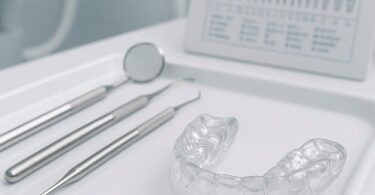
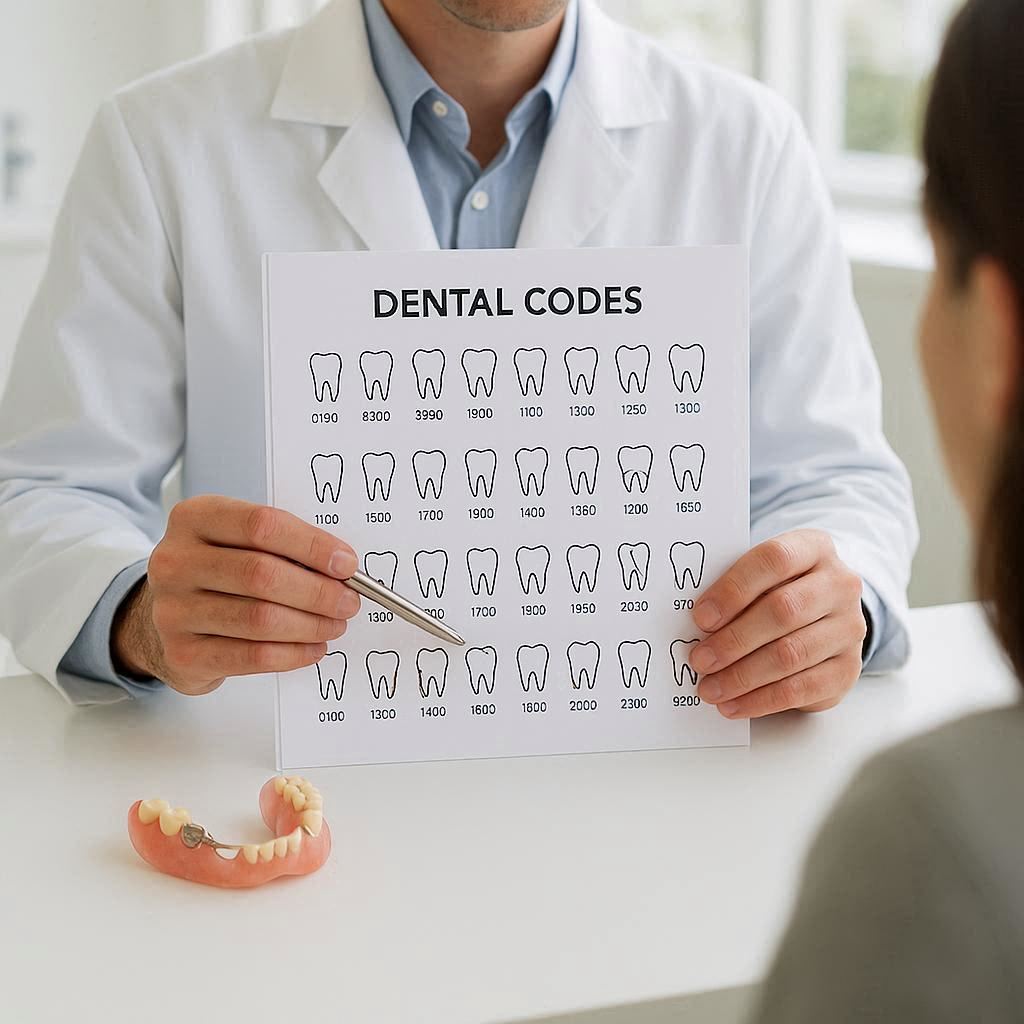
A dental flipper is a removable partial denture. It usually replaces one or two missing teeth. People often call it a “flipper” because you can flip it in and out of your mouth with your tongue or finger.
Think of it as a temporary solution. It is not meant to last forever. Most flippers last between six months and three years.
What Does a Flipper Look Like?
A flipper has three main parts:
- The false tooth (or teeth): Made of acrylic resin. It looks like a natural tooth but is less durable.
- The pink base: This looks like your gum tissue. It holds the false tooth in place.
- Small wire clasps: These wrap around your natural teeth to keep the flipper from falling out.
Some modern flippers do not use wire clasps. Instead, they use flexible pink plastic that grips your natural teeth gently.
When Do Dentists Recommend a Flipper?
Dentists do not suggest flippers for every situation. Here are the most common reasons a dentist will recommend one:
- You are waiting for a dental implant. Implants can take four to nine months to complete. A flipper fills the gap while you wait.
- You just had a tooth pulled. Your gums need time to heal. A flipper protects the space and helps you chew.
- You need a bridge but cannot afford it yet. A flipper is much cheaper than a bridge or implant.
- You play contact sports. A flipper can be removed during games, unlike a fixed bridge.
- You are a teenager or young adult. Your jaw is still growing. Dentists avoid permanent solutions like implants until growth stops.
What a Flipper Is NOT
It is equally important to know what a flipper is not:
- Not permanent: You cannot sleep with it. You must remove it every night.
- Not for eating everything: Hard, sticky, or crunchy foods can break it.
- Not for everyone: If you have many missing teeth, a partial denture or full denture is better.
- Not invisible: People will sometimes notice the pink base if they look closely.
Now that you understand the device, let us answer your main question.
The Direct Answer: What Is the Dental Code for a Flipper?
The American Dental Association (ADA) publishes the Current Dental Terminology (CDT) code book. Dentists and insurers use these codes to bill for procedures.
For a flipper, you will see one of two codes:
| CDT Code | Official Description | What This Means for You |
|---|---|---|
| D5820 | Interim partial denture (maxillary) – one tooth | A temporary flipper for the upper jaw replacing one missing tooth |
| D5821 | Interim partial denture (mandibular) – one tooth | A temporary flipper for the lower jaw replacing one missing tooth |
Important Note: These codes specifically say “one tooth.” But in real-world dental offices, dentists often use these same codes for flippers that replace two teeth. Insurance companies usually accept this, but not always.
What If the Flipper Replaces Two or More Teeth?
This is where things get a little messy. The ADA does not have a specific code for a “two-tooth flipper.” Dentists have two options:
- Use D5820 or D5821 anyway. Most insurers process this without a problem. The dentist adds a note saying “two units” or “replace teeth #8 and #9.”
- Use a different code: D5211 (maxillary partial denture – resin base) or D5212 (mandibular partial denture – resin base). These codes are for definitive (long-term) partials. Using them for a flipper may cause an insurance denial.
Realistic advice: Ask your dentist’s billing coordinator which code they plan to use. If they use D5820 for a two-tooth flipper, ask them to confirm with your insurance before the appointment.
Why Is There No “Flipper” Code?
The ADA avoids brand names or slang terms. “Flipper” is a nickname, not a medical term. The official term is “interim partial denture.” That is why you will not see the word “flipper” in any code book.
Think of it like this: You ask for a “Kleenex,” but the receipt says “facial tissue.” Same product, different name.
How Dental Codes for Flippers Work with Insurance
Understanding the code is only half the battle. The bigger challenge is getting your insurance to pay for it.
Most dental insurance plans consider flippers temporary. And many plans do not cover temporary appliances. But there are exceptions.
When Insurance Usually Pays for a Flipper
Insurance is more likely to cover a flipper if:
- You had a tooth extracted recently. Some plans cover one “interim prosthesis” per lifetime after an extraction.
- You are in an accident. Medical insurance (not dental) may cover a flipper if you lost teeth in a car crash or fall.
- You have a PPO plan with “missing tooth clause” exceptions. Some PPOs cover interim dentures at 50% after your deductible.
- The flipper is part of implant treatment. If your plan covers implants (rare), it often covers the temporary flipper during the healing phase.
When Insurance Will Deny the Claim
Prepare for a denial if:
- Your plan says “no coverage for temporary appliances.” Read your Evidence of Coverage booklet. Many HMOs and discount plans exclude D5820 and D5821 entirely.
- You are replacing a tooth that was missing before you joined the plan. This is called a “pre-existing condition.” Most dental plans do not cover missing teeth that existed before your effective date.
- You are getting a flipper for cosmetic reasons only. If the missing tooth is in the back and does not affect chewing, insurers may call it “cosmetic” and deny it.
Real Example: How a Flipper Gets Billed
Let me show you what an actual dental claim looks like for a flipper.
Patient: Sarah, age 34
Tooth missing: #9 (upper front tooth)
Reason: Tooth was knocked out in a biking accident
Insurance: Delta Dental PPO, $50 deductible, 80% coverage for basic services
| Code | Description | Fee | Insurance Pays | Patient Pays |
|---|---|---|---|---|
| D7140 | Extraction, erupted tooth | $150 | $120 (80%) | $30 |
| D5820 | Interim partial – upper, one tooth | $450 | $320 (80% after $50 deductible) | $130 |
| Total | $600 | $440 | $160 |
Notice: Sarah paid $160 out of pocket. Without insurance, she would have paid $600. The flipper itself cost $450.
What If Your Insurance Denies the Flipper Code?
Do not panic. You have options:
- Ask the dentist to resubmit with a different code. Some dentists will use D5211 (definitive partial) and write “interim use only” in the notes. This sometimes works.
- Pay out of pocket and ask for a discount. Many dentists offer a 10-20% cash discount if you pay same-day.
- Use a dental savings plan. These are not insurance. You pay an annual fee (around $100) and get 15-50% off all procedures, including flippers.
- Consider a dental school. Flippers at dental schools cost $150 to $250. Students perform the work under supervision.
Comparing a Flipper to Other Tooth Replacement Options
You now know the code for a flipper. But is a flipper the right choice for you? Let us compare it to other options using a simple table.
| Feature | Flipper (D5820/D5821) | Fixed Bridge (D6240) | Single Implant (D6010) | Partial Denture (D5211) |
|---|---|---|---|---|
| Cost (no insurance) | $350 – $600 | $2,000 – $5,000 | $3,000 – $6,000 | $700 – $1,800 |
| Permanent? | No (temporary) | Yes (10-15 years) | Yes (20+ years) | Yes (5-8 years) |
| Removable? | Yes | No | No | Yes |
| Affects nearby teeth? | No | Yes (shaving down healthy teeth) | No | No |
| Looks natural? | Good | Excellent | Excellent | Good |
| Chewing ability | 40-60% | 80-90% | 95-100% | 70-80% |
| Insurance coverage | Rare | Common (50-70%) | Rare | Common (50-70%) |
When a Flipper Is the Best Choice
A flipper makes sense if:
- You need a temporary solution for less than one year.
- You cannot afford a bridge or implant right now.
- You are waiting for an implant to heal.
- You are a child or teenager (jaw still growing).
- You need a tooth replaced for a special event (wedding, job interview) but plan to save for a permanent fix later.
When You Should Avoid a Flipper
Do not get a flipper if:
- You want a permanent fix. A flipper will break or wear out quickly.
- You have a severe gag reflex. The pink base touches your palate (upper jaw) or tongue space (lower jaw).
- You grind your teeth at night. You cannot wear a flipper while sleeping, but bruxism can break it during the day too.
- You are missing more than two teeth in a row. A partial denture or bridge is more stable.
- You have very few natural teeth left. The clasps need healthy teeth to grip.
Reader Note: I have spoken to patients who wore the same flipper for five years. Is that possible? Yes. Is it recommended? No. The acrylic breaks down over time. Bacteria grows in microscopic cracks. You risk infections and bad breath. Replace your flipper every two years at minimum.
Step-by-Step: How a Dentist Makes Your Flipper
Understanding the process helps you see why the dental code (D5820 or D5821) covers more than just the plastic tooth. It covers the entire service.
Step 1: The First Appointment (30-45 minutes)
Your dentist examines the gap. They check your nearby teeth for cavities or gum disease. Then they take impressions (molds) of your upper and lower teeth.
The dentist sends these molds to a dental laboratory. The lab pours stone into the molds to create a exact replica of your mouth.
What you feel: A gooey, mint-flavored material in a metal tray. It tastes strange but does not hurt.
Step 2: The Lab Work (3-7 days)
A dental technician:
- Paints the missing tooth area with wax
- Carves the wax into the shape of a tooth
- Sets the wax tooth into a pink acrylic base
- Packs the assembly into a flask (a metal container)
- Cures it under heat and pressure for 8 hours
- Trims, polishes, and adjusts the final flipper
Why this matters: This is skilled labor. A good technician charges $150-$300 just for their time. That is why a flipper costs what it does.
Step 3: The Try-In Appointment (15-20 minutes)
You return to the dentist. They place the flipper in your mouth. You both check:
- Does it fit snugly without rocking?
- Are the wire clasps too tight or too loose?
- Does the false tooth match the color of your natural teeth?
- Does the pink base irritate your gums?
The dentist may send the flipper back to the lab for adjustments. This happens often. Do not worry. It is normal.
Step 4: The Delivery (10 minutes)
The final flipper is inserted. The dentist shows you how to:
- Insert it (push with your thumb)
- Remove it (hook your fingernail under the pink base)
- Clean it (soft toothbrush, non-abrasive toothpaste)
- Store it (in water or denture solution overnight)
What the D5820 code includes: All four steps above. If your dentist tries to charge you separately for “insertion” or “adjustments,” ask why. Those services should be included.
Common Billing Mistakes with the Flipper Code
Even experienced dental offices make errors. Here are the most frequent mistakes involving D5820 and D5821.
Mistake #1: Using the Wrong Arch Code
The dentist bills D5820 (upper) when you received a lower flipper (D5821). Insurance computers catch this immediately. The claim gets rejected.
How to spot it: Look at your treatment plan. Does it say “maxillary” (upper) or “mandibular” (lower)? Make sure it matches your mouth.
Mistake #2: Billing for a Flipper and a Night Guard on the Same Day
Some patients try to get a flipper that also works as a night guard. That product does not exist. If a dentist bills D5820 and D9940 (night guard) on the same date, expect a denial.
Mistake #3: Upcoding to a Definitive Partial
A dentist wants higher reimbursement. Instead of D5820 ($450 fee), they bill D5211 ($1,200 fee). The insurance company audits the claim. They ask for x-rays and photos. When they see a flipper, not a definitive partial, they deny the entire claim.
Your risk: The dentist may ask you to sign a waiver saying you will pay the full $1,200 if insurance denies it. Do not sign that waiver. Ask for a corrected claim with the proper code.
Mistake #4: Forgetting the “Interim” Modifier
Some insurance plans require a special modifier (a two-letter code added to D5820) to indicate “this is temporary.” Common modifiers include:
- KP: First time this procedure is performed
- KQ: Second or subsequent time
- GA: Waiver of liability statement on file
Ask your dentist’s billing person: “Did you add the required modifier for an interim appliance?”
How Much Does a Flipper Really Cost? (By Payment Type)
The dental code itself does not set the price. Each dentist chooses their own fee. But national averages give you a realistic idea.
| Payment Method | Cost for D5820 (Upper, 1 tooth) | Cost for D5821 (Lower, 1 tooth) | Notes |
|---|---|---|---|
| No insurance (retail price) | $450 – $600 | $450 – $600 | Most common price |
| No insurance + cash discount | $350 – $480 | $350 – $480 | Ask for 15-20% off |
| PPO insurance (in-network) | $150 – $300 after deductible | $150 – $300 after deductible | If covered at all |
| HMO insurance | $50 – $150 | $50 – $150 | Very limited coverage |
| Dental school clinic | $150 – $250 | $150 – $250 | Longer appointment times |
| Medicaid (adult) | $0 – $50 copay | $0 – $50 copay | Only in states that cover adult dentures |
| Medicaid (child) | $0 | $0 | Most states cover interim partials for kids |
Hidden Costs to Watch For
The D5820 code covers the flipper itself. But you may see additional charges on your bill:
- D9910: Adjustment of flipper ($25-$50) – This should be included in the first 30 days. Refuse to pay it.
- D9950: Occlusion analysis ($50-$100) – Only needed if you have jaw pain. Not routine.
- D9986: Missed appointment fee ($50-$150) – If you cancel without 24 hours’ notice.
- D9999: Miscellaneous service – Never pay this. Ask for a specific code.
Pro tip: Before you agree to the flipper, ask for a written estimate with every code and price. This is called a “predetermination of benefits.” Send it to your insurance. They will tell you exactly what they pay. No surprises.
Caring for Your Flipper: Protecting Your Investment
You paid for the D5820 code. You have your flipper. Now how do you make it last?
Daily Cleaning Routine (3 minutes)
- Morning: Rinse the flipper under cool water. Brush it with a soft denture brush and non-abrasive paste. Do not use regular toothpaste – it scratches the acrylic.
- After meals: Remove the flipper. Rinse your mouth with water. Rinse the flipper. Reinsert it.
- Night: Remove the flipper. Brush it again. Soak it in denture cleaning solution (Polident, Efferdent) for 15 minutes. Rinse thoroughly. Store it in a container of water or solution overnight.
What Damages a Flipper (Avoid These)
| Action | Why It Is Harmful |
|---|---|
| Sleeping with it | Pressure from clenching/grinding cracks the base |
| Using hot water | Warps the acrylic, ruins the fit |
| Dropping it | The false tooth snaps off or the pink base cracks |
| Chewing gum or taffy | Sticky foods pull the flipper out of place |
| Biting into apples or corn on the cob | The force snaps the thin connector between teeth |
| Bleaching it | Whitening products weaken acrylic |
Signs You Need a Replacement or Repair
Your flipper is failing if you notice:
- A crack in the pink base (even a hairline crack)
- The false tooth feels loose (wiggles when you touch it with your tongue)
- The wire clasp broke (the flipper falls out when you talk)
- Bad smell (bacteria growing inside microscopic cracks)
- Gum pain or redness (the fit has changed)
Repair costs: Most dentists charge $75-$150 to repair a broken flipper. They use a code called D5610 (repair of broken denture base). If the repair costs more than 50% of a new flipper, just buy a new one.
Special Situations: When the Dental Code Changes
The standard codes (D5820, D5821) work for 90% of flipper cases. But some situations require different codes.
Situation 1: The Flipper Has a Metal Base
Rarely, a dentist will prescribe a flipper with a cast metal framework instead of all-acrylic. This is stronger but more expensive. The correct code is D5825 (interim partial denture – cast metal, maxillary) or D5826 (mandibular).
Cost difference: $800 – $1,200 instead of $450 – $600. Most patients do not need this.
Situation 2: The Flipper Replaces a Front Tooth with a “Fake Gum” That Covers Multiple Teeth
If you are missing several teeth and the pink base covers half your palate, you are no longer in “flipper” territory. The correct code is D5510 (repair broken complete denture base) or D5520 (replace missing teeth on complete denture). But honestly, you need a full or partial denture, not a flipper.
Situation 3: You Lost Your Flipper and Need a Duplicate
A duplicate flipper (using the same mold) uses code D5850 (tissue conditioning) if the lab needs a new mold. Or D9999 if the dentist simply orders a copy. Insurance rarely pays for duplicates. Expect to pay full price again.
Situation 4: The Flipper Is for a Child with Baby Teeth
Pediatric dentists use a special code: D5999 (unspecified pediatric prosthesis). They write “interim partial for primary dentition” in the description. Most Medicaid plans cover this 100% for children under 21.
Frequently Asked Questions (FAQ)
I have collected the most common questions from real patients about the dental code for flippers. Here are honest, realistic answers.
Q1: Can I buy a flipper online without a dental code?
A: No. Absolutely not. You will see websites selling “DIY flippers” for $50-$100. These are dangerous. They do not fit your mouth. They trap food and bacteria. They can cause gum disease, tooth decay, and even choking hazards. A proper flipper requires impressions, a dental lab, and a dentist’s supervision. Do not risk your health.
Q2: Will my medical insurance cover a flipper if I lost teeth in an accident?
A: Possibly. Medical insurance (not dental) sometimes covers dental injuries from accidents. The hospital or dentist must bill your medical plan using CPT codes, not dental CDT codes. The most common CPT code for a flipper is D0412 (but this is rare). Ask your dentist’s billing office to submit a “coordination of benefits” claim to your medical insurer first.
Q3: How long does it take to get a flipper after the dentist uses the D5820 code?
A: Typically 7-14 days from the first appointment. Dental labs need 3-7 business days. The dentist needs 2 appointments (impressions + delivery). Add a weekend, and you are looking at two weeks total. Some large dental chains offer “same-day flippers” using in-house 3D printers. Those cost 20-30% more but take only 2-3 hours.
Q4: My dentist says the flipper code D5820 is “not covered” by my insurance. Can I appeal?
A: Yes. Write a letter to your insurance company. Explain that the flipper is medically necessary to:
- Prevent teeth from shifting into the gap (malocclusion)
- Maintain chewing function
- Protect the extraction site during healing
- Avoid speech problems (lisping)
Attach a letter from your dentist. Many appeals succeed. It takes 30-60 days. Do not give up at the first denial.
Q5: What is the difference between D5820 and a “partial denture” code like D5211?
A: D5820 is for interim (temporary) use. D5211 is for definitive (long-term) use. A D5820 flipper uses thinner acrylic, lighter wire clasps, and is not designed to last more than 2 years. A D5211 partial denture uses stronger materials, better retention, and lasts 5-8 years. Do not let a dentist talk you into paying for D5211 when you are receiving a flipper.
Q6: Can I get a flipper for just one back molar?
A: Yes, but it is rarely recommended. Back molars handle most of your chewing force. A flipper in the back will break within weeks. For a single missing molar, a better choice is a bridge (D6240) or an implant (D6010). If you absolutely cannot afford those, ask about a space maintainer (D1510 for children, D1515 for adults). That is a metal loop that holds the gap open. It costs $200-$350 but does not replace the tooth – it just prevents shifting.
Q7: Does Medicare cover the dental code for a flipper?
A: Original Medicare (Parts A and B) does not cover dental procedures, including flippers. Medicare Advantage (Part C) plans sometimes include dental benefits. Review your plan’s Evidence of Coverage. Look for “interim partial denture” or “temporary prosthesis.” Coverage varies wildly by state and plan.
Q8: My flipper broke after two months. Is that normal?
A: No. A properly made flipper should last 12-24 months. If it breaks within 6 months, the dentist or lab made an error. Most dentists offer a 90-day warranty on flippers. Call your dentist. Ask them to repair it for free using code D5610 at no charge. If they refuse, leave a factual review and find a new dentist.
Q9: Can I use FSA or HSA money to pay for D5820?
A: Yes. The IRS considers dental flippers a qualified medical expense. Use your Flexible Spending Account (FSA) or Health Savings Account (HSA) debit card directly. Save your receipt showing the D5820 code in case of an audit.
Q10: Is there a separate code for adjusting a flipper that hurts?
A: The adjustment itself uses code D9910 (application of desensitizing agent – but this is wrong). Honestly, most dentists do not bill for simple flipper adjustments. They consider it part of the original D5820 service. If your dentist tries to charge you for an adjustment within 30 days of delivery, politely ask them to waive the fee. They usually will.
Additional Resources
I want you to have trustworthy places to learn more about dental codes and flippers. Here are three excellent resources.
Resource 1: American Dental Association (ADA) CDT Code Search Tool
The ADA maintains the official CDT code book. You can search for any code, including D5820, and read the official description.
Link: search.ada.org (free, no login required)
What you will find: The exact wording of every dental code, plus “clinical examples” that show when to use each code.
Resource 2: National Association of Dental Plans (NADP) – Understanding Your Dental Benefits
NADP is a nonprofit that explains dental insurance in plain English. They have a free PDF called “Dental Benefits 101.”
Link: nadp.org/benefits101
What you will find: A glossary of insurance terms (deductible, co-pay, maximum, missing tooth clause). Very helpful for fighting claim denials.
Resource 3: Your State’s Dental Society
Every state has a dental society (e.g., Texas Dental Association, California Dental Association). These groups offer patient resources, including fee surveys that show average prices for D5820 in your specific zip code.
How to find yours: Search Google for “[Your State] dental society patient resources”
What you will find: A list of dentists, average fees for common codes, and a grievance process if you believe you were overbilled.
Final Checklist: Before You Agree to a Flipper
You have read the entire guide. You know the dental code for a flipper (D5820 for upper, D5821 for lower). You understand costs, insurance, and alternatives. Now use this checklist before you say “yes” to treatment.
- Did the dentist explain why a flipper is the right choice for my situation?
- Did I receive a written treatment plan with specific codes (D5820 or D5821)?
- Did my insurance send a predetermination showing what they will pay?
- Did I ask about cash discount or payment plans if insurance denies coverage?
- Did I check the dentist’s warranty policy (minimum 90 days)?
- Did I get the name of the dental lab making my flipper?
- Did I set a reminder to replace this flipper within 24 months?
If you checked every box, you are ready. Go ahead and schedule the appointment.
Conclusion (Three Lines)
The dental code for a flipper is D5820 (upper jaw) or D5821 (lower jaw), both classified as interim partial dentures for temporary tooth replacement. Insurance coverage is inconsistent, but understanding these codes helps you verify bills, appeal denials, and compare costs between dentists. Always get a written predetermination before treatment, and remember that a flipper is a short-term solution meant to last no more than two years.
Author: Dental Billing Team
Date: APRIL 15, 2026
Disclaimer: This content is for informational purposes only and does not replace professional medical or dental advice. Always consult a licensed dentist for diagnosis and treatment.
Disclaimer: This article is for informational purposes only and does not constitute medical, financial, or legal advice. Dental codes and insurance policies vary by provider and region. Always consult your dentist and insurance carrier for specific billing questions.
Author: Dental Billing Team
Date: APRIL 15, 2026